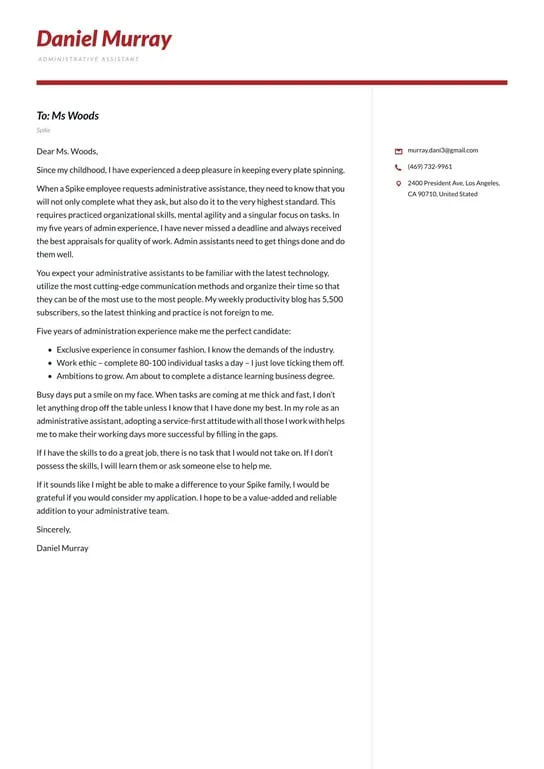
Understanding the Administrative Assistant Role
Before crafting a cover letter, it’s crucial to understand the responsibilities of an administrative assistant. This role is the backbone of many organizations, providing crucial support to ensure smooth operations. An effective cover letter directly reflects this understanding, showcasing your ability to fulfill these key duties. Your cover letter should highlight your awareness of the administrative assistant’s position’s dynamic nature, and how your skills and experience make you an ideal candidate. This understanding informs your approach to the cover letter, allowing you to target your skills and experiences effectively.
Key Responsibilities of an Administrative Assistant
Administrative assistants perform various tasks to facilitate a company’s day-to-day operations. These responsibilities include managing schedules, coordinating meetings, handling correspondence, and preparing reports. They often act as the first point of contact, greeting visitors and answering phone calls. Other duties encompass data entry, managing office supplies, and assisting with travel arrangements. Understanding these core functions is important for demonstrating a clear understanding of the role in your cover letter and helps you explain how your abilities and experience can add value to the company.
Skills Needed for Success

Success as an administrative assistant hinges on a strong skillset. Essential abilities include exceptional organizational skills, proficiency in Microsoft Office Suite (Word, Excel, PowerPoint, Outlook), communication skills, and attention to detail. You should also possess strong time management and multitasking abilities, enabling you to juggle multiple projects efficiently. Furthermore, adaptability and problem-solving skills are necessary to navigate various situations. A strong understanding of these essential skills is important so that you can highlight your strengths in your cover letter and demonstrate how you can bring value to the role.
Why a Cover Letter is Crucial
In the competitive job market, a well-crafted cover letter can make or break your chances of landing an interview. It’s an opportunity to showcase your personality, passion, and how your skills align with the specific job and the company’s culture. The cover letter offers a space to explain gaps in your resume, provide context for career changes, and show that you understand the role’s requirements. It also sets you apart from other candidates who may only submit a resume. Writing a solid cover letter shows potential employers that you care enough to put the necessary effort into making a good first impression.
Importance of a Cover Letter
A cover letter acts as a persuasive introduction, going beyond the basic information in your resume. It allows you to connect your skills and experiences to the specific needs of the job. A well-written cover letter highlights your enthusiasm, explains your reasons for applying, and demonstrates your understanding of the company. This level of engagement shows you are genuinely interested in the position and prepared to contribute to the organization’s success. The cover letter is an opportunity to make a personal connection, showcasing your communication skills and personality.
How the Cover Letter Complements Your Resume

While your resume provides a concise overview of your qualifications, the cover letter allows you to elaborate on your achievements and show why you’re the perfect fit. The resume lists your experiences and skills; the cover letter tells the story. It’s where you can highlight specific accomplishments, explain how your skills match the job requirements, and demonstrate your enthusiasm for the role. The cover letter gives the hiring manager a more complete picture of your abilities and helps them understand why you’re the right candidate.
Formatting Your Administrative Assistant Cover Letter
The format of your cover letter is essential for presenting your information in a professional and readable manner. A well-formatted cover letter demonstrates your attention to detail and ensures the hiring manager can easily grasp your qualifications. The layout should be clean and well-organized, with clear sections and appropriate spacing. Using a standard business letter format shows professionalism. It’s also essential to use a professional font like Times New Roman or Arial to maintain a neat and formal appearance.
Contact Information and Date
Begin with your contact information (name, phone number, email) at the top of the letter. Then, include the date. This information should be aligned to the left or right, depending on the chosen format. Ensure your contact information is up-to-date and professional. Using a formal email address is important, and it’s also useful to include a link to your professional online profile, such as LinkedIn. A clean and well-formatted header conveys your organizational skills before the hiring manager even reads the content.
Recipient Information

Directly under the date, include the hiring manager’s name and title, the company name, and the company’s address. Whenever possible, address the letter to a specific person. Research the company and job posting to find the hiring manager’s name. This shows initiative and a genuine interest in the role. Addressing the letter to a specific person creates a personal touch and demonstrates that you’ve taken the time to learn more about the organization.
Professional Salutation
Use a professional salutation, such as “Dear Mr./Ms./Mx. [Last Name].” If you cannot find the hiring manager’s name, use “Dear Hiring Manager” or “Dear [Company Name] Hiring Team.” Avoid generic greetings such as “To Whom It May Concern.” A proper salutation sets a professional tone for the cover letter. Always double-check the spelling of the recipient’s name and title to avoid making a negative first impression. The salutation is your initial step in establishing a respectful tone.
Writing the Opening Paragraph
The opening paragraph is your chance to make a strong first impression. State the position you are applying for and how you found the job opening. Briefly mention why you are a good fit. Clearly communicate your intention and make your interest in the role evident. Your opening paragraph should grab the reader’s attention and make them want to learn more about you. A strong opening paragraph demonstrates your enthusiasm and can significantly impact the reader’s initial impression.
Highlighting Your Skills and Experience

The body of your cover letter should highlight your relevant skills and experience, demonstrating how you can fulfill the job requirements. Focus on the key skills listed in the job description and provide specific examples of how you have utilized these skills in previous roles. Use action verbs to describe your accomplishments and quantify your achievements whenever possible. This section should effectively convince the hiring manager that you possess the necessary qualities to excel in the position. Your cover letter should focus on the abilities that best meet the employer’s needs.
Tailoring Your Skills to the Job Description
Carefully read the job description and identify the key skills and qualifications the employer is seeking. Then, align your skills and experiences to match these requirements. Use the same keywords and phrases from the job description in your cover letter. This shows you have understood the role and that you can fulfill the job’s responsibilities. This targeted approach demonstrates your ability to customize your application to the specific needs of each position. Use your cover letter to make a direct connection between your skills and the requirements.
Quantifying Your Accomplishments
Whenever possible, quantify your accomplishments to demonstrate your impact in previous roles. Use numbers and statistics to illustrate your achievements. For example, instead of saying, “Managed a high volume of calls,” say, “Managed an average of 50 calls per day with a 95% customer satisfaction rate.” Quantifying your accomplishments provides concrete evidence of your abilities. It also helps to highlight the value you can bring to the new role. Quantifiable results demonstrate your effectiveness and your capacity to make a difference.
Demonstrating Your Soft Skills

While technical skills are essential, soft skills are equally crucial for administrative assistant roles. Highlight skills such as communication, problem-solving, teamwork, and time management. Provide examples of how you have used these skills in past situations. Mention how you resolve conflict, work effectively within a team, and manage multiple projects simultaneously. Demonstrate your ability to handle pressure, resolve issues, and work professionally with others. Soft skills help build relationships, solve problems, and adapt to any situation.
Expressing Your Enthusiasm and Interest
Show genuine enthusiasm for the role and the company. Explain why you are interested in the position and what attracts you to the organization. This could include the company’s mission, its culture, or its products or services. Your cover letter should reflect your desire to contribute and be a part of the team. Expressing enthusiasm makes you more memorable. It also demonstrates that you have taken the time to learn about the company and its values.
The Closing Paragraph and Call to Action
In your closing paragraph, restate your interest in the position and thank the hiring manager for their time and consideration. Include a call to action, such as, “I look forward to hearing from you” or “I am available for an interview at your earliest convenience.” Provide your contact information once again. This closes your cover letter professionally. It also shows that you are proactive and eager to move forward in the hiring process.
Proofreading and Editing Your Cover Letter

Proofreading and editing are crucial steps to ensure your cover letter is free of errors. Check for any grammatical mistakes, spelling errors, and punctuation issues. Ensure that your sentences flow logically and that your tone is appropriate. Ask a friend or family member to review your cover letter as a second pair of eyes can catch errors you may have missed. A polished and error-free cover letter demonstrates your attention to detail. This also enhances your chances of making a positive impression.
Common Mistakes to Avoid
Avoid making common mistakes that can undermine your cover letter. This includes using templates without customizing them, ignoring the job description, and submitting generic cover letters. Other mistakes include grammatical errors, typos, and a lack of personalization. These errors can give the impression that you lack attention to detail, enthusiasm, and interest in the position. Take the time to make sure your cover letter meets the employer’s needs.
Using a Template
Using a cover letter template can be helpful, but you must personalize it to fit the specific job. Do not send a generic template without tailoring it to the job requirements and company. Modify the template to highlight your relevant skills and experiences. A generic cover letter shows a lack of effort and may cause the hiring manager to dismiss your application. Customization is key when using templates; otherwise, your application may look unoriginal.
Ignoring the Job Description
Failing to address the requirements and qualifications listed in the job description is a major mistake. Your cover letter should demonstrate that you have read the job description and understand what the employer is looking for. Highlight the skills and experiences listed in the job description. Tailoring your cover letter to the job requirements indicates your attention to detail and your ability to fulfill the needs of the role. Always align your skills to the needs of the job.
Generic Cover Letters
Sending a generic cover letter to multiple jobs is a major turn-off. These letters fail to show your enthusiasm and knowledge about the company. Always tailor your cover letter to the specific role and the company’s values. Personalize your letter with specific information. Generic cover letters do not convey your interest in the particular role. It is crucial to show you have researched the company.