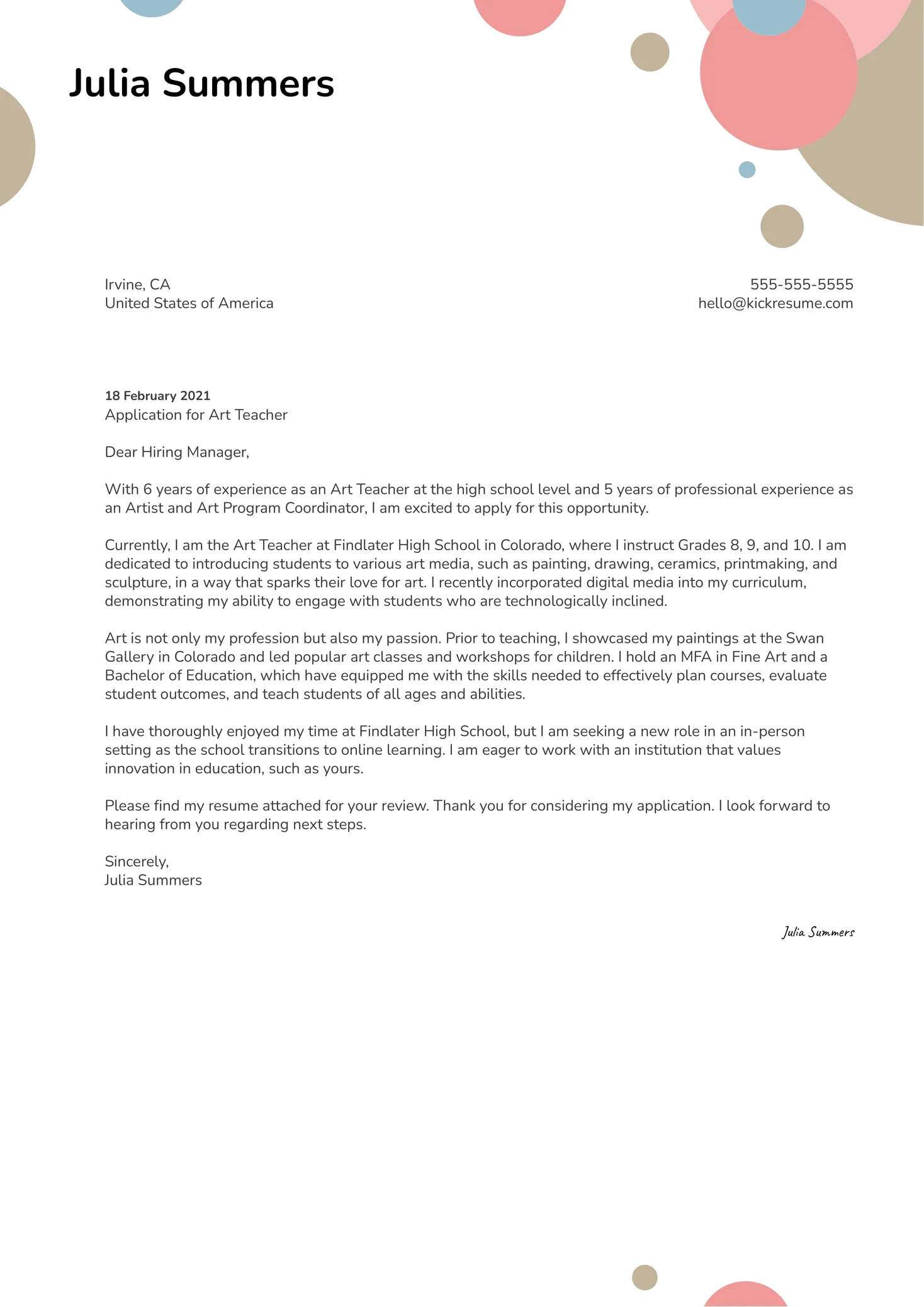
Understanding the Art Professor Cover Letter
The art professor cover letter is your initial introduction to a potential employer, and a crucial step in the academic job application process. It’s more than just a formality it’s a carefully crafted document that showcases your qualifications, experiences, and passion for art and teaching. Unlike a standard resume, the cover letter provides an opportunity to tell your story, highlighting your unique skills and experiences in a way that resonates with the hiring committee. A well-written cover letter can set you apart from other candidates, demonstrating your understanding of the position and the institution’s specific needs. It should communicate your enthusiasm, your suitability for the role, and your potential to contribute to the art department’s goals. A strong cover letter is a persuasive tool that convinces the search committee to delve deeper into your application materials.
Key Components of a Winning Cover Letter
A successful art professor cover letter goes beyond simply listing your accomplishments. It should demonstrate your understanding of the position and the institution, and make a compelling case for why you are the ideal candidate. Begin with a strong introduction that captures the reader’s attention and clearly states the position you are applying for and where you saw the job posting. The body of the letter should then highlight your key qualifications, emphasizing your relevant experience, teaching philosophy, and artistic practice. Finally, conclude with a confident and professional closing, reiterating your interest and thanking the committee for their time and consideration. A well-structured letter will guide the reader through your qualifications and make a lasting positive impression.
Highlighting Your Academic Qualifications

Your academic qualifications are the foundation of your application. Be sure to clearly state your highest degree earned, the institution from which it was obtained, and the date of graduation. Emphasize any specializations or areas of expertise relevant to the position. If your doctoral dissertation or other research projects are particularly relevant, provide a brief description of the scope, methodology, and key findings. Mention any academic honors, awards, or fellowships that you have received. If the position requires specific technical skills or knowledge, make sure to highlight those competencies in your cover letter, providing examples of your proficiency. The more you can align your qualifications with the specific requirements of the job, the more compelling your application will be. Use keywords from the job description to ensure your qualifications are easily recognized by the hiring committee.
Showcasing Your Teaching Experience
Teaching experience is a critical component of any art professor cover letter. Provide details about the courses you have taught, including the level (undergraduate or graduate), the subject matter, and the number of students. Describe your teaching philosophy and approach, emphasizing your ability to engage students, foster critical thinking, and promote creativity. If you have developed new courses or curriculum, be sure to highlight that experience, demonstrating your initiative and innovation. Include specific examples of successful teaching strategies, such as innovative assignments, project-based learning, or the integration of technology. Mention any teaching awards or positive student evaluations you have received. It is important to demonstrate a passion for teaching, a commitment to student success, and a clear understanding of pedagogical best practices.
Emphasizing Research and Publications
Research and publications are essential for many art professor positions. Describe your research interests and the scope of your scholarly work. Provide a list of your publications, including peer-reviewed articles, book chapters, and books. Highlight any presentations you have given at conferences or other academic venues. If your research aligns with the institution’s strategic goals or the specific requirements of the position, be sure to emphasize those connections. Mention any grants or fellowships you have received to support your research. Detail any ongoing research projects and provide a sense of your long-term scholarly goals. Illustrate your contributions to the field of art and how your research can benefit the institution’s academic environment. The more you can demonstrate your commitment to research and its impact, the stronger your application will be.
Demonstrating Your Artistic Practice

For art professor positions, your artistic practice is just as important as your academic qualifications. Describe your artistic work, including your medium, style, and subject matter. Include information about exhibitions you have participated in, both solo and group shows. Mention any awards or recognition you have received for your art. If your artistic practice aligns with the department’s strengths or the institution’s mission, make that connection clear. Include a link to your online portfolio or a selection of high-quality images of your work. Showcase your artistic philosophy and your commitment to creative expression. Highlight how your artistic practice informs your teaching and inspires your students. The goal is to convince the committee that you are a practicing artist who is passionate about sharing your art with the world.
Tailoring Your Cover Letter to the Specific Position
A generic cover letter is a surefire way to land in the rejection pile. Instead, customize your letter to each position you apply for. This requires careful attention to detail and a thorough understanding of the job requirements and the institution’s values. Research the art department, the faculty, and the institution’s mission and strategic goals. Identify the specific skills, experiences, and qualifications the hiring committee is seeking. Then, demonstrate how your qualifications align with those requirements and how you can contribute to the department’s success. This level of personalization shows the committee that you are genuinely interested in the position and that you have taken the time to understand what they are looking for in a candidate. This effort significantly increases your chances of moving forward in the hiring process.
Analyzing the Job Description
The job description is your roadmap to success. Carefully read and analyze the description to identify the key requirements and expectations. Look for specific keywords and phrases that the hiring committee is likely to be looking for. Make a list of these requirements and then address each one in your cover letter. Provide concrete examples of how your skills and experience meet those requirements. If the description emphasizes teaching experience, for instance, make sure to dedicate a significant portion of your letter to showcasing your teaching abilities. If research is a priority, highlight your publications and ongoing research projects. Tailoring your letter to the specific needs of the position demonstrates that you have the ability to meet and exceed the requirements of the job, and it shows you take the application process seriously.
Researching the Institution

Before writing your cover letter, take the time to research the institution and the art department. Visit the department’s website to learn about the faculty, the curriculum, and the department’s mission and values. Familiarize yourself with the institution’s strategic plan and any recent initiatives. Understanding the institution’s culture and goals will help you tailor your cover letter to demonstrate how you can contribute to their success. If possible, read the publications of the faculty members to learn more about their research and artistic practice. Mention specific faculty members or programs that interest you and explain how you could collaborate with them. Researching the institution demonstrates your interest and initiative, and shows the hiring committee that you’re not just applying for any job, but that you are truly interested in this specific opportunity.
Addressing the Search Committee
Address your cover letter to the specific person or committee listed in the job posting. If the name of the hiring authority is not specified, use a professional salutation such as “Dear Search Committee” or “Dear Hiring Committee.” Avoid generic greetings such as “To Whom It May Concern.” In the body of your letter, refer to the institution by name and use the language of the job description. Show your familiarity with the department’s mission and values. If you know the names of any of the faculty members, you can mention them in your letter. Always maintain a professional tone and use respectful language. By directly addressing the search committee, you show that you are aware of your audience and that you have taken the time to understand the application process. Demonstrating that you understand the purpose of the letter will help you get noticed.
Structuring Your Art Professor Cover Letter
A well-structured cover letter is easy to read and makes a strong impression. Divide your letter into clear, concise paragraphs, each focusing on a specific aspect of your qualifications or experiences. Use headings and subheadings to organize your thoughts and make it easier for the reader to find the information they are looking for. Use a professional font and format, and ensure that your letter is free of errors. Proofread the letter carefully before submitting it. A well-structured cover letter guides the reader through your qualifications and helps you make a strong case for why you should be hired. Using proper structure is the key to showing you can meet all job duties.
The Introductory Paragraph

The introductory paragraph is your chance to capture the reader’s attention and make a strong first impression. Clearly state the position you are applying for and where you saw the job posting. Briefly mention your most relevant qualifications and express your enthusiasm for the opportunity. Avoid generic or vague opening statements. Instead, create an engaging introduction that immediately grabs the reader’s attention and encourages them to continue reading. State the position you are applying for and mention the job posting source. Briefly highlight a key achievement or qualification. The goal is to create a strong impression that makes the reader want to know more. A strong intro makes the rest of your letter more effective.
Body Paragraphs Crafting Your Narrative
The body paragraphs are where you tell your story and showcase your qualifications. Use separate paragraphs to address different aspects of your experience, such as your teaching experience, research, and artistic practice. Provide specific examples of your accomplishments and use quantifiable results whenever possible. For example, instead of saying “I improved student outcomes,” say “I improved student outcomes by 15% on the final project.” Demonstrate how your skills and experience meet the specific requirements of the job. Use keywords from the job description to ensure that your qualifications are easily recognized. The body paragraphs should be well-organized, clear, and concise, showcasing your unique skills and the value you can bring to the art department. Your narrative should be clear and concise to showcase your qualifications.
The Closing Paragraph
The closing paragraph is your final opportunity to make a strong impression. Reiterate your interest in the position and thank the search committee for their time and consideration. Express your enthusiasm for the opportunity to contribute to the art department’s goals. Provide your contact information, including your email address and phone number. Include a call to action, such as stating that you are available for an interview. Proofread the closing paragraph carefully to ensure that it is free of errors. End your letter on a positive note, demonstrating your enthusiasm and your confidence in your ability to succeed. The closing paragraph should reiterate your interest and thank the committee for their time.
Formatting and Presentation

The formatting and presentation of your cover letter are just as important as the content. Your letter should be easy to read and visually appealing. Use a professional font, such as Times New Roman, Arial, or Calibri, and a font size of 11 or 12 points. Use standard margins (1 inch on all sides) and single-space your text. Use proper paragraph spacing to improve readability. Make sure your letter is free of grammatical errors and typos. Proofread your letter carefully before submitting it. A well-formatted cover letter demonstrates your attention to detail and your professionalism. A poorly formatted letter can create a negative impression. Use a professional font, and format, and proofread your letter carefully.
Choosing the Right Font and Format
Choose a professional font that is easy to read, such as Times New Roman, Arial, or Calibri. Avoid using overly decorative or unusual fonts. Use a standard font size (11 or 12 points) to ensure that your letter is easy to read. Use standard margins (1 inch on all sides) and single-space your text. Use paragraph spacing to create visual separation between paragraphs. Use bolding or italics sparingly, and only to emphasize key points. Choose a format that is clean and easy to navigate. Use a professional letterhead if available. A well-chosen font and format will make your cover letter more readable and professional. Make sure that your letter is easy on the eyes.
Proofreading and Editing Your Cover Letter
Proofreading and editing are essential steps in the cover letter writing process. Before submitting your letter, carefully proofread it for any errors in grammar, spelling, punctuation, and style. Read your letter aloud to catch any awkward phrasing or sentence structure. Ask a friend or colleague to proofread your letter as well. They may catch errors that you have missed. Ensure that your letter is free of typos and grammatical errors. Edit your letter for clarity and conciseness. Use active voice and avoid jargon or overly complex language. Ensure that your letter flows smoothly and that your ideas are well-organized. A well-proofread and edited cover letter will make a positive impression and increase your chances of success. Correcting the errors will make your letter more credible.
Common Mistakes to Avoid

There are several common mistakes that applicants make when writing an art professor cover letter. Avoiding these mistakes will improve your chances of making a strong impression. Pay attention to the details, and take the time to create a compelling application.
Generic Cover Letters
Avoid using a generic cover letter that could be sent to any employer. Customize your letter to each position you apply for, demonstrating your understanding of the specific requirements and the institution’s values. Generic cover letters are easily spotted and often result in an immediate rejection. Tailor your letter to the specific job requirements and the institution. Research the institution and the department to demonstrate your interest and initiative. Personalized letters make a strong impression.
Focusing Solely on Your Achievements
While it’s important to highlight your achievements, avoid focusing solely on yourself. Show the hiring committee how your skills and experience can benefit the department and the institution. Demonstrate how you can contribute to the department’s goals and how you align with the institution’s mission and values. Give the committee reasons to want you. Highlight how your qualifications meet the job requirements. Show how you can benefit the department and institution.
Ignoring the Specifics of the Job
Pay close attention to the specific requirements of the job description. Tailor your cover letter to address each of these requirements. If the job description emphasizes teaching experience, dedicate a significant portion of your letter to showcasing your teaching abilities. If research is a priority, highlight your publications and ongoing research projects. Ignoring the specifics of the job suggests that you haven’t taken the time to understand the position and that you may not be a good fit. Make sure to reference the specific requirements. Make sure the letter aligns with the job posting.