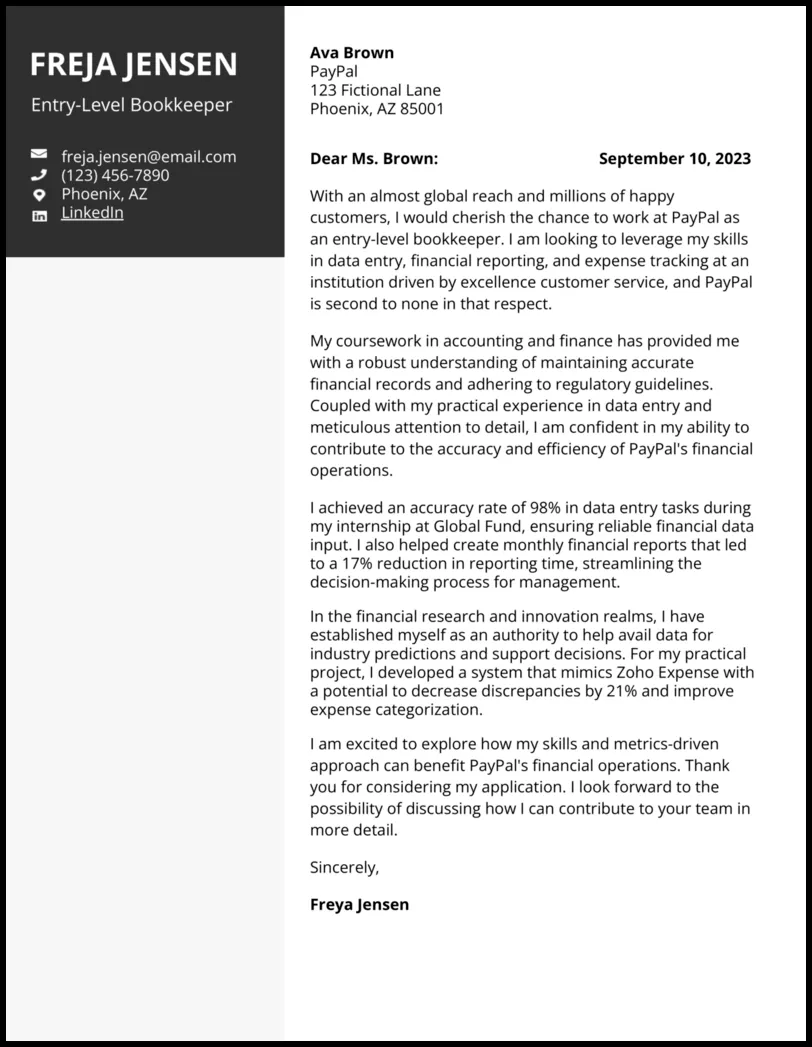
Understanding the Importance of a Bookkeeper Cover Letter
Landing a bookkeeper position, especially without prior experience, requires a strategic approach. A well-crafted cover letter is your primary tool for making a strong first impression. It’s a chance to go beyond the constraints of a resume and showcase your personality, passion, and potential. This guide will help you craft a winning cover letter that grabs the attention of hiring managers and increases your chances of securing an interview. Your cover letter is not just an add-on; it’s a crucial element in your job application that can significantly boost your prospects, and is a great starting point for your career in bookkeeping.
Why a Cover Letter Matters
In a competitive job market, particularly for roles where direct experience might be limited, a cover letter serves as your personal introduction. It provides context to your resume and allows you to elaborate on your qualifications, explain your career goals, and show your genuine interest in the specific role and company. Moreover, the cover letter demonstrates your communication skills, which are crucial for any bookkeeping position. It’s an opportunity to set yourself apart by demonstrating your attention to detail, organizational skills, and your ability to present information clearly and concisely. A well-written cover letter helps potential employers understand the ‘why’ behind your application.
Highlighting Transferable Skills

Since you’re applying with no direct experience, highlighting transferable skills is essential. These are the skills you’ve gained from previous jobs, education, or volunteer work that are applicable to bookkeeping. Identify skills such as attention to detail, strong organizational abilities, proficiency in using software like Microsoft Excel or Google Sheets, data entry skills, and an analytical mindset. For example, experience managing personal finances, organizing group projects, or handling customer service can showcase these transferable skills. Focus on how these skills translate into bookkeeping responsibilities, like maintaining records, managing financial transactions, and ensuring accuracy.
Identifying Your Relevant Skills
Begin by making a list of all your skills, both hard and soft. Consider any experience where you’ve managed budgets, tracked expenses, handled invoices, or worked with numbers. Look at the job description and identify the skills the employer is looking for. Then, draw the connection between your existing skills and the required bookkeeping tasks. Even seemingly unrelated experience can be relevant; for example, customer service experience showcases your communication and problem-solving skills, which are useful in a bookkeeping role when dealing with vendors or clients. Make sure to address the specific requirements listed by the employer.
Showcasing Your Education and Certifications
If you lack professional experience, a strong focus on your education and any relevant certifications is vital. Highlight any degrees, diplomas, or courses you have completed in accounting, business administration, finance, or a related field. Also, mention any bookkeeping certifications you hold, such as those offered by the American Institute of Professional Bookkeepers (AIPB) or other professional bodies. Briefly describe what you learned during these programs, focusing on how it prepared you for the responsibilities of a bookkeeper. Even if you have limited formal education, any online courses or workshops related to accounting software or bookkeeping principles should be included.
Crafting a Compelling Opening

The opening paragraph is your first chance to capture the employer’s attention. It should be concise, enthusiastic, and clearly state why you are applying for the position. Avoid generic openings. Instead, show genuine interest in the company and the role. Briefly mention where you found the job posting and why the company’s mission or values resonate with you. If you were referred by someone, name the person in the opening. This personal touch shows that you’ve put thought into your application and have a connection to the company. Emphasize your enthusiasm for the opportunity and your eagerness to contribute.
Grabbing the Employer’s Attention
Start with a strong hook. This could be a brief statement about your passion for bookkeeping, your strong work ethic, or your quick learning ability. Tailor the opening to the specific job description, and mention how your skills and education align with the requirements. For example, if the job requires proficiency in a specific accounting software, mention your experience with that software in the opening. Keep it brief and to the point, ensuring that the employer immediately understands why you are a good fit for the role. Be confident and enthusiastic about the opportunity.
Emphasizing Your Enthusiasm
Throughout your cover letter, show your genuine interest in the bookkeeping role and the company. Research the company’s mission, values, and recent achievements, and mention how you see yourself contributing to their success. Be specific about why you are interested in the position; is it the opportunity to learn new skills, the company culture, or the chance to work in a specific industry? Avoid using generic statements, and instead, personalize your letter by mentioning specific aspects of the job or company that appeal to you. This shows you’ve done your homework and are genuinely excited about the opportunity.
Demonstrating Your Understanding of the Role

Show the employer that you understand the responsibilities of a bookkeeper. Briefly mention the tasks you expect to perform, such as managing financial records, processing invoices, reconciling accounts, and preparing financial reports. Research the specific requirements of the role and explain how your skills and education have prepared you for those tasks. If you’re familiar with accounting principles or specific accounting software, mention it. This demonstrates that you have a basic understanding of the role and are prepared to handle the day-to-day responsibilities. Use clear and concise language, avoiding jargon that may confuse the hiring manager.
Detailing Your Relevant Experiences
Even without direct bookkeeping experience, you likely have experiences that have equipped you with relevant skills. Focus on these experiences and demonstrate how they relate to the bookkeeping role. For example, if you’ve managed personal finances, highlight your ability to track expenses, create budgets, and manage financial records. If you’ve volunteered for a treasurer role in a club or organization, explain how you handled financial transactions and maintained accurate records. The goal is to translate your past experiences into something relevant to the job requirements, emphasizing your transferable skills and demonstrating how they will help you succeed in the role. Each detail must relate to the requirements in the job description.
Focusing on Academic and Project Experience
If you’re a recent graduate, highlight relevant projects or coursework. Mention any projects where you applied accounting principles, used accounting software, or prepared financial statements. If you participated in group projects, describe your role and contributions. This shows the ability to work in a team and apply your knowledge. Even if you do not have professional experience, academic achievements and related projects can demonstrate your understanding of the fundamental concepts of bookkeeping. This is especially important for entry-level roles where employers understand that candidates might not have prior work experience.
Quantifying Your Accomplishments

Wherever possible, quantify your accomplishments. Instead of saying ‘I managed finances,’ say ‘I managed a budget of $X and reduced expenses by Y%.’ Numbers make your achievements more concrete and show the impact you’ve made in your previous roles or projects. For example, if you’ve used accounting software in school or a personal project, mention it, along with any results or improvements you achieved. Quantifying your skills helps potential employers understand the value you can bring to the company. Also, this helps distinguish your application from other candidates, even when you have no direct experience.
Structuring Your Cover Letter Effectively
The structure of your cover letter is critical for readability. It should be clear, concise, and easy to navigate. Use a professional business letter format with a clear heading, including your contact information, the date, and the employer’s information. Divide your letter into clear paragraphs, with each addressing a specific point. Start with an engaging introduction, followed by a section highlighting your key skills and experiences, and conclude with a strong closing that reiterates your interest and expresses your availability for an interview. Keep it short and to the point to grab the reader’s attention right away. The structure must be clear for the reader to quickly follow.
Formatting for Readability
Use a professional and easy-to-read font, such as Times New Roman, Arial, or Calibri, with a font size of 11 or 12 points. Use single-spacing within paragraphs and double-spacing between paragraphs. Use bullet points to highlight key skills or accomplishments. Use clear headings and subheadings to organize your content and make it easy to scan. Ensure your letter fits on one page; it will make your cover letter much more appealing to the reader. Keep the formatting clean, professional, and consistent throughout the document. This ensures that your letter is not only informative but also visually appealing.
The Power of a Strong Closing

Your closing paragraph is your final opportunity to impress the employer. Reiterate your interest in the position and express your enthusiasm for the opportunity. Thank the employer for their time and consideration, and state that you’re looking forward to hearing from them soon. Include a call to action, such as mentioning that you are available for an interview. Proofread the entire letter and ensure there are no typos or grammatical errors. The closing should be confident, positive, and leave the employer with a strong impression of your abilities and potential.
Expressing Your Interest and Availability
In your closing, specifically mention your interest in the role and reiterate your enthusiasm for the opportunity. Reiterate your understanding of the job requirements and how your skills align with the needs of the company. State your availability for an interview and provide your contact information again. Make it easy for the employer to reach you. End with a professional closing, such as “Sincerely” or “Best regards,” followed by your full name. This assures the employer of your eagerness to get the job. Expressing this interest in the role increases the likelihood of a positive response.
Proofreading and Editing Your Letter
Before sending your cover letter, thoroughly proofread and edit it to ensure there are no errors. Check for any typos, grammatical errors, and formatting inconsistencies. Ask a friend, family member, or career counselor to review your letter and provide feedback. A polished, error-free cover letter shows attention to detail, which is a crucial skill for a bookkeeper. Make sure your writing is clear, concise, and professional. Proofreading is crucial; it is your last chance to impress the employer. It also helps ensure that you have done your best in your application process.
Crafting a winning cover letter for a bookkeeper position, even without experience, requires emphasizing transferable skills, highlighting education and certifications, and showcasing your enthusiasm. By following these guidelines and tailoring your letter to each job application, you can significantly increase your chances of securing an interview and landing your dream job.