Understanding the Career Change Cover Letter
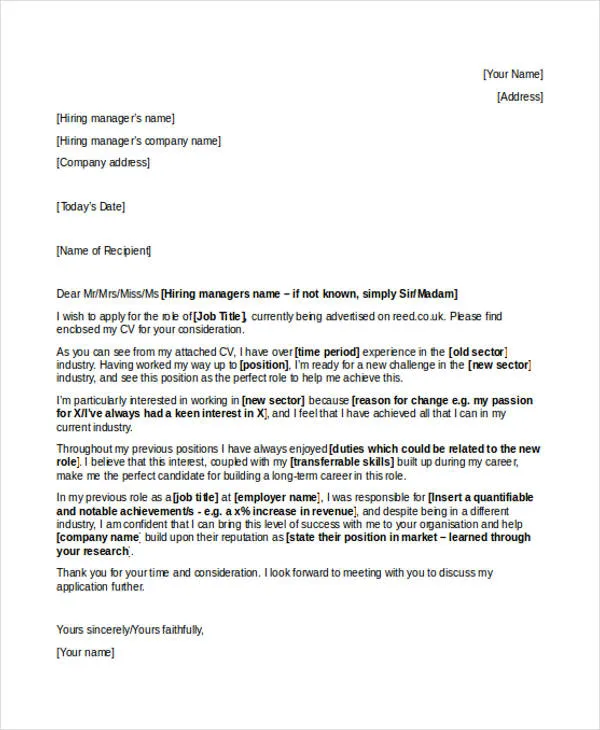
Embarking on a career change is a significant step, and your cover letter is the first impression you make on potential employers. Unlike a resume, which is a factual summary of your experience, a cover letter provides context and demonstrates your passion for the new field. It’s your opportunity to explain why you’re making a career shift, highlight relevant skills, and show how your past experiences have prepared you for the role you’re seeking. The best career change cover letters are not just about listing skills; they’re about crafting a narrative that convinces the hiring manager that you are the right fit, despite your non-traditional background. A well-written cover letter can bridge the gap between your past and your desired future, positioning you as a strong candidate even without direct experience.
Why a Cover Letter is Crucial
In the competitive job market, especially when changing careers, a cover letter is more than just a formality it’s a necessity. It allows you to personalize your application and address the employer directly. A cover letter lets you explain the ‘why’ behind your career change, which is often the biggest question hiring managers have. Without a cover letter, you risk being overlooked, especially if your resume doesn’t immediately align with the job description. Furthermore, it provides a space to showcase your personality and enthusiasm, setting you apart from other applicants. Cover letters are also a chance to demonstrate your writing skills, which are essential in many professional roles. A well-crafted cover letter is your opportunity to make a memorable first impression and increase your chances of landing an interview.
Key Elements of a Strong Cover Letter

A compelling career change cover letter includes several essential elements. Start with a professional heading that includes your contact information and the date. Address the letter to the specific hiring manager if possible, otherwise use a generic greeting like ‘Dear Hiring Manager’. The body of the letter should clearly state the position you’re applying for and how you learned about it. Explain your career change in a concise and positive manner, focusing on your motivations. Highlight the skills and experiences that are relevant to the new role, even if they were gained in a different context. Use action verbs to describe your achievements, and quantify your accomplishments whenever possible. Close with a strong statement of interest and a call to action, such as expressing your availability for an interview. Proofread carefully to ensure there are no typos or grammatical errors.
Addressing Your Career Change Effectively
The most critical part of your cover letter is addressing your career change. Be honest, but frame your transition positively. Instead of dwelling on what you’re leaving behind, focus on what you’re moving towards. Explain your reasons for the change briefly and with enthusiasm. Did you discover a new passion Did you identify an opportunity for growth? Avoid negative language about your previous job or industry. Instead, emphasize how your previous experiences have equipped you with valuable skills that are transferable to the new role. Show that you have researched the industry and the company, and that you understand what the job entails. This demonstrates that you’re not just looking for a new job, but that you’re committed to building a career in the new field. The key is to show the employer that your career change is a well-considered decision and that you are prepared and enthusiastic.
Highlighting Transferable Skills
Identify and highlight the skills you’ve developed in your previous roles that are relevant to the new position. These are your transferable skills and are crucial to making your application stand out. Think about skills such as communication, problem-solving, leadership, project management, and customer service. These are universally valuable across different industries and roles. Give specific examples of how you’ve used these skills in the past. For instance, if you’re moving from sales to project management, highlight instances where you successfully managed client relationships, met deadlines, or coordinated team efforts. If you’re changing careers, make a skills matrix where you list the skills that the new role requires, then the skills you have, and finally the proof and example from your previous work. Focus on these aspects in your cover letter. Tailor your examples to match the requirements of the specific job description, ensuring that the hiring manager can easily see how your skills align with their needs.
Showcasing Your Motivation and Enthusiasm

Your cover letter is the perfect place to express your enthusiasm for the new career path and the specific company. This is not just about stating your interest; it’s about demonstrating it through your actions and words. Explain what attracts you to the new field and the role you’re applying for. Have you taken any courses, attended any workshops, or completed any projects related to the new field? Mention these. Show that you’ve researched the company by mentioning specific projects, values, or initiatives that resonate with you. Explain why you are excited about this specific opportunity and what you hope to achieve. Your enthusiasm can be contagious and can make a lasting impression on the hiring manager. It shows that you are not just looking for any job, but that you are genuinely interested in making a contribution to the company. This excitement will make your application more memorable and significantly boost your chances of securing an interview.
Tailoring Your Cover Letter for Each Application
A generic cover letter won’t cut it. Tailor each cover letter to the specific job and company. This involves more than just changing the name of the company and the job title. Read the job description carefully and identify the key requirements and keywords. Then, customize your letter to address those specific needs. Highlight the skills and experiences that are most relevant to the position. Show that you understand the company’s mission, values, and culture. Research the company and its products or services, and incorporate this information into your letter. Mention specific aspects of the job or the company that appeal to you. This level of customization shows that you have taken the time to understand the role and that you are genuinely interested in the opportunity. It significantly increases your chances of making a strong impression and getting noticed.
Formatting and Design Best Practices
The format and design of your cover letter are just as important as the content. Use a professional font such as Times New Roman, Arial, or Calibri in a readable size (11 or 12 points). Maintain a clean and consistent layout with clear margins and appropriate spacing. Divide your letter into short, easily digestible paragraphs. Use bullet points to highlight key skills or achievements, if appropriate. Keep the letter concise, ideally no longer than one page. Ensure your letter is well-organized, with a clear introduction, body, and conclusion. The overall design should be visually appealing and easy to read. A well-formatted cover letter shows attention to detail and professionalism. A cluttered or poorly formatted letter will make a bad impression, regardless of the content. Before submitting, preview your cover letter as a PDF to ensure that the formatting is preserved across different devices and platforms.
Writing a Compelling Opening and Closing

The opening and closing paragraphs of your cover letter are critical because they set the tone and leave a lasting impression. The opening paragraph should immediately grab the reader’s attention. State the position you’re applying for and where you found the job posting. In the opening, briefly explain why you are making a career change and why you’re interested in this role. The closing paragraph should reiterate your interest in the position and the company. Summarize your key qualifications and reiterate your enthusiasm. Include a clear call to action, such as stating your availability for an interview and thanking the hiring manager for their time and consideration. Avoid generic phrases. Instead, write a personalized and memorable opening and closing that reflects your personality and passion.
Opening Paragraph Techniques
There are several techniques to make your opening paragraph engaging. Start with a strong statement of interest. Mention a specific project or achievement related to the job description. If you have a connection to the company or someone who works there, mention it. Share a brief anecdote that illustrates your relevant skills or experiences. State your core motivation for the career change and what you have to offer the company. Tailor your opening to the specific job and company. The opening paragraph sets the stage for the rest of your letter, so make it impactful. Make the reader want to know more.
Closing Paragraph Strategies
The closing paragraph should leave a positive and lasting impression. Restate your interest in the position and the company. Reiterate your key qualifications and how they align with the job requirements. Add a call to action, expressing your availability for an interview and thanking the hiring manager for their time and consideration. Mention what you bring to the team. Keep it concise and focused. Avoid overly generic phrases like ‘Thank you for your time.’ Instead, use a more specific and enthusiastic closing. For example, ‘I am excited about the opportunity to bring my skills in X and Y to your team and contribute to Z’ The closing paragraph should reinforce your enthusiasm and leave the reader feeling confident that you are the right candidate.
Reviewing and Editing Your Cover Letter

Before submitting your cover letter, thoroughly review and edit it. Check for grammatical errors, typos, and inconsistencies. Ensure that your letter flows logically and is easy to read. Ask a friend, mentor, or career counselor to review your letter and provide feedback. They can offer a fresh perspective and catch any mistakes you may have missed. Pay attention to the tone of your letter. Ensure it is professional, enthusiastic, and aligned with the company’s culture. Make sure that your letter addresses all the key elements of a strong cover letter and that it effectively communicates your value to the employer. Proofreading is essential to ensure your cover letter is polished, professional, and error-free.
Common Mistakes to Avoid
Avoid common mistakes that can undermine your cover letter. Don’t use generic templates that are not tailored to the specific job. Avoid making your cover letter too long. Keep it concise and to the point, aiming for one page. Don’t simply restate your resume; provide additional context and detail. Avoid negative language or criticizing your previous employers. Do not include irrelevant information that doesn’t relate to the job. Avoid clichés. Stay away from using jargon that the hiring manager might not understand. Do not send a cover letter with typos or grammatical errors. These mistakes show a lack of attention to detail. Lastly, make sure to follow all the instructions provided in the job posting.
Using Keywords to Beat Applicant Tracking Systems
Many companies use Applicant Tracking Systems (ATS) to screen resumes and cover letters. To ensure your cover letter gets noticed, incorporate keywords from the job description. Identify the key skills, qualifications, and requirements listed in the job posting. Integrate these keywords naturally into your cover letter. Don’t stuff your letter with keywords, but ensure that you use them throughout. Use different variations of the same keywords. Ensure that your cover letter reads naturally and the keywords fit within the context of your writing. This helps the ATS recognize your application and increases the likelihood of it being reviewed by a human. Consider the key phrases from the job description and mirror the same terminology if you have the corresponding skills.
Cover Letter Examples for Different Career Changes

Different career changes require different approaches in your cover letter. Tailor your examples to fit the specific industry you are targeting. If you are looking to transition from a sales role to project management, highlight your skills in team coordination, time management, and client relationship management. If you are switching from education to human resources, focus on your experience in training, communication, and conflict resolution. For each example, emphasize the transferable skills and demonstrate how you can bring value to the new role. These examples will provide you with a framework to showcase your skills effectively.
From Marketing to Project Management
When transitioning from marketing to project management, highlight your experience in managing campaigns, deadlines, and budgets. Show that you have coordinated cross-functional teams, and successfully delivered projects on time and within budget. Showcase your skills in communication, organization, and problem-solving. Provide examples of successful projects you have led and the positive outcomes. Frame your marketing experience as preparation for the challenges of project management. Explain how you can adapt your existing skills to the new role.
From Education to Human Resources
For a career change from education to human resources, emphasize your skills in training, communication, and conflict resolution. Showcase your experience in creating training programs, managing performance, and building positive relationships. Highlight any experience you have in recruiting, onboarding, or employee relations. Frame your experience in education as preparation for HR. Explain how your classroom management skills, your ability to motivate and engage people, and your understanding of employee development make you a strong candidate for the role.