Why Your Chef Cover Letter Matters
In the competitive world of culinary arts, a well-crafted chef cover letter is your first opportunity to make a lasting impression on potential employers. It’s more than just a formality; it’s your chance to introduce yourself, highlight your unique skills and experience, and demonstrate your passion for food and the culinary profession. Unlike a resume, which offers a snapshot of your career, a cover letter allows you to tell your story, explain your motivations, and showcase your personality. A compelling cover letter can significantly increase your chances of securing an interview and ultimately landing your dream job. Therefore, taking the time to create a standout cover letter is a crucial step in your job search.
Highlighting Your Culinary Skills
Your cover letter should be a showcase of your culinary prowess. Be specific about the skills you possess, such as proficiency in various cooking techniques (e.g., grilling, sautéing, baking), knowledge of different cuisines (e.g., French, Italian, Asian), and expertise in specific areas (e.g., pastry, sauces). Think about the unique skills that set you apart. Do you have experience with molecular gastronomy? Are you skilled in menu planning and costing? Emphasize these specialized skills. Avoid generic statements; instead, use action verbs to describe your accomplishments. For example, instead of saying “Managed kitchen operations,” say “Streamlined kitchen operations, reducing food costs by 15% within six months.” This approach provides concrete evidence of your abilities and demonstrates your value to the employer.
Showcasing Experience

Your cover letter should provide a narrative of your professional journey, not just a list of job titles. Describe the restaurants and culinary establishments where you’ve worked, highlighting your roles and responsibilities. For each position, detail your accomplishments and contributions. Did you lead a team? Did you improve kitchen efficiency? Did you receive positive feedback from customers or management? Providing specific examples of your experience and achievements will help the hiring manager understand your capabilities and potential. Tailor this section to the specific job requirements. If the job description emphasizes a particular skill or experience, be sure to highlight your relevant qualifications and provide examples to back up your claims.
Emphasizing Passion for Food
A chef’s cover letter should be filled with your passion. Your love for food is essential to demonstrate. Chefs are passionate about the culinary arts, and employers want to see that enthusiasm in your application. Express your excitement for cooking, your appreciation for quality ingredients, and your dedication to creating exceptional dining experiences. Share what inspires you in the culinary world. Do you have a particular style of cooking you love? Are you passionate about food sustainability or a specific cuisine? Let your personality shine through. Your passion will not only impress the employer but also distinguish you from other applicants. Your enthusiasm makes you memorable and shows you’re invested in a long-term culinary career.
Crafting the Perfect Chef Cover Letter
Format and Structure

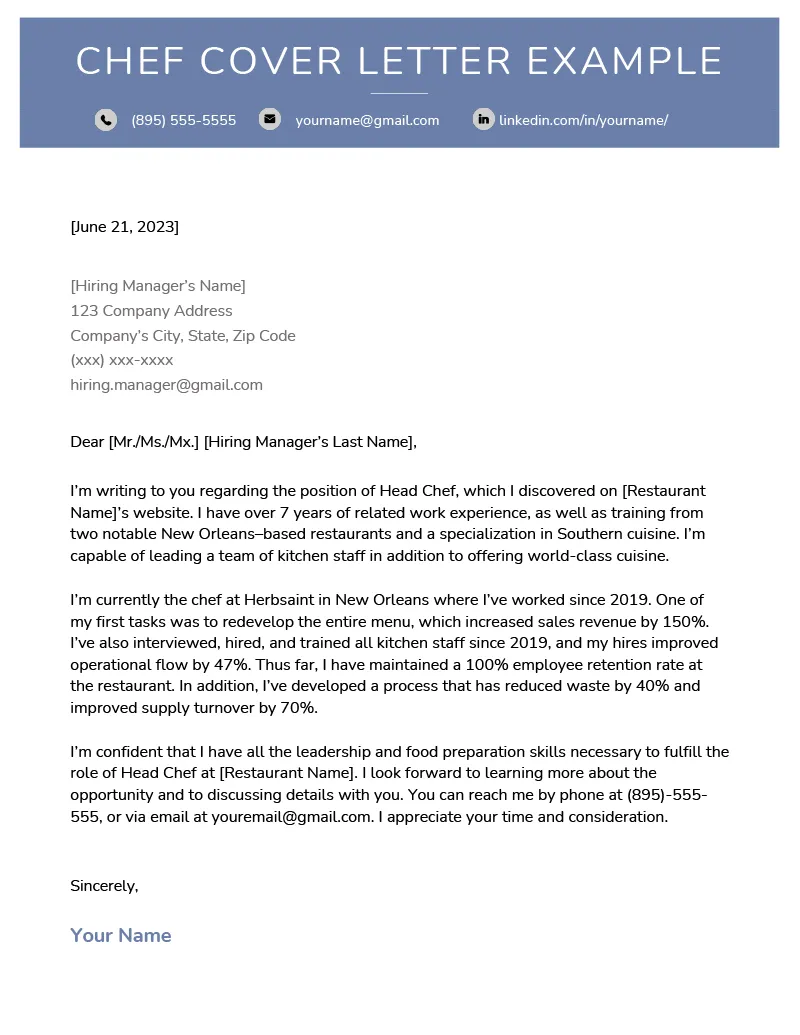
A well-structured cover letter is easy to read and professional in appearance. Use a standard business letter format, with your contact information at the top, followed by the date and the employer’s contact information. The body of the letter should be divided into clear, concise paragraphs. Keep the tone professional and enthusiastic. Use a readable font, such as Arial or Times New Roman, and maintain consistent formatting throughout. Ensure your cover letter is free of grammatical errors and typos, which can detract from your professionalism. Always proofread your letter carefully before submitting it. A well-formatted cover letter demonstrates attention to detail, a crucial quality for a chef.
Opening the Cover Letter
The opening of your cover letter sets the tone for the rest of your application. Start with a strong, attention-grabbing statement that immediately conveys your interest in the position. Address the hiring manager by name if possible; this shows you’ve done your research and are genuinely interested in the opportunity. State the specific position you’re applying for and briefly mention where you saw the job posting. In your first paragraph, showcase your enthusiasm and briefly mention why you’re a good fit for the role. Keep the introduction concise and focused on demonstrating your value proposition. The first impression is very important, so make it count.
Body Paragraphs
The body of your cover letter is where you elaborate on your skills, experience, and passion. Use the body paragraphs to provide specific examples that support your claims. Structure your paragraphs logically, each addressing a key aspect of your qualifications. For instance, one paragraph could highlight your culinary skills, while another could focus on your leadership experience. Use action verbs to describe your accomplishments, and quantify your achievements whenever possible. For example, instead of saying, “Managed a team of cooks,” say “Managed a team of 10 cooks, consistently meeting deadlines and maintaining high food quality standards.” Tailor each paragraph to the specific requirements of the job, referencing skills or experience mentioned in the job description.
Closing the Cover Letter

The closing paragraph should reiterate your interest in the position and express your enthusiasm for the opportunity. Thank the hiring manager for their time and consideration. Include a call to action, such as inviting them to contact you for an interview. Reiterate your contact information, making it easy for the hiring manager to reach you. Keep the closing concise and professional, expressing your readiness to discuss your qualifications further. A strong closing leaves the hiring manager with a positive impression and encourages them to take the next step in the hiring process.
Key Ingredients for a Successful Chef Cover Letter
Tailoring Your Letter to the Job
One of the most critical secrets is tailoring your cover letter to each job application. Do not send a generic cover letter to every employer. Research the restaurant or culinary establishment and understand its specific needs and preferences. Carefully review the job description and identify the key skills, experience, and qualifications the employer is seeking. In your cover letter, highlight how your skills and experience align with those requirements. Use the same keywords and phrases from the job description. This targeted approach demonstrates that you understand the role and are a perfect fit for the position. Tailoring your letter shows your genuine interest and increases your chances of getting noticed.
Using Keywords

Use keywords from the job description in your cover letter. Employers often use Applicant Tracking Systems (ATS) to scan resumes and cover letters for relevant keywords. By incorporating these keywords, you increase the likelihood that your application will be noticed. Read the job description carefully and identify the skills, experience, and qualifications the employer is looking for. Integrate these keywords naturally throughout your cover letter, but avoid keyword stuffing. Focus on incorporating them within context, ensuring your letter remains readable and engaging. This practice improves your application’s visibility and ensures the hiring manager quickly identifies you as a qualified candidate.
Showcasing Achievements
Instead of simply listing your responsibilities, use your cover letter to showcase your achievements. Quantify your accomplishments whenever possible. Provide specific examples of how you’ve made a positive impact in previous roles. Did you improve food costs, increase customer satisfaction, or mentor junior chefs? Detail your achievements and the results you achieved. For example, instead of saying “Managed kitchen operations,” say “Streamlined kitchen operations, resulting in a 15% reduction in food waste and a 10% increase in customer satisfaction.” Highlighting your achievements demonstrates your value and shows the employer what you can bring to their kitchen. Specific examples make your accomplishments more impactful and memorable.
Common Mistakes to Avoid
Grammar and Spelling Errors

One of the most common mistakes is making grammar and spelling errors in your cover letter. These errors can create a negative impression, suggesting a lack of attention to detail and professionalism. Proofread your cover letter carefully before submitting it. Use a spell checker and grammar checker, but don’t rely on them entirely. Read the letter aloud to catch any errors that the software might miss. Ask a friend or colleague to review your letter for any mistakes. Ensure that your cover letter is polished and error-free. This attention to detail is especially critical in the culinary field, where precision is essential.
Generic Cover Letters
Another significant mistake is sending generic cover letters that are not tailored to the specific job or employer. Generic letters lack personalization and fail to demonstrate genuine interest. Employers can easily recognize when a cover letter is a template, and these are often discarded. Take the time to research the restaurant or culinary establishment, and customize your letter accordingly. Address the hiring manager by name, if possible. Show that you understand the job requirements and highlight how your skills and experience align with those needs. The effort to personalize your cover letter can significantly increase your chances of getting noticed and landing an interview.
Failing to Highlight Relevant Skills
Failing to highlight relevant skills and experience is another common mistake that can be fatal for your application. Your cover letter should focus on the skills and experiences most relevant to the job requirements. Ensure that your cover letter clearly demonstrates how your qualifications match the employer’s needs. Don’t be afraid to emphasize your strengths and provide specific examples of your achievements. Identify the key skills and experience sought by the employer, and ensure those are highlighted prominently in your letter. This targeted approach will make it easier for the hiring manager to see you as a strong candidate.
Secrets of Successful Chef Cover Letters

Show, Don’t Tell
Instead of simply stating that you possess certain skills or qualities, demonstrate them with specific examples. Show, don’t tell, is a golden rule. For example, instead of stating, “I am a good leader,” describe a situation where you successfully led a team to achieve a specific goal. Instead of stating you are creative, provide an example of a dish you created. Provide details and concrete examples. This approach makes your claims more believable and persuasive. Your cover letter needs to show your capabilities by providing evidence.
Quantify Your Achievements
Whenever possible, quantify your achievements to demonstrate the impact you’ve made in your previous roles. Use numbers and statistics to back up your claims. For example, instead of saying “Increased sales,” say “Increased sales by 20% in six months.” Quantifying your achievements makes them more compelling and shows the employer the value you bring to the table. This practice will impress the hiring manager and distinguish you from other candidates. The more data you have, the more convincing you become.
Demonstrate Knowledge of the Restaurant
Show that you’ve done your homework by demonstrating knowledge of the restaurant or culinary establishment. Mention specific aspects of their menu, cuisine, or philosophy that appeal to you. This shows the employer that you are genuinely interested in the opportunity and that you’ve taken the time to learn about their business. Research the restaurant’s website, social media pages, and any recent press coverage. Demonstrating your knowledge shows you are invested in getting the job and are a serious applicant. Personalizing your cover letter in this way will leave a positive impression.
Review and Refinement
Before submitting your cover letter, take the time to review and refine it. Proofread it carefully for grammar, spelling, and punctuation errors. Ensure that your letter is well-organized, easy to read, and tailored to the specific job and employer. Seek feedback from friends, colleagues, or career counselors. They can offer valuable insights and help you identify any areas for improvement. Revising and refining your cover letter is essential for making a strong impression. A polished and professional cover letter will significantly increase your chances of landing an interview and securing your desired chef position.