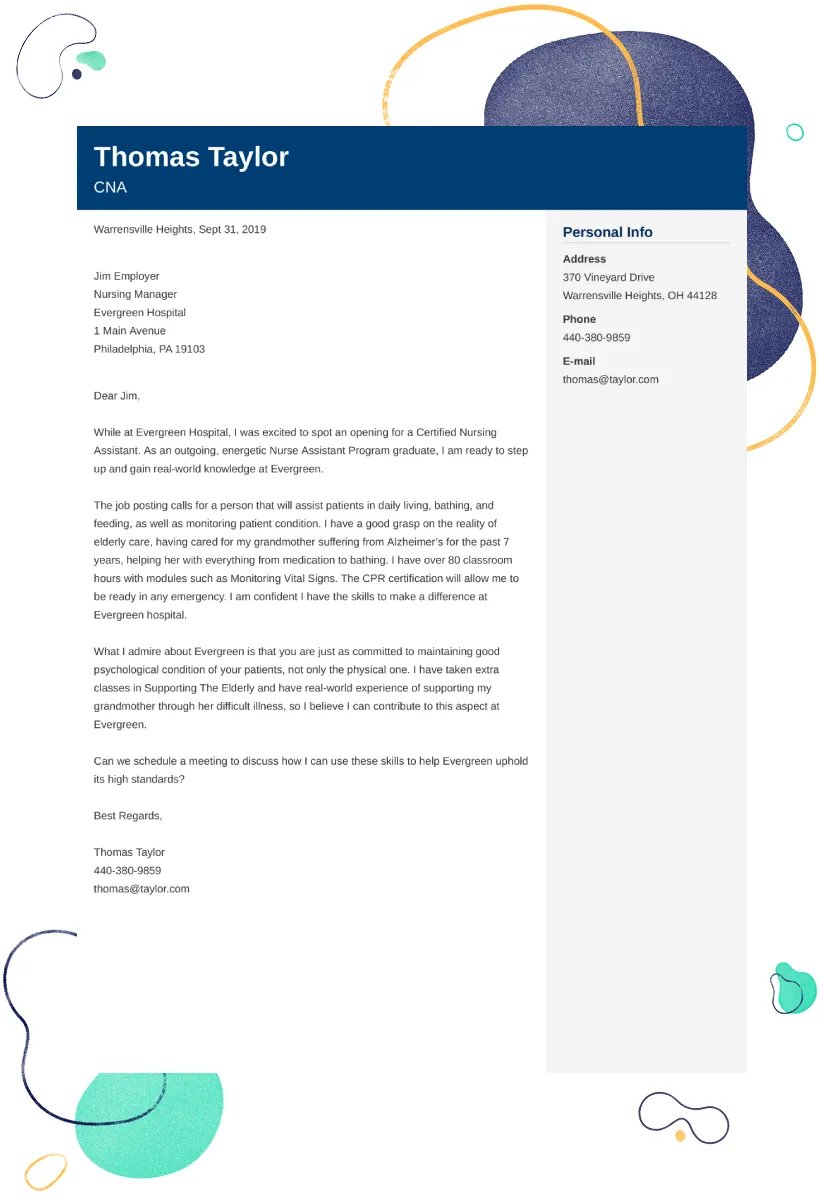
Why a Strong CNA Cover Letter Matters
In the competitive world of healthcare, especially for Certified Nursing Assistants (CNAs), a well-crafted cover letter can be your golden ticket to landing a job. Even if you’re entering the field with no prior professional experience, a compelling cover letter serves as your initial introduction to potential employers, allowing you to showcase your personality, passion for patient care, and potential. It’s your chance to make a lasting first impression and differentiate yourself from other applicants. A strong cover letter does more than just summarize your resume; it tells a story, highlighting your unique skills and qualities that align with the specific needs of the hiring facility. Remember, a generic cover letter is often discarded; a personalized one can significantly increase your chances of getting an interview. This is your opportunity to shine, and let your passion for caregiving come through.
Highlighting Transferable Skills
When you lack direct CNA experience, focusing on transferable skills becomes paramount. These are the abilities you’ve developed in other settings – be it volunteer work, academic projects, or previous jobs – that can be applied to the role of a CNA. Consider skills like communication, empathy, teamwork, problem-solving, and time management. Detail how you’ve utilized these skills in past scenarios. For example, if you volunteered at a soup kitchen, explain how you interacted with diverse individuals, managed time efficiently during meal preparation, and worked collaboratively with other volunteers. If you were a student, elaborate on projects that required organization, attention to detail, and the ability to follow instructions. The goal is to convince the employer that while you may be new to the CNA role, you possess the fundamental skills necessary to excel.
Communication and Interpersonal Skills

Exceptional communication is fundamental in healthcare. As a CNA, you’ll interact with patients, families, and other healthcare professionals daily. Showcase your ability to communicate clearly, empathetically, and respectfully. Provide examples of how you’ve demonstrated strong interpersonal skills in past experiences. This could involve resolving conflicts, actively listening to others, or explaining complex information in an easy-to-understand manner. Consider situations where you had to deal with difficult individuals or emotionally charged situations, and describe how you navigated them with patience and understanding. Emphasize your ability to build rapport and establish trusting relationships, essential for patient care.
Empathy and Compassion
Empathy and compassion are cornerstones of effective CNA care. Highlight instances where you’ve demonstrated these qualities, such as helping a friend through a difficult time, volunteering at a community event, or assisting someone in need. Even seemingly small acts can showcase your empathetic nature. Describe how you recognized and responded to the emotional needs of others. Illustrate your ability to provide comfort, offer support, and show genuine concern for others’ well-being. If you’ve had experiences in caregiving roles, such as taking care of elderly relatives or providing support to individuals with disabilities, elaborate on those experiences and the lessons you learned. The more you demonstrate your understanding of emotional support, the more convincing your cover letter will be.
Teamwork and Collaboration
CNAs frequently work as part of a larger healthcare team. Illustrate your ability to collaborate with others, share information effectively, and contribute to a positive work environment. Describe instances where you worked successfully as part of a team, whether in a school project, volunteer activity, or previous job. Explain how you handled conflicts, supported your colleagues, and contributed to achieving a common goal. Highlight your willingness to learn from others and your ability to adapt to different work styles. Mention any experiences that involved coordinating efforts with others or assuming leadership roles within a team. This will demonstrate your capacity to integrate seamlessly into a healthcare setting.
Showcasing Relevant Experiences

Even without direct CNA experience, you likely have experiences that can be directly related to the role. Use your cover letter to spotlight these. Highlight any volunteer work, shadowing opportunities, or coursework that has provided you with relevant skills. Explain how these experiences have prepared you for the responsibilities of a CNA, even if they didn’t involve hands-on patient care. For example, if you volunteered at a nursing home, detail the tasks you performed, the interactions you had with residents, and any observations you made about patient care. The more you can connect your past experiences to the requirements of a CNA position, the stronger your application will be.
Volunteer Work and Shadowing Experiences
Volunteer work and shadowing experiences offer valuable insights into the healthcare field. Describe any volunteer activities, such as working at a hospital, nursing home, or hospice. Detail the tasks you performed, the patients you interacted with, and the healthcare professionals you observed. Emphasize the skills you gained, the lessons you learned, and the exposure you had to patient care. Shadowing experiences provide another opportunity to learn about the daily tasks and responsibilities of a CNA. Explain what you learned during your observation periods, the skills you witnessed, and the impression it left on you. Make sure to write how these experiences influenced your decision to pursue a career as a CNA.
Coursework and Certifications
Even if you have no professional experience, having completed a CNA certification course or relevant coursework can strengthen your cover letter. Highlight the key skills and knowledge you acquired during your training. Mention specific techniques you learned, such as taking vital signs, assisting with daily living activities, or providing basic patient care. Note any certifications you have earned, such as CPR or First Aid. Detail any honors or awards you received during your studies. This demonstrates your commitment to the field and your willingness to invest in your professional development. Remember to comply with any course or institution policy about the use of their name, or your enrollment, in your application.
Addressing the Employer’s Needs

Tailoring your cover letter to each specific job application is essential. Analyze the job description carefully and identify the key requirements and qualifications the employer is seeking. Customize your cover letter to demonstrate how your skills and experiences align with those needs. Use the same keywords and phrases from the job description. Show the employer that you understand their requirements and that you are the ideal candidate. Demonstrate that you’ve paid attention to the details of the role and the facility, proving your interest and initiative.
Researching the Facility
Before writing your cover letter, research the healthcare facility you are applying to. Visit their website, read reviews from patients and staff, and familiarize yourself with their mission, values, and culture. This information will help you tailor your cover letter to the specific needs and priorities of the employer. Mention any programs or services that resonate with you, demonstrating your interest in the facility. If possible, find the name of the hiring manager and address your letter directly to them. This shows initiative and attention to detail. Display your familiarity with the facility’s focus on patient care, specialized treatments, or community involvement.
Tailoring Your Letter
Once you have a good understanding of the employer’s needs and the facility’s culture, tailor your cover letter accordingly. Highlight the skills and experiences that are most relevant to the job description and the facility’s mission. Use specific examples to demonstrate how you have utilized those skills in the past. Show how your values align with the facility’s values, and express your enthusiasm for contributing to their team. Ensure that your cover letter is free of generic statements and clichés. Instead, focus on demonstrating your unique qualities and why you’re the perfect fit for the position. Customize each cover letter for each opportunity.
Writing a Compelling Introduction

Your introduction is the first opportunity to grab the employer’s attention. Start with a strong opening statement that immediately captures their interest. State the position you are applying for and where you saw the job posting. Briefly mention your key qualifications and your enthusiasm for the role. Avoid generic phrases like “I am writing to express my interest…” Instead, aim for a concise and engaging opening that highlights your most compelling qualities. Make your introduction clear, concise, and focused on what you have to offer. Aim to convey your personality and genuine interest in the role right from the start. Make the reader want to continue reading and learn more about you.
The Body of Your Cover Letter
The body of your cover letter is where you elaborate on your skills, experiences, and qualifications. Use well-structured paragraphs to showcase your most relevant experiences and abilities. Focus on the skills and experiences that align with the job description. Back up your claims with specific examples and quantifiable achievements. This is where you demonstrate how you meet the employer’s needs and how you can contribute to their team. Avoid simply repeating the information in your resume. Instead, provide context, expand on your experiences, and highlight your strengths. Keep the body concise and easy to read, maintaining a professional tone and using clear language.
Quantifying Your Achievements
Whenever possible, quantify your achievements to demonstrate the impact of your skills and experiences. Use numbers, percentages, or specific metrics to show the value you brought to previous roles or projects. For example, instead of saying “I improved customer satisfaction,” you could say “Improved customer satisfaction scores by 15% through implementing a new communication strategy.” Quantifying your achievements makes them more tangible and credible. It helps the employer understand the concrete benefits you can bring to the role. Providing specific examples will help you stand out.
Closing Your Cover Letter

Your closing paragraph should reiterate your interest in the position and express your gratitude for the employer’s time and consideration. Reiterate your enthusiasm for the role, and summarize why you are a good fit. Thank the employer for their time and consideration. Include a call to action, such as expressing your availability for an interview and providing your contact information. Maintain a professional and confident tone. Proofread your closing paragraph carefully to avoid any errors. Ending with a strong closing will leave a positive impression and encourage the employer to contact you.
Expressing Enthusiasm and Gratitude
In your closing paragraph, express your enthusiasm for the opportunity and your gratitude for the employer’s time. Restate your interest in the position and briefly mention why you are excited about the role and the facility. Express your thanks for the employer’s consideration and the opportunity to apply. This final gesture of respect can help you leave a lasting positive impression. Make sure to show that you’ve taken the time to research the facility and that you genuinely want to be a part of their team. Your closing words should be a summary of your main points and leave the employer with a clear sense of your value.
Proofreading and Editing
Before submitting your cover letter, proofread it carefully for any errors in grammar, spelling, or punctuation. A cover letter filled with mistakes can create a negative impression, regardless of your qualifications. Check for any typos or inconsistencies in your formatting. It’s also a good idea to have a friend, family member, or career counselor review your letter for you. They may catch errors or offer suggestions for improvement that you missed. Ensure your letter is easy to read and free of jargon. Use a professional tone, and make sure your cover letter aligns with the job description and facility’s requirements. A polished, error-free cover letter demonstrates your attention to detail and professionalism.
Good luck with your application!