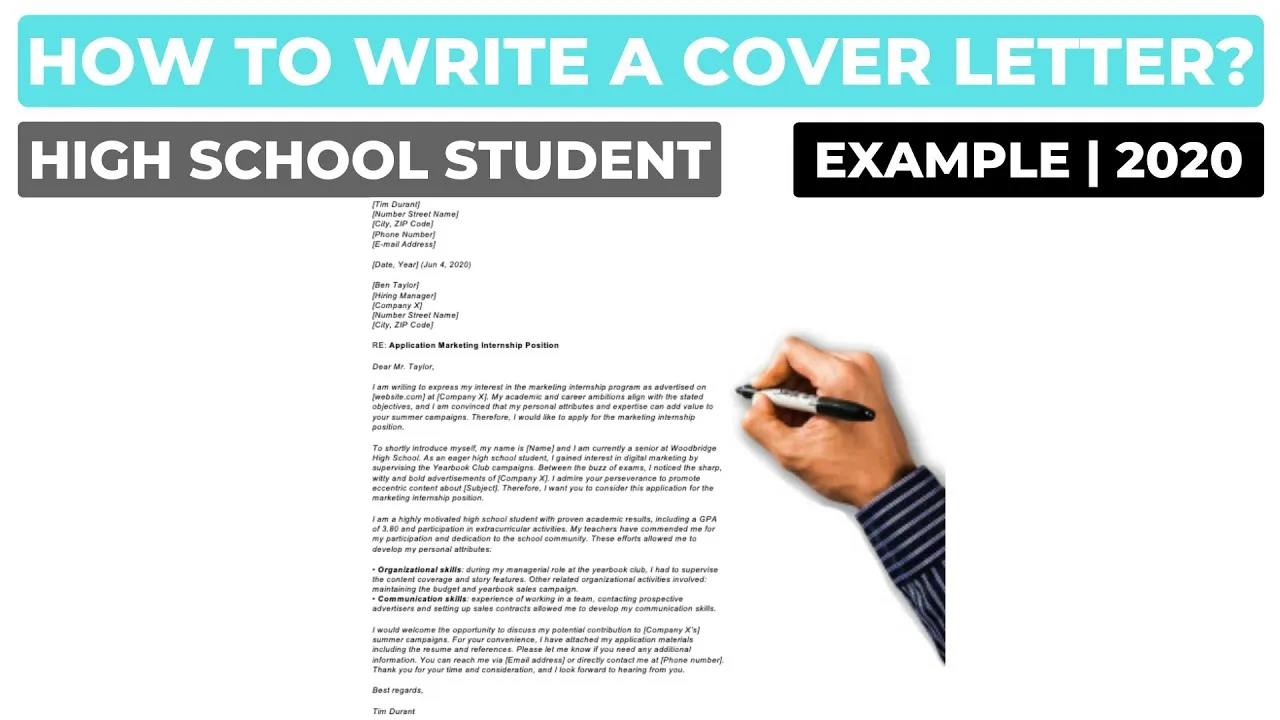
Why a Cover Letter Matters
As a high school student, you might think a cover letter is just an extra hoop to jump through when applying for a job or internship. However, a well-written cover letter is your golden ticket to making a strong first impression. It’s your opportunity to shine, to show potential employers who you are beyond the bullet points of your resume. A cover letter enables you to communicate your personality, your enthusiasm, and why you’re the perfect fit for the role. Unlike a resume, which is a concise summary, a cover letter lets you tell a story. It connects your skills and experiences to the specific requirements of the job. A compelling cover letter demonstrates your professionalism, attention to detail, and genuine interest in the opportunity. It shows employers you’ve taken the time to understand their needs. A cover letter is not optional; it’s a necessity for setting you apart from the competition and landing that job or internship.
Highlighting Your Skills (Step 1)
The first step to writing an impressive cover letter is highlighting your relevant skills. Begin by carefully reviewing the job description and making a list of the skills the employer is seeking. Then, reflect on your own skills and experiences, and identify the ones that align with the job requirements. Think about what you excel at and how you can demonstrate those skills. Don’t just list skills; provide concrete examples of how you’ve used them. For instance, instead of simply stating that you have strong communication skills, you could describe a situation where you effectively presented a project, led a discussion, or mediated a conflict. This shows that you can use your skills in real-world situations. Tailor your skills to match the job description. The more specific you are, the better you showcase yourself and your abilities.
Skills to Include

When deciding which skills to include, consider both hard and soft skills. Hard skills are specific, measurable abilities, such as proficiency in a particular software program or the ability to perform a certain task. Soft skills are interpersonal or professional skills, such as communication, teamwork, or problem-solving. It’s a good idea to focus on a combination of both. Highlight skills that are mentioned in the job description and provide examples of how you’ve used them. For example, if teamwork is important, provide examples of your experience in group projects or sports teams. If the job requires strong organizational skills, share your experience with managing multiple tasks or meeting deadlines. Demonstrating your skills with specific examples is an effective way to demonstrate your qualifications to a hiring manager. Make sure that the skills you highlight are relevant to the specific job or internship for which you’re applying.
Showcasing Your Experience (Step 2)
Once you’ve identified your key skills, the next step is to showcase your relevant experiences. As a high school student, you may not have a long list of professional job experiences. However, you can include any experience that demonstrates your skills and abilities. This includes part-time jobs, volunteer work, extracurricular activities, and school projects. Briefly describe your responsibilities, the skills you used, and what you achieved in each experience. Use action verbs to describe your actions and contributions. Instead of saying you “helped” with an event, you might say you “organized” or “managed” it. Always aim to quantify your accomplishments whenever possible, demonstrating the value of your contributions. Showcasing your experiences helps to illustrate your skills, drive, and passion for the work.
Experiences to List
Think about the experiences that are relevant to the job or internship you’re applying for, including any part-time jobs, volunteer work, or extracurricular activities. Part-time jobs such as babysitting, tutoring, or working in retail demonstrate responsibility, customer service skills, and time management abilities. Volunteer work at a local charity showcases your commitment to community service and provides opportunities for teamwork and communication. Extracurricular activities like sports teams, clubs, or student government demonstrate leadership, teamwork, and organizational skills. School projects can highlight your problem-solving skills, research abilities, and project management capabilities. Be sure to tailor your experience list to the job you are applying for, putting the most relevant experiences and skills front and center. This targeted approach will make your cover letter more compelling to potential employers.
Quantifying Achievements (Step 3)

Quantifying your achievements is a powerful way to demonstrate the impact of your skills and experiences. Using numbers and data makes your accomplishments more credible and memorable. This approach enables you to provide concrete evidence of your abilities. Instead of stating that you improved customer service, you could say you improved it by 15% by implementing a new training program. Quantifiable results demonstrate the value you bring to the role. Even in volunteer or extracurricular activities, you can quantify your contributions. For example, if you raised money for a school project, specify the exact amount you raised. Always use specific numbers to show concrete results, this approach makes your cover letter more compelling and gives employers a clear picture of what you can achieve.
Using Action Verbs
Using action verbs is an effective way to make your cover letter more dynamic and engaging. They add energy to your descriptions and highlight your accomplishments. Instead of using passive phrases, begin your sentences with strong action verbs to emphasize what you did and how you did it. Action verbs make your writing more concise and impactful. Examples of effective action verbs include managed, led, organized, created, implemented, improved, achieved, collaborated, developed, increased, reduced, and designed. For instance, instead of saying you “were responsible for” managing a project, you could say, “managed a team of five volunteers.” Use action verbs in every section of your cover letter. This will help make your cover letter more memorable and help you make a favorable impression on your potential employer.
Formatting for Impact (Step 4)
The format of your cover letter is as important as its content. A well-formatted cover letter is easier to read and more professional, which shows attention to detail and respect for the reader’s time. Choose a clean, easy-to-read font, such as Times New Roman or Arial, and keep the font size between 10 and 12 points. Use standard 1-inch margins on all sides and single-space the body of your letter, with a blank line between paragraphs. Avoid excessive use of bolding, italics, or underlining. Keep your layout simple and neat. Proper formatting is a sign of professionalism, and it makes your letter more visually appealing.
Formatting Essentials
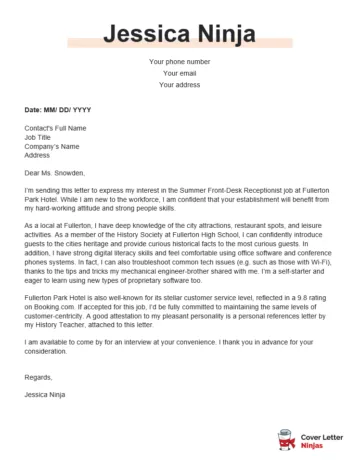
Begin your cover letter by including your contact information at the top, including your name, address, phone number, and email address. Make sure this information is up to date. Address the hiring manager by name if possible; research the company to identify the contact person. Use a formal and professional tone throughout the letter. Keep the letter concise and to the point, aiming for one page in length. Use clear, concise language and avoid jargon or overly complex sentences. Ensure your cover letter is properly formatted. Proofread your letter carefully for any grammatical errors or typos. A well-formatted, well-written letter makes a positive first impression, demonstrating that you are prepared for professional communication.
Proofreading and Editing (Step 5)
The final, and arguably most important, step is proofreading and editing. Even minor errors can create a negative impression, so meticulous attention to detail is crucial. Carefully review your cover letter for any grammatical errors, spelling mistakes, and typos. The best way to avoid mistakes is to read your letter aloud. Ask a friend, family member, teacher, or career counselor to review your cover letter as well. A fresh pair of eyes can often catch errors you might miss. Ensure your sentences are clear and concise. Double-check all information for accuracy, especially the company name, job title, and contact information. By proofreading and editing carefully, you ensure that your cover letter is polished and professional. This helps to increase your chances of making a positive impact and securing the job or internship.
Common Mistakes to Avoid
There are several common mistakes that high school students should avoid. Do not use a generic cover letter; tailor each letter to the specific job and company. Provide relevant context and details that expand on what’s in your resume. Avoid clichés and overly formal language, using a professional but personable tone. Never lie or exaggerate your experience; honesty is always the best policy. Do not overlook the importance of formatting and proofreading; these elements demonstrate your attention to detail. Avoid any typos, grammatical errors, and inconsistencies. By steering clear of these common pitfalls, you can be sure your cover letter will be a strong representation of your abilities and increase your chances of success.