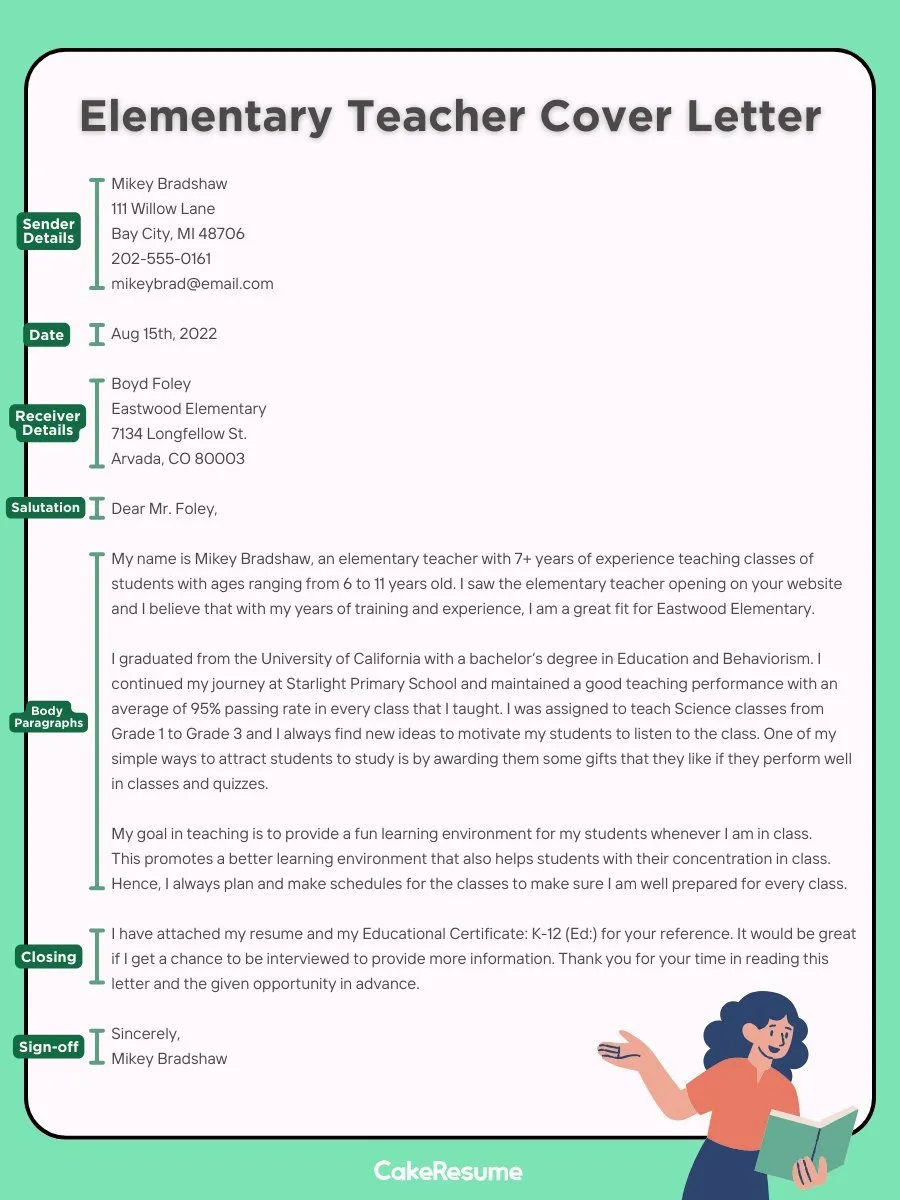
Crafting Your Cover Letter for Elementary Teaching
A well-crafted cover letter is your first opportunity to make a positive impression on a hiring committee. It’s more than just a formality; it’s a chance to demonstrate your understanding of the elementary school teacher role, showcase your skills, and express your passion for education. Your cover letter should complement your resume, providing context and depth to your qualifications. It should be concise, compelling, and tailored to each specific job application. This initial document serves as a gateway, offering insights into your teaching philosophy, classroom management style, and overall suitability for the position. Remember, it is your first step to landing your dream teaching job. Before you even begin, make sure you have a good understanding of the specific requirements outlined in the job description.
Understanding the Elementary School Teacher Role
Elementary school teachers wear many hats—educators, mentors, and role models. Understanding the multifaceted nature of this role is essential for creating a compelling cover letter. Elementary teachers are responsible for creating a nurturing and stimulating learning environment, where children can explore their potential and develop essential skills. They must be adept at differentiating instruction to meet the diverse needs of their students, creating lesson plans, and assessing student progress. This involves a blend of creativity, patience, and a genuine love for children. Your cover letter should clearly articulate your understanding of these core responsibilities. It’s about more than just teaching; it’s about fostering a love for learning, building character, and preparing students for future success.
Highlighting Relevant Skills and Experience

Your cover letter is a prime opportunity to showcase your most relevant skills and experiences. Start by identifying the key requirements outlined in the job description. Then, review your past experiences—teaching internships, volunteer work, or previous roles—and identify instances where you demonstrated those skills. Highlight your experience with lesson planning, curriculum development, classroom management, and student assessment. Focus on tangible accomplishments and use the STAR method (Situation, Task, Action, Result) to provide specific examples of your achievements. For instance, describe a situation where you implemented a new reading program (Situation), what you were tasked to do (Task), what actions you took (Action), and the positive outcomes you achieved (Result). Including measurable results, such as improved test scores or increased student engagement, will further strengthen your application. Don’t just list your skills; show how you’ve successfully applied them in real-world settings.
Tailoring Your Cover Letter to the School
Generic cover letters rarely make a lasting impression. Tailoring your cover letter to each specific school is crucial. Before writing, research the school’s mission, values, and educational philosophy. Visit their website, read parent testimonials, and familiarize yourself with their programs. Then, incorporate what you’ve learned into your cover letter. Refer to specific initiatives, projects, or values that resonate with you. Demonstrate that you understand the school’s unique environment and that you’re genuinely interested in contributing to their community. Mentioning specific teachers or programs you admire can also demonstrate your genuine interest. Show them that you’ve taken the time to understand their specific needs and how your skills and experience align with their goals. Personalized letters signal that you’re not just sending out a generic application; you’re eager to join their team.
Showcasing Your Passion for Teaching
Your passion for teaching should shine through in your cover letter. This is where you can express your enthusiasm for working with children, your commitment to their development, and your love for the profession. Share what motivates you to become an educator. Describe what you love most about working with children. Talk about your teaching philosophy, highlighting your belief in creating a positive and inclusive learning environment. Share anecdotes that illustrate your interactions with children and the impact you’ve made. This is a chance to move beyond skills and experience to connect with the hiring committee on a more personal level. Show them why you are excited about teaching and how your values align with the school’s mission. Genuine enthusiasm and passion are infectious and can significantly enhance your candidacy.
Demonstrating Classroom Management Skills

Classroom management is critical for elementary school teachers. In your cover letter, demonstrate that you have strong classroom management skills. Explain your approach to creating a structured, positive, and engaging learning environment. Do you use specific techniques to address behavioral issues, such as positive reinforcement or restorative practices? Have you effectively managed diverse student populations? Provide specific examples of how you have handled challenging situations, such as conflicts among students or disruptive behavior. Share strategies you employ to create a sense of community and belonging within the classroom. Mention any professional development or training you’ve received in classroom management. The ability to maintain a calm and orderly environment is essential for student success, and demonstrating that you possess these skills is vital.
Quantifying Your Achievements
Whenever possible, quantify your achievements to make your accomplishments more impactful. Instead of simply stating that you improved student performance, specify the percentage increase in test scores. Instead of saying that you implemented a new reading program, mention the number of students who benefited from the program and the positive results. Using numbers gives the hiring committee a clearer understanding of your impact. Quantifiable results are more compelling and demonstrate your ability to achieve measurable outcomes. This is an opportunity to differentiate yourself from other candidates by providing concrete evidence of your skills and abilities. Consider data, percentages, and the scope of your success, making your cover letter a powerful testament to your achievements.
Highlighting Education and Certifications
Clearly state your educational background and any relevant certifications. Include your degree(s), the institutions you attended, and the dates of graduation. Highlight any specializations, endorsements, or honors you received. Ensure your teaching certifications are clearly stated and current. If you are working towards any additional certifications, mention them. If you have received any awards, scholarships, or grants, include these details as well. Providing this information quickly and accurately will help the hiring committee assess your qualifications and ensure you meet the basic requirements of the position. Always verify that your credentials are up to date and relevant to the teaching role you are seeking.
Proofreading and Editing Your Cover Letter

Before submitting your cover letter, carefully proofread and edit it for any errors. Typos, grammatical errors, and inconsistencies can undermine your credibility and make a negative impression. Check your spelling, grammar, punctuation, and sentence structure. Ensure your cover letter is free from errors and that it flows logically. Read it aloud to catch any awkward phrasing or repetitive language. Ask a friend, mentor, or career counselor to review your letter for a fresh perspective. Pay close attention to the formatting and ensure that your cover letter is easy to read. A polished and error-free cover letter demonstrates attention to detail and professionalism, which are essential qualities for an elementary school teacher.
Following Up After Submission
After submitting your cover letter and application, it’s a good idea to follow up. Usually, a week after applying, you can send a brief email to the hiring manager, expressing your continued interest in the position. This demonstrates your enthusiasm and initiative. Keep the email concise, and avoid being overly persistent. Express gratitude for their time, reiterate your interest, and mention any specific aspects of the job that particularly interest you. If the school has a specific application process, make sure to follow their instructions. While following up, it’s also important to respect the hiring timeline. Knowing when to follow up and how to do so professionally can make all the difference in landing your dream teaching job.