Understanding Cover Letter Addressing Basics
Crafting a compelling cover letter is a crucial step in any job application process. However, many job seekers often overlook a fundamental detail addressing the letter to the correct person. This seemingly small aspect can significantly impact how your application is perceived by the hiring manager or the recruitment team. Knowing who to address your cover letter to, and how to find that information, demonstrates attention to detail, initiative, and a genuine interest in the specific role and company. It shows that you’ve taken the time to go the extra mile, setting you apart from applicants who use generic salutations. The goal is to make a strong first impression, and proper addressing is key to achieving that.
Why Addressing Matters
Addressing your cover letter to the appropriate individual does more than just show you care; it shows you are serious about the opportunity. A cover letter that is properly addressed indicates that you have done your homework and are genuinely interested in the position and the company. This personalized approach can significantly increase the likelihood of your application being read and considered seriously. A generic greeting, on the other hand, may suggest a lack of effort, potentially leading the hiring manager to believe you’re sending out mass applications and not tailoring your approach to their specific needs. This can result in your application being overlooked in favor of candidates who have demonstrated a greater level of personalized attention.
The Importance of a Personal Touch

Personalization is paramount in the professional world, and your cover letter is no exception. Addressing your letter to a specific person makes it more engaging and ensures your message resonates. It immediately establishes a connection and shows that you are addressing their specific needs. A personalized approach can create a more favorable impression, making the reader feel valued and increasing the chances of them reading your application with interest. By personalizing your cover letter, you are also more likely to capture the reader’s attention and leave a lasting impression. The impact of a personalized touch in your cover letter can significantly contribute to your overall success in the job application process and help you stand out among other applicants.
Researching the Hiring Manager
Before you start writing your cover letter, the initial step should be identifying the hiring manager or the person responsible for reviewing applications. This may require some detective work on your part. The ability to find the right person shows that you have gone above and beyond in your job search. Begin by checking the job posting itself; the name and title of the hiring manager might be included. If the job posting doesn’t specify who to address, move on to other resources. This initial research is a crucial part of the process and is a demonstration of your attention to detail, which recruiters and hiring managers highly value.
Using Company Websites
Many companies provide information about their leadership on their websites. Visit the ‘About Us’ or ‘Team’ sections, which often list key personnel and their roles. If the company is large, you might find the name and title of the hiring manager on the specific department’s page related to the job you are applying for. Look for a ‘Contact Us’ section; sometimes, you can find a specific person to address your application to, or at least a department name. If you find the correct name, ensure you check the spelling and title carefully. Correct spelling shows professionalism and respect for the hiring manager.
Checking LinkedIn

LinkedIn is an invaluable tool for job seekers. Search for the company and then the specific job title or department related to the position you’re applying for. You might find the hiring manager’s profile by looking at who is currently working in that department or role. You can also use LinkedIn’s search filters to find individuals with titles like ‘Hiring Manager,’ ‘Recruiter,’ or ‘Talent Acquisition Specialist’ at the company. Once you identify a potential contact, review their profile for more information about their role and any relevant information. This research will give you some information about their background, making your cover letter more relevant. If you can’t find the hiring manager, you can try looking for a relevant contact in HR or the department where the job is based.
Contacting the Company Directly
If you’ve exhausted all other options, don’t hesitate to contact the company directly. Call their HR department and politely ask for the name and title of the person responsible for reviewing applications for the position you’re interested in. Or, you can email the company. Use the general contact email address and ask for the hiring manager’s name. When reaching out to the company, be polite and professional. Explain that you are interested in applying for a specific role and would like to ensure your cover letter reaches the right person. This is an important and effective strategy, but ensure that you are confident in the information you obtain and use it in your cover letter. This demonstrates initiative and a proactive approach to your job search.
When You Can’t Find a Name
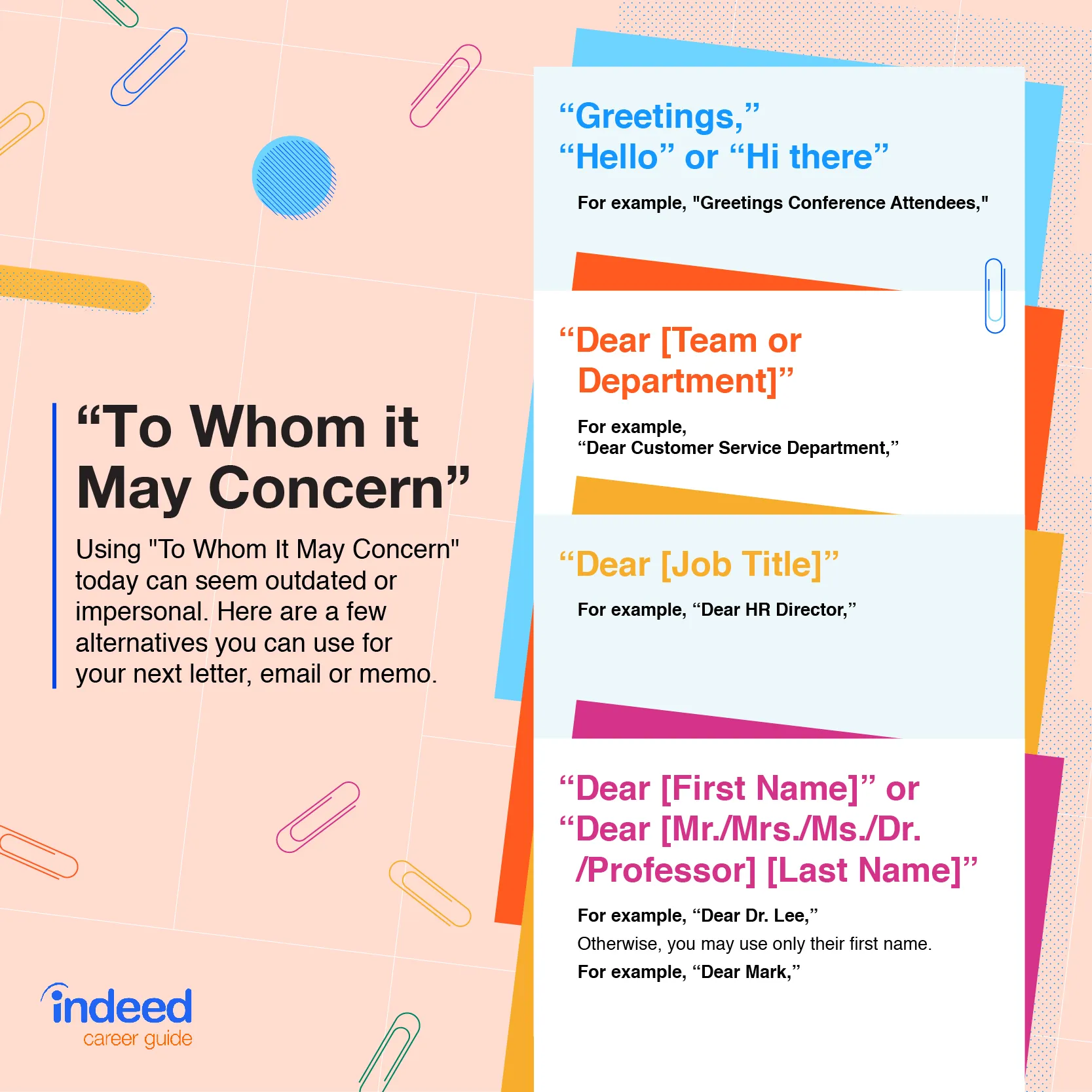
Despite your best efforts, you may not always be able to find the hiring manager’s name. In such cases, you can still personalize your cover letter. It’s better to use a title or department rather than a generic greeting. The best alternative is to use the title of the position, such as ‘Dear Hiring Manager’ or ‘Dear Recruiting Team.’ This is a step above ‘To Whom It May Concern.’ If the company has a specific department for the role you are seeking, addressing your letter to that department is also a good option. For example, ‘Dear Marketing Department’ or ‘Dear Sales Team.’ This shows that you’ve made an effort to address your letter appropriately, even if you couldn’t find a specific name.
Using General Titles

If you cannot determine a specific person’s name, consider using a professional title or department name to address your cover letter. Using ‘Dear Hiring Manager’ is preferable to ‘To Whom It May Concern’ and acknowledges that you are addressing the person in charge of hiring. ‘Dear Recruiting Team’ is another appropriate option. Make sure the title or department you select is relevant to the job you’re applying for. For instance, if applying for a marketing position, addressing your letter to ‘Dear Marketing Department’ is an excellent choice. The focus should be on showing that you have tailored your application and are interested in the specific role.
Alternatives to ‘To Whom It May Concern’
The salutation ‘To Whom It May Concern’ is outdated and impersonal. It should be avoided in modern cover letters. If you don’t know the recipient’s name, there are more professional and engaging alternatives. ‘Dear Hiring Manager’ and ‘Dear [Department Name]’ are both excellent choices, as they are less generic and show that you’ve put some thought into your application. Another alternative is to use the company’s name, for example, ‘Dear [Company Name] Team.’ These options demonstrate a level of professionalism and initiative that the old-fashioned salutation simply cannot achieve, helping your application stand out.
Formatting the Cover Letter Address
When you address your cover letter, ensure you use the proper formatting. The address block is usually placed at the top of the letter, before the body of the letter. Start with the hiring manager’s name and title, followed by their company and address. For instance, if you are writing to a hiring manager named Sarah Johnson at ABC Company, your address block might look like this: ‘Sarah Johnson, Hiring Manager, ABC Company, 123 Main Street, Anytown, USA’. Use a formal salutation such as ‘Dear Mr./Ms./Mx. [Last Name]’. Always use the correct title and avoid using nicknames. Double-check the spelling of the name and title to demonstrate your attention to detail. This level of care will make a great impression on the hiring manager and is essential to your cover letter’s overall effectiveness and your success.
In conclusion, knowing who to address your cover letter to is a crucial element that can enhance your job application. By taking the time to research the hiring manager or appropriate contact, you’ll demonstrate your commitment to the role and make a better first impression. Avoid generic greetings, and always aim for a personalized approach. With these tips, you can improve your cover letter and boost your chances of landing your dream job. Applying these strategies will greatly enhance your prospects, showing you are a professional with a genuine interest in the opportunity. Good luck with your job search!