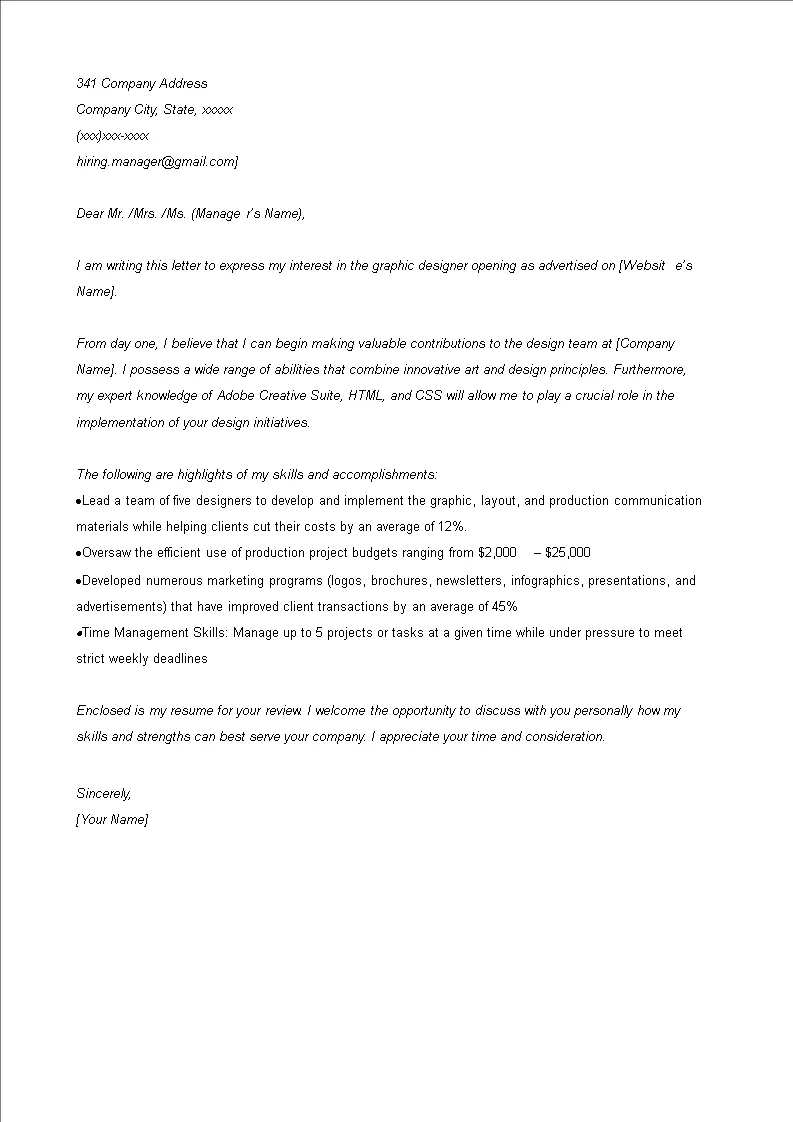
Why Cover Letter Design Matters
In a world saturated with job applications, a well-designed cover letter can be your secret weapon. It’s not just about what you say; it’s also about how you present it. The design of your cover letter is often the first impression you make on a potential employer, and in the competitive job market, you want to make sure it’s a positive one. A thoughtfully designed cover letter demonstrates professionalism, attention to detail, and a proactive approach – all qualities that hiring managers look for. Moreover, a well-designed cover letter is easier to read and digest, making the information more accessible and impactful. A visually appealing cover letter helps you stand out from the crowd, and effectively communicates your value proposition. A good design shows that you put in the effort and care about the opportunity, making it more likely that your application will get noticed and considered.
Make It Visually Appealing
First impressions are crucial, and your cover letter design is the first thing a recruiter sees. Opt for a clean, modern design that aligns with your personal brand or the company’s style. Use clear headings and subheadings to break up text and guide the reader’s eye. Consider using a subtle color palette, but avoid overwhelming the reader with vibrant colors. The goal is to create a visual experience that is both inviting and professional, making it easy for the recruiter to navigate the information. Remember, the design should support the content, not distract from it. Aim for a balance between aesthetics and readability, ensuring that the visual elements enhance the overall message and reinforce your qualifications. Make sure the design is consistent and reflects your personal brand or the company’s culture, demonstrating your attention to detail and commitment to excellence. Remember that the visual elements should complement your written content, drawing the reader’s attention and making your application more memorable.
Choose the Right Fonts

Font choice plays a critical role in the overall readability and aesthetic of your cover letter. Select professional and easy-to-read fonts like Arial, Calibri, or Helvetica for the body text. These fonts are widely recognized, ensuring that your text is clear and accessible to all readers. For headings, you can experiment with slightly bolder or more distinct fonts to create visual hierarchy and draw attention to key information. However, avoid using overly ornate or difficult-to-read fonts, as they can detract from the message and make your cover letter look unprofessional. Ensure that your font choices are consistent throughout the document, creating a cohesive and polished look. Consider the company’s culture and industry when choosing fonts, and try to align your choices with their brand aesthetic. Always prioritize readability to make it easy for the hiring manager to quickly understand your qualifications and experience.
Font Pairings for Cover Letters
Choosing the right font pairings can elevate the visual appeal and readability of your cover letter. A good pairing involves selecting a font for your headings that complements the font used for the body text. Consider pairing a clean sans-serif font like Open Sans or Lato for your body text with a slightly bolder sans-serif font for headings, such as Montserrat. For a more classic look, you could pair a serif font like Times New Roman or Georgia for the body with a sans-serif font for headings. Experiment with different combinations to find what best suits your style and the job you’re applying for. Avoid using too many different fonts, as this can make your cover letter appear cluttered and unprofessional. The key is to create a visually pleasing and readable document that enhances your message and makes a positive impression on the hiring manager.
Use of White Space to Enhance Readability
White space, or negative space, is your best friend when it comes to designing a cover letter that’s easy to read. It refers to the blank areas around text, images, and other elements on the page. Using white space effectively can greatly improve the readability and visual appeal of your cover letter. Ensure adequate margins, line spacing, and spacing between paragraphs to give the reader’s eyes room to breathe. Avoid overcrowding your text, as this can make the cover letter look dense and difficult to navigate. White space helps to create visual hierarchy, guiding the reader’s eye and highlighting important information. It also makes your cover letter appear more polished and professional. Use it strategically to create a balanced and visually pleasing layout, making your cover letter more engaging and easier to digest. White space is essential for presenting a clean, uncluttered design.
How to Incorporate Your Branding

Your cover letter is an extension of your personal brand. If you have a personal brand or a specific design style, consider incorporating it into your cover letter. This can involve using the same color palette, fonts, or design elements as your other professional materials, such as your website or resume. Doing so creates a cohesive and consistent brand identity, showing that you’re detail-oriented and understand the importance of branding. However, be subtle. The focus should always be on the content, so don’t let the design overshadow the message. Ensure that the branding elements align with the company’s culture and industry, demonstrating that you’ve done your research and are a good fit. By thoughtfully incorporating your branding, you can make your cover letter more memorable and demonstrate your understanding of professional presentation.
Color Psychology and Cover Letter Design
Colors evoke emotions and can influence perceptions. When designing your cover letter, consider the color psychology associated with different shades. For example, blue often conveys trust and stability, making it suitable for conservative industries. Green can represent growth and harmony, while orange and yellow are often associated with creativity and energy. Choose colors that align with the job and company culture. Avoid using too many colors, as this can be distracting. Use a minimalist approach, with a neutral background color and a subtle accent color to highlight key information. The colors should support your message, create a positive impression, and make your cover letter more visually appealing. Research the company’s brand colors and consider incorporating them into your design to show that you pay attention to detail.
Key Considerations for Cover Letter Design
Several factors contribute to a well-designed cover letter. First, always proofread your cover letter multiple times to catch any typos or grammatical errors. Ensure that your formatting is consistent throughout the document, using the same font sizes, line spacing, and margins. Use clear and concise language, avoiding jargon and overly complex sentences. Highlight your key skills and experiences, tailoring your cover letter to the specific job you’re applying for. Structure your cover letter logically, with a clear introduction, body, and conclusion. Proofread your cover letter carefully and make sure it is free from errors. The goal is to create a cover letter that is professional, easy to read, and showcases your qualifications effectively. Double-check everything before submitting your application.
Layout and Structure Essentials

The layout and structure of your cover letter play a vital role in its overall effectiveness. Start with a professional header that includes your contact information, the date, and the hiring manager’s name and address. Use clear headings to organize your content, making it easy for the reader to navigate. The body of your cover letter should be concise and well-structured, with each paragraph focusing on a specific point or aspect of your qualifications. Use bullet points or numbered lists to highlight key skills, experiences, or accomplishments. Keep the layout clean and uncluttered, with ample white space to enhance readability. End with a strong call to action, inviting the reader to review your resume or schedule an interview. The goal is to create a cover letter that is easy to read, visually appealing, and effectively communicates your value to the employer.
Formatting Your Cover Letter Properly
Correct formatting is essential for a professional cover letter. Use a standard font size (11 or 12 points) and a legible font, such as Arial or Times New Roman. Set consistent margins (typically 1 inch on all sides) to create a balanced layout. Double-space between paragraphs for improved readability and single-space within paragraphs. Align your text to the left, as this is the easiest format to read. Avoid using excessive bolding or underlining, which can make your cover letter look cluttered. Ensure that your contact information, the date, and the hiring manager’s details are clearly presented at the top of the document. Proofread your cover letter multiple times to catch any formatting errors or inconsistencies. Properly formatted cover letter demonstrates your attention to detail and professionalism, increasing the chances of your application being noticed.
Include a Strong Call to Action
A strong call to action is crucial for encouraging the reader to take the next step. In the closing paragraph of your cover letter, clearly state what you want the hiring manager to do, such as reviewing your resume, scheduling an interview, or contacting you with any questions. Use action-oriented language and make your call to action specific and easy to understand. For example, instead of simply saying ‘Thank you for your time,’ try something like, ‘I am eager to discuss how my skills and experience can contribute to your team, and I welcome the opportunity to schedule an interview.’ By including a strong call to action, you increase the likelihood that the hiring manager will take the desired action and move your application forward. Ensure that your call to action is tailored to the job and reflects your enthusiasm and interest in the position.