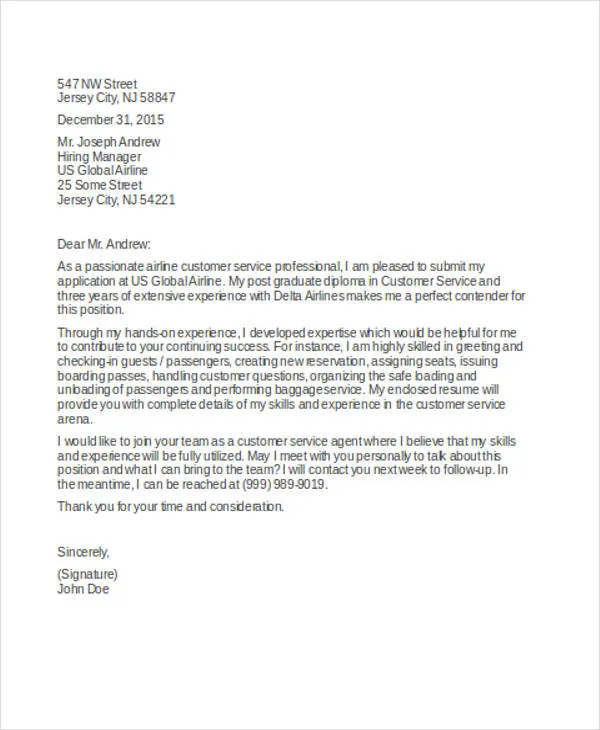
Understanding Airline Customer Service Roles
Airline customer service roles are essential for ensuring passenger satisfaction and smooth operations. These positions involve direct interaction with customers, handling inquiries, resolving issues, and providing support throughout their travel experience. From assisting with booking and check-in to addressing complaints and managing disruptions, customer service representatives are the face of the airline and play a critical role in shaping the overall customer experience. Understanding the scope of these roles is the first step toward crafting a compelling cover letter that highlights your relevant skills and experiences, making you a strong candidate for the position. Consider that the primary goal of customer service is to assist passengers, making sure their experience is as pleasant and stress-free as possible. This can include dealing with difficult situations, so patience and empathy are also key characteristics of a successful customer service representative.
Key Skills for Airline Customer Service
To excel in airline customer service, certain key skills are essential. These skills enable representatives to effectively communicate, solve problems, and provide exceptional service. Highlighting these skills in your cover letter is crucial for demonstrating your suitability for the role. By showcasing these skills, you present yourself as a well-rounded candidate who is prepared to handle the diverse challenges and responsibilities of the position. The airline industry demands a high level of professionalism and adaptability, which is further enhanced by these abilities. Tailoring your cover letter to emphasize these attributes will significantly improve your chances of making a positive impression on the hiring manager and securing an interview.
Communication Skills

Effective communication is paramount in airline customer service. You must be able to clearly and concisely convey information, actively listen to customers’ concerns, and respond in a professional and empathetic manner. This includes both verbal and written communication, as representatives often interact with customers via phone, email, and in-person. Strong communication skills involve the ability to adapt your language and tone to suit different situations and personalities, ensuring that every customer feels heard and understood. Your cover letter should provide specific examples of how you have used your communication skills to resolve customer issues. Highlighting these abilities proves your capacity to build rapport and deliver excellent customer service.
Problem-Solving Abilities
Airline customer service representatives regularly encounter various problems, from flight delays and cancellations to lost luggage and booking errors. Possessing strong problem-solving skills allows you to quickly assess situations, identify solutions, and implement them effectively. This involves critical thinking, the ability to remain calm under pressure, and a proactive approach to resolving issues. In your cover letter, demonstrate your ability to analyze problems and offer practical solutions, illustrating your capacity to think on your feet and manage challenging situations efficiently. This skill is important for reducing customer frustration and maintaining the airline’s reputation.
Empathy and Patience
Customer service roles often involve dealing with frustrated or upset customers. Empathy and patience are essential qualities for building trust and resolving conflicts. The ability to understand and share the feelings of others, along with maintaining a calm and composed demeanor, can significantly de-escalate tense situations. By demonstrating empathy, you can reassure customers that their concerns are heard and valued. In your cover letter, showcase instances where you have used empathy and patience to turn negative experiences into positive ones, creating positive interactions and enhancing customer loyalty. Highlighting these soft skills is important for showing your interpersonal abilities.
Crafting Your Cover Letter

A well-crafted cover letter can significantly increase your chances of landing an interview for an airline customer service position. It serves as your first introduction to the hiring manager, providing an opportunity to showcase your skills, experience, and personality. Your cover letter should be concise, well-organized, and tailored to the specific requirements of the job. Using a professional format, clear language, and specific examples of your achievements will make your cover letter stand out. Remember to always proofread your cover letter for any grammatical errors or typos. Presenting a polished and professional cover letter is critical for making a positive first impression and demonstrating your attention to detail.
Header and Contact Information
Your cover letter should begin with a professional header that includes your full name, address, phone number, and email address. Ensure that the contact information is accurate and up-to-date, allowing the hiring manager to easily reach you. Include the date and the hiring manager’s name and title, if known, followed by the airline’s address. A well-formatted header demonstrates your attention to detail and provides essential information for potential employers. If you do not know the hiring manager’s name, it’s appropriate to use a general salutation such as “Dear Hiring Manager.”
Personalized Salutation
Always address your cover letter to a specific person if possible. Research the company and try to find the name of the hiring manager or the person responsible for reviewing applications. Addressing the letter to a specific person is a sign that you have taken the time to learn about the company and the role. This will make your cover letter feel more personal and show that you are genuinely interested in the position. If you are unable to find the hiring manager’s name, a generic greeting such as “Dear Hiring Manager” is acceptable, but try to personalize the letter further within the body.
Writing the Body of Your Cover Letter

The body of your cover letter is where you showcase your skills, experience, and enthusiasm for the position. The structure should include an introductory paragraph that states your interest in the role and how you found the job opening. Then, write one or two paragraphs highlighting relevant experiences and skills, providing specific examples to support your claims. Finally, write a concluding paragraph, reiterate your interest, and include a call to action, such as expressing your availability for an interview. A well-written body demonstrates your ability to communicate effectively and provides the hiring manager with a clear understanding of why you are the best candidate.
Highlighting Relevant Experience
When highlighting your relevant experience, focus on the skills and accomplishments that align with the job description. Describe your previous roles, detailing the responsibilities you held and the results you achieved. Use action verbs to illustrate your contributions and quantify your achievements whenever possible. Tailor your examples to match the airline customer service role, emphasizing experiences such as resolving customer issues, managing complaints, or handling inquiries. Demonstrating relevant experience will show the hiring manager that you possess the necessary skills and knowledge to succeed in the role. Using a problem-solving example will increase your chances to show your abilities.
Showcasing Your Skills
Clearly identify and showcase the skills that are crucial for airline customer service roles. These include communication, problem-solving, empathy, and patience. Provide specific examples of how you have demonstrated these skills in past roles or situations. For example, describe how you resolved a difficult customer issue by actively listening to their concerns, finding a practical solution, and ensuring they left satisfied. Provide examples of your ability to handle high-pressure situations and maintain a positive attitude. The more specific examples you use, the more compelling your application will be. Highlighting your skills directly contributes to your success in the hiring process.
Quantifying Achievements

Whenever possible, quantify your achievements with data and metrics. Instead of saying “Improved customer satisfaction,” state “Increased customer satisfaction scores by 15% within six months.” Using numbers adds credibility to your claims and demonstrates the impact of your contributions. Quantifying your achievements will make your cover letter more compelling and memorable. Whether it’s reducing wait times, resolving a higher percentage of customer issues, or improving positive feedback, providing specific figures will show how effective you are. Quantifiable results speak volumes and give hiring managers a clear understanding of your capabilities.
Expressing Enthusiasm
Demonstrate your enthusiasm for the position and the airline. Express your genuine interest in the company and the opportunity to contribute to its success. Show that you have researched the airline and understand its values and mission. Explain what excites you about the prospect of working in airline customer service and the potential to serve customers. Your enthusiasm can make a significant difference in the hiring process. This will make you stand out from other candidates and showcase your interest in the company. Share why the specific role and the airline appeal to you to make a better impression.
Closing Your Cover Letter
The closing of your cover letter should summarize your interest and reiterate your qualifications. Also, it should provide a strong call to action, encouraging the hiring manager to contact you for an interview. A well-crafted closing will leave a lasting positive impression and increase your chances of moving to the next stage of the application process. It should be confident, professional, and emphasize your eagerness to discuss your qualifications further. Closing should also include a thank you to the hiring manager for their time and consideration. This demonstrates your respect and appreciation.
Formal Closing and Signature

End your cover letter with a formal closing such as “Sincerely,” “Best regards,” or “Yours sincerely.” This maintains a professional tone. Leave space for your signature, if submitting a physical copy, or type your full name if submitting electronically. Ensure that your closing and signature are consistent with the overall professional tone of your cover letter. A formal closing and signature completes the letter and assures the hiring manager that the application is from a professional candidate. The choice of the closing depends on your preferences and company culture, but the key is to be consistent.
Proofreading and Editing
Before submitting your cover letter, carefully proofread and edit it for any errors in grammar, spelling, and punctuation. Errors can detract from your professionalism and undermine your credibility. Read your cover letter aloud or have someone else review it for you. Use spell-check and grammar-check tools, but don’t rely on them entirely; they can miss subtle errors. Take time to ensure that your cover letter is error-free and polished. Presenting a flawless cover letter demonstrates your attention to detail and respect for the hiring manager’s time. Errors often signal that you do not care about the position.
Common Mistakes to Avoid
Avoid common mistakes that can hurt your chances of getting hired. These mistakes can damage your credibility and prevent you from making a positive impression. By avoiding these pitfalls, you will improve your cover letter and increase your chances of securing an interview. Careful attention to detail and thorough preparation are essential for submitting a compelling cover letter.
Generic Cover Letters

Avoid sending generic cover letters that are not tailored to the specific role or company. Generic letters often fail to capture the hiring manager’s attention and do not demonstrate your genuine interest in the position. Always customize your cover letter to reflect the specific requirements of the job and the values of the airline. Research the company and tailor your examples and skills to align with their needs. This will show the hiring manager that you are genuinely interested in the position and have invested time and effort into your application.
Typos and Grammatical Errors
Typos and grammatical errors can create a negative impression and indicate a lack of attention to detail. Always proofread your cover letter carefully before submitting it. Use spell-check and grammar-check tools, but don’t rely on them alone. It’s often helpful to have another person review your cover letter to catch any errors you might have missed. A polished and error-free cover letter reflects your professionalism and demonstrates your respect for the hiring manager. Showing you have good attention to details is one of the most important aspects for a customer service representative.
Ignoring Company Culture
Avoid ignoring the company culture in your cover letter. Before applying, research the airline’s values, mission, and culture. Tailor your cover letter to demonstrate how your skills and experience align with these aspects. A company culture that matches your personality will ensure a positive working environment. If the airline emphasizes teamwork, highlight your ability to collaborate effectively. If it values innovation, showcase your creative problem-solving skills. Ignoring the company culture will not show the hiring manager you’re a good fit. Demonstrating an understanding of the company culture will make you stand out from other applicants.
Tailoring Your Cover Letter
Tailoring your cover letter to the specific airline and the job requirements is essential for making a positive impression. This includes researching the airline, matching your skills to the job requirements, adding a strong call to action, and ensuring your formatting and presentation are professional. Tailoring your cover letter demonstrates your commitment to the role and increases your chances of getting an interview. Your focus should be on presenting a cover letter that is customized and relevant to the specific job you are applying for. Tailoring will ensure that you have the edge over other applicants.
Researching the Airline
Before writing your cover letter, conduct thorough research on the airline. Visit their website, read about their values, mission, and current initiatives. Understand their customer service approach and the specific challenges they face. This will help you tailor your cover letter to the company’s needs and demonstrate your genuine interest in the position. Mention specific aspects of the airline that appeal to you, which shows your commitment to understanding their company culture. Researching the airline will ensure that your cover letter reflects an understanding of the company.
Matching Skills to Job Requirements
Carefully review the job description and identify the key skills and qualifications the airline is seeking. Then, align your skills and experience with those requirements in your cover letter. Provide specific examples that demonstrate how you have used those skills in the past. This will prove that you meet the requirements for the role. Emphasize the skills that directly relate to customer service, such as communication, problem-solving, and empathy. The more precisely you match your skills to the job requirements, the greater your chances of getting an interview. The cover letter is the place to clearly show your skills and expertise.
Adding a Strong Call to Action
Conclude your cover letter with a strong call to action, encouraging the hiring manager to contact you for an interview. Express your enthusiasm for the position and your confidence in your ability to contribute to the airline’s success. Provide your contact information again and state your availability for an interview. A clear and concise call to action will prompt the hiring manager to take the next step in the application process. A call to action is an invitation for the hiring manager to continue the conversation. Without it, your cover letter will not be effective.
Formatting and Presentation
The formatting and presentation of your cover letter should be professional and easy to read. The goal is to make the hiring manager’s experience of reading your letter as easy as possible. This includes using a clear and readable font, maintaining consistent formatting, and keeping the length appropriate. A well-formatted cover letter will demonstrate your professionalism and attention to detail, making a positive first impression. Always make sure to use a professional layout. Also, format the content to allow for better reading.
Font and Readability
Choose a clear and readable font for your cover letter, such as Times New Roman, Arial, or Calibri. Use a font size between 10 and 12 points for the body text, and use consistent formatting throughout the document. Proper formatting ensures that the hiring manager can easily read and digest your information. Avoid using overly decorative or unusual fonts, as they can distract from your message. Simple and clean fonts are the most effective in demonstrating your professionalism. Readability is one of the keys to a great application.
Length of the Cover Letter
Keep your cover letter concise and to the point. Aim for a length of one page. The hiring manager receives numerous applications, so your goal is to quickly convey your key qualifications and enthusiasm. Focus on highlighting your most relevant skills and experiences. Avoid unnecessary details or repetition. A concise cover letter will show your respect for the hiring manager’s time. A short cover letter proves you are able to transmit the most important aspects of your experience to the hiring manager.
Submitting Your Cover Letter
When submitting your cover letter, follow the application instructions carefully. Usually, you will be asked to submit your cover letter along with your resume or application form. Save your cover letter in a professional format, such as a PDF, to ensure that the formatting remains consistent across different devices. Double-check all your details and make sure you have attached the correct documents before submitting. Always review the application instructions. Submitting a well-formatted cover letter will improve your application. Following the specific instructions ensures your application will be considered.