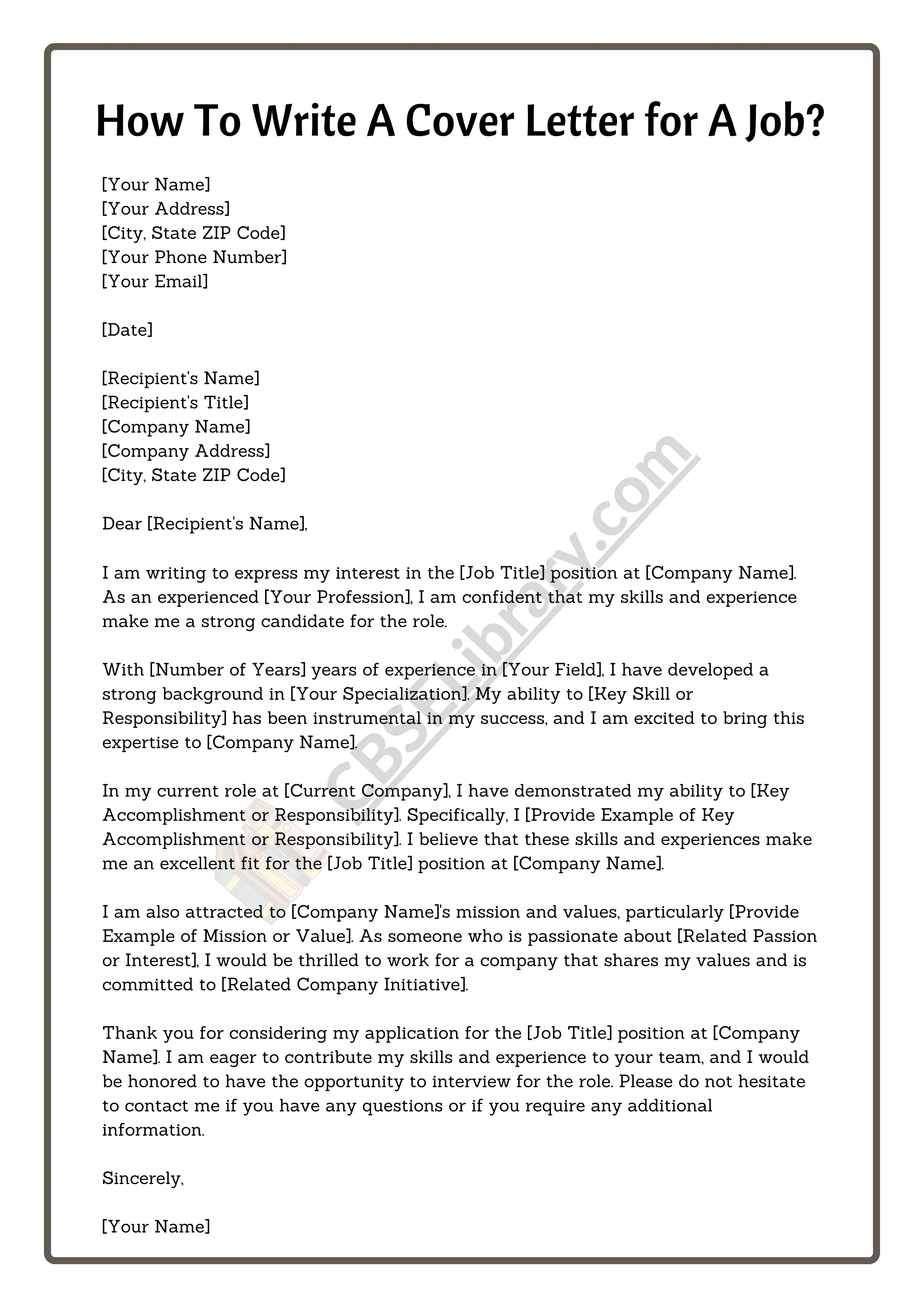
Cover Letter for Job What Is It
A cover letter for a job is a concise document that you submit as part of your job application. It serves as an introduction to your resume, offering a personalized narrative that complements your qualifications. Unlike your resume, which presents a factual summary of your skills and experience, a cover letter allows you to demonstrate your personality, express your enthusiasm for the position, and explain why you are the perfect fit for the role. It’s your opportunity to connect with the hiring manager on a more personal level, showcasing not just what you’ve done, but also who you are as a professional. In essence, it’s your first impression and a critical tool in setting yourself apart from other applicants.
Why a Cover Letter Matters
In today’s competitive job market, a cover letter is a pivotal component of your job application package. It’s not just a formality but a crucial tool that can significantly influence whether your application gets noticed. The primary reason a cover letter matters is that it allows you to elaborate on your resume, providing context to your experiences and highlighting how your skills align with the specific job requirements. Furthermore, a well-crafted cover letter demonstrates your communication skills and attention to detail, qualities that are highly valued by employers. By personalizing your cover letter to the job and company, you show that you’ve done your research and are genuinely interested in the opportunity, setting you apart from generic applicants. Moreover, a cover letter allows you to address any potential gaps in your resume or explain career transitions, providing a comprehensive view of your professional journey.
Key Components of a Cover Letter

A compelling cover letter is structured to guide the reader through your most relevant qualifications and motivations. The key components typically include your contact information, a formal greeting, a captivating introduction, a section that highlights your skills and experience, a demonstration of your value, an expression of enthusiasm, a clear call to action, and a professional closing. Each section serves a specific purpose, contributing to the overall impact of your letter. Mastering these elements will allow you to craft a cover letter that effectively communicates your value and increases your chances of securing an interview.
Contact Information and Date
Begin your cover letter with your contact information, including your full name, address, phone number, and email address. This ensures that the hiring manager can easily reach you. Below your information, include the date, which reflects the day you are submitting the application. This part is straightforward but essential for providing a professional touch and facilitating future communication. Accuracy and neatness are key; ensure all details are correct and easily readable.
The Greeting
Your greeting sets the tone for the entire cover letter. Whenever possible, address the hiring manager by name. This personal touch immediately grabs their attention and shows you’ve invested the effort to research the company and position. If the hiring manager’s name isn’t available, use a professional greeting like ‘Dear Hiring Manager’ or ‘Dear [Department Name] Team’. Avoid generic greetings such as ‘To Whom It May Concern’, as these can make your letter seem impersonal. Tailoring your greeting to the specific recipient demonstrates your attention to detail and respect for their time, creating a positive first impression that encourages them to read further.
The Introduction Grab Attention

The introduction to your cover letter is your first opportunity to capture the hiring manager’s attention. Instead of a generic opening, try to immediately highlight your most relevant qualifications or express your enthusiasm for the position. Mention the specific job you are applying for and briefly state where you found the posting. Consider starting with a strong statement that reflects the company’s values or addresses a key challenge they face. The goal is to demonstrate that you understand their needs and are eager to contribute to their success. A compelling introduction not only piques the reader’s interest but also sets the stage for the rest of your letter, encouraging them to read on and learn more about what makes you the right candidate for the role.
Highlighting Your Skills and Experience
The core of your cover letter should focus on your skills and experience. Review the job description carefully and identify the key requirements the employer is seeking. Then, provide specific examples from your past roles that demonstrate how you meet those requirements. Quantify your achievements whenever possible, using numbers and data to showcase your impact. For instance, instead of saying ‘Managed projects’, you could state ‘Managed 5 projects simultaneously, resulting in a 15% increase in project completion rates.’ Make sure your examples are relevant to the job and showcase how your past accomplishments directly translate into value for the new role. This is where you bridge the gap between your resume and the job’s needs.
Showcasing Relevant Achievements
Beyond listing your skills and responsibilities, highlight significant achievements that demonstrate your capabilities and successes. Use the STAR method (Situation, Task, Action, Result) to structure your examples. Describe the situation you faced, the task you were assigned, the actions you took, and the positive results achieved. This narrative approach makes it easier for the hiring manager to understand your contributions and the value you bring. Choose achievements that align with the job’s requirements and showcase how you have exceeded expectations in previous roles. Emphasizing these achievements gives the hiring manager a clear picture of your potential and how you can contribute to the company’s objectives.
Demonstrating Your Value

In your cover letter, make it clear how you can add value to the company. Explain how your skills, experience, and achievements align with the company’s goals and objectives. Research the company to understand their mission, values, and current challenges. Then, tailor your cover letter to show how you can help them overcome these challenges and achieve their goals. Provide concrete examples of how you have brought similar value to past employers. Demonstrating your value isn’t just about listing your qualifications; it’s about showing the hiring manager why you are the best candidate to help their company succeed.
Expressing Enthusiasm for the Role
Show genuine enthusiasm for the role and the company. Explain why you are excited about the opportunity and what specifically attracts you to the position. Mention aspects of the company culture or values that resonate with you, demonstrating that you have researched the company and are genuinely interested in joining their team. This enthusiasm should be sincere and specific, avoiding generic statements. Expressing your excitement sets a positive tone and helps the hiring manager see you not just as a qualified candidate, but also as someone who is passionate about the job and eager to contribute to the company’s success. This genuine interest can make a significant difference.
The Call to Action
Conclude your cover letter with a clear call to action. State your interest in an interview and express your availability to discuss your qualifications further. Make it easy for the hiring manager to take the next step by providing your contact information again. Thank them for their time and consideration, and reiterate your enthusiasm for the role. This proactive approach shows your eagerness and makes it more likely that the hiring manager will respond. A well-defined call to action ensures that your cover letter leads to the desired outcome, increasing your chances of getting an interview and ultimately, the job.
Proofreading and Formatting

Before submitting your cover letter, thoroughly proofread it for any grammatical errors, spelling mistakes, and typos. A clean, error-free cover letter demonstrates your attention to detail and professionalism. Use a clear and easy-to-read font, and ensure the formatting is consistent throughout the document. Pay attention to the layout, including margins and spacing, to make your cover letter visually appealing and easy to read. Consider asking a friend, family member, or career counselor to review your cover letter for a fresh perspective and to catch any errors you may have missed. A polished, well-formatted cover letter significantly boosts your chances of making a positive impression.
Formatting and Length
Keep your cover letter concise and focused. Aim for a length of one page, or about 250-400 words. Avoid using jargon or overly complex language. Use a professional font, such as Times New Roman, Arial, or Calibri, and ensure the font size is readable (usually 11 or 12 points). Use clear headings and spacing to break up the text and make it easy for the reader to scan. Maintain consistent formatting throughout the document, and ensure the layout is visually appealing. A well-formatted cover letter is easier to read, making it more likely that the hiring manager will take the time to review your qualifications thoroughly.
Common Mistakes to Avoid
Avoid common mistakes that can undermine your cover letter and decrease your chances of getting an interview. One of the most significant errors is using generic, impersonal language. Tailor your cover letter to each specific job and company. Another mistake is simply restating your resume; your cover letter should provide additional context and highlight your personality. Avoid negative language, such as complaints about past employers or positions. Proofread carefully to eliminate any grammatical errors or typos. Also, don’t exceed the one-page limit, as overly long cover letters can deter the reader. By avoiding these mistakes, you can craft a cover letter that effectively showcases your qualifications and increases your chances of making a positive impression.