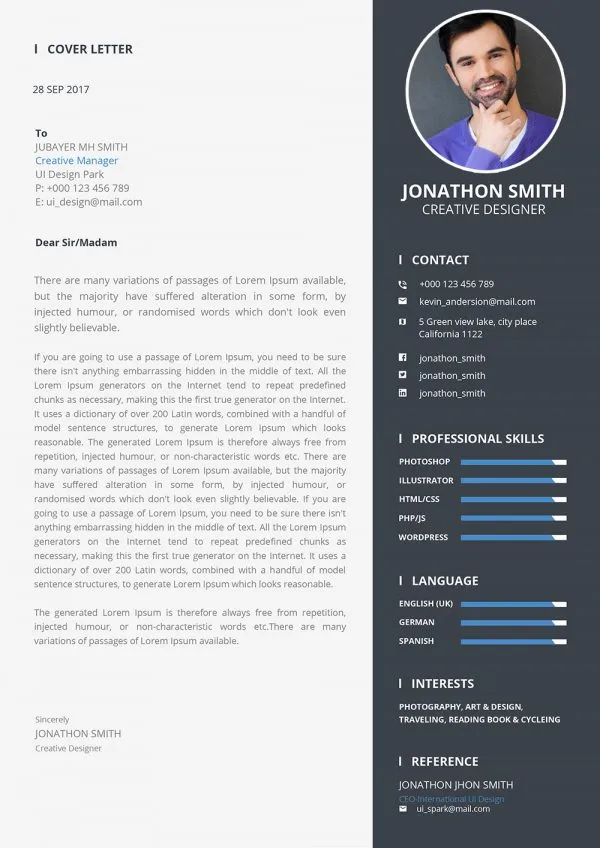
Cover Letter for Resume Why It’s Essential
In the competitive job market, a well-crafted cover letter can be the deciding factor between landing an interview and being overlooked. It’s not just a formality; it’s your opportunity to make a strong first impression, showcase your personality, and demonstrate your genuine interest in the position and the company. A cover letter for resume allows you to elaborate on your resume, providing context and depth to your qualifications. It’s a chance to tell your story, connecting your skills and experiences directly to the job requirements, and making you a memorable candidate. Think of your cover letter as your personal sales pitch, designed to convince the hiring manager that you’re the perfect fit for the role.
Key Components of a Cover Letter for Resume
A winning cover letter has several key components, each playing a crucial role in capturing the reader’s attention. Start with a professional header, followed by a personalized greeting that addresses the hiring manager by name, if possible. The introduction should immediately grab the reader’s interest, stating the position you’re applying for and briefly summarizing why you’re a great fit. The body of the letter is where you highlight your relevant skills and experiences, tailoring them to the job description and quantifying your achievements. A strong closing should reiterate your interest and include a call to action, such as expressing your availability for an interview. Let’s delve into each part to create the best cover letter format.
Contact Information (Your Header)

Your header should include your full name, address, phone number, and email address. Ensure that your email address is professional. It’s the first thing a hiring manager sees and sets the tone for your entire application. Make sure it’s easy to read and visually appealing. You can use a simple, clean font. The header is important to make sure your contact information is easily accessible. Make it simple, easy to read, and updated.
Professional Greeting
Always start your cover letter with a professional greeting. Ideally, address the hiring manager by name; this shows you’ve taken the time to research the company. If you can’t find a name, use a general greeting like “Dear Hiring Manager” or “Dear [Company Name] Team.” Avoid generic greetings that lack personalization. Taking the time to customize your greeting shows initiative and attention to detail. Researching who to address the letter to demonstrates your interest in the company and the role.
Introduction Make a Strong First Impression
Your introduction is your first chance to capture the reader’s attention. State the position you’re applying for and briefly explain why you’re a great fit. You can mention a key skill or achievement that directly aligns with the job requirements. Keep it concise and engaging. A strong opening piques the reader’s interest and encourages them to continue reading. This part can set the tone for the rest of the letter. Consider your most impressive qualification and use that to engage the reader and keep them interested.
Highlighting Relevant Skills and Experiences

In the body of your cover letter, delve into your skills and experiences, using specific examples to showcase your qualifications. Tailor your letter to match the job description. Identify the key requirements and explain how your experiences align with them. Use action verbs to describe your accomplishments, and focus on quantifiable achievements whenever possible. Providing concrete examples demonstrates your abilities and makes your claims more credible. Match your skills and experience to what the job description requires.
Tailoring to the Job Description
Customizing your cover letter for each job is crucial. Carefully review the job description and identify the key skills and qualifications the employer seeks. Then, align your experiences and achievements with these requirements. Explain how your skills match the company’s needs. This targeted approach shows that you’ve taken the time to understand the role and the company. Avoid sending generic cover letters, as they demonstrate a lack of interest and attention to detail. Customization is key to catching a hiring manager’s eye.
Quantifying Achievements
Whenever possible, quantify your achievements with numbers and data. Instead of saying, “Improved sales,” say, “Increased sales by 15% in one quarter.” Use metrics to demonstrate the impact of your work. Quantifying your accomplishments makes your cover letter more compelling and shows the tangible results you’ve delivered. Metrics add credibility to your claims and provide a clear picture of your value. Providing specific numbers helps the hiring manager understand the scope of your success.
Showcasing Enthusiasm and Company Knowledge

Demonstrate your enthusiasm for the role and the company. Show that you’ve researched the company and understand its mission, values, and recent achievements. Mention specific aspects of the company or role that excite you. This shows your genuine interest and that you’re not just sending out generic applications. It also increases the chances of your application getting noticed. Expressing enthusiasm helps you stand out among other applicants.
The Closing Call to Action
End your cover letter with a strong closing statement. Reiterate your interest in the position and express your availability for an interview. Thank the hiring manager for their time and consideration. Include a call to action, such as, “I look forward to discussing my qualifications further in an interview.” A well-crafted closing leaves a lasting positive impression and encourages the hiring manager to take the next step.
Formatting and Design Tips for Your Cover Letter
The appearance of your cover letter is just as important as the content. Choose a professional font and use clear formatting. Maintain consistent spacing and avoid excessive use of bolding or underlining. Ensure your letter is easy to read and visually appealing. A well-formatted cover letter shows that you pay attention to detail and take pride in your work. Make sure it’s easy on the eyes. Good formatting makes your letter more inviting to read and enhances its overall impact.
Font Selection and Readability

Select a professional and readable font, such as Times New Roman, Arial, or Calibri. Ensure the font size is easy to read, typically between 10 and 12 points. Avoid using overly decorative or unusual fonts, as they can distract from the content. Good font selection enhances readability and makes a positive impression on the reader. Prioritize clarity and legibility to make your cover letter accessible to everyone.
Keeping it Concise Page Length
Keep your cover letter concise and to the point. Aim for a single page in length. Avoid unnecessary details and focus on the most relevant information. A concise letter shows that you respect the hiring manager’s time. Being succinct helps you make a stronger impact. If you’re able to showcase your skills and experiences in a shorter amount of time, the hiring manager will appreciate it and pay more attention to what you have to say.
Proofreading and Editing Your Cover Letter
Always proofread and edit your cover letter carefully before submitting it. Check for any grammatical errors, spelling mistakes, or typos. Ask a friend or colleague to review your letter. Errors can undermine your credibility and create a negative impression. Proofreading ensures that your cover letter is polished and professional. Double-check all of your sentences to catch all the mistakes. It’s important to have a second pair of eyes to review your work.
Common Mistakes to Avoid

Avoiding common mistakes can significantly improve your chances of success. Generic cover letters, grammar and spelling errors, and failing to tailor your letter to the specific role are all major red flags. Pay attention to details and tailor your letter to each job you apply for. Addressing these issues can prevent your application from being immediately rejected. Your cover letter is your first impression, so you should make it count and show you are a great fit.
Grammar and Spelling Errors
Carelessly written cover letters with grammatical errors or spelling mistakes can damage your credibility. Always proofread your letter meticulously and use spell-check. Consider having someone else review your letter for accuracy. Errors demonstrate a lack of attention to detail. Correct grammar and spelling convey professionalism. These errors can make a negative impression on the hiring manager.
Generic Cover Letters
Sending generic cover letters that are not tailored to the specific job or company shows a lack of effort and interest. Tailor each letter to match the job description and the company’s values. Research the company and highlight relevant skills and experiences. Customization demonstrates your genuine interest. Generic cover letters rarely make a positive impact, as they are a sign you are mass applying.
Failing to Tailor to the Specific Role

Failing to tailor your cover letter to the specific requirements of the job description can result in your application being overlooked. Carefully review the job posting and identify the key skills and qualifications the employer seeks. Then, highlight your relevant experiences and skills. Customize your letter to demonstrate how you meet their needs. If you do not do this, the hiring manager may think you aren’t a great fit for the job.
Cover Letter Examples and Templates
Reviewing cover letter examples and templates can provide valuable insights into effective formats and content. Numerous resources are available online, including examples for different industries and job types. Use these as a guide to create a cover letter that showcases your strengths and qualifications. Adapting templates to your specific needs can save you time and effort while ensuring your letter is well-structured and compelling. Use these resources to write your cover letter.
Cover Letter Examples by Industry
Cover letter examples tailored to specific industries can offer valuable guidance. Many websites provide examples for various fields, such as technology, healthcare, finance, and marketing. These examples can help you understand industry-specific language, formatting, and the skills and experiences that are most relevant. Customizing your cover letter to match your industry’s standards can greatly improve its impact. Look at examples for your industry to help you know what the hiring manager wants to see.
Where to Find Cover Letter Templates
You can find cover letter templates on various websites, including job search platforms, resume builders, and career advice sites. These templates often provide pre-formatted layouts and suggested content, making it easier to create a professional-looking cover letter. Customize the template to fit your qualifications and the job requirements. Some resources provide free templates. You can edit these to match your qualifications and make it your own.
Final Thoughts on Cover Letter Success
A well-crafted cover letter is a powerful tool in your job search. By following these tips, you can create a cover letter that captures the hiring manager’s attention, highlights your skills and experiences, and increases your chances of landing an interview. Remember to tailor each letter to the specific job, proofread carefully, and showcase your enthusiasm. A strong cover letter format and content will help you make a great first impression, showing why you’re the perfect fit for the role. It is your chance to show you’re the best candidate and that you are passionate about the company.