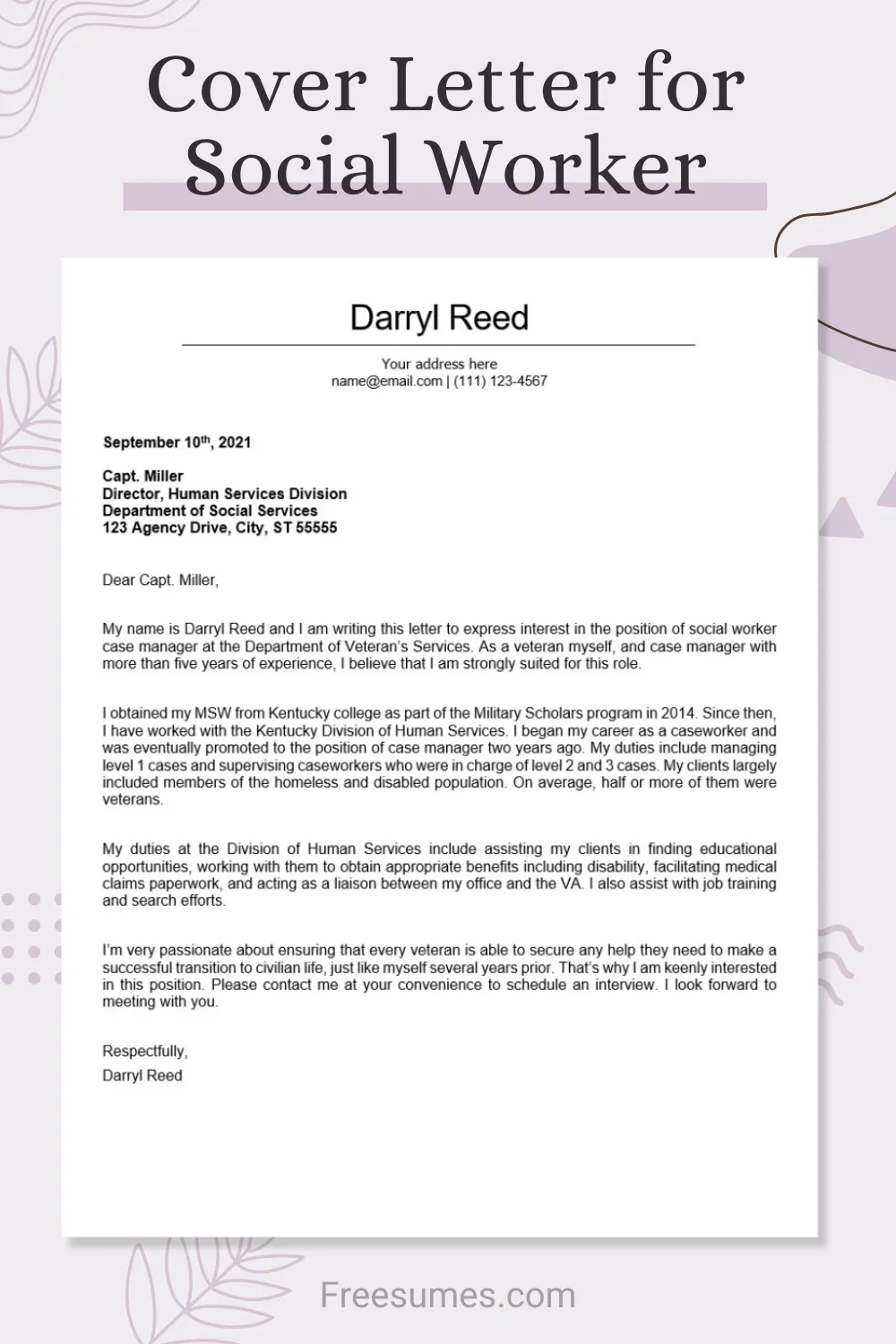
As a social worker, your cover letter is your first impression, the document that bridges the gap between your resume and the hiring manager’s desk. It’s not merely a formality; it’s your opportunity to showcase your unique qualifications, passion for helping others, and understanding of the specific job requirements. A well-crafted cover letter is crucial for setting you apart from other candidates and securing an interview. This guide will walk you through creating a compelling cover letter that impresses.
Why a Strong Cover Letter is Crucial for Social Workers
A strong cover letter is your opportunity to make a great first impression. It goes beyond simply listing your qualifications, allowing you to weave a narrative that highlights your passion, skills, and suitability for the role. In the competitive field of social work, where compassion and dedication are paramount, a well-written cover letter can be the deciding factor in whether you get an interview. It demonstrates your communication skills, attention to detail, and understanding of the organization’s mission.
Key Components of a Compelling Social Worker Cover Letter
To create a compelling cover letter, focus on including the following key components.
Contact Information and Professional Greeting

Start with your contact information (name, address, phone, email) at the top. Address the letter to the hiring manager by name if possible. Use a professional greeting, such as ‘Dear Mr./Ms. [Last Name]’. This personal touch immediately sets a professional tone and shows that you’ve researched the organization.
Highlighting Your Passion for Social Work
Your cover letter should reflect your genuine enthusiasm for social work and your commitment to the values of helping others. Share what motivates you to work in this field, whether it’s a specific personal experience, a strong belief in social justice, or a desire to make a positive impact on the community. Your passion should be evident from the beginning of the letter.
Expressing Your Relevant Skills and Experience
Outline the skills and experience that align with the job description. Social work demands a wide range of abilities, including empathy, communication, problem-solving, and case management. Give specific examples of how you have applied these skills in past roles. For instance, you might say, ‘In my role at [Previous Organization], I effectively managed a caseload of 30 clients, providing individual and group therapy while ensuring compliance with all regulatory standards.’
Demonstrating Empathy and Understanding

Social work is built upon empathy, and your cover letter should reflect that. Show that you understand the challenges faced by the clients you’ll serve. Demonstrate your ability to listen actively, show compassion, and build trusting relationships. These qualities are critical in forming effective working relationships with clients, and the letter should clearly demonstrate your ability to practice them.
Showcasing Your Achievements and Impact
Instead of simply listing your responsibilities, focus on your achievements and the impact you’ve made in previous roles. Did you implement a new program that improved client outcomes? Did you successfully advocate for policy changes? Quantify your achievements whenever possible, using data and specific examples to demonstrate your effectiveness.
Quantifying Your Accomplishments
Quantifying your achievements adds concrete value to your claims. Whenever possible, use numbers to illustrate your impact. For instance, instead of saying ‘Improved client outcomes,’ you could say ‘Increased client satisfaction by 20% through the implementation of a new support program.’ This demonstrates your results-driven approach and shows the value you bring to an organization.
Tailoring Your Cover Letter to the Job Description

Customize your cover letter for each job application. Carefully review the job description and identify the key requirements. Then, align your skills and experience with those requirements. This shows the hiring manager that you’ve taken the time to understand the role and that you’re a great fit. Generic cover letters often fail to impress.
Researching the Organization and Addressing Their Needs
Demonstrate your knowledge of the organization’s mission, values, and current initiatives. Discuss how your skills and experience align with their goals. Show that you’ve researched the organization and are genuinely interested in contributing to their work. This extra effort can greatly increase your chances of being selected for an interview.
Proofreading and Editing Your Cover Letter
Typos and grammatical errors can undermine your credibility. Proofread your cover letter carefully, or better yet, have a friend or colleague review it. Ensure the language is clear, concise, and professional. A well-written cover letter demonstrates attention to detail, a crucial skill in social work.
Ensuring Clarity, Conciseness, and Professionalism

Your cover letter should be easy to read. Use a clear and professional font (e.g., Arial, Times New Roman, Calibri) and formatting. Keep your paragraphs concise and to the point. Maintain a professional tone throughout the letter. A concise and well-formatted letter shows respect for the reader’s time and highlights your communication skills.
Creating a Powerful Closing and Call to Action
End your cover letter with a strong closing statement. Reiterate your interest in the position and summarize why you’re a good fit. Include a call to action, such as, ‘I am eager to discuss my qualifications further and welcome the opportunity for an interview.’ This encourages the hiring manager to take the next step.
Expressing Gratitude and Offering Availability
Thank the hiring manager for their time and consideration. Express your availability for an interview and provide your contact information again. This final touch shows professionalism and respect. Closing with a sincere ‘Thank you’ can leave a positive lasting impression.
Cover Letter Templates and Examples for Social Workers

Leveraging templates and examples can streamline the process of creating your cover letter. Reviewing these resources can provide inspiration, structure, and ensure that you include the essential components.
Leveraging Pre-written Templates
Utilize pre-written cover letter templates as a starting point. Many online resources offer templates tailored to social work roles. These templates provide a basic structure and can help you organize your thoughts. Remember to personalize the template to reflect your unique skills and experience.
Analyzing and Adapting Sample Cover Letters
Review sample cover letters from successful social workers to gain insights into effective writing styles and content. Analyze how they structure their letters, highlight their skills, and express their passion. Adapt these examples to fit your situation, ensuring your cover letter is authentic and reflective of your career goals.
Avoiding Common Cover Letter Mistakes

Avoid these common mistakes to enhance your cover letter’s effectiveness.
Generic vs. Personalized Cover Letters
A generic cover letter is a major turn-off. Tailor your cover letter to each specific job and organization. Generic letters lack the personal touch, showing that you have not invested time in understanding the role or the employer’s needs. Personalized letters, on the other hand, show that you have taken the initiative to learn more about the position and organization.
Focusing on Buzzwords or Clichés
Avoid using buzzwords and clichés that don’t add any substance to your letter. Phrases like ’team player’ or ‘results-oriented’ are overused and don’t provide concrete examples. Focus on your achievements and skills instead. Instead of stating you’re a ’team player’, provide an instance where you’ve collaborated effectively within a team.
Using the Right Tone and Language
Your cover letter’s tone should be professional and enthusiastic. Avoid being overly casual or using slang. Ensure your language is clear, concise, and free of grammatical errors. The language you use needs to match the culture of the organization; if it’s more formal, your letter should reflect that.
Final Tips for a Winning Social Worker Cover Letter
These final tips can help to make your cover letter more effective.
Formatting, Font, and Readability
Use a professional font like Arial or Times New Roman. Maintain a consistent font size (11 or 12 points) and adequate spacing. A well-formatted cover letter is easy to read and makes a positive impression. Use bullet points to highlight key skills and achievements, which improves readability.
Submitting Your Cover Letter Effectively
Always submit your cover letter in the format requested by the employer. Usually, this is a PDF file. Ensure the file name is professional (e.g., ‘FirstName_LastName_CoverLetter.pdf’). Follow all instructions carefully to show your attention to detail and professionalism. Double-check the job application guidelines to ensure you’re complying with the requirements.
In conclusion, a well-crafted cover letter is essential for social workers looking to make a lasting impression. By following these guidelines and tailoring your letter to each job, you can significantly increase your chances of securing an interview and landing your dream job. Remember to highlight your passion, skills, and accomplishments while showing empathy and a deep understanding of the social work field. Good luck with your job search!