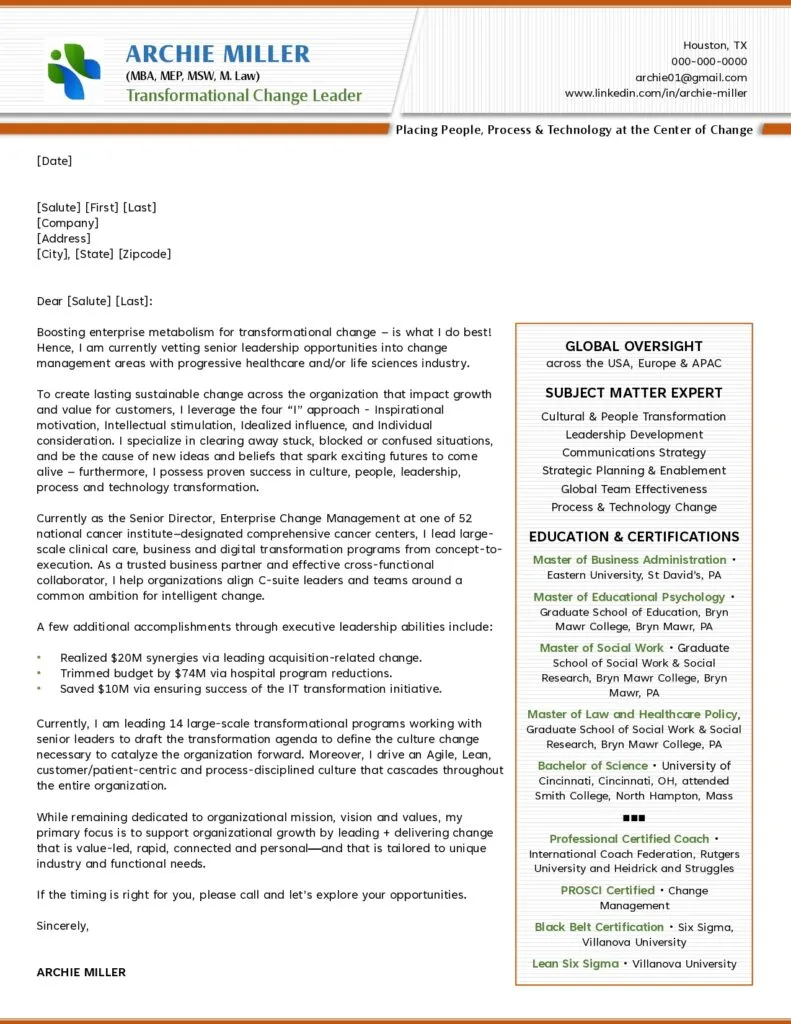
Why a Cover Letter Matters
In today’s competitive job market, a well-crafted cover letter can be the difference between landing an interview and your application being overlooked. Many job seekers underestimate the power of a cover letter, viewing it as a mere formality. However, a cover letter provides a crucial opportunity to introduce yourself, showcase your personality, and highlight the skills and experiences that make you the ideal candidate for the position. It’s your first chance to make a positive impression on a potential employer, demonstrating your genuine interest in the company and the specific role. A compelling cover letter goes beyond simply restating your resume; it provides context, tells a story, and connects your qualifications to the employer’s needs. When effectively written, it can significantly increase your chances of moving forward in the hiring process, setting you apart from other applicants.
What to Include in Your Cover Letter
Crafting a winning cover letter involves carefully selecting and presenting relevant information. A well-structured cover letter is a persuasive tool that will showcase your qualifications. It should be tailored to each specific job application, reflecting your understanding of the role and the company’s needs. Including the right elements is vital to ensure your letter captures the hiring manager’s attention and effectively communicates your value proposition. The content should be concise, focused, and compelling, proving your application’s value and ultimately securing you an interview.
Contact Information

Begin your cover letter by including your contact information. This should include your full name, phone number, email address, and optionally, your LinkedIn profile URL. This section should be placed at the top, either on the left or right side of the page. Make sure your contact details are up-to-date and professional. This ensures the hiring manager can easily reach you if they’re interested in scheduling an interview. Always double-check the accuracy of your contact information to avoid any missed opportunities. A simple error can prevent you from moving forward in the hiring process, so attention to detail is key in this initial section.
Hiring Manager’s Name and Title
Addressing your cover letter to a specific person is a key step in making a positive impression. Research the hiring manager’s name and title, and use this information in your salutation. This demonstrates that you’ve taken the time to understand the organization. Addressing the letter to a specific person rather than using a generic greeting (like “To Whom It May Concern”) shows initiative and attention to detail. If you can’t find the hiring manager’s name, try reaching out to someone in HR or searching on LinkedIn. Personalizing your greeting immediately makes your letter more engaging and signals your genuine interest in the position.
Opening Paragraph Your Hook
The opening paragraph is your chance to grab the reader’s attention. Start with a strong hook that clearly states the position you’re applying for and where you found the job posting. Then, briefly mention why you’re interested in the role and the company. Focus on conveying your enthusiasm and highlighting one or two key skills or experiences that make you a strong fit. Avoid generic statements. Instead, aim to be specific and impactful. This is your first impression, so make it count. By immediately showcasing your understanding of the company and the role, you capture the hiring manager’s interest and encourage them to read on. A well-crafted opening paragraph sets the tone for the rest of your letter.
Body Paragraphs Showcasing Skills

The body of your cover letter is where you demonstrate how your skills and experiences align with the job requirements. This section should be focused on highlighting the key skills and qualifications that the employer is seeking. Select 2-3 of your most relevant accomplishments and explain how they relate to the role. Use specific examples to illustrate your abilities, providing quantifiable results whenever possible. Tailor the content to the specific job description, emphasizing the skills and experiences that the employer values most. The goal is to show, not just tell, why you are the perfect candidate. Keep your paragraphs concise and focused, ensuring that each sentence contributes to the overall message.
Highlight Relevant Skills and Experiences
When highlighting your skills and experiences, focus on those that are directly relevant to the job description. Review the job posting carefully to identify the key requirements and keywords. Then, choose examples from your work history or academic background that demonstrate these skills. Use action verbs to describe your accomplishments. Instead of simply listing your responsibilities, explain what you achieved and the impact of your actions. Provide context for your experiences, explaining the situation, your actions, and the positive outcome. This approach allows the hiring manager to understand your capabilities and how you can contribute to the company’s success.
Quantify Your Accomplishments
Quantifying your accomplishments is a powerful way to make your cover letter more impactful. Whenever possible, use numbers and data to demonstrate your achievements. For example, instead of saying “Improved sales,” state “Increased sales by 15% in one quarter.” This provides concrete evidence of your abilities and demonstrates your impact. Think about what you have accomplished in past roles, and use metrics to showcase your successes. Include specific figures like the number of projects completed, the amount of money saved or earned, or the percentage of improvement in a particular area. Quantifiable data makes your claims more credible and helps the hiring manager quickly understand the value you bring to the table.
Closing Paragraph Call to Action

The closing paragraph is your opportunity to summarize your interest in the role and express your desire to learn more. Reiterate your enthusiasm for the position and the company. Thank the hiring manager for their time and consideration. Then, include a clear call to action. Specifically, state that you are available for an interview. Provide your contact information one more time, and express your willingness to discuss your qualifications further. Conclude with a professional closing, such as “Sincerely” or “Best regards,” followed by your name. Make sure that your closing paragraph leaves a lasting positive impression and encourages the hiring manager to take the next step.
Proofread and Edit
Before submitting your cover letter, always proofread and edit it carefully. Errors in grammar and spelling can undermine your credibility and leave a negative impression. Read your letter aloud to catch any awkward phrasing or sentence structures. Check for consistency in formatting, and make sure the tone is professional and consistent throughout. Ask a friend or family member to review your letter for a fresh perspective. A second pair of eyes can help catch errors that you might have missed. Proofreading demonstrates your attention to detail and your commitment to presenting yourself in the best possible light. Ensure that every aspect of your cover letter is polished and professional before submitting your application.
Formatting Tips for Your Cover Letter
Proper formatting is essential for a cover letter. A well-formatted letter is easy to read and visually appealing. Use a professional font and layout to create a polished appearance. Ensure that your letter is well-organized, with clear headings, paragraphs, and spacing. The formatting should make it easy for the hiring manager to scan the document and quickly find the information they need. Consistent formatting enhances readability and highlights the key information. A well-formatted cover letter demonstrates your professionalism and attention to detail.
Font and Layout

Choose a professional font, such as Times New Roman, Arial, or Calibri, for your cover letter. Use a font size between 10 and 12 points for the body text. Ensure that the font is clear and easy to read. Maintain a consistent layout with one-inch margins on all sides of the page. Use single-spacing within paragraphs and double-spacing between paragraphs. Left-align the text, and avoid using justified text, which can sometimes create uneven spacing. Use bolding and italics sparingly to emphasize key points. A clean and uncluttered layout makes your cover letter more readable and professional.
File Format
Always save your cover letter as a PDF file before submitting it. PDF files preserve the formatting of your document, ensuring that it appears the same on any computer or device. This helps prevent formatting issues that can occur when the recipient opens the document in a different word processor. Ensure that your file name includes your name and the job title. This makes it easier for the hiring manager to identify your application. Using a consistent and professional file format demonstrates your attention to detail and makes a positive impression on the hiring manager.