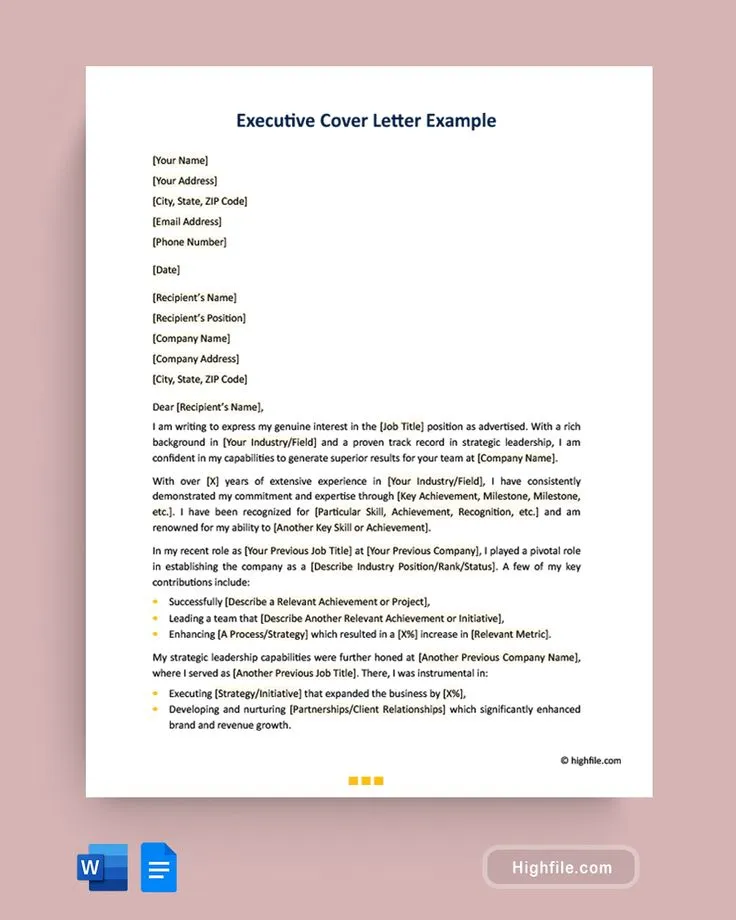
Crafting an Executive Level Cover Letter
An executive level cover letter is not just a formality; it’s a powerful marketing tool that can significantly influence whether you land your dream job. Unlike standard cover letters, an executive cover letter needs to immediately capture the attention of hiring managers and showcase your unique value proposition. This means going beyond simply restating your resume; it’s about demonstrating how your skills, experience, and leadership align with the specific needs and challenges of the organization. The letter should be concise, impactful, and tailored to the specific role, highlighting your achievements and quantifying your successes whenever possible. Remember, this is your opportunity to make a strong first impression and set yourself apart from the competition. It’s your chance to tell a compelling story about why you are the ideal candidate and why they should choose you.
Highlighting Your Achievements
One of the most critical aspects of a compelling executive cover letter is showcasing your achievements, not just listing your responsibilities. Hiring managers are interested in results. Instead of saying you ‘managed a team,’ describe the positive impact of your leadership. For example, ‘Led a team of 20 to increase sales by 15% within one year.’ Use the STAR method (Situation, Task, Action, Result) to structure your examples, providing context and demonstrating the value you brought to previous roles. Focus on outcomes that align with the company’s goals and challenges, such as increased revenue, reduced costs, improved efficiency, or successful project completion. Make sure that your achievements are relevant to the position you are applying for and demonstrate your capabilities in the specific areas the company needs.
Quantifying Your Impact

Numbers speak louder than words in an executive cover letter. Quantify your achievements by providing specific data and metrics that illustrate your impact. This could include financial figures, percentages, or other measurable results. For instance, instead of saying you improved customer satisfaction, state: ‘Increased customer satisfaction scores by 20% through implementation of a new service strategy.’ Quantifying your impact allows hiring managers to quickly understand the value you can bring to their organization. This approach not only makes your claims more credible but also provides concrete evidence of your ability to deliver results. Use data to demonstrate how you have made a positive impact in your previous roles and how you can replicate that success in the new role. This data should be related to the goals of the company.
Showcasing Leadership Skills
Leadership is a cornerstone of executive roles, so your cover letter must demonstrate your leadership skills. This means going beyond simply mentioning that you have leadership experience. Show, don’t just tell. Provide specific examples of how you have led teams, motivated employees, made strategic decisions, and achieved significant results. Highlight your ability to inspire others, manage conflicts, and foster a positive work environment. Examples of strong leadership include: Successfully navigated a company through a period of rapid growth, leading a team through a complex restructuring, or mentoring emerging leaders within the organization. The cover letter should reflect that you have the ability to take the helm and lead a company, inspiring others and achieving significant results. Make sure you illustrate these aspects.
Tailoring to the Job Description
One of the most critical steps in writing an executive cover letter is tailoring it to the specific job description. Generic cover letters are easily identified and often discarded. Review the job posting carefully and identify the key requirements, skills, and qualifications the employer is seeking. Then, customize your cover letter to address those specific needs. Highlight the relevant experience, skills, and achievements that align with the job requirements. Use the same keywords and phrases from the job description to demonstrate that you are a perfect fit for the role. This level of personalization shows that you have taken the time to understand the company’s needs and that you are genuinely interested in the position. Address the company’s needs and address the challenges of the company and how you can provide solutions.
Understanding the Executive Landscape

Executives must showcase their understanding of the industry and the executive level in a letter. This involves demonstrating strategic thinking, awareness of industry trends, and an understanding of business challenges. The cover letter should indicate familiarity with the company’s competitors, challenges, and the broader industry landscape. It shows that you have done your homework and are not just applying for a job but are genuinely interested in the success of the organization. Use your experience to show how you will use your skills to help the company meet its goals and create value. Mention current business trends and how you can apply them in the company.
Key Components of a Winning Cover Letter
A winning executive cover letter typically includes several key components that work together to create a compelling narrative. Start with a strong opening that immediately captures the reader’s attention, stating the specific role you are applying for and expressing your interest in the company. The body of the letter should highlight your key achievements, skills, and experiences, with a focus on quantifying your impact. It should also address the specific requirements of the job and showcase your leadership skills. The closing paragraph should reiterate your interest in the position, summarize your key qualifications, and include a clear call to action. The most effective cover letters are concise, well-written, and tailored to the specific job and company.
Opening with Impact
The opening paragraph of your executive cover letter is crucial as it sets the tone and grabs the reader’s attention. Avoid generic phrases and instead, start with a concise, powerful statement that immediately conveys your enthusiasm for the position and the company. Consider using a compelling statistic or a brief anecdote that highlights your relevant experience and achievements. Mention the specific position you are applying for and state your sincere interest in the opportunity. Avoid clichés and focus on creating a memorable opening that makes the hiring manager want to read the rest of your letter. A well-crafted opening will differentiate you from other candidates and encourage the reader to learn more about you.
The Body of Your Cover Letter

The body of your executive cover letter is where you showcase your qualifications and make your case for why you are the best candidate for the job. The body of the letter should highlight your relevant experiences, skills, and achievements. Provide specific examples of how you have addressed the company’s needs and challenges. Use the STAR method to provide context and describe the impact. Focus on the specific requirements of the job and tailor your narrative to demonstrate your value proposition. Keep the body of the letter concise and easy to read, using bullet points and short paragraphs to highlight key points. The body of the letter should be well-structured, easy to read, and demonstrates the ability to provide tangible value to the company. Demonstrate your ability to solve problems and contribute to company success.
Closing with Confidence
The closing paragraph of your executive cover letter should reiterate your interest in the position and leave a lasting impression. Summarize your key qualifications and highlight your enthusiasm for the opportunity. Include a clear call to action, such as expressing your availability for an interview and providing your contact information. Avoid generic closings and use a confident and professional tone. Thank the hiring manager for their time and consideration. The closing should leave the reader with a positive impression, and provide a sense of closure, and make it clear that you are eager to move forward in the hiring process. The closing should summarize your interest and your confidence.
Formatting and Design
The formatting and design of your executive cover letter are important as it reflects your attention to detail and professionalism. Use a clean, professional font such as Times New Roman, Arial, or Calibri, and ensure your letter is well-organized and easy to read. Use appropriate spacing and margins, and avoid excessive use of bold or italics. Proofread your letter carefully for any grammatical errors or typos, as these can detract from your credibility. Consider using bullet points or short paragraphs to break up the text and highlight key information. If submitting a digital cover letter, ensure that it is properly formatted, and save it as a PDF to preserve its formatting across different devices. A well-formatted cover letter is critical in order to make a great impression.
Proofreading and Editing

Before submitting your executive cover letter, it’s imperative to proofread and edit it meticulously. Typos, grammatical errors, and formatting mistakes can significantly undermine your professionalism and diminish your chances of landing an interview. Read your letter aloud to catch any awkward phrasing or inconsistencies. Ask a trusted colleague or friend to review it for you, as a fresh pair of eyes can often identify errors that you might have missed. Ensure that the letter is free from errors and that the tone is consistent and professional. It is worth the investment to do this; a polished, error-free cover letter demonstrates your attention to detail and commitment to excellence.