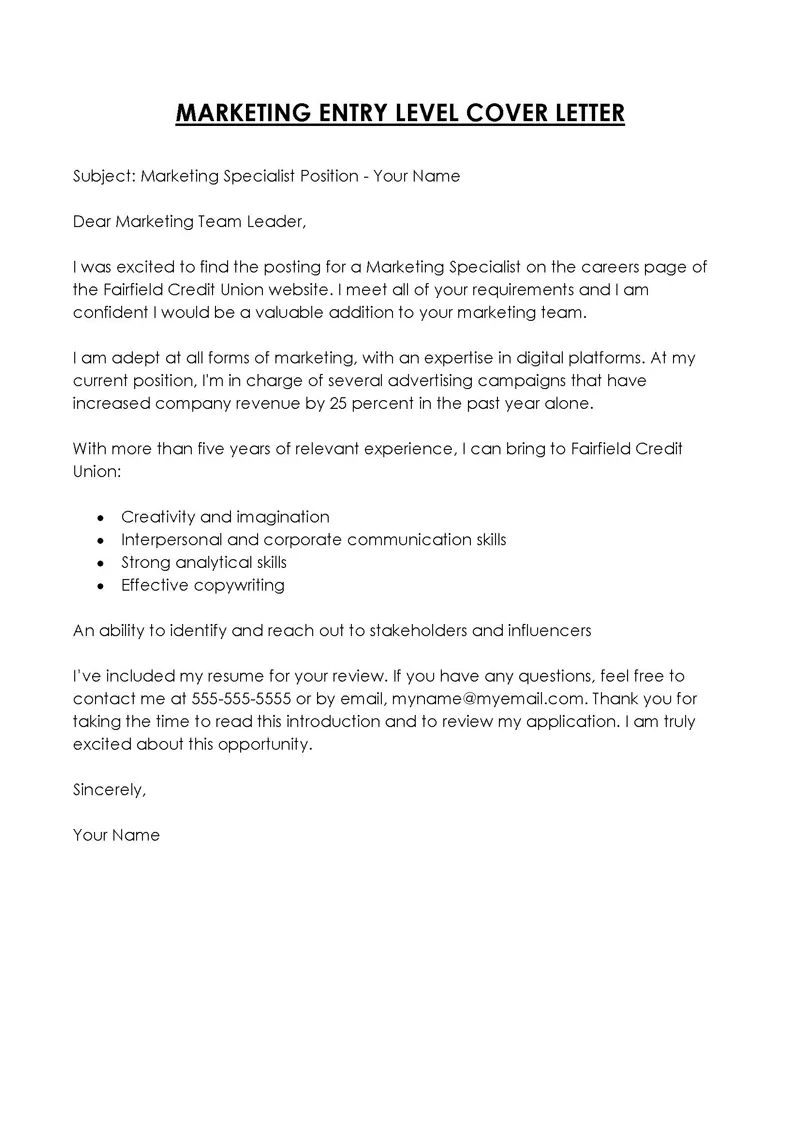
Why Cover Letters Matter for Entry-Level Jobs
In the competitive landscape of entry-level job applications, a well-crafted cover letter can be the key to unlocking your career aspirations. While a resume provides a snapshot of your skills and experience, the cover letter offers a crucial opportunity to tell your story, express your personality, and demonstrate your genuine interest in the role and the company. For entry-level positions where experience may be limited, a strong cover letter can effectively showcase your potential, drive, and enthusiasm, setting you apart from other candidates. It’s often the first impression you make on a hiring manager, shaping their initial perception of you and whether you are a good fit for the position. A cover letter goes beyond simply reiterating information found in your resume; it provides a platform to elaborate on specific achievements, explain any gaps in your work history, and highlight the unique value you bring to the table. Furthermore, it demonstrates your communication skills, attention to detail, and writing proficiency, all of which are essential for success in the professional world. Ultimately, a compelling cover letter is not just a formality; it is a strategic tool that significantly increases your chances of landing an interview and ultimately, securing the job.
Highlighting Your Skills and Experience
When applying for entry-level positions, emphasizing your skills and relevant experiences is paramount. Even if you lack extensive professional experience, focus on transferable skills acquired through academics, extracurricular activities, volunteer work, or part-time jobs. Identify the skills that align with the job description, such as communication, teamwork, problem-solving, time management, and leadership. Provide concrete examples of how you have utilized these skills in the past, illustrating your abilities with specific achievements and outcomes. For example, if the job requires strong communication skills, you could describe a project where you successfully presented information to a group or mediated a conflict. If the role requires teamwork, highlight instances where you collaborated with others to achieve a common goal. Quantify your accomplishments whenever possible, using metrics to showcase the impact of your contributions. Did you increase sales by a certain percentage, streamline a process, or improve customer satisfaction? Demonstrating tangible results can significantly strengthen your cover letter and demonstrate your value to the employer. Additionally, tailor your skills to the specific requirements of each job application. Carefully review the job description and identify the key skills and qualifications the employer is seeking. Then, highlight the skills and experiences that are most relevant to the position, ensuring your cover letter showcases you as the perfect fit.
Tailoring Your Cover Letter

One of the most critical secrets to a successful entry-level cover letter is personalization. Avoid using generic templates or recycled content; instead, tailor each cover letter to the specific job and company. This demonstrates to the hiring manager that you have invested time and effort into researching the role and are genuinely interested in the opportunity. Begin by thoroughly reviewing the job description and identifying the key requirements and responsibilities. Then, structure your cover letter to address these specific points, highlighting the skills and experiences that align with the employer’s needs. In the opening paragraph, clearly state the position you are applying for and where you found the job posting. Briefly mention why you are interested in the role and what sparked your interest in the company. Throughout the body of your cover letter, provide specific examples of how your skills and experiences match the job requirements. Use the language from the job description to demonstrate that you understand the employer’s needs. Furthermore, show your understanding of the company’s values, mission, and culture. Research the company’s website, social media profiles, and recent news articles to gain a deeper understanding of its operations and goals. Then, incorporate this information into your cover letter to show that you have done your homework and are genuinely interested in the organization. By tailoring your cover letter, you not only increase your chances of getting noticed but also showcase your attention to detail and ability to communicate effectively, all of which are highly valued by employers.
Researching the Company
Before you start writing your cover letter, conducting thorough research on the company is essential. This proactive step demonstrates your genuine interest in the organization and allows you to personalize your application effectively. Start by visiting the company’s website and exploring the ‘About Us’ section, mission statement, and values. Pay attention to their products or services, target audience, and recent news or announcements. This will provide you with valuable insights into their operations and culture. Next, delve deeper by searching for the company on social media platforms like LinkedIn, Twitter, and Facebook. Follow their pages to gain a better understanding of their brand identity, employee engagement, and industry presence. Look for posts that highlight their achievements, values, and company culture. If possible, try to identify the hiring manager or someone within the department you are applying to. Researching their background and experience can provide valuable context for your cover letter. You can also search for news articles, press releases, and industry publications related to the company. This will help you stay informed about their recent activities, strategic goals, and any challenges they may be facing. Incorporate the information you gather into your cover letter to show your knowledge and understanding of the company. For instance, you can mention specific projects, initiatives, or values that resonate with you and explain why you are interested in contributing to their mission. This personalized approach will make your application stand out and demonstrate your genuine interest in the opportunity.
Showcasing Your Enthusiasm
In an entry-level job search, enthusiasm is your secret weapon. Hiring managers want to see that you are genuinely excited about the opportunity and eager to learn and contribute. Infuse your cover letter with this enthusiasm by expressing your passion for the field, the company, and the specific role. Begin by clearly stating why you are interested in the position and what motivated you to apply. Instead of just stating your interest, elaborate on the reasons why this particular role aligns with your career goals and passions. Mention any specific projects, experiences, or skills that make you excited about the opportunity. Avoid generic phrases like ‘I am eager to learn’ and instead, show your eagerness by highlighting your willingness to take on new challenges, adapt to new situations, and continuously improve. For instance, you could mention your proactive approach to learning new technologies, attending industry events, or seeking out mentorship opportunities. Demonstrate your knowledge of the company and express why you are enthusiastic about their mission, values, and culture. Refer to specific aspects of the company that resonate with you, such as their commitment to innovation, community involvement, or employee development. Explain how you envision contributing to their success and what you can bring to the team. Your cover letter should convey a positive, proactive, and passionate attitude, which can make a lasting impression and set you apart from other candidates. By injecting your personality, enthusiasm, and genuine excitement, you will increase your chances of securing an interview.
Formatting and Structure

A well-structured and formatted cover letter is essential for making a positive first impression. Even if you have great content, a poorly formatted letter can undermine your chances of success. Start with a professional header that includes your name, address, phone number, and email address. This should be followed by the date and the recipient’s information (hiring manager’s name, title, company name, and address). The body of your cover letter should be divided into distinct paragraphs, each addressing a specific point or idea. Use clear and concise language, keeping your sentences and paragraphs short and easy to read. Choose a professional font, such as Times New Roman, Arial, or Calibri, and use a consistent font size (11 or 12 points). Ensure your letter is properly aligned (left-aligned is typically preferred), and use single or 1.15 line spacing. Use white space effectively to improve readability. Leave a blank line between paragraphs and use indentation to visually separate the different sections of your letter. Keep your cover letter to one page. Hiring managers often have many applications to review, so it’s important to be concise and get to the point quickly. Aim for a length of 250-400 words. Proofread your cover letter carefully for any grammatical errors, typos, or formatting inconsistencies. A polished and professional cover letter demonstrates your attention to detail and commitment to excellence. Following these guidelines will help you create a cover letter that is both visually appealing and easy to read, making it more likely to capture the hiring manager’s attention and increase your chances of getting an interview.
The Opening Paragraph
The opening paragraph of your cover letter is crucial as it sets the tone and captures the hiring manager’s attention. It’s your first and often only chance to make a strong impression. Begin by clearly stating the position you are applying for and where you found the job posting. This provides immediate context and demonstrates that you are addressing the specific job opportunity. Following this, immediately state your interest in the role and company. Instead of a generic statement, provide a specific reason why you are interested. This could be related to the company’s mission, its products or services, its culture, or the role’s specific responsibilities. Briefly mention any key skills or experiences that make you a strong fit for the position. Focus on one or two of your most relevant qualifications to pique the hiring manager’s interest. Avoid simply restating your entire resume. Instead, highlight what makes you unique and what you bring to the table that other candidates may not. Demonstrate a genuine connection by referencing something that drew you to the company, like a project, an initiative, or a value. This shows that you have done your research and are genuinely interested in the organization. Keep your opening paragraph concise, compelling, and enthusiastic. Aim to capture the hiring manager’s attention immediately and make them want to read more. This will set the stage for the rest of your cover letter, making it more likely that your application will be seriously considered.
Body Paragraphs
The body paragraphs of your cover letter are where you expand on your qualifications and demonstrate how your skills and experiences align with the job requirements. Each paragraph should focus on a specific skill, experience, or accomplishment. Start each paragraph with a topic sentence that clearly introduces the main point. This helps the reader understand the focus of the paragraph right away. Provide specific examples of how you have used your skills and achieved results in the past. Instead of simply listing your skills, describe a situation or project where you successfully applied them. Quantify your accomplishments whenever possible. Use numbers and metrics to demonstrate the impact of your contributions. For example, if you improved a process, mention the percentage of improvement or the time saved. Relate your skills and experiences to the job description. Carefully review the job posting and identify the key requirements. Then, tailor your examples to show how you meet those requirements. Make sure your content directly addresses the employer’s needs. Show, don’t just tell. Use vivid language and descriptive details to bring your experiences to life. Avoid vague statements. Instead, use action verbs to describe what you did, how you did it, and the results you achieved. By following these guidelines, you can create body paragraphs that are both compelling and informative, showcasing your suitability for the role and making a strong case for your candidacy.
The Closing Paragraph

The closing paragraph of your cover letter should be concise, confident, and leave a positive lasting impression. Reiterate your interest in the position and the company. This serves as a reminder to the hiring manager of your enthusiasm and commitment. Express your appreciation for their time and consideration. This shows professionalism and courtesy, and acknowledges the effort they put into reviewing your application. Include a call to action by stating your availability for an interview. Clearly indicate how you can be reached and your willingness to discuss your qualifications further. Be direct and specific, such as, ‘I am available for an interview at your earliest convenience and can be reached at [phone number] or [email address].’ Avoid using cliché phrases. Steer clear of generic closings such as ‘Thank you for your time’ or ‘I look forward to hearing from you soon.’ Instead, use a more personalized and compelling closing that reflects your unique personality and interest in the opportunity. Maintain a professional tone throughout the closing paragraph. While you can inject some of your personality, keep it appropriate for a business communication. Proofread the closing paragraph for any grammatical errors or typos. A polished closing paragraph demonstrates your attention to detail and commitment to excellence. Your closing paragraph is the last thing the hiring manager will read, so make sure it is impactful and leaves a positive and memorable impression.
Proofreading and Editing
Proofreading and editing are critical steps in ensuring that your cover letter is polished, professional, and free of errors. Errors in grammar, spelling, or punctuation can undermine your credibility and create a negative impression on the hiring manager. After you have written your cover letter, set it aside for a period of time, such as a few hours or overnight. This will allow you to return to it with fresh eyes. Read your cover letter carefully, checking for any mistakes in grammar, spelling, punctuation, and sentence structure. Pay close attention to details and make sure that all of your sentences are clear, concise, and easy to understand. Use a grammar and spell-checking tool, but don’t rely on it entirely. These tools can help catch some errors, but they may not always identify all of them. Ask a trusted friend, family member, or career counselor to read your cover letter and provide feedback. A second pair of eyes can often catch errors that you might have missed. Make sure that your cover letter is tailored to the specific job and company. Proofread for any inconsistencies or irrelevant information. Verify that your contact information is accurate and up-to-date. Ensure that the formatting is consistent and that the cover letter is visually appealing. A well-proofread and edited cover letter demonstrates your attention to detail and commitment to excellence, increasing your chances of making a positive impression and securing an interview. Taking the time to proofread and edit your cover letter is an investment that can pay off handsomely in your job search.
Common Mistakes to Avoid
Certain common mistakes can significantly diminish the effectiveness of your cover letter. Being aware of these pitfalls can help you avoid them and ensure your application stands out. Avoid using generic cover letters. Do not send the same cover letter to multiple companies or positions. Tailor each cover letter to the specific job and company, highlighting the skills and experiences that are most relevant to the role. Typos and grammatical errors can create a negative impression and suggest a lack of attention to detail. Proofread your cover letter carefully, use spell-checking tools, and have someone else review it before submitting it. Avoid focusing solely on yourself. While it is important to highlight your skills and experiences, also focus on how you can contribute to the company and solve their problems. Focus on the employer’s needs and how you can meet them. Do not exceed the recommended length of one page. Hiring managers often have many applications to review, so be concise and get to the point quickly. Avoid using overly formal or informal language. Maintain a professional tone throughout your cover letter, using clear, concise, and respectful language. Avoid rehashing your resume word-for-word. Instead, use your cover letter to elaborate on specific achievements, explain any gaps in your work history, and demonstrate your enthusiasm. Always address the cover letter to a specific person if possible. Research the hiring manager’s name and title. Addressing the letter to a specific person shows that you have taken the time to research the company and the role. Avoiding these common mistakes can significantly improve your chances of making a positive impression and securing an interview.
Generic Cover Letters

One of the most significant pitfalls in cover letter writing is using generic templates or a one-size-fits-all approach. A generic cover letter is one that is not tailored to the specific job and company. It often uses vague language, lacks specific examples, and does not demonstrate a genuine interest in the opportunity. Employers can easily spot a generic cover letter. They are often written with a standard template, lacking any personalization, and are devoid of specific information about the company or role. Using a generic cover letter sends a message that you have not taken the time to research the company or carefully consider the job requirements. This can give the impression that you are not truly interested in the position. To avoid this, always tailor your cover letter to each specific job and company. Research the company, review the job description carefully, and customize your letter to address the specific requirements and demonstrate your interest. Make sure your skills and experiences align with the job description, and highlight the accomplishments most relevant to the role. Show your understanding of the company’s mission, values, and culture. Mention specific projects, initiatives, or values that resonate with you. By avoiding generic cover letters, you increase your chances of getting noticed and making a positive impression on the hiring manager.
Typos and Grammatical Errors
Typos and grammatical errors in your cover letter can severely damage your credibility and undermine your chances of getting an interview. These errors can create a negative impression, suggesting a lack of attention to detail and a lack of professionalism. Even a single typo or grammatical mistake can lead to the hiring manager questioning your communication skills and overall qualifications. Typos and grammatical errors can be easily avoided with careful proofreading and editing. Always proofread your cover letter multiple times, and use spell-checking and grammar-checking tools. However, do not rely solely on these tools, as they may not catch all errors. It is also a good idea to have a trusted friend, family member, or career counselor review your cover letter. Consider reading your cover letter aloud, as this can help you catch errors that you might have missed when reading silently. Pay attention to details, such as capitalization, punctuation, and sentence structure. Ensure that your language is clear, concise, and easy to understand. By taking the time to proofread and edit your cover letter, you can demonstrate your attention to detail and commitment to excellence, making a positive impression on the hiring manager. A polished and error-free cover letter will showcase your professionalism and increase your chances of getting an interview.
Focusing Solely on Yourself
When writing a cover letter, a common mistake is focusing excessively on yourself and your accomplishments without demonstrating how you can contribute to the company’s success. While it is essential to highlight your skills and experiences, the primary focus should be on how you can solve the employer’s problems and meet their needs. A cover letter that solely focuses on your own achievements can come across as self-centered and may not resonate with the hiring manager. They want to know what you can do for them, not just what you have done. Instead of simply listing your skills and experiences, explain how you have used them to achieve results in the past and how those results can benefit the company. Relate your skills and experiences directly to the job description. Tailor your letter to the specific requirements of the role, highlighting the skills and experiences that are most relevant. Show your understanding of the company’s mission, values, and goals. Express how your skills and experiences align with the company’s objectives and how you can contribute to their success. Provide specific examples of how you have solved problems, achieved results, and improved processes in the past. Quantify your accomplishments whenever possible, using numbers and metrics to demonstrate the impact of your contributions. This shows employers that you are focused on results and can deliver value. A well-crafted cover letter that focuses on how you can contribute to the company, demonstrating your value, and aligning your skills with their objectives will significantly increase your chances of landing an interview.
Providing Examples of Successful Cover Letters

Studying examples of successful cover letters can provide valuable insights and inspiration as you craft your own. These examples offer a roadmap for how to structure your letter, highlight your skills and experiences, and make a compelling case for your candidacy. By analyzing successful cover letters, you can learn how to effectively present your qualifications and demonstrate your value to the employer. Look for examples that are tailored to the specific industry and job you are applying for. Pay attention to how the writer addresses the hiring manager, expresses their enthusiasm, and showcases their skills and experiences. Identify the language used, the tone, and the structure of the letter. Note how the writer quantifies their accomplishments, provides specific examples, and relates their skills and experiences to the job requirements. Many online resources offer examples of successful cover letters. Websites like LinkedIn, Indeed, and Glassdoor provide templates and examples that you can adapt to your own needs. You can also find examples of cover letters in career guides, books, and articles. Tailor your cover letter to the specific job and company, highlighting the skills and experiences most relevant to the role. Research the company, review the job description carefully, and customize your letter to address the specific requirements and demonstrate your interest. By studying examples of successful cover letters and tailoring your own to the specific job and company, you can significantly increase your chances of making a positive impression and securing an interview.