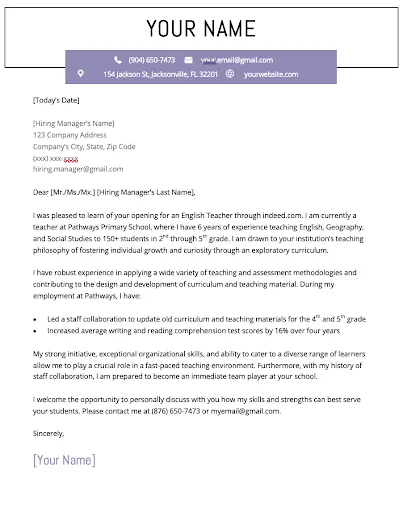
What is a Cover Letter and Why is it Important
A cover letter is a crucial document that accompanies your resume when applying for a job. It serves as your introduction to the hiring manager, providing context and personality that a resume alone often lacks. Think of it as a tailored sales pitch, designed to persuade the employer that you are the perfect candidate for the teaching position. This is your opportunity to make a strong first impression and demonstrate why you’re the ideal fit for the role, highlighting your skills, experiences, and passion for teaching. The cover letter acts as a bridge, connecting your qualifications to the specific needs of the school or district, showcasing your understanding of their requirements.
Understanding the Purpose of a Cover Letter
The primary purpose of a cover letter is to introduce you and your qualifications to a potential employer. It’s your chance to go beyond the facts and figures presented in your resume, and to elaborate on why you are interested in the specific teaching position and school. The cover letter should be used to explain any gaps in your resume, or to highlight your key skills and experiences that are relevant to the specific role. It allows you to explain how your skills and experience align with the school’s needs and what you can bring to the classroom and the school community. It is also a great opportunity to showcase your writing skills and attention to detail, all essential in the teaching profession.
How a Cover Letter Complements a Resume

A cover letter complements your resume by providing a narrative that the resume cannot. While your resume lists your accomplishments and qualifications, the cover letter allows you to explain the ‘why’ behind them. It adds a personal touch, showcasing your enthusiasm for the specific teaching position. The resume offers a concise overview; the cover letter provides the details. It allows you to elaborate on your skills, experiences, and how they relate to the specific requirements of the teaching role. In essence, the resume shows ‘what’ you have done, while the cover letter explains ‘how’ and ‘why’ you’re the right fit.
Key Components of a Winning Cover Letter
A winning cover letter comprises several key components, each playing a vital role in capturing the hiring manager’s attention. A well-structured cover letter should be easy to read and should provide a clear and concise overview of your qualifications. The structure, tone, and content must align with the specific role you are applying for, making the letter compelling. It should be free of errors and showcase your professionalism. A properly structured cover letter will significantly increase your chances of getting an interview and landing the teaching job. Make sure all the key components are in the right place and aligned to the job requirements.
Header Section Your Contact Information
The header is the first section of your cover letter and should include your contact information. This typically includes your name, address, phone number, and email address. It is critical that this information is accurate and up-to-date, as it is the primary way the hiring manager will contact you. Consider using a professional email address, and ensure your voicemail is set up appropriately. Ensure that all your contact details are clearly presented and easy to find. Check your contact information for any typos or errors before sending, ensuring there are no mistakes that could prevent the school from getting in touch with you.
Date and Recipient Details
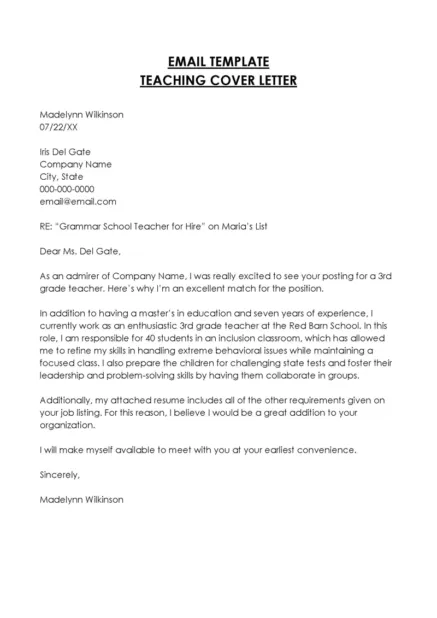
Following your contact information, include the date and the recipient’s details. The date should be the current date, and the recipient’s details should include their name, title, and the school’s address. If you are unsure of the hiring manager’s name, try to find it by looking at the job posting, the school’s website, or LinkedIn. Addressing the cover letter directly to a specific person shows you’ve done your research and that you are interested in the teaching position, which can make a positive impression. Always double-check that the details are accurate to avoid any missteps.
Salutation Addressing the Hiring Manager
The salutation is your greeting, and it’s important to choose the right one to start the letter. Ideally, you should address the hiring manager by name. If you know their name, use ‘Dear Mr./Ms./Dr. [Last Name]’. If you cannot find the name, a professional alternative is ‘Dear Hiring Manager’ or ‘Dear [Department] Hiring Committee’. Avoid generic greetings like ‘To Whom It May Concern,’ as these can make your application seem impersonal. Ensure the salutation matches the overall tone of your letter, and is professional and respectful.
Body Paragraph 1 Hooking the Reader
The first paragraph should immediately grab the reader’s attention. It should state the specific teaching position you are applying for and explain why you are interested in the role and the school. This is your chance to make a strong first impression. Consider starting with a compelling statement that showcases your passion for education or a brief highlight of a relevant achievement. The goal is to make the hiring manager want to read the rest of your cover letter and learn more about you. Avoid generic opening lines. Instead, tailor your opening to demonstrate your understanding of the school’s needs and your excitement about the teaching opportunity.
Body Paragraph 2 Highlighting Relevant Skills

The second paragraph should focus on highlighting your relevant skills and qualifications. Carefully review the job description and identify the key skills and experiences the school is seeking. Then, provide specific examples of how you have demonstrated those skills in the past. Use action verbs to describe your accomplishments and quantify your achievements whenever possible. Tailor this section to fit the specific requirements of the teaching role and showcase how your skill set aligns with the school’s needs. This is a key section to demonstrate how you meet the criteria and requirements outlined in the job posting.
Body Paragraph 3 Showcasing Teaching Experience
The third paragraph should focus on showcasing your teaching experience, with examples of how you have successfully worked with students. Provide specific details about your experience, including the grade levels you’ve taught, the subjects you’ve covered, and the teaching methods you’ve used. Highlight your experience in creating lesson plans, classroom management, and student assessment. Share any successes or achievements you have had in previous teaching roles. It’s important to use this paragraph to highlight how your experience has prepared you to excel in the specific teaching position for which you are applying.
Tailoring the Cover Letter to Teaching Positions
Cover letters for teaching positions require specific tailoring. Generic cover letters will likely be overlooked. You need to demonstrate that you understand the unique requirements of the role and school. This includes highlighting your relevant experience, showcasing your understanding of educational philosophies, and expressing your passion for teaching. Consider it to be an opportunity to show that you have the necessary skills for the job, and explain how you would contribute to student success.
Focusing on Specific Teaching Roles

When tailoring your cover letter, focus on the specific teaching role you are applying for. If it’s a primary school position, highlight your experience with younger children and your understanding of early childhood education. For a secondary school role, emphasize your knowledge of the subject matter and experience with older students. If the job description emphasizes a certain teaching method, show how your approach aligns with this method. Tailor your cover letter to the particular requirements of each position. Show that you’ve considered the grade level, subject matter, and the school’s overall approach.
Demonstrating Passion for Education
Demonstrating your passion for education is critical in your cover letter. Explain what motivates you to teach, and what you find rewarding about working with students. Share stories or examples that illustrate your dedication to student success and your commitment to creating a positive learning environment. Express your enthusiasm for the opportunity to contribute to the school community. Conveying your genuine passion for teaching can make you stand out from other candidates, as this will likely make you a more appealing candidate.
Highlighting Relevant Teaching Experience
Highlighting relevant teaching experience is a key element in your cover letter. Focus on the experiences that are most relevant to the specific teaching position. Provide detailed descriptions of your responsibilities, the grade levels you’ve taught, the subjects you’ve covered, and the teaching methods you’ve used. Include any achievements or successes you’ve had, such as improved student performance, positive classroom management, or innovative lesson plans. Emphasize experience that directly aligns with the school’s needs and values. This helps the hiring manager quickly assess your suitability for the role.
Including Samples of Teaching Philosophy

Many schools want to know about your teaching philosophy, or your beliefs about education and how you approach teaching. Provide a brief overview of your teaching philosophy, highlighting your key beliefs and values. Explain how you approach student engagement, classroom management, and assessment. Provide examples of how you implement your teaching philosophy in the classroom. This is a chance to show how your approach aligns with the school’s mission and values. Include a brief explanation of your teaching style, and what makes your approach effective.
Showcasing Accomplishments and Results
Showcasing your accomplishments and the results you have achieved is essential for a cover letter. It demonstrates the impact you have had in previous roles and provides tangible evidence of your abilities. Highlight specific achievements that are relevant to the teaching position. Use data and statistics to quantify your accomplishments and make your claims more compelling and credible. This helps the hiring manager understand the value that you can bring to their school.
Quantifying Achievements with Data
Quantifying your achievements with data makes your claims more compelling and concrete. Instead of saying ‘Improved student test scores,’ say ‘Increased student test scores by 15%’. Quantify your accomplishments whenever possible by providing specific data points, such as the number of students you have taught, the percentage increase in student engagement, or the number of lesson plans you developed. Including data adds credibility and impact to your cover letter, helping you stand out from other candidates. Use numbers and stats to show the effect your actions have on students.
Providing Specific Examples of Impact

Provide specific examples of the impact you have made in previous teaching roles. Instead of saying ‘I improved student engagement’, describe how you did it. This can include creating innovative lesson plans, implementing new teaching methods, or fostering a positive classroom environment. Provide specific details about the strategies you used, the challenges you faced, and the results you achieved. Specific examples add credibility and make your cover letter more engaging. Tell stories that reflect your skills in action.
Formatting and Tone of a Cover Letter
The formatting and tone of your cover letter are crucial to making a good impression. The goal is to present yourself professionally and to make the letter easy to read. Pay attention to the layout, font, and the overall tone. The formatting must reflect your professionalism and attention to detail. A well-formatted and appropriately-toned cover letter makes a positive statement about you as a candidate.
Choosing the Right Font and Layout
Choose a professional font like Times New Roman, Arial, or Calibri, and maintain a consistent font size throughout your cover letter. Use a standard layout with clear margins and spacing to make it easy to read. Ensure the letter is well-organized, with clear headings and paragraphs. Avoid using overly decorative fonts or complex layouts, as these can distract the reader. Ensure there is proper spacing between each section to help the reader.
Maintaining a Professional Tone
Maintain a professional tone throughout your cover letter. Use clear and concise language, and avoid using slang, jargon, or overly casual language. Use proper grammar, punctuation, and spelling, as these demonstrate your attention to detail. Be enthusiastic and positive, but avoid being overly familiar or informal. Proofread your cover letter carefully before submitting it. The tone should be appropriate for the teaching profession and should reflect the same level of seriousness you show in your classroom.
Proofreading for Errors and Polishing
Proofread your cover letter carefully to identify any errors in grammar, spelling, or punctuation. Errors can undermine your credibility and make you appear unprofessional. Read the letter aloud to catch any awkward phrasing or sentence structure issues. It can also be beneficial to have someone else proofread your cover letter. Ensure the language is clear and easy to understand. Correct any mistakes, and polish your cover letter to make it the best it can be, and be sure it reflects your attention to detail.
Closing Your Cover Letter
The closing of your cover letter is your last chance to leave a positive impression. It’s important to express your gratitude and reiterate your interest in the position. A strong closing will encourage the hiring manager to reach out to you and invite you to an interview.
Expressing Gratitude
Express your gratitude to the hiring manager for considering your application. Thank them for their time and consideration. This shows that you are polite and appreciative of the opportunity. Expressing gratitude leaves the reader with a positive final impression.
Call to Action
End your cover letter with a call to action. Indicate your availability for an interview and encourage the hiring manager to contact you. Provide your contact information again, and express your eagerness to discuss your qualifications further. Make it easy for the hiring manager to take the next step. A clear call to action increases your chances of getting an interview and landing the job. The call to action is very important to have a follow up, so the hiring manager knows how to contact you.