Understanding the Power of a Cover Letter
In the competitive landscape of job applications, a well-crafted cover letter is your secret weapon. It’s more than just a formality; it’s your opportunity to make a lasting first impression and persuade the hiring manager that you’re the ideal candidate. While a resume provides a snapshot of your experience and skills, a cover letter allows you to tell a compelling story about yourself, connecting your qualifications to the specific requirements of the job. This is where you can showcase your personality, passion, and genuine interest in the role, setting you apart from other applicants. A cover letter offers the chance to explain career transitions, address any gaps in your employment history, and highlight achievements that might not be immediately apparent on your resume. Ultimately, a cover letter serves as your personal introduction and an advocate, increasing your chances of landing an interview and ultimately, your dream job.
What is a Cover Letter and Why Is It Important
A cover letter is a one-page document that accompanies your resume when you apply for a job. It’s a personalized introduction to the hiring manager, designed to express your interest in the position and briefly highlight your relevant skills and experiences. It serves as a bridge, connecting your qualifications to the specific needs of the employer. A cover letter is crucial because it provides a platform to demonstrate your communication skills, enthusiasm, and understanding of the role and the company. It’s an opportunity to showcase your personality and explain why you are the best fit for the job beyond what is written on your resume. Moreover, a cover letter allows you to tailor your application to each specific job, emphasizing the skills and experiences that align with the employer’s requirements. In many cases, the cover letter is the first document a hiring manager reads, so it sets the tone for your entire application. A strong cover letter can significantly increase your chances of getting noticed, securing an interview, and ultimately, landing your dream job.
Key Elements of a Cover Letter

A compelling cover letter includes several key elements that work together to make a strong case for your candidacy. These elements work in harmony to create a cohesive and persuasive narrative. The first is a professional header, that should include your contact information, followed by the date and the recipient’s information. Next is a compelling opening paragraph that grabs the reader’s attention, state the specific position you are applying for and why you are interested. The body of your cover letter is where you highlight your relevant skills and experiences, demonstrating how they align with the job requirements. The closing paragraph should reiterate your interest, express gratitude, and include a call to action, such as inviting the reader to contact you for an interview. Formatting, including clear language, appropriate fonts, and a professional layout, is essential to ensure readability and impact. Each section must be carefully crafted to make a strong, clear and professional impression.
Header Details for Professionalism
The header of your cover letter sets the tone for professionalism and attention to detail. Start by including your full name, address, phone number, and email address. Make sure this information is accurate and up-to-date. Use a clear and easy-to-read font, ensuring your contact details are readily accessible. Below your information, include the date of your cover letter. After the date, include the recipient’s information, including their name, title, and the company’s address. If you do not know the name of the hiring manager, try to find it on LinkedIn or the company website. Addressing the letter to a specific person demonstrates that you’ve taken the time to research the company and shows your initiative. A well-formatted header is a crucial first step in making a positive impression, showcasing your professionalism and attention to detail. See picture of a cover letter header.
Proper Salutations to Address the Recruiter
The salutation is the first interaction you have with the hiring manager in your cover letter. It should be professional and engaging. The best approach is to use a personalized greeting, such as “Dear Mr./Ms./Mx. [Last Name],” if you know the hiring manager’s name. If you are unsure, research on the company’s website or LinkedIn. Avoid generic greetings like “To Whom It May Concern.” If you can’t find a name, a professional alternative is “Dear Hiring Manager” or “Dear [Department] Team.” Ensure you use the correct title and spelling, and always address the person with respect. Proper salutations not only show that you have taken the time to do your research, but it also sets a positive and personalized tone for the entire cover letter, helping to capture the reader’s attention.
Body of the Cover Letter

The body of your cover letter is where you make your case, highlighting your skills, experiences, and qualifications. It’s the heart of your document and should be well-structured and focused. The body should be divided into a series of paragraphs, each addressing a specific aspect of your suitability for the role. The opening paragraph grabs the reader’s attention, states the position you are applying for, and why you are interested. The subsequent paragraphs should focus on your relevant skills and how your experiences align with the job requirements, providing specific examples and quantifiable achievements. Show your enthusiasm and demonstrate your understanding of the company’s values and goals. Maintain a professional and engaging tone throughout the body of the cover letter. The aim is to show how your qualifications match the employer’s needs. The goal is to persuade the reader that you are a strong candidate and worthy of an interview.
Opening Paragraph Grab Their Attention
The opening paragraph is your first opportunity to make a positive impression. It should capture the hiring manager’s attention and encourage them to read the rest of your cover letter. Start by clearly stating the specific position you are applying for. Briefly explain where you saw the job posting and, most importantly, express your strong interest in the role and the company. Make it clear why you are excited about the opportunity. Consider starting with a compelling statement or a brief story. You can include a key achievement or a relevant skill that immediately showcases your value. Avoid generic phrases or clichés. Your opening paragraph should be concise, enthusiastic, and directly related to the job you are seeking. The primary objective is to make a positive impression and encourage the reader to keep reading.
Highlight Your Relevant Skills
In the main body, highlight the skills and experiences that make you a strong fit for the job. Review the job description carefully and identify the key requirements and qualifications the employer is seeking. Provide specific examples of how you have used your skills and achieved results in your previous roles. Use action verbs to describe your accomplishments. Quantify your achievements whenever possible; for example, mention how you increased sales by a specific percentage or how you reduced costs. Focus on the skills that are most relevant to the job. Tailor your content to the requirements of each specific position. Avoid simply listing your skills. Instead, provide context and explain how you used your skills to overcome challenges and achieve positive outcomes. A well-crafted cover letter demonstrates how your skills meet the employer’s needs, making a strong case for why you should be considered for the role. Make the perfect picture of your cover letter.
Showcase Your Enthusiasm and Fit

Employers want to hire people who are passionate about their work and are a good fit for the company culture. Show your enthusiasm for the role and the organization by expressing your genuine interest. Research the company and its mission, values, and recent projects. Show that you understand their goals and what they are trying to achieve. Explain why you want to work for this specific company and how your values align with theirs. Showcase your knowledge of the industry. Use language that reflects your personality and excitement. Demonstrate how your skills and experiences specifically align with the job requirements and the company’s needs. Personalize your cover letter by mentioning specific projects or aspects of the company that resonate with you. A cover letter that showcases enthusiasm and a good fit increases the chances of securing an interview and a job offer.
Closing Paragraph Prompt Action
The closing paragraph is your final opportunity to make a lasting impression. It should reiterate your interest in the position and express gratitude to the hiring manager for their time and consideration. Reiterate your excitement about the opportunity and summarize why you are a strong fit for the role. Include a call to action, such as inviting the reader to contact you for an interview or to discuss your qualifications further. Make it easy for the hiring manager to reach you by providing your phone number and email address. End on a positive and confident note. Make sure you sign off with a professional closing. This makes you memorable and creates a path to the next stage of the application process. A clear, strong closing paragraph can significantly boost your chances of securing an interview, ultimately helping you land your dream job.
Formatting a Cover Letter for Impact
The formatting of your cover letter is crucial for making a positive impression and ensuring readability. Pay attention to the layout, font choices, and overall visual appeal. The right formatting can make the difference between a cover letter that gets read and one that is immediately dismissed. Your cover letter should be easy to read and visually appealing. This is the picture of a cover letter formatting.
Font Choices and Readability

The font you choose can significantly affect the readability and professional look of your cover letter. Opt for a clean, legible font like Times New Roman, Arial, Calibri, or Helvetica. Ensure the font size is between 10 and 12 points to make the text easy to read. Avoid using overly stylized or decorative fonts. They can be distracting. Ensure consistent font formatting throughout the document. Use bolding and italics sparingly to highlight key information. A clear font choice enhances the overall readability of your cover letter and makes a more positive impression on the hiring manager. A professional font choice demonstrates attention to detail.
Layout and Visual Appeal
A well-designed layout is essential for a cover letter that is easy to read and visually appealing. Use margins of at least one inch on all sides to provide ample white space. This helps the text breathe and makes it less overwhelming for the reader. Use concise paragraphs and bullet points to break up large blocks of text and emphasize key information. Make sure your contact information is clearly displayed at the top of the document. Maintain consistent spacing between lines and paragraphs for a clean, organized look. Proofread carefully for any formatting inconsistencies. A visually appealing layout enhances the cover letter’s readability and conveys a sense of professionalism. Picture of a cover letter for a job application is always perfect for landing a job.
Cover Letter Mistakes to Avoid
Avoiding common cover letter mistakes can dramatically improve your chances of making a strong first impression. Many mistakes can easily be corrected with careful review and attention to detail. Being aware of these common errors can ensure your cover letter presents you in the best possible light.
Generic and Vague Content

One of the most critical mistakes is using generic or vague language. Avoid using a generic template for every application. Always tailor your cover letter to the specific job and the company. Ensure your cover letter speaks directly to the requirements outlined in the job description. Do not rely on general statements about your skills or experience. Instead, provide specific examples of how you’ve demonstrated those skills in previous roles. Use action verbs to describe your accomplishments, and provide concrete details. A personalized and detailed cover letter shows that you have put in the effort and are genuinely interested in the position.
Typos and Grammatical Errors
Typos and grammatical errors are unacceptable. These errors show a lack of attention to detail and can damage your credibility. Before submitting your cover letter, thoroughly proofread it for any spelling, grammar, or punctuation errors. Use spell-check and grammar-check tools to help catch mistakes, but don’t rely on them entirely. Have a friend, family member, or career advisor proofread your cover letter to get a fresh perspective. A well-written, error-free cover letter demonstrates your professionalism, attention to detail, and respect for the hiring manager. A perfect cover letter example picture is always a plus.
Cover Letter Examples That Work
Reviewing successful cover letter examples can provide valuable insights and guidance for crafting your own. Cover letter examples offer a practical way to understand what a compelling cover letter looks like. Learning the different structures can help you articulate your skills effectively and make a strong case for your candidacy.
Cover Letter Example for Entry-Level Positions

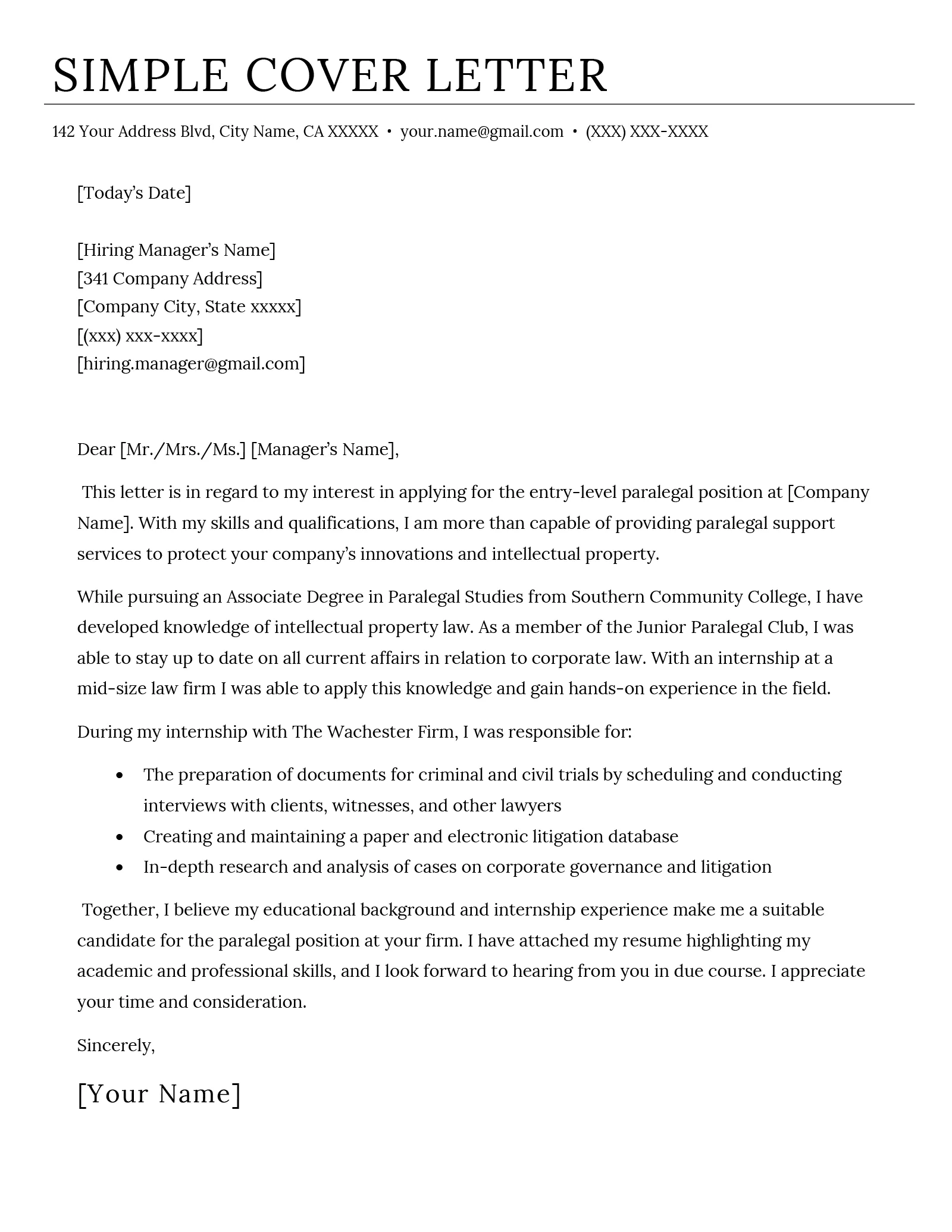
For entry-level positions, your cover letter should emphasize your education, relevant coursework, internships, and any part-time jobs or volunteer experiences. Highlight any skills or experiences that align with the job requirements. Demonstrate your enthusiasm for the company and the role. Show your willingness to learn and contribute. If you have limited work experience, focus on showcasing your transferable skills, such as communication, teamwork, problem-solving, and time management. Tailor your cover letter to the specific role. A well-crafted cover letter for an entry-level position helps you make a strong first impression, even with limited professional experience. This entry-level picture of a cover letter is the perfect example for your case.
Cover Letter Example for Experienced Professionals
For experienced professionals, your cover letter should showcase your accomplishments, expertise, and leadership skills. Focus on your key achievements and the results you’ve delivered in previous roles. Provide specific examples that demonstrate how you have contributed to the success of your past companies. Quantify your achievements whenever possible. Highlight any awards, promotions, or recognition you’ve received. Show how your experience aligns with the job requirements. A cover letter for experienced professionals should serve as a persuasive summary of your career. A cover letter that highlights career progression and significant achievements is an excellent example.
Cover Letter Tips and Tricks
In addition to the core elements, there are several tips and tricks to make your cover letter more effective. Small adjustments can make a big difference in how your application is perceived. Knowing the best approach can help you optimize your cover letter and make it more compelling to the reader.
Tailoring Your Cover Letter
Tailoring your cover letter to each job is the most crucial tip for maximizing your chances of success. Start by carefully reading the job description and identifying the key requirements and qualifications. Customize your cover letter to highlight the skills, experiences, and achievements that are most relevant to the specific position. Use keywords from the job description to demonstrate that you are a strong fit. Research the company and its culture, then tailor your cover letter to reflect your understanding of its values and goals. This level of personalization shows that you’ve taken the time to understand the job and the company, which makes a lasting impression. Tailoring shows a great picture of a cover letter.
Proofreading and Editing
Proofreading and editing your cover letter is an essential step in ensuring it is polished and professional. After writing your cover letter, take a break and then review it with fresh eyes. Check for spelling errors, grammatical mistakes, and punctuation errors. Ensure that your sentences are clear, concise, and well-structured. Read your cover letter aloud to catch any awkward phrasing or errors. Use a grammar checker to help identify any mistakes you might have missed. Have someone else proofread your cover letter to get a second opinion. A well-proofread and edited cover letter enhances your credibility. A picture of a cover letter, free of mistakes, reflects your attention to detail.
Conclusion Recap Key Takeaways
Mastering the art of the cover letter is a crucial step in any job search. Remember, a well-crafted cover letter is an important opportunity to showcase your qualifications, express your enthusiasm, and connect with the hiring manager on a personal level. When you craft a cover letter, tailor each one to the specific job, highlighting the most relevant skills, experiences, and achievements. Always proofread your letter for errors before submitting your application. The key to success is to provide examples that demonstrate your skills and experience and make you stand out from other candidates. By following the tips, you can create a cover letter that gets you noticed, secures an interview, and helps you land your dream job. Use the picture of a cover letter as your guide. Good luck!