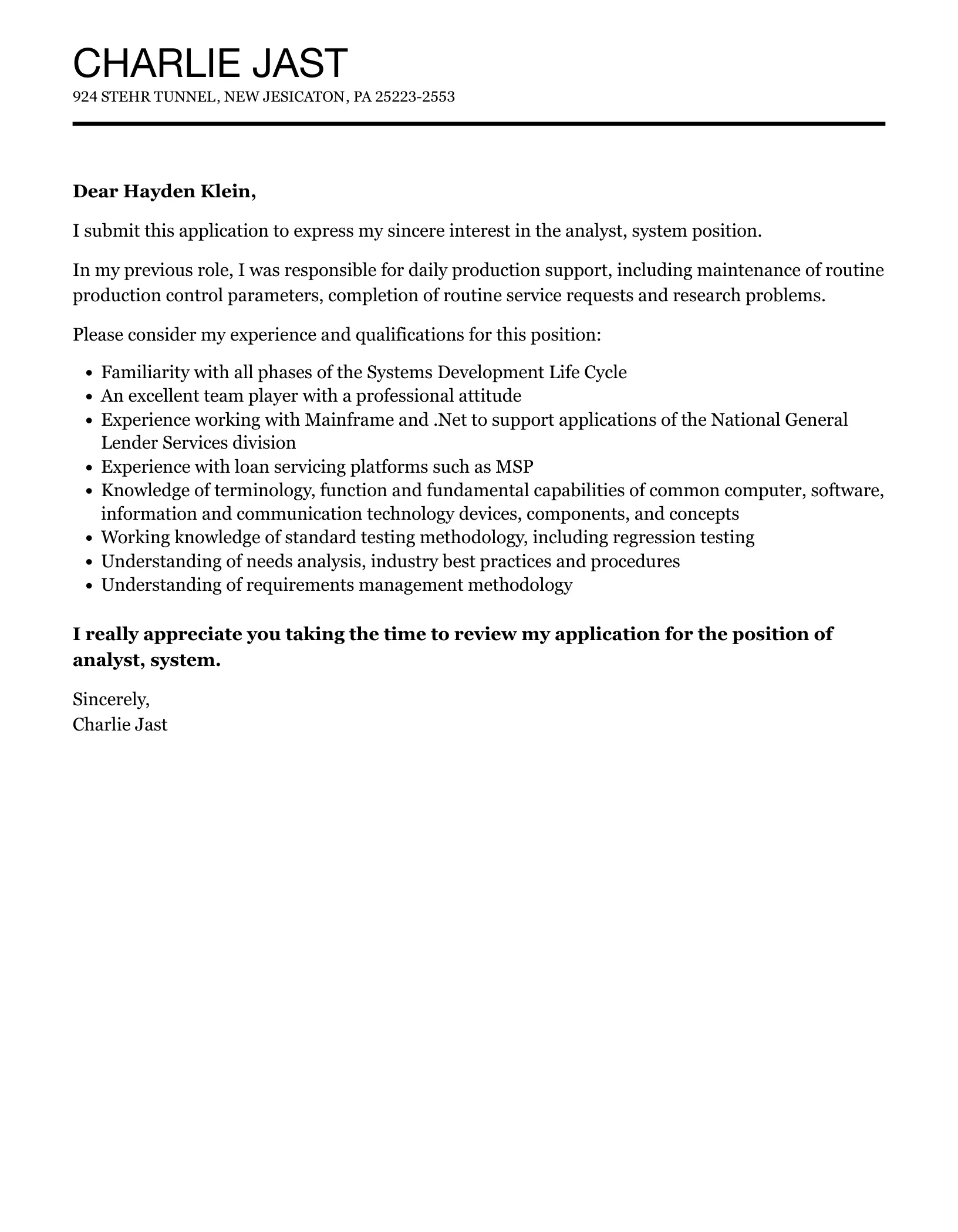
Crafting a Compelling Cover Letter
A well-crafted cover letter is your first impression when applying for a System Analyst position. It’s your opportunity to showcase your skills, experience, and enthusiasm for the role. A compelling cover letter goes beyond simply restating your resume; it tells a story, highlighting your relevant accomplishments and demonstrating why you are the ideal candidate. This guide will walk you through creating a cover letter that effectively grabs the attention of hiring managers and increases your chances of landing an interview. It is crucial to present yourself in a way that aligns with the job description and clearly communicates your value proposition to the prospective employer. Take your time and carefully consider each section of your cover letter to ensure you make a lasting positive impression.
Understanding the System Analyst Role
Before you start writing your cover letter, it is essential to understand the role of a System Analyst. This understanding will enable you to tailor your cover letter effectively and demonstrate your relevant experience. System Analysts play a critical role in aligning IT systems with business goals. They analyze an organization’s needs, design and implement IT solutions, and ensure systems run efficiently. To demonstrate your knowledge, research the specific company and understand their business model and IT infrastructure. Tailor your letter to address their specific needs by emphasizing your relevant experience and skills that directly address the job requirements.
Key Responsibilities of a System Analyst

System Analysts have a wide range of responsibilities. These responsibilities vary from company to company, but a general understanding can help you focus your cover letter. These professionals gather and analyze business requirements, document system specifications, and design solutions. They are also involved in testing, implementing, and maintaining IT systems. Showcasing your experience in these areas is critical. Highlight your ability to collaborate with various stakeholders, manage projects, and troubleshoot system issues. Include examples of past projects where you successfully implemented or improved systems to meet business needs. A well-written cover letter should reflect your knowledge of these key responsibilities.
Essential Skills to Highlight
System Analyst roles require a blend of technical and soft skills. Your cover letter should prominently feature both to impress hiring managers. Begin by identifying the essential skills listed in the job description. These often include technical proficiency, problem-solving abilities, and strong communication skills. Ensure that you have incorporated keywords directly from the job description. Demonstrate how your past experiences align with the skills sought by the employer. Show how you have utilized these skills to achieve specific results. Avoid merely listing skills; instead, provide brief, impactful examples that illustrate your capabilities.
Technical Skills
Technical skills form the foundation of a System Analyst’s expertise. Highlight skills that are relevant to the specific role. Examples include proficiency in programming languages, database management, and system integration. Mention any experience with specific software, tools, or methodologies that are relevant to the job requirements. Include examples of the projects where you have applied these technical skills. For instance, describe how you used SQL to manage databases, or how you utilized a specific programming language to automate a process. Focus on illustrating how you have used technical skills to solve problems and improve systems.
Soft Skills

Soft skills are just as crucial as technical abilities. System Analysts are often the bridge between technical teams and business stakeholders, requiring exceptional communication and interpersonal skills. Demonstrate your ability to collaborate effectively, solve problems, and manage projects. Mention your experience in requirements gathering, user training, and conflict resolution. Include examples of how you have successfully communicated complex technical information to non-technical audiences. Highlighting strong soft skills in your cover letter portrays you as a well-rounded candidate and shows your capability to thrive in collaborative environments. Be sure to showcase your leadership, teamwork, and adaptability.
Structuring Your Cover Letter
The structure of your cover letter is crucial for making a strong first impression. A well-organized letter is easier to read and shows you understand professional communication. Begin with a professional header that includes your contact information. Follow this with a compelling opening statement. Then, craft several body paragraphs that showcase your accomplishments and skills. Conclude with a strong closing statement that reiterates your interest and next steps. Ensure your cover letter is formatted neatly, with clear paragraphs and appropriate spacing. Consider using bullet points and headings to break up the text and improve readability. This structure will help you create a cover letter that captures the reader’s attention and highlights your best attributes.
Header and Contact Information
The header of your cover letter should provide the hiring manager with your contact information. Include your full name, address, phone number, and email address. Make sure that your email address is professional. It is also important to include the date and the recipient’s contact information, such as the name and title of the hiring manager and the company’s address. Formatting this information correctly is critical for ensuring your cover letter looks professional. Double-check all contact details to avoid any errors that could hinder the recruiter’s ability to reach you. This section ensures the recruiter can easily contact you.
Opening Statement

Your opening statement is your chance to grab the hiring manager’s attention. It should be concise, engaging, and clearly state the position you are applying for. Express your enthusiasm for the role and the company. Mention where you found the job posting and briefly highlight your most relevant skills and experience. Avoid generic opening lines. Instead, tailor your opening to the specific job and company, showing that you have done your research. This will make you stand out from other applicants. Aim to create an opening that captivates the recruiter’s attention and motivates them to continue reading.
Body Paragraphs
The body paragraphs are where you highlight your achievements, skills, and experiences. Each paragraph should focus on a specific aspect of your qualifications and demonstrate your value to the company. Use the job description as a guide and address the key requirements and responsibilities listed. Provide concrete examples of your accomplishments, using the STAR method (Situation, Task, Action, Result) to describe your contributions. Use strong action verbs and quantify your achievements whenever possible. For instance, instead of stating, ‘Managed projects,’ state, ‘Managed three concurrent projects, resulting in a 15% increase in efficiency and a 10% reduction in costs.’ This method allows you to showcase your value and demonstrates your potential to the recruiter.
Highlighting Achievements and Skills
In the body paragraphs, focus on showcasing your achievements and relevant skills. Provide detailed examples of how you have successfully applied your skills in previous roles. Describe the specific challenges you faced, the actions you took, and the results you achieved. Emphasize the positive outcomes of your actions and the value you brought to your previous employers. Use quantifiable data whenever possible to demonstrate the impact of your contributions. It is important to show, not just tell. Instead of saying, ‘I am good at problem-solving,’ provide an example of how you resolved a critical issue and the positive outcomes that resulted. This approach will enable you to impress the hiring managers.
Quantifying Accomplishments

Quantifying your accomplishments adds credibility and impact to your cover letter. Whenever possible, use numbers, percentages, and statistics to demonstrate the value you brought to your previous employers. For example, instead of saying, ‘Improved system efficiency,’ state, ‘Improved system efficiency by 20%, resulting in a reduction of operational costs.’ Highlighting specific figures gives a clear indication of your capabilities and results. Use metrics to show the impact of your actions on key performance indicators. This makes your cover letter more persuasive and compelling. Make sure your quantified achievements align with the key requirements of the job. Focus on outcomes that directly benefited previous employers.
Closing the Letter
Your closing should reiterate your interest in the position and thank the hiring manager for their time and consideration. Reiterate your enthusiasm for the opportunity and briefly mention why you are a good fit for the role. Include a call to action, such as stating that you are available for an interview. Provide your contact information and make it easy for the hiring manager to reach you. Ensure your closing is professional and courteous. This demonstrates your professionalism and leaves a positive impression. A well-crafted closing helps you secure an interview.
Proofreading and Formatting
Before submitting your cover letter, proofread it carefully for any errors in grammar, spelling, and punctuation. Ensure your letter is formatted consistently and is easy to read. Pay close attention to the font, margins, and spacing. Errors can damage your credibility and make it seem as if you lack attention to detail. Consider asking a friend or colleague to review your letter for you. A fresh pair of eyes can often catch mistakes you may have missed. Ensure that your letter is free from any errors. Pay attention to the tone and structure of your cover letter. A polished and error-free cover letter increases your chances of making a great impression.