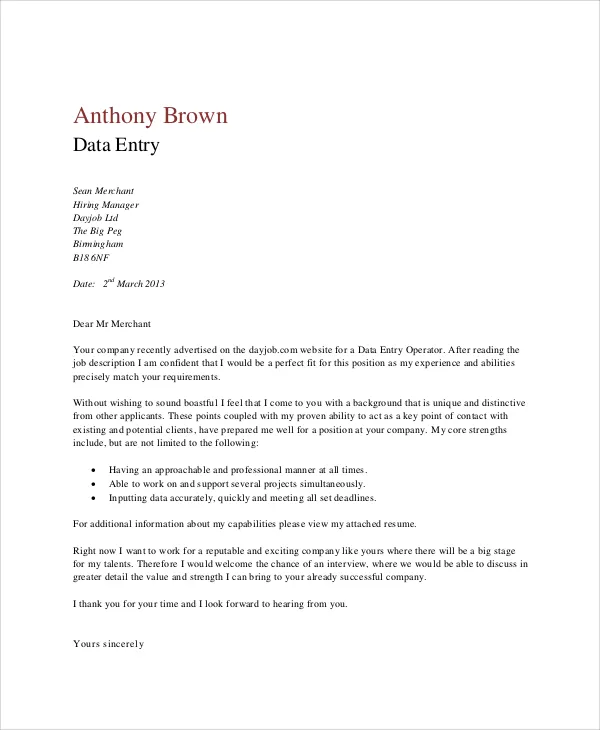
Why You Need a Data Entry Cover Letter
In the competitive job market, especially for roles like data entry, a well-crafted cover letter is not just optional; it’s essential. It serves as your first introduction to a potential employer, providing a chance to showcase your personality, skills, and enthusiasm beyond what a resume can convey. A cover letter allows you to elaborate on your qualifications, explain your motivations for applying, and demonstrate your understanding of the specific job requirements. Without a compelling cover letter, your application might get overlooked, even if your resume is strong. A cover letter provides context and personality to your application, making you stand out from other applicants.
The Importance of a Cover Letter
The importance of a cover letter cannot be overstated. It is a crucial tool that helps you create a positive first impression and persuade the hiring manager to consider your application. A cover letter is a chance to demonstrate your communication skills, which are vital in any professional setting. It enables you to highlight specific achievements and qualifications that directly align with the job description, thus demonstrating your suitability for the position. Furthermore, a cover letter shows that you are serious about the role and have taken the time to personalize your application to the company’s needs. It is a key element in the job application process, as it provides a crucial opportunity to showcase your personality, passion, and commitment to the role.
Highlighting Your Data Entry Skills

Your cover letter is the perfect platform to spotlight your specific data entry skills. This isn’t just about listing skills; it’s about demonstrating how those skills have translated into tangible results. For example, instead of simply stating that you have ’excellent typing skills,’ provide a typing speed (e.g., 60 WPM) and mention how this speed contributed to increased productivity in your previous role. Similarly, instead of saying you are proficient with ‘data entry software,’ name the specific software you’ve used (e.g., Microsoft Excel, SAP) and give examples of how you used it to manage and process data accurately. Using specific examples and quantifiable achievements will make your application more compelling and highlight your capabilities effectively.
Key Components of a Data Entry Cover Letter
A data entry cover letter follows a standard structure, but the content should be customized to make a strong impression. A well-structured letter ensures that you cover all the essential aspects and present yourself in the best light possible. Each part plays a critical role in conveying your qualifications and enthusiasm for the role. The following sections outline what should be in each part.
Contact Information and Salutation
Start with your contact information (name, address, phone number, email) at the top of the letter. This ensures the recruiter can easily reach you. Below this, include the date and the hiring manager’s name and title if available; otherwise, use a generic salutation like ‘Dear Hiring Manager.’ Personalizing the salutation by addressing it to a specific person is always preferred, as it shows you’ve researched the company and are genuinely interested in the position. This level of detail sets a professional tone from the outset and makes a positive first impression.
Opening Paragraph & Hook

The opening paragraph is your chance to grab the reader’s attention. Start with a strong hook that states your interest in the data entry position and mentions where you saw the job posting. Briefly mention why you’re a good fit for the job, highlighting your most relevant skill or experience to pique their interest. This initial paragraph is crucial; it should clearly state your intention and provide a concise overview of your qualifications. This will make the recruiter or hiring manager want to read further.
Body Paragraphs Explaining Skills
The body of your cover letter is where you detail your skills and experience. Use this section to elaborate on your key skills for data entry, such as accuracy, speed, and proficiency with relevant software. Provide specific examples of how you’ve used these skills to achieve results in previous roles. Quantify your achievements whenever possible (e.g., ‘Reduced data entry errors by 15%’ or ‘Processed an average of 500 records per day’). Tailor your examples to the specific requirements mentioned in the job description to demonstrate that you are a great fit for the role. Also, show how these achievements align with the company’s goals.
Closing Paragraph & Call to Action
In your closing paragraph, reiterate your interest in the data entry position and thank the hiring manager for considering your application. Express your enthusiasm for the opportunity and state your availability for an interview. End with a strong call to action, such as ‘I am eager to discuss how my skills can contribute to your team’s success.’ A clear call to action shows your proactive approach and eagerness to move forward in the hiring process, reinforcing your interest in the role and encouraging the hiring manager to contact you.
Essential Skills to Showcase

Highlighting the right skills is critical in a data entry cover letter. Many skills make you stand out in this competitive environment. These skills show that you are the best candidate for the role.
Typing Speed and Accuracy
Typing speed and accuracy are fundamental for data entry roles. Mention your typing speed in words per minute (WPM) and provide examples that demonstrate your ability to maintain high accuracy while typing quickly. Employers often seek candidates who can efficiently enter large volumes of data without errors. Include any certifications or assessments that validate your typing skills, such as a typing test certificate. Emphasize the importance of both speed and accuracy, as they go hand-in-hand in ensuring productivity and minimizing errors in data management.
Attention to Detail
Attention to detail is paramount in data entry. Showcase your ability to meticulously review data, identify discrepancies, and correct errors. Provide specific examples of how you have ensured data accuracy in previous roles, such as by implementing quality control checks or using verification tools. Emphasize that you understand the importance of error-free data entry. This ensures high-quality information is used for business decisions.
Data Entry Software Proficiency

Data entry professionals must be proficient with various software tools. Mention the specific software you have experience with, such as Microsoft Excel, Google Sheets, CRM systems (e.g., Salesforce, HubSpot), or specialized data entry programs. Describe your level of proficiency (e.g., beginner, intermediate, advanced) and provide examples of how you’ve used these tools to manage, process, and analyze data. If you have experience with any industry-specific software, be sure to include it, as this can significantly enhance your application and make you a more competitive candidate.
How to Format Your Cover Letter
Formatting a cover letter correctly can enhance its professionalism and readability, which directly impacts your ability to grab the hiring manager’s attention. Choosing the right font and spacing is important for this process.
Font, Size, and Spacing Guidelines
Use a professional font, such as Times New Roman, Arial, or Calibri, with a font size between 10 and 12 points. Ensure that the font is easy to read and consistent throughout the document. Maintain a standard 1-inch margin on all sides of the page. Use single or 1.15 line spacing to enhance readability and create a clean, organized appearance. Proper formatting makes your cover letter easy to read, which helps to keep the hiring manager interested in your qualifications.
Proofreading and Editing

Proofread your cover letter meticulously for any grammatical errors, spelling mistakes, or typos. These errors can detract from your professionalism and diminish your chances of getting the job. Read the letter aloud to catch any awkward phrasing or sentence structure issues. Consider having a friend or family member review your cover letter to get a fresh perspective and catch any errors you may have missed. Proofreading and editing are essential to make sure your cover letter showcases your writing skills and attention to detail.
Customizing Your Letter
A generic cover letter is unlikely to impress a hiring manager. To truly stand out, you must customize your letter for each job you apply for, showing that you have a clear understanding of the role and the company’s needs.
Tailoring to the Job Description
Carefully review the job description and identify the key skills and requirements the employer is looking for. Use these keywords and phrases throughout your cover letter to demonstrate that you possess the skills and experience they seek. Tailor your examples and accomplishments to directly address the job’s specific needs. This personalization shows the hiring manager that you have carefully considered the role and are a good fit for the position. This approach will make your application more relevant and increase your chances of success.
Researching the Company

Researching the company is an essential part of personalizing your cover letter. Visit the company’s website, read their mission statement, and learn about their products or services. If possible, research the hiring manager or anyone you might be reporting to. Mention something specific about the company that interests you and explain why you are eager to work there. Showing genuine interest in the company helps demonstrate that you are not just looking for any job but are specifically drawn to their organization and culture. This level of detail shows that you are invested in the opportunity and will make you a more compelling candidate.
Data Entry Cover Letter Examples
Reviewing examples of data entry cover letters can help you visualize how to effectively present your skills and experience. Use these examples as guides to craft your cover letter and tailor the format to fit your specific needs.
Example 1 Strong Skills
This example focuses on highlighting the candidate’s core data entry skills. [Insert Example Cover Letter snippet highlighting skills here]. This approach ensures that the candidate’s key capabilities are clearly conveyed to the potential employer. This makes it easy for the reader to identify their strongest assets at a glance.
Example 2 Highlighting Experience

This example showcases the candidate’s work experience and achievements. [Insert Example Cover Letter snippet highlighting experience here]. This method provides context to the candidate’s expertise. It also showcases how they’ve used their skills to achieve tangible results in the past.
Example 3 Addressing Gaps
This example is designed for candidates who may have gaps in their employment history or are changing careers. [Insert Example Cover Letter snippet addressing gaps here]. Using this approach allows the candidate to address possible concerns upfront while still showcasing their strengths and enthusiasm for the role.