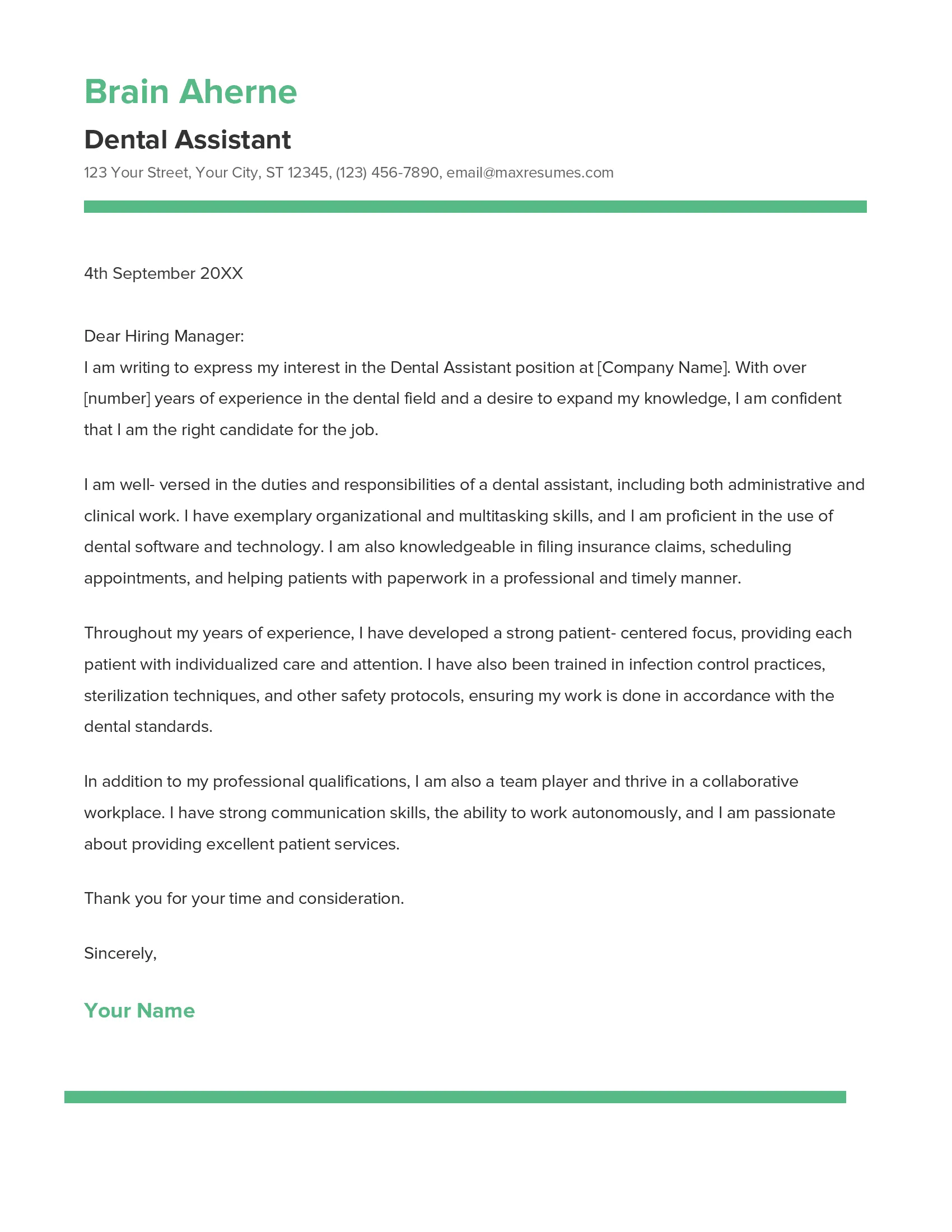
Crafting the Perfect Dental Assistant Cover Letter
Landing a dental assistant position requires more than just a resume. A well-crafted cover letter is your chance to make a strong first impression, showcasing your personality, skills, and genuine interest in the role. This simple guide provides a step-by-step approach to creating a compelling cover letter that will grab the attention of potential employers. We will cover essential elements from formatting to content, ensuring your application stands out from the competition. A PDF-ready template can be the best choice.
Understanding the Purpose of a Cover Letter
Why a Cover Letter is Essential

A cover letter serves as your introduction to the hiring manager, offering a glimpse into your personality and qualifications that a resume alone cannot provide. It allows you to elaborate on your skills, explain your motivations, and express your enthusiasm for the specific position and dental practice. Essentially, a cover letter acts as a persuasive tool, convincing the employer that you are the ideal candidate. A strong cover letter elevates your application, increasing your chances of securing an interview. A perfect cover letter is the best choice to get a job.
Highlighting Your Key Skills and Experience
Essential Skills for Dental Assistants
When writing your cover letter, emphasize the skills most relevant to the dental assistant role. These may include assisting dentists during procedures, taking and developing X-rays, sterilizing instruments, preparing treatment rooms, and providing patient education. Highlight your proficiency in these areas with specific examples of your accomplishments. For instance, instead of stating ‘Proficient in X-ray techniques,’ describe a time when you successfully took and processed a complex X-ray, resulting in a more accurate diagnosis. This shows the employer that you are a professional and skilled employee.
Showcasing Relevant Experience
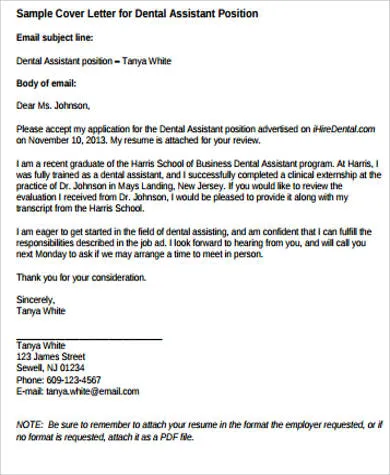
Your cover letter should provide concrete examples of your previous experience. Describe your roles and responsibilities in past positions, focusing on achievements and contributions that align with the job requirements. If you have experience in specialized areas, such as orthodontics or periodontics, be sure to highlight it. Quantify your accomplishments whenever possible. For example, instead of saying ‘Managed patient records,’ you could say ‘Managed and updated over 200 patient records, ensuring accuracy and compliance.’ This provides tangible evidence of your capabilities and value.
Formatting Your Dental Assistant Cover Letter
Header and Contact Information
Start your cover letter with a professional header that includes your name, address, phone number, and email address. Following this, include the date and the employer’s contact information. This should include the name of the hiring manager, their title, and the practice’s address. This provides the necessary information for a proper response. Make sure your contact information is current and easily accessible, so the employer can reach you promptly.
Greeting and Salutation

Always address your cover letter to a specific person whenever possible. Research the practice to find the hiring manager’s name. If you cannot find a name, use a professional greeting, such as ‘Dear Hiring Manager.’ Avoid generic greetings like ‘To Whom It May Concern.’ Use a professional closing, such as ‘Sincerely’ or ‘Respectfully,’ followed by your full name. These small details demonstrate your attention to detail and professionalism.
Body Paragraph Structure
Structure your cover letter with clear and concise paragraphs. Typically, a cover letter consists of an introductory paragraph, two to three body paragraphs, and a concluding paragraph. The introductory paragraph should state your purpose and grab the reader’s attention. The body paragraphs should highlight your skills and experiences, providing specific examples. The concluding paragraph should summarize your interest in the position and state your call to action. Keep each paragraph focused and easy to read. Ensure a professional and simple design in your cover letter to show your capacity to get the job.
Closing and Call to Action
In your concluding paragraph, reiterate your interest in the position and express your enthusiasm for the opportunity. Include a call to action, such as requesting an interview and providing your availability. Thank the employer for their time and consideration. This reinforces your interest and makes it easy for the employer to take the next step. Make sure you include a thank you for the time they are spending reviewing the cover letter. Include the option to contact you at any time in the future to get more information.
Writing a Strong Opening Paragraph

Grabbing the Reader’s Attention
Your opening paragraph is your first opportunity to make a strong impression. Start with a compelling sentence that grabs the reader’s attention. You might mention your passion for dentistry, a specific skill that matches the job requirements, or a past accomplishment that aligns with the practice’s needs. Your opening paragraph should set the tone for the rest of your cover letter, highlighting your enthusiasm and qualifications from the start. Ensure you include a personal story or a past experience that will lead the hiring manager to keep reading.
Stating Your Purpose Clearly
Clearly state the purpose of your cover letter and the specific position you are applying for in your opening paragraph. Mention where you saw the job posting. This shows the employer that you have taken the time to research the role and tailor your application accordingly. Be direct and concise, avoiding any unnecessary information that might distract from your main objective, which is getting the job.
Highlighting Your Enthusiasm and Passion

Expressing Your Interest in the Position
Throughout your cover letter, express your genuine interest in the dental assistant position. Describe what attracts you to the role and why you are excited about the opportunity. Show that you have researched the practice and understand its mission, values, and services. Highlighting your enthusiasm will make your application more appealing and show the hiring manager your interest in working for the dental practice. You can also include why you are interested in the dental practice in particular.
Demonstrating Your Knowledge of the Practice
If possible, show that you have researched the dental practice and understand its services, values, and goals. This could be by mentioning a specific program, treatment, or aspect of the practice that interests you. This demonstrates that you are truly interested in the position and aligns with the company values. Tailoring your letter to the specific practice will make you stand out from other applicants and show that you’ve done your homework.
Proofreading and Editing Your Cover Letter
Checking for Grammar and Spelling Errors
Carefully proofread your cover letter for any grammar or spelling errors. Errors can damage your credibility and give the impression that you lack attention to detail. Use a grammar checker and spell checker, but also read your letter aloud to catch any mistakes that may be missed. It’s also useful to have a friend or family member review your letter. A perfect cover letter can be considered a PDF format, the employer can easily read it.
Ensuring a Professional Tone
Maintain a professional and respectful tone throughout your cover letter. Avoid using slang, jargon, or overly casual language. Your cover letter is a formal document. Use clear, concise language, and a positive, enthusiastic tone. Professionalism reflects your ability to communicate effectively in the workplace. This shows your professionalism and dedication to your job. Remember that this letter is a key to getting the job.