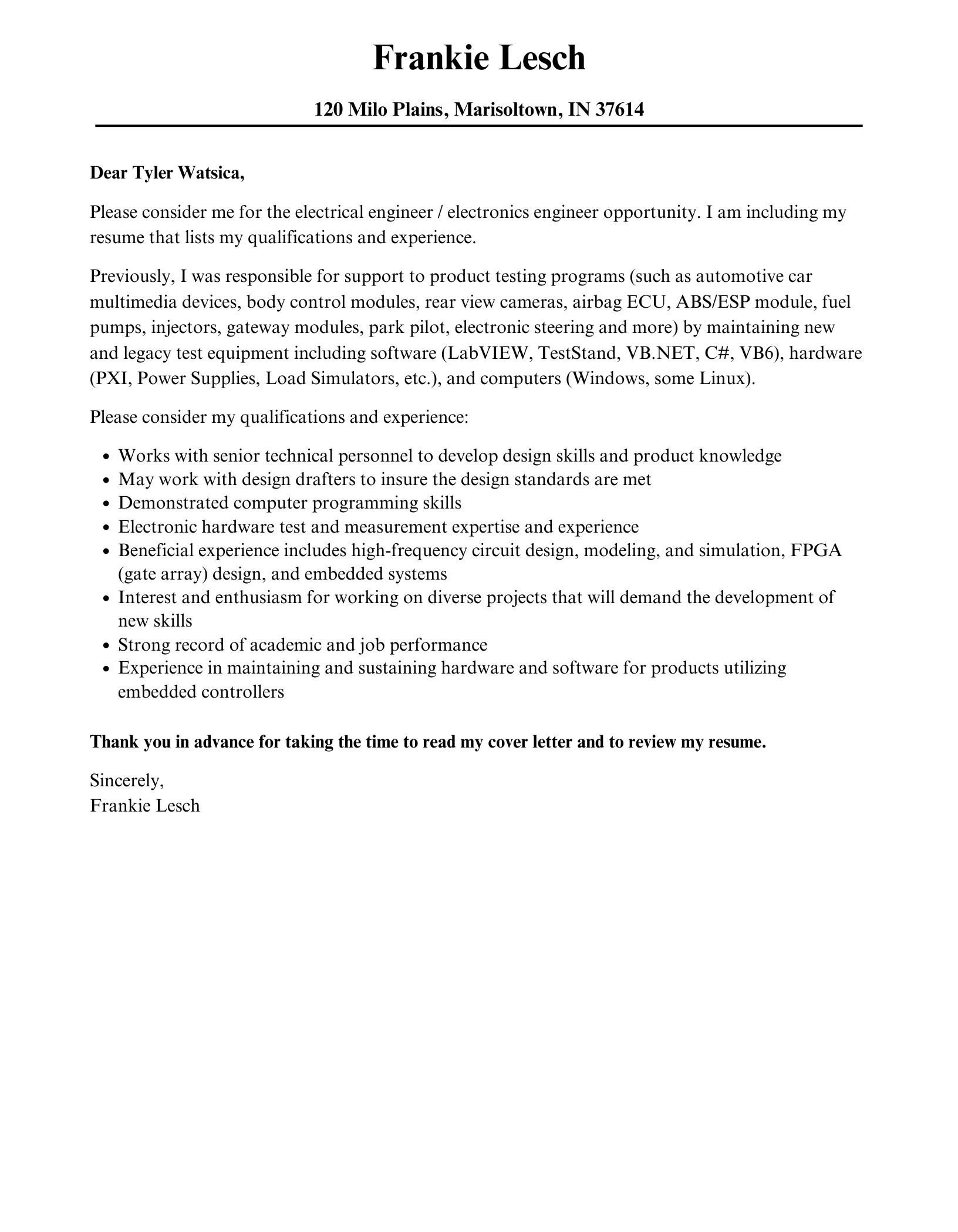
Highlighting Your Skills in Your Electronic Engineer Cover Letter
A well-crafted cover letter is your opportunity to shine, especially when applying for an Electronic Engineer position. It’s more than just a formality; it’s your chance to present a compelling narrative of your skills, experience, and enthusiasm. In this guide, we’ll explore the top 5 tips to make your electronic engineer cover letter stand out from the competition. Remember, your cover letter is the first impression you make on a potential employer. It provides context to your resume and allows you to elaborate on your most relevant qualifications. A successful cover letter doesn’t just list your skills; it tells a story of how you’ve applied those skills and achieved tangible results. Your goal is to demonstrate why you are the perfect fit for the specific role and company.
Technical Skills to Showcase
Electronic engineering is a multifaceted field, so your cover letter should highlight the specific technical skills that align with the job description. Start by reviewing the job posting carefully to identify the skills that the employer values most. Common skills include proficiency in circuit design, experience with various testing and measurement equipment, and knowledge of relevant industry standards. Be specific and avoid vague statements. Instead of saying you have experience with circuit design, mention specific software or tools you’ve used, such as Altium Designer or Eagle. Provide examples of projects where you applied these skills, and the results you achieved. When you tailor your cover letter to the specific requirements of each job, you demonstrate your attention to detail and your genuine interest in the position.
Software and Programming Expertise

Software and programming skills are increasingly vital in electronic engineering. Include programming languages you are proficient in, such as C++, Python, or Verilog. Mention your experience with embedded systems, firmware development, or any software tools relevant to the role. Many electronic engineers work with microcontrollers and related programming environments; highlighting this expertise can significantly boost your application. Include examples of software-driven projects you’ve worked on and how your programming skills contributed to the project’s success. This could involve developing control algorithms, designing user interfaces, or integrating software with hardware components. Always provide specific examples of your achievements to illustrate your proficiency.
Hardware Design and Implementation
Your cover letter should also highlight your hardware design and implementation skills. This includes experience in schematic capture, PCB layout, and prototyping. Mention any experience with specific design tools, such as Cadence, Mentor Graphics, or KiCad. If you have experience with analog or digital circuit design, be sure to mention it. Describe your experience with various hardware components, such as microcontrollers, sensors, and communication modules. If possible, showcase any practical experience you have with building, testing, or troubleshooting hardware. Emphasize projects where you were involved in the entire design cycle, from concept to implementation, and highlight your problem-solving abilities and attention to detail.
Highlighting Relevant Experience
Experience is a cornerstone of any successful electronic engineer cover letter. Focus on experiences that align with the requirements of the job you are applying for. Start by listing your previous positions, internships, or projects, and then describe your responsibilities and accomplishments in each role. Instead of simply listing your tasks, use action verbs to describe what you did and the results you achieved. For example, instead of saying “responsible for designing circuits,” you could say “designed and implemented a new circuit that improved system efficiency by 15%.” Showcasing your experience in this manner provides tangible evidence of your skills and qualifications. Prioritize experiences that are most relevant to the job. For each experience, explain the context, your role, your actions, and the outcomes.
Project Experience and Achievements

The most impressive part of your experience section is often your project work and associated achievements. Include specific details about projects you’ve worked on, whether they were part of your education, internships, or previous jobs. Describe the project’s scope, your role, and the challenges you faced. Focus on the results you achieved, such as improved performance, cost savings, or successful product launches. Use the STAR method (Situation, Task, Action, Result) to structure your project descriptions. For instance, describe the situation you faced, your task, the actions you took, and the positive results that followed. Quantify your accomplishments whenever possible. Did your work lead to an increase in efficiency, a decrease in costs, or an improvement in product performance? Providing specific data will make your achievements more impactful and memorable.
Quantifying Accomplishments
Numbers speak volumes. To make your accomplishments more compelling, quantify your achievements whenever possible. Instead of saying you improved a system, say you improved it by a specific percentage. Instead of saying you saved costs, specify the amount saved. Use metrics that are relevant to the job and industry. For example, you could mention the number of components you designed, the reduction in power consumption achieved, or the increase in product reliability. Quantifying your accomplishments gives potential employers a clear understanding of the value you bring to the table. It also demonstrates your ability to measure and evaluate your performance. When possible, use data to back up your claims. Cite reports, studies, or other evidence that supports your achievements.
Tailoring Your Cover Letter
A generic cover letter rarely makes a positive impression. Tailoring your cover letter to each specific job is crucial for demonstrating your interest and suitability for the role. This involves more than just changing the company name. Carefully review the job description and identify the key requirements, skills, and experiences the employer is seeking. Then, adjust your cover letter to highlight your relevant qualifications and experiences. Explain how your skills and experiences align with the job requirements. Focus on the areas where you can provide the most value to the company. This demonstrates to the employer that you’ve taken the time to understand their needs and that you’re genuinely interested in the position. Remember, a tailored cover letter shows that you’ve done your research and are serious about the opportunity.
Researching the Company

Before you write your cover letter, research the company. Learn about their products, services, values, and culture. This information will help you tailor your cover letter to their specific needs and demonstrate your interest in the company. Visit the company’s website, read news articles, and check out their social media profiles. Look for information about their recent projects, any awards they have received, or any company initiatives. Use this information to show that you understand the company’s goals and how your skills and experiences can contribute to their success. Mention specific projects or initiatives that resonate with you. Demonstrating this knowledge shows that you’re not just looking for a job; you’re eager to contribute to their specific goals and objectives.
Customizing for the Role
Once you understand the company, tailor your cover letter to the specific role. Review the job description carefully and identify the key requirements and responsibilities. Use the job description as a guide to highlight the skills and experiences that are most relevant to the position. Use the same keywords and phrases that the employer uses in the job description. This will help your cover letter pass through applicant tracking systems (ATS) and catch the attention of hiring managers. When describing your experiences, emphasize how they relate to the specific tasks and responsibilities outlined in the job description. Show how you can contribute to the company’s success by highlighting what makes you the ideal candidate for the role.
Formatting and Structure for Your Cover Letter
The format and structure of your electronic engineer cover letter are essential for making a positive first impression. A well-formatted cover letter is easy to read and visually appealing, while a poorly formatted one can be frustrating and distracting. Follow the standard cover letter format, which includes a header with your contact information, a salutation, an introduction, body paragraphs, and a closing. Use clear and concise language and avoid jargon that might not be understood by the hiring manager. Focus on clarity and ensure your cover letter is easy to navigate. Aim for a clean and professional design that reflects your attention to detail. Good formatting helps communicate professionalism, organizational skills, and a commitment to excellence.
Professional Formatting Tips

Choose a professional font such as Times New Roman, Arial, or Calibri. Use a font size between 10 and 12 points. Use single-spaced paragraphs with a space between each paragraph. Use bolding and underlining sparingly to highlight key information. Use bullet points to list your skills and accomplishments, making them easy to scan. Keep your cover letter concise. Aim for one page, unless the job requirements explicitly allow for more. Maintain consistent margins throughout the document. Use a professional email address and ensure your contact information is accurate. Always proofread your cover letter carefully to avoid any grammatical errors or typos. Following these formatting tips will make your cover letter more visually appealing, readable, and professional.
Proofreading and Editing
Proofreading and editing are the final steps to ensure your electronic engineer cover letter is polished and error-free. Before submitting your cover letter, carefully proofread it for any grammatical errors, typos, or inconsistencies. Read your cover letter aloud to help catch errors you might miss when reading silently. Ask a friend, family member, or career advisor to review your cover letter. A fresh pair of eyes can often spot mistakes you may have overlooked. Check the formatting, including the use of fonts, spacing, and margins. Make sure your cover letter is clear, concise, and easy to read. Ensure that your contact information is accurate and up-to-date. Proofreading and editing show attention to detail and a commitment to excellence, and are essential to a positive first impression.
By following these top 5 tips, you can create an electronic engineer cover letter that not only highlights your skills and experience, but also captures the attention of hiring managers. Remember to tailor your cover letter to each specific job, quantify your accomplishments, and proofread carefully. With a well-crafted cover letter, you’ll be well on your way to landing your dream job in electronic engineering.