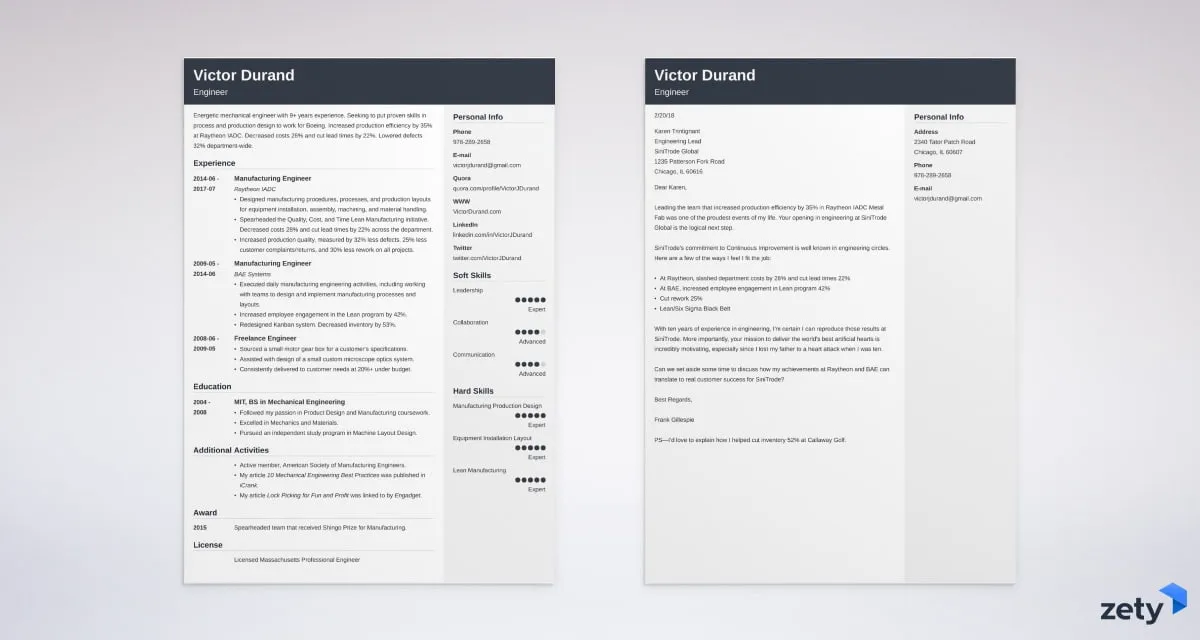
The Importance of an Engineering Cover Letter
In the competitive world of engineering, a well-crafted cover letter is more than just a formality it is your first opportunity to make a strong impression and convince potential employers that you are the perfect candidate. Unlike your resume, which provides a factual overview of your skills and experience, your cover letter allows you to showcase your personality, passion, and specific reasons for your interest in the role. It gives you the chance to tell a compelling story about why you want the job and what you can bring to the table. It also offers an opportunity to highlight the key qualifications that directly align with the job description.
Why Cover Letters Matter for Engineers
Cover letters provide a valuable opportunity to tailor your application to a specific company and position. Engineering is a diverse field with many specializations. A cover letter allows you to articulate how your specific skills and experiences align with the particular requirements of the role, making your application stand out from generic ones. Cover letters give you the chance to personalize your application. In a world of automation, a well-written, personalized cover letter demonstrates your genuine interest in the company and the specific role. It shows you’ve done your research and are not simply sending out a mass application. Cover letters provide a platform to showcase your communication skills. Clear and concise communication is crucial in engineering. Your cover letter demonstrates your ability to convey information effectively, write professionally, and present yourself in a polished manner.
Highlighting Your Skills and Experience

When composing your cover letter, focus on highlighting your relevant technical skills, experiences, and accomplishments. Think of your cover letter as a way to expand on the information provided in your resume, going deeper into your skills and the impact you’ve made in previous roles. Focus on the key skills and experiences that are most relevant to the specific job you’re applying for. Review the job description carefully and identify the skills and qualifications that the employer is looking for. Then, demonstrate how your skills and experiences align with those requirements. Provide specific examples and metrics to support your claims. Instead of just saying you have experience with a particular software, describe how you used it in a project, what challenges you overcame, and what results you achieved. Use action verbs and quantify your accomplishments to make them more impactful.
Key Components of a Winning Engineering Cover Letter
Header and Contact Information
The header should include your full name, contact information (phone number, email address, and LinkedIn profile URL), and the date. Make sure your contact information is accurate and up-to-date so that recruiters can easily reach you. It is also good practice to include the hiring manager’s name and the company’s address, if known. Doing so shows that you have taken the time to personalize your application and have done some research on the company and the role.
Formatting Your Header

The format should be clean, professional, and easy to read. Use a standard font, such as Times New Roman, Arial, or Calibri, and a font size of 10-12 points. Use consistent spacing and alignment throughout your cover letter. The header should be clearly separated from the rest of the content.
The Opening Paragraph
This is your first chance to make a strong impression. Start with a compelling hook to grab the reader’s attention and make them want to keep reading. It sets the tone for the rest of your letter. Briefly introduce yourself and state the position you are applying for. Mention where you found the job posting to help the recruiter understand your recruitment source.
Grabbing the Reader’s Attention
To grab the reader’s attention, you might start with a brief anecdote, a compelling statement about your interest in the company, or a highlight of your relevant achievements. Consider tailoring the opening to the company’s mission or recent projects to show your genuine interest.
Clearly State Your Purpose

Clearly state the position you are applying for in the opening paragraph. Be specific about the job title to avoid any confusion. Make sure to mention where you found the job posting (e.g., LinkedIn, company website, etc.). This helps the recruiter track the effectiveness of their recruitment efforts.
Body Paragraphs Engineering Cover Letter
The body paragraphs are where you provide more detail about your skills, experience, and achievements. Focus on the key requirements outlined in the job description and demonstrate how your qualifications align with those requirements. The body paragraphs should showcase your relevant technical skills, such as proficiency in specific software or engineering principles. Use concise language and clear explanations. Use quantifiable achievements to demonstrate your impact. Avoid vague statements and focus on the tangible results you have achieved in past projects or roles.
Showcasing Your Technical Skills
When showcasing your technical skills, be specific and use industry-standard terminology. For example, instead of saying you’re good at “design,” mention your experience with specific CAD software, simulation tools, or engineering analysis techniques. Describe the projects you’ve worked on and your specific contributions. Provide details about the challenges you faced, the solutions you developed, and the results you achieved. It is important to align your skills with the job description. If the job description emphasizes a particular skill or software, make sure to highlight your relevant experience and expertise. If you are lacking experience in a particular area, try to showcase transferrable skills.
Quantifying Your Achievements

Quantifying your achievements makes your cover letter more impactful and shows concrete evidence of your abilities. Instead of saying “Improved efficiency,” state “Increased project efficiency by 15% through process optimization.” Use numbers, metrics, and percentages to demonstrate your accomplishments. Whenever possible, use quantifiable data to showcase your contributions. Mention any awards, recognition, or positive feedback you received in past roles. Highlighting these achievements adds credibility to your claims and reinforces your value as a candidate.
Demonstrating Problem-Solving Abilities
Engineers are, at their core, problem solvers. Therefore, your cover letter should provide examples of how you approach and solve complex technical challenges. Describe a specific problem you encountered in a past project or role. Explain the steps you took to analyze the problem, identify potential solutions, and implement the best approach. Highlight your analytical skills, critical thinking, and ability to make data-driven decisions. Mention any innovative solutions you developed or implemented. Emphasize your ability to think creatively and come up with new and effective approaches.
Highlighting Relevant Projects and Experience
Give detailed examples of your projects and experiences, focusing on the skills and knowledge you gained. Explain the project, your role, and your specific contributions. Describe the engineering principles you applied, the technologies you used, and the challenges you overcame. Emphasize your teamwork, communication, and project management skills. Provide a brief overview of your role, the project’s goals, and the key outcomes. Use the STAR method (Situation, Task, Action, Result) to structure your stories and present your experiences in a clear and concise manner. Focus on your achievements and their impact.
Tailoring Your Letter to the Job Description

Review the job description and identify the key requirements, skills, and qualifications the employer is seeking. Customize your cover letter to align with the specific needs of the role. Make sure to address all of the required skills and qualifications. Use the same keywords and phrases that are used in the job description. This will help the hiring manager quickly see that you are a good match for the role. If there is something in the job description that is important to the company’s mission, try to reflect it in your cover letter to demonstrate that you’ve done your research and care about the company and their goals.
Using Keywords Effectively
Carefully review the job description and identify the key skills, qualifications, and keywords that the employer is looking for. Incorporate these keywords naturally throughout your cover letter, especially in the body paragraphs. Make sure the keywords fit naturally into the flow of your writing. Avoid keyword stuffing. Your letter should still read well, with a clear narrative. Make sure to use a variety of keywords and related terms to demonstrate your breadth of knowledge and skills.
The Closing Paragraph
In the closing paragraph, express your enthusiasm for the opportunity and reiterate your interest in the role. Make sure your conclusion leaves a positive impression and reinforces your value as a candidate.
Expressing Enthusiasm and Interest
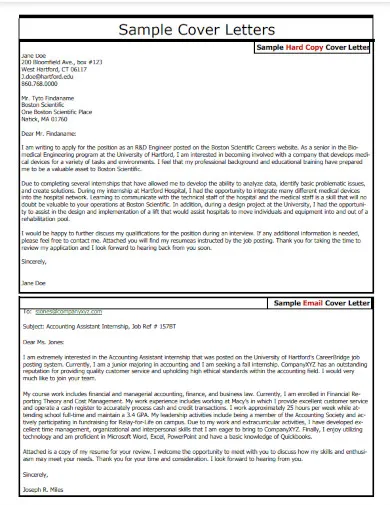
Reiterate your genuine interest in the role and the company. Mention why you are excited about the opportunity and what you hope to achieve in the role. Show you have a strong understanding of the company’s mission and culture. Show your commitment and willingness to contribute to the company’s success.
Call to Action
Include a clear call to action. Thank the hiring manager for their time and consideration. Express your willingness to discuss your qualifications further and provide your contact information again. If possible, mention your availability for an interview. This will ensure that you keep the conversation moving forward.
Cover Letter Examples for Engineering Jobs
Reviewing examples can help you understand how to structure your cover letter, highlight your skills, and tailor your message to different roles. Here are example for different specializations.
Example 1 Mechanical Engineer Cover Letter
Dear [Hiring Manager Name], I am writing to express my keen interest in the Mechanical Engineer position at [Company Name], as advertised on [Platform]. With a [Number]-year track record of successfully designing, analyzing, and implementing mechanical systems, I am confident in my ability to contribute significantly to your team. In my previous role at [Previous Company], I was responsible for [Specific responsibility]. I consistently delivered projects on time and within budget, contributing to a [Percentage]% reduction in [Area of Improvement]. My skills in CAD software (SolidWorks, AutoCAD), FEA, and thermodynamics, coupled with my hands-on experience, make me well-suited to tackle the challenges of this role. I am particularly drawn to [Company Name] because of [Reason]. I am eager to learn more about this opportunity. Thank you for your time and consideration. Sincerely, [Your Name] [Contact Information]
Example 2 Civil Engineer Cover Letter
Dear [Hiring Manager Name], I am writing to express my strong interest in the Civil Engineer position at [Company Name], as advertised on [Platform]. With a solid background in civil engineering principles and a passion for designing sustainable infrastructure, I am excited about the opportunity to contribute to your projects. In my previous role at [Previous Company], I led the design and construction of [Project Type], which involved [Specific tasks]. My expertise in structural analysis, site development, and project management, combined with my proficiency in AutoCAD and Civil 3D, positions me well to meet the demands of this role. I am particularly impressed by [Company Name]’s commitment to [Specific Company Initiative]. I am available for an interview at your earliest convenience. Sincerely, [Your Name] [Contact Information]
Example 3 Software Engineer Cover Letter
Dear [Hiring Manager Name], I am writing to express my interest in the Software Engineer position at [Company Name], as advertised on [Platform]. My strong background in software development, combined with my passion for creating efficient and scalable solutions, makes me a great candidate. In my previous role at [Previous Company], I developed [Specific project]. I have expertise in Java, Python, and C++, as well as experience with Agile development methodologies. I am adept at problem-solving, debugging, and collaborating with cross-functional teams. I am excited about [Company Name]’s innovative work in [Specific Area]. I am available for an interview at your earliest convenience. Thank you for your time and consideration. Sincerely, [Your Name] [Contact Information]
Proofreading and Editing Your Cover Letter
Before submitting your cover letter, proofreading and editing are essential steps. Ensure your letter is free of any grammatical errors, spelling mistakes, or typos.
Tips for Avoiding Common Mistakes
Review your cover letter multiple times to catch any errors. Use spell-check and grammar-check tools. Ensure correct capitalization and punctuation. Have a friend, family member, or career advisor proofread your cover letter. A fresh pair of eyes can often spot errors that you might have missed. Read your cover letter out loud. This can help you catch awkward phrasing or sentences that don’t flow smoothly. Make sure your formatting is consistent throughout the document, including font, font size, spacing, and margins.
Using a Professional Tone
Maintain a professional and respectful tone. Avoid using casual language, slang, or abbreviations. Use formal language, such as “I am writing to express my interest” instead of “I’m really interested.” Be polite and respectful in your tone. Avoid making negative statements about your previous employers or colleagues. Remain positive throughout your cover letter. Focus on what you can offer the company and the value you can bring.
Additional Resources and Tips
Here are some additional resources and tips to help you create a strong cover letter that will impress potential employers. Always research the company and the specific role before you start writing. Tailor your cover letter to the specific requirements and expectations of each job. Consider including a portfolio or links to your projects to showcase your work. If the job posting asks for specific documents, make sure you include them. Customize your cover letter for each job application. A generic cover letter is unlikely to impress hiring managers. Use a clear, concise writing style. Avoid overly long sentences or paragraphs. Keep your cover letter to one page. Stay positive and enthusiastic throughout your cover letter. Focus on your accomplishments and what you can bring to the company. Follow up with the hiring manager after submitting your application. You can do this by sending an email to inquire about the status of your application.