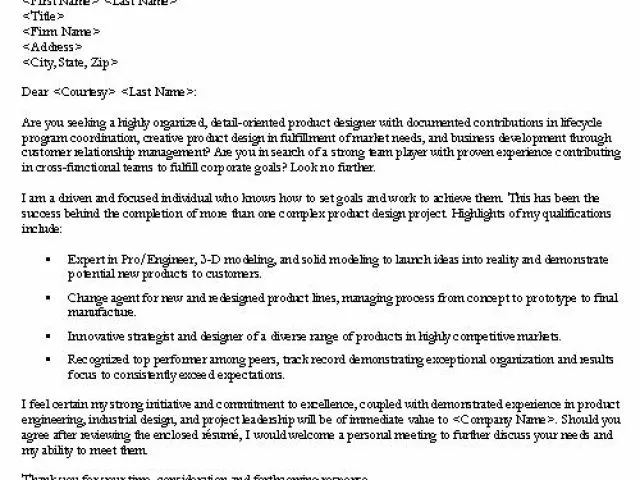
Why You Need an Engineering Resume Cover Letter
In the competitive world of engineering, a well-crafted cover letter is more than just a formality it is your personal introduction and your opportunity to stand out from the crowd. While your resume provides a snapshot of your skills and experience, a cover letter allows you to tell a story. It’s a chance to explain why you are the perfect fit for the role, showcase your personality, and express your genuine interest in the company. Many engineers underestimate the power of a strong cover letter, but in reality, it can significantly increase your chances of landing an interview. It helps the hiring manager understand your motivations, values, and how your skills align with the company’s needs and the specific job requirements. Moreover, a cover letter allows you to address any potential gaps in your resume, such as a career change or a period of unemployment, and reframe them as positive learning experiences. By taking the time to create a compelling cover letter, you demonstrate your attention to detail and your commitment to securing the position, setting you apart from candidates who might submit a generic application.
Highlighting Your Key Skills and Experience
Your cover letter should act as a bridge between your resume and the specific job requirements. Begin by identifying the key skills and experiences most relevant to the position. These might include technical skills like CAD software proficiency, project management experience, or specific engineering specializations. When writing about these skills, don’t just list them; provide concrete examples. For instance, instead of saying ‘Proficient in AutoCAD,’ you could write, ‘Utilized AutoCAD to design and draft detailed schematics for the X project, resulting in a 15% reduction in material costs.’ This approach gives the hiring manager a clearer understanding of your capabilities and the value you can bring to their team. Tailor this section to match the keywords in the job description, ensuring that you address each of the required skills and qualifications. Be specific, concise, and focus on accomplishments rather than simply listing responsibilities.
Quantify Your Achievements

One of the most effective ways to make your cover letter stand out is to quantify your achievements. This means using numbers, percentages, and specific data points to illustrate the impact of your work. Instead of saying ‘Improved project efficiency,’ try ‘Improved project efficiency by 20% through the implementation of Agile methodologies.’ This level of detail immediately grabs the reader’s attention and provides concrete evidence of your abilities. Consider including metrics such as cost savings, time reductions, or performance improvements. If you led a team, mention the team size and the successes achieved under your leadership. If you developed a new system or process, quantify the benefits it delivered. By quantifying your achievements, you provide tangible proof of your value and make it easier for the hiring manager to see how you can contribute to the company’s success. Use data from previous projects and roles to support your claims, showing a clear link between your actions and positive outcomes.
Tailoring Your Cover Letter to the Job Description
A generic cover letter is a surefire way to end up in the rejection pile. To truly impress, you must tailor your cover letter to each specific job application. Start by carefully reading the job description and identifying the key requirements, skills, and qualifications the employer is seeking. Then, structure your cover letter to directly address these points. Explain how your experience, skills, and accomplishments align with the job’s needs. Avoid simply restating your resume; instead, use the cover letter to expand on the most relevant aspects of your background and provide specific examples that demonstrate your capabilities. Highlight any projects or experiences that directly relate to the job requirements and emphasize how you’ve used your skills to achieve positive results in the past. This focused approach shows that you understand the role and are genuinely interested in the opportunity. Furthermore, it demonstrates your attention to detail and your ability to customize your communication to meet specific needs.
Researching the Company
Before you start writing, take the time to research the company. Understanding their mission, values, recent projects, and industry position will allow you to tailor your cover letter to their specific needs and demonstrate your genuine interest. Visit the company’s website, read news articles, and check their social media profiles to gather information. Identify any recent achievements or initiatives that resonate with your experience and values. Mention specific projects or products that interest you and explain how your skills and experience could contribute to their ongoing success. Showing that you’ve done your homework makes a strong impression and proves you’re not just sending out generic applications. It also gives you an opportunity to showcase your understanding of the company’s goals and how you can help them achieve those goals. By demonstrating your understanding of the company’s needs, you can make a more compelling case for your candidacy and increase your chances of getting an interview.
Matching Your Skills to Their Needs

Once you’ve researched the company, you should align your skills and experience with the needs of the role and the organization. In your cover letter, explicitly state how your qualifications meet the requirements outlined in the job description. Use keywords and phrases from the job posting to show that you are a good fit. This is not simply about listing skills; it’s about explaining how you’ve used those skills to achieve results and contribute to previous projects. Give specific examples of your accomplishments and how they relate to the company’s needs. If the job description emphasizes problem-solving, provide an example of a problem you successfully solved and the positive outcome. If the role requires teamwork, describe your experience working collaboratively and achieving shared goals. By demonstrating a clear connection between your skills and the company’s needs, you will present yourself as a valuable asset and increase your chances of being selected for an interview. This targeted approach allows you to effectively communicate the value you bring to the table.
Formatting and Structure of Your Cover Letter
The formatting and structure of your cover letter are just as important as its content. A well-organized and easy-to-read cover letter makes a positive impression and ensures that your key points are conveyed effectively. Begin with your contact information, the date, and the hiring manager’s name and title. Use a professional and easy-to-read font, such as Arial or Times New Roman, and maintain consistent formatting throughout the document. Your cover letter should be divided into clear sections with concise paragraphs. A typical structure includes an introduction, body paragraphs, and a conclusion. The introduction should state the position you’re applying for and briefly explain why you’re interested. The body paragraphs should highlight your relevant skills and experiences, using specific examples to support your claims. The conclusion should reiterate your interest in the position and include a call to action, such as expressing your availability for an interview. Keep the letter concise, ideally no more than one page, and use headings and bullet points to improve readability. Ensure your cover letter is free of typos and grammatical errors.
Contact Information and Salutation
Start your cover letter by including your contact information at the top, including your name, address, phone number, and email address. This allows the hiring manager to easily contact you. Then, include the date and the hiring manager’s name and title. Addressing the letter to a specific person shows that you have taken the time to research the company and demonstrates your attention to detail. If the hiring manager’s name isn’t available, use a professional salutation such as ‘Dear Hiring Manager’ or ‘Dear [Company Name] Hiring Team.’ Avoid generic greetings like ‘To Whom It May Concern,’ which can make your application feel impersonal. The salutation sets the tone for the rest of your cover letter, so make sure it’s appropriate for the company’s culture and the specific role you are applying for. Proper formatting in this first section makes a positive impression and sets the stage for a professional application.
Body Paragraphs

The body paragraphs of your cover letter are where you make your case. They should highlight your relevant skills, experience, and accomplishments, demonstrating how you meet the requirements of the job. Each paragraph should focus on a specific point, and it is important to use a logical structure to improve readability. Start with a clear topic sentence that introduces the main point of the paragraph. Then, provide supporting details, such as specific examples, quantifiable results, and relevant experiences. Use action verbs to describe your accomplishments and emphasize your contributions. For instance, instead of writing ‘Responsible for project management,’ write ‘Managed multiple engineering projects, resulting in on-time and under-budget completion for 90% of the projects.’ Use the STAR method (Situation, Task, Action, Result) to structure your examples effectively. Explain the situation, the task you were assigned, the actions you took, and the positive results you achieved. Ensure that each paragraph directly addresses the requirements outlined in the job description and provides a clear understanding of your qualifications.
Closing and Call to Action
The closing of your cover letter should reiterate your interest in the position and include a clear call to action. Thank the hiring manager for their time and consideration. Reiterate your enthusiasm for the opportunity and briefly summarize why you are a strong fit for the role. Then, include a specific call to action, such as, ‘I am eager to discuss my qualifications further in an interview.’ or ‘I welcome the opportunity to discuss my skills and experience in more detail.’ Provide your contact information once again to make it easy for the hiring manager to reach you. Finish with a professional closing, such as ‘Sincerely’ or ‘Best regards,’ followed by your full name. A strong closing reinforces your interest and provides a clear next step for the hiring manager. Avoid clichés and make sure your tone is professional and enthusiastic. This final section is important, as it encourages the hiring manager to take the next step in the hiring process.
Keywords and SEO for Your Cover Letter
In the digital age, using keywords and SEO techniques in your cover letter can help your application get noticed. Applicant Tracking Systems (ATS) are used by many companies to screen resumes and cover letters. These systems scan your documents for keywords and phrases that match the job description. To optimize your cover letter, carefully analyze the job description and identify the key skills, qualifications, and keywords the employer is looking for. Naturally integrate these keywords into your cover letter. Use these terms throughout the document, including in your introduction, body paragraphs, and conclusion. While keyword optimization is important, avoid keyword stuffing, which can make your letter sound unnatural. Focus on using the keywords in a way that highlights your skills and experience in a clear and concise manner. By optimizing your cover letter with the right keywords, you can increase your chances of passing the initial screening process and getting your application seen by a human reader. A well-optimized cover letter ensures your application is recognized and properly considered.
Using Action Verbs

Action verbs are a critical element in making your cover letter engaging and impactful. They help you describe your accomplishments in a dynamic and compelling way. Instead of using passive phrases like ‘Was responsible for,’ use active verbs like ‘Managed,’ ‘Developed,’ ‘Implemented,’ or ‘Led.’ These verbs create a sense of action and demonstrate your ability to take initiative and achieve results. When describing your experience, start each sentence with a strong action verb to grab the reader’s attention. Here’s a list of examples: Developed, Designed, Implemented, Managed, Led, Created, Improved, Increased, Reduced, Achieved, and many more. Be specific and choose the verbs that best represent your accomplishments and match the job description. By using strong action verbs, you present yourself as a proactive and results-oriented individual, making a more positive impression on the hiring manager. This enhances the overall impact of your application and helps you highlight your achievements.
Avoiding Common Cover Letter Mistakes
Avoiding common cover letter mistakes can significantly improve your chances of success. Many applicants make the same mistakes, which can lead to their applications being overlooked. By being aware of these pitfalls, you can create a cover letter that stands out from the crowd. One of the most critical mistakes is submitting a generic cover letter that is not tailored to the specific job or company. It is also vital to avoid simply restating your resume and instead, providing added value by expanding on your experiences and skills. Other common mistakes include failing to proofread, using vague or generic language, and not highlighting your key achievements. Addressing these issues ensures your application is polished and professional. Proofreading is essential to remove any errors that might detract from your message, and using specific and compelling language will showcase your qualifications effectively. By knowing and avoiding these common pitfalls, you can present yourself in the best possible light and increase your chances of landing an interview.
Typos and Grammatical Errors
Typos and grammatical errors can significantly damage your credibility. They suggest a lack of attention to detail and can make you appear unprofessional. Always proofread your cover letter carefully before submitting it. Check for spelling mistakes, punctuation errors, and grammatical inconsistencies. Read the cover letter aloud to catch any awkward phrasing or sentences. Ask a friend, family member, or career advisor to review your cover letter and provide feedback. Fresh eyes can often spot errors that you might miss. Use spell-check and grammar-check tools, but don’t rely on them entirely. These tools can miss context errors. Take the time to thoroughly proofread your cover letter. A polished, error-free document reflects your professionalism and attention to detail, which are important qualities in any engineering role. Proofreading is a simple but critical step that can significantly improve your chances of making a positive first impression.
Generic Language

Avoid using generic language that doesn’t add value to your cover letter. Phrases such as ‘I am a hard worker’ or ‘I have excellent communication skills’ are vague and don’t provide specific evidence of your abilities. Hiring managers want to see concrete examples of your skills and achievements. Instead of making general claims, provide specific details and quantifiable results. For example, instead of ‘I am a team player,’ you could write, ‘Successfully collaborated with a team of engineers to design a new system that reduced operational costs by 15%.’ This approach provides concrete evidence of your skills and showcases your value. Use clear, concise language and avoid clichés and overused phrases. Focus on highlighting your accomplishments and demonstrating how your skills and experience align with the job requirements. By using specific and compelling language, you’ll make a more memorable impression and demonstrate your ability to achieve tangible results.
Proofreading and Editing Your Cover Letter
Proofreading and editing are essential steps in the cover letter writing process. Before submitting your cover letter, thoroughly review it for any errors. Start by checking for typos, grammatical mistakes, and punctuation errors. Then, review the content to ensure it is clear, concise, and well-organized. Make sure your sentences flow logically and that your key points are clearly articulated. Consider asking a friend, family member, or career counselor to proofread your cover letter and provide feedback. Fresh eyes can often spot errors you might have missed. Read the cover letter aloud to check for any awkward phrasing or sentences. Ensure that your contact information is accurate and up to date. Taking the time to proofread and edit your cover letter demonstrates your attention to detail and commitment to excellence, which are important qualities that hiring managers look for in candidates. A polished and well-crafted cover letter significantly increases your chances of making a positive impression and getting an interview.