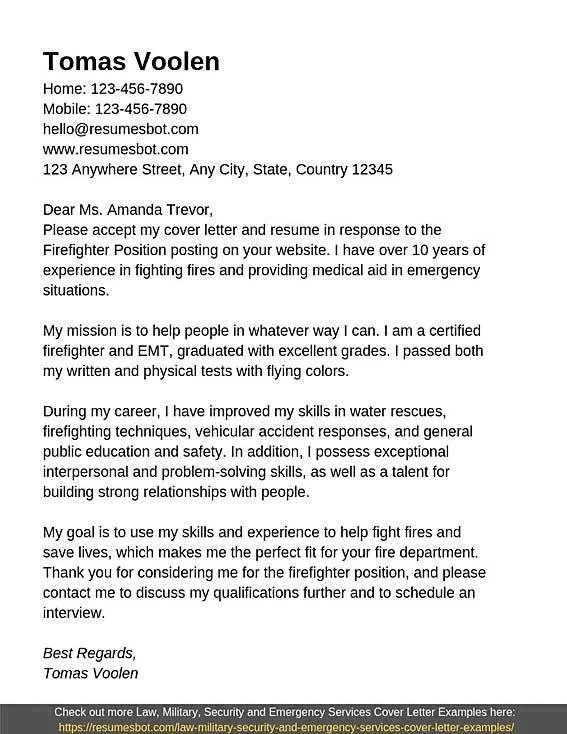
Why a Cover Letter is Crucial for Entry-Level Firefighters
For aspiring firefighters, particularly those with no prior experience, a cover letter is not just a formality it’s your primary opportunity to make a strong first impression. It’s a crucial tool in showcasing your personality, skills, and genuine interest in becoming a firefighter. While your resume provides a factual account of your education and any past work, the cover letter allows you to elaborate on your aspirations, express your passion for the role, and demonstrate how your unique qualities align with the fire department’s values. Without prior firefighting experience, a well-crafted cover letter is your chance to stand out among other candidates, articulating your commitment and explaining why you’re the ideal candidate despite your lack of direct experience. It’s your chance to sell yourself, emphasizing your potential and eagerness to learn and contribute to the team.
Highlighting Transferable Skills
Since you may lack direct firefighting experience, focus on transferable skills acquired from previous jobs, volunteer work, or educational pursuits. These skills are the building blocks of a successful firefighter. For instance, if you’ve worked in customer service, highlight your communication skills and ability to remain calm under pressure. Experience in a team-based environment, such as sports or group projects, showcases your teamwork and collaborative abilities. Any experience involving problem-solving, critical thinking, or leadership, such as leading a project or resolving conflicts, are valuable assets. Emphasize how these skills translate to the firefighting profession, explaining how they can contribute to the fire department’s mission. Remember, every experience has value; the key is to recognize and articulate how it aligns with the requirements of a firefighter.
Researching the Fire Department

Before writing your cover letter, thoroughly research the fire department to which you’re applying. This shows your dedication and genuine interest. Visit the department’s website to learn about its mission, values, and recent activities. Check for any specific requirements or preferences they mention in their job postings. Knowing the department’s specific needs and goals allows you to tailor your cover letter to address them directly. Mentioning specific initiatives, community programs, or values that resonate with you demonstrates that you’ve done your homework and are genuinely invested in joining their team. This personalized approach makes your cover letter more compelling and shows that you’re not just sending out generic applications.
Formatting Your Entry-Level Firefighter Cover Letter
A well-formatted cover letter is crucial for making a positive impression. Use a clean, professional font like Times New Roman or Arial, and maintain consistent font sizes throughout the document. Keep your letter concise, ideally within one page. Use clear headings and subheadings to organize your content and make it easy to read. Ensure there are sufficient margins and spacing to prevent the letter from appearing cramped. Proofread your letter carefully for any grammatical errors or typos. A well-formatted and error-free cover letter shows attention to detail, which is a critical quality for a firefighter. Structure your letter in a logical manner, with an introduction, body paragraphs, and a conclusion, each playing a specific role in conveying your message.
Header and Contact Information
Your header should include your full name, address, phone number, and email address. Ensure that the contact information is accurate and professional. Below your contact information, include the date, followed by the name of the hiring manager or the person to whom you are addressing the letter, their title, and the fire department’s address. Addressing your letter to a specific person, if possible, makes your application feel more personal and shows you’ve taken the initiative to find out who the appropriate contact is. If you cannot find the hiring manager’s name, use a generic title such as ‘Hiring Manager’.
The Salutation

Use a professional salutation to begin your cover letter. If you know the hiring manager’s name, use ‘Dear Mr./Ms. [Last Name]’. If you are unsure of the hiring manager’s name, a safe alternative is ‘Dear Hiring Manager’. Avoid informal greetings like ‘Hello’ or ‘Hi’. The salutation sets the tone for the rest of the letter, so ensure it’s respectful and appropriate for a professional context. The goal is to show respect and consideration from the very beginning, making a positive first impression.
The Opening Paragraph
In your opening paragraph, clearly state the position you’re applying for and where you saw the job posting. Express your strong interest in becoming a firefighter and briefly highlight your most relevant skills or qualities. This paragraph serves as your hook, immediately capturing the reader’s attention and making them want to read more. Be enthusiastic and concise in your opening statement. It should leave the reader wanting to know more about you, which sets the stage for the rest of your letter. Clearly stating your intention to apply for the position right away is key.
Body Paragraph 1 Showcasing Your Skills
In the first body paragraph, delve into your transferable skills. Choose 2-3 key skills and provide specific examples of how you’ve used them. If you’re highlighting communication skills, describe a situation where you effectively conveyed information under pressure. For teamwork, give an example of a collaborative project where you played a vital role. If you’re focusing on problem-solving, mention a time you had to find a solution to a complex issue. Back up each skill with concrete examples, using the STAR method (Situation, Task, Action, Result) to provide context and illustrate your abilities. This approach provides tangible evidence of your capabilities, allowing the hiring manager to see how your skills translate to the role of a firefighter.
Body Paragraph 2 Emphasizing Your Motivation

This paragraph is where you emphasize your motivation for wanting to become a firefighter. Share your personal reasons for pursuing this career. Explain what attracts you to the firefighting profession, such as a desire to help others, a commitment to public safety, or a passion for teamwork. Discuss what you admire about the fire department, referencing its values or community involvement if possible, as this shows that you’ve conducted research. Show genuine enthusiasm and use specific examples to illustrate your dedication. Your passion can be a powerful tool in convincing the hiring manager that you are the right fit, even without prior experience. Highlighting these reasons will make your application more memorable and show that you are serious about the job.
Body Paragraph 3 Addressing the Lack of Experience
Acknowledge the lack of direct firefighting experience, but do so positively. Instead of dwelling on what you haven’t done, emphasize your willingness to learn, your eagerness to train, and your commitment to becoming a valuable member of the team. You can discuss any relevant courses or certifications you’ve completed, such as CPR or first aid training, to demonstrate your preparedness. Highlight any volunteer work or community involvement that aligns with firefighting, such as assisting in emergency services or participating in disaster relief. Show that you’re taking proactive steps to build the skills and knowledge necessary for the job. Assure the hiring manager that your determination and work ethic will help you succeed in training and on the job.
The Closing Paragraph
In your closing paragraph, reiterate your interest in the position and thank the hiring manager for considering your application. Express your enthusiasm for the opportunity to contribute to the fire department and state your availability for an interview. Reiterate how you can be contacted. A strong close leaves a lasting impression and reinforces your commitment. It’s also an opportunity to leave a final positive note, reminding the hiring manager of your qualifications and eagerness. End your letter with a professional closing, such as ‘Sincerely’ or ‘Respectfully’, followed by your typed name.
Proofreading and Editing

Before submitting your cover letter, thoroughly proofread and edit it for any grammatical errors, typos, or inconsistencies. Read your letter aloud to catch awkward phrasing or sentences that don’t flow well. Ask a friend or family member to review your letter for a second opinion. Ensure your cover letter is free of errors and reflects your attention to detail and professionalism. A well-written, error-free cover letter demonstrates respect for the hiring process and showcases your commitment to the role. Review everything one last time to ensure that everything is formatted correctly and makes sense.
Tailoring Your Cover Letter
Avoid sending generic cover letters. Always customize your letter for each fire department you apply to. This involves researching the department’s specific needs, values, and requirements, and tailoring your letter to address them directly. Highlight the skills and experiences that are most relevant to each specific job posting. Demonstrate your knowledge of the fire department by mentioning specific initiatives, community programs, or values that resonate with you. A tailored cover letter shows that you’ve taken the time to understand the department and are genuinely interested in joining their team. This personalization makes your application more compelling and increases your chances of getting an interview.
Key Skills to Include
When writing your cover letter, make sure to highlight key skills that are important for firefighters. Focus on these skills and provide specific examples. Show the hiring manager that you possess the following traits and know how to apply them.
Physical Fitness

Firefighting is a physically demanding profession. Highlight your commitment to physical fitness. Mention any regular exercise routines you follow, such as running, weightlifting, or participation in sports. If you have any certifications related to physical fitness or training, be sure to include them. Show your awareness of the physical demands of the job and your dedication to maintaining a high level of fitness to perform your duties effectively and safely. Include how you are staying physically fit for the role.
Teamwork and Communication
Firefighters work as a team, so demonstrate your ability to work collaboratively. Give examples of your teamwork experience, such as working on group projects, participating in sports, or volunteering in group settings. Highlight your communication skills, emphasizing your ability to listen effectively, share information clearly, and communicate under pressure. Describe situations where you’ve successfully worked with others to achieve a common goal. Effective communication and teamwork are essential for coordinating efforts and ensuring safety during emergency situations. Provide examples, such as team projects or sports, to showcase your experience.
Problem-Solving and Decision-Making
Firefighters often face complex and dangerous situations that require quick decision-making. Demonstrate your ability to think critically and solve problems. Provide examples of situations where you’ve had to make difficult decisions, assess risks, and take appropriate action. Describe your thought process, the steps you took to solve the problem, and the outcome. Even if the situations aren’t directly related to firefighting, showcasing your problem-solving skills is important. Use examples of situations that show your decision-making process.
Volunteer Experience and Community Involvement

Highlight any volunteer experience or community involvement you have, as this demonstrates your commitment to helping others and your involvement in the community. This can include volunteering at a local fire department, participating in community events, or supporting charitable causes. Describe the tasks you performed, the skills you gained, and the impact you made. This experience showcases your dedication to service and your ability to work with diverse groups of people. Explain the kind of community involvement or volunteer experience you have.
Addressing Gaps in Your Resume
If there are any gaps in your resume, such as periods of unemployment or changes in career paths, briefly address them in your cover letter. Explain these gaps in a positive and straightforward manner, focusing on what you’ve learned or how you’ve grown during those times. If you took time off for travel or personal development, explain how this experience has broadened your perspective or helped you develop new skills. If you were unemployed, highlight any skills or experiences you gained during your job search or any activities you pursued to stay engaged. Be honest and transparent, but frame any gaps as opportunities for growth and learning.
Dos and Don’ts of Cover Letter Writing
There are some general guidelines to keep in mind when creating a cover letter. Follow these tips to ensure that you are presenting yourself in the best possible way.
Do Emphasize Your Enthusiasm

Show your genuine interest in firefighting. Use enthusiastic language to express your passion for the job. Mention your admiration for the fire department, and detail why you want to become a firefighter. Make sure to express your excitement for the opportunity.
Do Showcase Your Research
Demonstrate that you’ve researched the fire department. Mention specific aspects of the department that appeal to you. Referring to community programs or mentioning departmental values shows you have taken the time to learn about the organization.
Do Keep it Concise
Keep your cover letter to one page. Be direct and get to the point. Focus on your most relevant skills and experiences.
Don’t Be Generic
Do not send a generic cover letter. Customize each letter to match the specific fire department and job posting. Address the hiring manager by name, when possible.
Don’t Focus Solely on Your Lack of Experience
While it’s important to acknowledge your lack of experience, don’t dwell on it. Instead, focus on your transferable skills, enthusiasm, and willingness to learn.
Don’t Use Clichés
Avoid using clichéd phrases like ‘hard worker’ or ’team player’ without providing specific examples to back them up. Use fresh language, and focus on the impact you want to create.
Following Up After Submitting Your Cover Letter
After submitting your cover letter and application, it’s appropriate to follow up to express your continued interest and confirm receipt of your application. Send a brief follow-up email or make a phone call a week or two after the application deadline or the date you sent your application. Thank the hiring manager for their time, reiterate your interest in the position, and inquire about the status of your application. Be polite, professional, and concise in your communication. Following up shows your initiative and dedication, but avoid being overly persistent.