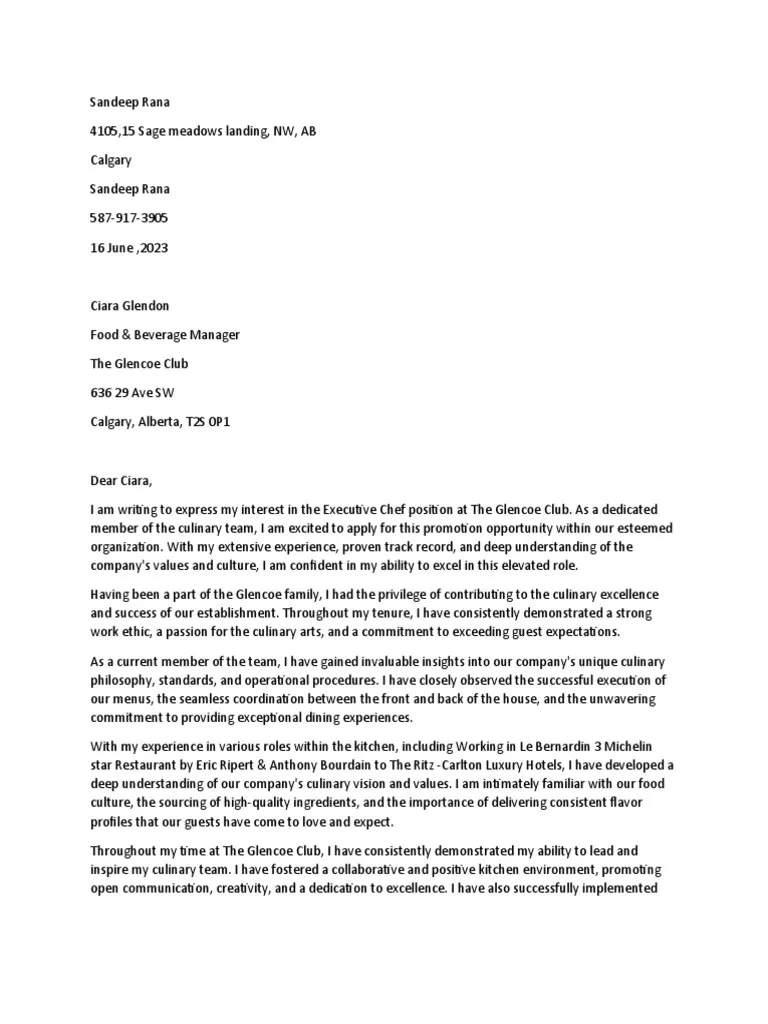
Crafting a Winning Executive Chef Cover Letter
An executive chef cover letter is your first opportunity to impress a potential employer and secure an interview. It serves as a crucial introduction, allowing you to showcase your skills, experience, and passion for culinary excellence. Unlike a resume, which provides a factual overview, a cover letter lets you connect with the hiring manager on a personal level, demonstrating your personality and enthusiasm for the role. It’s your chance to articulate why you’re the perfect fit for the specific position and the restaurant’s unique culture. Taking the time to craft a compelling cover letter can significantly boost your chances of getting hired in a competitive field.
Understanding the Importance of a Cover Letter
In the culinary world, where competition is fierce, a well-written cover letter is more than just a formality; it’s a strategic advantage. It provides context to your resume, explaining your career trajectory and highlighting the experiences most relevant to the target job. It enables you to demonstrate your understanding of the restaurant’s needs and how your skills align with their requirements. A strong cover letter shows that you’ve done your homework, researched the establishment, and are genuinely interested in the opportunity. It sets you apart from other applicants who may have a similar resume but lack the personal touch and tailored approach that a cover letter offers. Your cover letter shows that you’re serious and invested in this role.
Highlighting Relevant Experience

Your cover letter should prominently feature your relevant experience, focusing on achievements rather than simply listing job duties. Instead of stating you ‘managed a kitchen,’ describe how you ‘reduced food costs by 15% while maintaining quality and exceeding guest satisfaction scores.’ When describing your previous roles, highlight the skills and accomplishments that align with the requirements of the executive chef position. Mention your experience with menu development, inventory management, staff training, and any specializations, such as fine dining or specific cuisines. Tailor your experience to match the restaurant’s style and the type of cuisine they serve. This focused approach will make your cover letter more impactful and demonstrate your ability to excel in the position.
Tailoring Your Cover Letter to the Specific Job
One of the biggest mistakes applicants make is sending a generic cover letter. Customize each cover letter to the specific job and the restaurant. Research the restaurant’s cuisine, ambiance, and values. Mention specific dishes you admire on their menu or initiatives that align with their mission. If the job description emphasizes a particular skill, such as team leadership or menu innovation, make sure your cover letter provides compelling examples. This personalization shows that you are genuinely interested in the opportunity and have considered how your skills and experience can contribute to the restaurant’s success. Your cover letter should clearly address the employer’s needs and demonstrate why you’re the ideal candidate.
Key Components to Include in Your Cover Letter
Contact Information and Salutation

Start with your contact information at the top, including your name, phone number, email address, and any relevant professional links (like a LinkedIn profile). Always address the hiring manager by name if possible. Research the restaurant to identify the hiring manager’s name and title; this small detail demonstrates initiative and attention to detail. Use a professional salutation like ‘Dear Mr./Ms./Mx. [Last Name],’ or if the name is unavailable, use a general salutation such as ‘Dear Hiring Manager’.
The Opening Paragraph Capturing Attention
Your opening paragraph is crucial for grabbing the hiring manager’s attention. Start with a compelling statement that immediately conveys your interest in the position and the restaurant. Briefly mention how you learned about the opportunity and express your enthusiasm. Avoid generic phrases like ‘I am writing to express my interest.’ Instead, try something more engaging, such as ‘I was thrilled to see the Executive Chef opening at [Restaurant Name], as I have long admired your innovative approach to [cuisine/concept].’ This opening sets the tone and encourages the reader to continue reading.
Showcasing Achievements and Skills
In the body of your cover letter, provide specific examples of your achievements and how your skills align with the job requirements. Use the STAR method (Situation, Task, Action, Result) to structure your responses and demonstrate your capabilities. Describe a situation you faced, the task you needed to accomplish, the actions you took, and the positive results you achieved. For example, you might explain how you successfully revamped a menu, increased customer satisfaction, or improved kitchen efficiency. Quantify your accomplishments whenever possible, using numbers and data to demonstrate your impact.
Quantifying Accomplishments for Impact

When describing your achievements, provide concrete numbers and data to demonstrate your impact. Use percentages, dollar amounts, and specific metrics to make your claims more compelling. For example, instead of saying ‘I increased profits,’ say ‘I increased profits by 20% within one year by implementing new inventory management strategies.’ Quantifying your accomplishments shows that you can drive results and contribute to the restaurant’s financial success. Use numbers in your resume and cover letter to leave a lasting impression.
Demonstrating Leadership and Management Abilities
An executive chef must be an effective leader. Highlight your leadership and management abilities by providing examples of how you’ve successfully motivated and trained kitchen staff, resolved conflicts, and created a positive work environment. Mention any leadership training or certifications you have. Describe how you empower your team to excel and foster a culture of collaboration and continuous improvement. Share instances where you’ve mentored junior chefs, implemented training programs, or successfully managed a large team to achieve operational excellence.
Expressing Enthusiasm and Interest
Throughout your cover letter, express your genuine enthusiasm for the position and the restaurant. Show that you’ve researched the establishment and understand its unique offerings and values. Mention specific aspects of the restaurant that excite you, such as its cuisine, atmosphere, or commitment to sustainability. Demonstrate your passion for the culinary arts and your dedication to providing exceptional dining experiences. This enthusiasm can set you apart from other candidates and make a strong impression on the hiring manager.
Closing Your Cover Letter

In your closing paragraph, reiterate your interest in the position and express your eagerness to discuss your qualifications further. Thank the hiring manager for their time and consideration. Include a call to action, such as ‘I am available for an interview at your earliest convenience’ or ‘I look forward to the opportunity to speak with you.’ Use a professional closing, such as ‘Sincerely’ or ‘Respectfully,’ followed by your full name.
Proofreading and Formatting
Before submitting your cover letter, carefully proofread it for any grammatical errors, spelling mistakes, and typos. Ensure that your formatting is consistent and professional. Use a readable font and maintain a clean layout. Ensure your cover letter is concise and easy to read, typically no more than one page. Ask a friend or colleague to review your cover letter for any errors or areas for improvement. A polished and error-free cover letter demonstrates attention to detail and professionalism, essential qualities for an executive chef.
Common Mistakes to Avoid
Avoid common mistakes that can undermine your cover letter. These include sending a generic letter, using jargon or clichés, and focusing solely on your needs rather than the restaurant’s needs. Don’t include irrelevant information or exaggerate your experience. Avoid negative language or complaints about previous employers. Focus on your strengths and accomplishments and demonstrate your value to the prospective employer. Tailor your letter to the specific job and restaurant to showcase your knowledge and interest.
Submitting Your Cover Letter

When submitting your cover letter and resume, follow the instructions provided in the job posting. If the posting specifies a particular format or method of submission, adhere to it precisely. Always attach your cover letter and resume in a professional format, such as PDF, to ensure that your formatting remains consistent across different devices and systems. Double-check that you’re sending your application to the correct contact person and email address. Ensure your email subject line is clear and professional, such as ‘Executive Chef Application - [Your Name]’.
Following Up After Submission
After submitting your cover letter and resume, it’s appropriate to follow up with the hiring manager to reiterate your interest in the position. Send a brief, polite email one to two weeks after submitting your application. Reiterate your enthusiasm for the opportunity, reference your cover letter and resume, and express your availability for an interview. However, avoid being overly persistent or sending multiple follow-up emails. A single, well-timed follow-up email can demonstrate your continued interest without being intrusive.