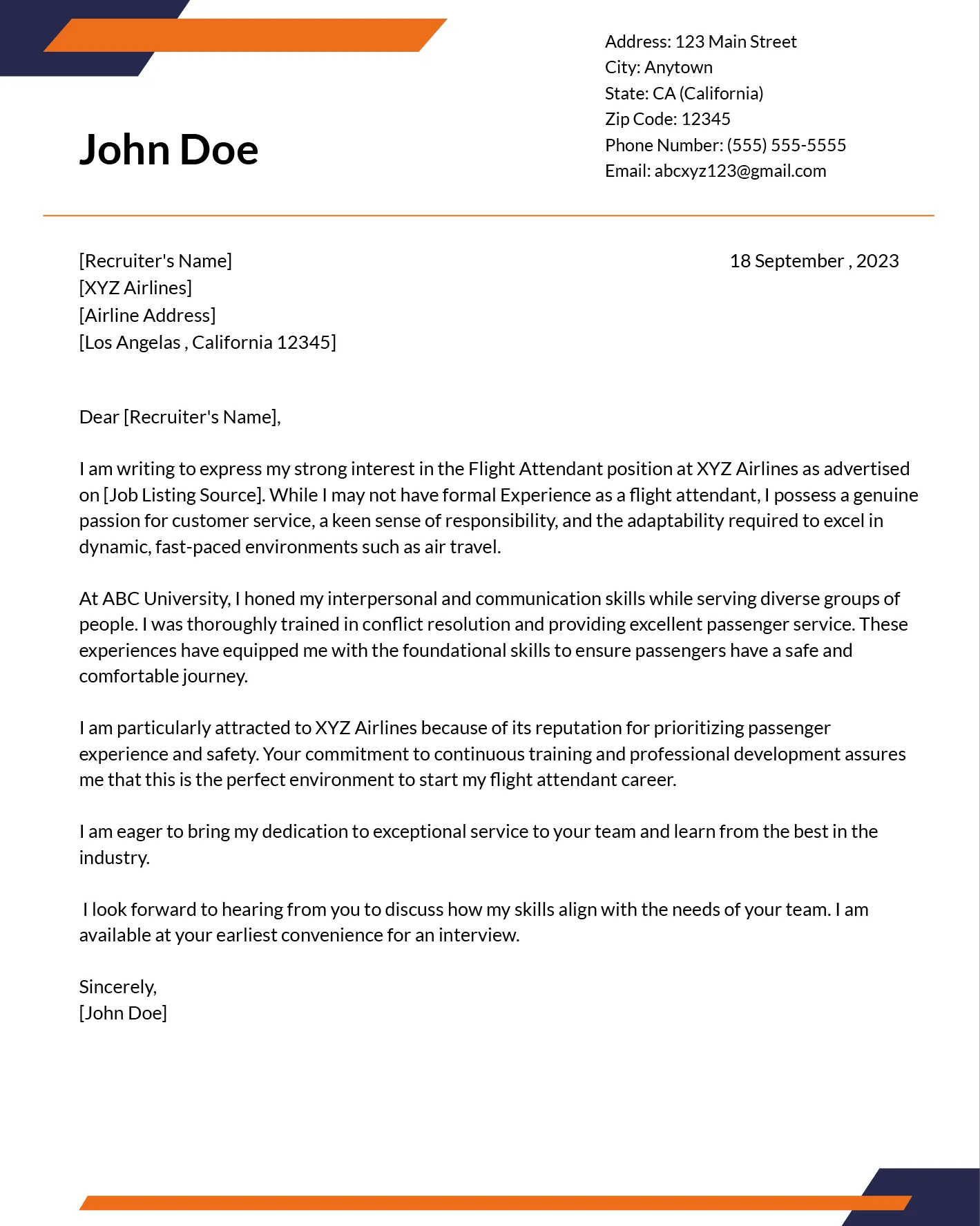
Crafting the Perfect Flight Attendant Cover Letter
Landing a flight attendant position is a competitive process, and your cover letter is your first opportunity to make a lasting impression. It’s not just a formality, but a crucial tool to showcase your personality, skills, and enthusiasm. This guide provides a comprehensive approach to crafting a compelling cover letter, even if you have no prior experience in the aviation industry. We’ll navigate the challenges, highlight the transferable skills that make you an ideal candidate, and provide practical tips to ensure your application stands out. By following these steps, you’ll increase your chances of securing an interview and taking off on your dream career path.
Understanding the No-Experience Challenge
Many aspiring flight attendants face the hurdle of lacking direct experience. The good news is, airlines understand this. They often seek individuals with strong soft skills and a willingness to learn. Your cover letter should address this head-on. Acknowledge the absence of experience, but don’t dwell on it. Instead, focus on what you do bring to the table: relevant skills, a positive attitude, and a genuine passion for the role. This section will show you how to shift the focus from what you lack to what you offer, making you a more compelling candidate.
Highlighting Transferable Skills

Transferable skills are the foundation of a successful cover letter for those without direct experience. These are the skills you’ve acquired in other jobs, volunteer roles, or even personal experiences that are valuable in the flight attendant role. Identifying and emphasizing these skills is crucial. We will provide clear examples of how to highlight your transferable skills and make a compelling case for your candidacy. These skills can be used across different industries and settings. It is important to remember that demonstrating these skills are important to make a good first impression.
Skills from Customer Service
Customer service experience is highly relevant. Flight attendants are, at their core, customer service professionals. Highlight any experience where you’ve interacted with the public, resolved complaints, and exceeded customer expectations. Consider roles in retail, hospitality, or call centers. Focus on specific examples that demonstrate your ability to remain calm under pressure, handle difficult situations, and provide excellent service. Use action verbs like ‘assisted,’ ‘resolved,’ ‘managed,’ and ‘provided’ to showcase your achievements. For example, you can describe a situation where you went above and beyond to assist a customer or successfully handled a complaint. Remember that the goal here is to show you can offer positive outcomes.
Skills from Hospitality
Experience in the hospitality industry provides valuable insights into the demands of a flight attendant. Roles in restaurants, hotels, or event planning often involve multitasking, anticipating needs, and providing excellent service. Highlight experiences where you’ve demonstrated these skills. Mention specific tasks like managing reservations, handling guest requests, or ensuring a positive atmosphere. The ability to work well under pressure and maintain a professional demeanor is crucial. Showcase your ability to create a welcoming environment and provide exceptional service. Remember, a flight attendant’s role is not just about serving food; it’s about creating a positive experience for every passenger.
Skills from Communication

Excellent communication skills are paramount for flight attendants. Whether you’re talking with passengers or crew, you will need to be able to present yourself and the information to passengers in a clear and concise manner. Emphasize any experiences where you’ve needed to communicate effectively – public speaking, presentations, training, or even conflict resolution. If you are fluent in multiple languages, be sure to state the languages you know. Include any experience you have in writing reports or documentation. Highlight your ability to listen actively, speak clearly, and adapt your communication style to different situations. Remember, clear communication is critical for safety and passenger satisfaction.
Showcasing Your Personality & Enthusiasm
Airlines seek individuals who are passionate about the role and genuinely enjoy interacting with people. Your cover letter is your opportunity to let your personality shine through. Be enthusiastic, positive, and genuine. Share why you’re drawn to the flight attendant profession, what excites you about the role, and what you hope to achieve. Use a friendly and professional tone. Show off your personality and explain why you are a good fit for the company’s culture. Airlines want team members who are committed, enthusiastic, and dedicated. When you can successfully communicate this, you will catch their attention and increase your chances of obtaining the job.
Researching the Airline & Tailoring Your Letter
Generic cover letters are easily recognizable and rarely effective. Before you write, thoroughly research the airline you’re applying to. Understand their values, mission, and brand. Visit their website, read their social media, and look for any company culture insights. Tailor your cover letter to align with their specific needs and requirements. Mention specific aspects of the airline that appeal to you. By demonstrating this in your application, you are showing you care about the company. Customize your letter to reflect what the airline is seeking. Showing you did your research shows your serious interest and that you want to be part of the team.
Formatting & Structure Essentials

A well-formatted cover letter is just as important as its content. Ensure your letter is easy to read and visually appealing. Pay close attention to the layout, font, and spacing. Following these guidelines will help you stand out. A clean and organized format demonstrates professionalism and attention to detail. It also makes it easier for the hiring manager to quickly scan your qualifications. Use standard fonts like Times New Roman or Arial and maintain consistent spacing throughout. A well-structured letter allows the hiring manager to quickly see the important points.
Header & Contact Information
Your header should include your full name, address, phone number, and email address. Ensure your contact information is accurate and professional. You can place it on the left or right side of the page. Double-check your contact information to make sure it is up to date. Make sure your email address is professional. If you have a LinkedIn profile, include the URL in your header. This allows recruiters to easily find your information and review your profile. Use a clear and easy-to-read font. This helps recruiters reach you quickly and easily if they want to contact you for an interview.
Opening Paragraph: Grab Their Attention
The opening paragraph is your first chance to make a great impression. Start with a strong hook that grabs the reader’s attention. Clearly state the position you’re applying for and how you learned about the opportunity. Mention the airline’s name and briefly explain why you’re interested in working for them. Show your enthusiasm. Make it clear why you are the right candidate. Show them that you have researched the company. Make sure to tailor this section to the specific airline and position. Show them your passion for the flight attendant role.
Body Paragraphs: Make Your Case

This is the meat of your cover letter, where you highlight your skills and qualifications. In a no-experience scenario, emphasize your transferable skills. Provide specific examples and quantifiable achievements. Tailor your content to the job description. Use action verbs. Use a positive and enthusiastic tone throughout this section. Make sure to address the company’s needs and explain how you meet them. This shows that you are the right fit. Connect your past experiences to the required duties. Doing so will show the reader that you have what it takes to succeed in the role.
Closing Paragraph: Call to Action
End your cover letter with a strong call to action. Express your enthusiasm for the opportunity and reiterate your interest in the position. Thank the hiring manager for their time and consideration. State your availability for an interview and how they can contact you. Make sure to check your spelling and grammar. Proofread it. Make sure your contact information is accurate. This section is crucial, so it is important to make sure everything is just right. It helps employers reach you for an interview. You will be one step closer to getting the job.
Common Mistakes to Avoid
Certain mistakes can immediately disqualify your application. Avoid typos and grammatical errors. Proofread carefully. Avoid using generic language. Tailor your letter to the specific airline and position. Don’t be too long, keep it concise and to the point. Avoid negative language or complaining about previous employers. Don’t make the letter all about you, instead focus on what you bring to the role. Avoid exaggerating your skills or experience. Do not send the same cover letter to every company. Be sure you have proofread your application. Take your time and avoid making any of these common mistakes.
Proofreading & Editing: Ensure Perfection

Proofreading is critical to make sure there are no errors in your application. Before submitting your cover letter, proofread it carefully. Check for typos, grammatical errors, and formatting inconsistencies. Read it aloud to catch any awkward phrasing. Ask a friend or family member to review it as a second pair of eyes can catch mistakes you might have missed. A polished cover letter is a sign of professionalism. Make sure that your cover letter accurately reflects your abilities. Check your contact information to make sure everything is correct. Perfecting your cover letter will increase your chances of getting an interview and landing your dream job.
Cover Letter Samples for Inspiration
Reviewing samples can provide a helpful reference. Search online for flight attendant cover letter samples. Use these as a guide, but don’t copy them directly. Customize the samples to reflect your own skills and experiences. Pay attention to the formatting, structure, and tone. Modify the samples to fit your specific qualifications and the airline you’re applying to. By reviewing these samples you can create a cover letter that gets noticed. Use the sample as a starting point, not the finished product. Let these samples inspire you to create a cover letter.