Why a Flight Attendant Cover Letter Matters
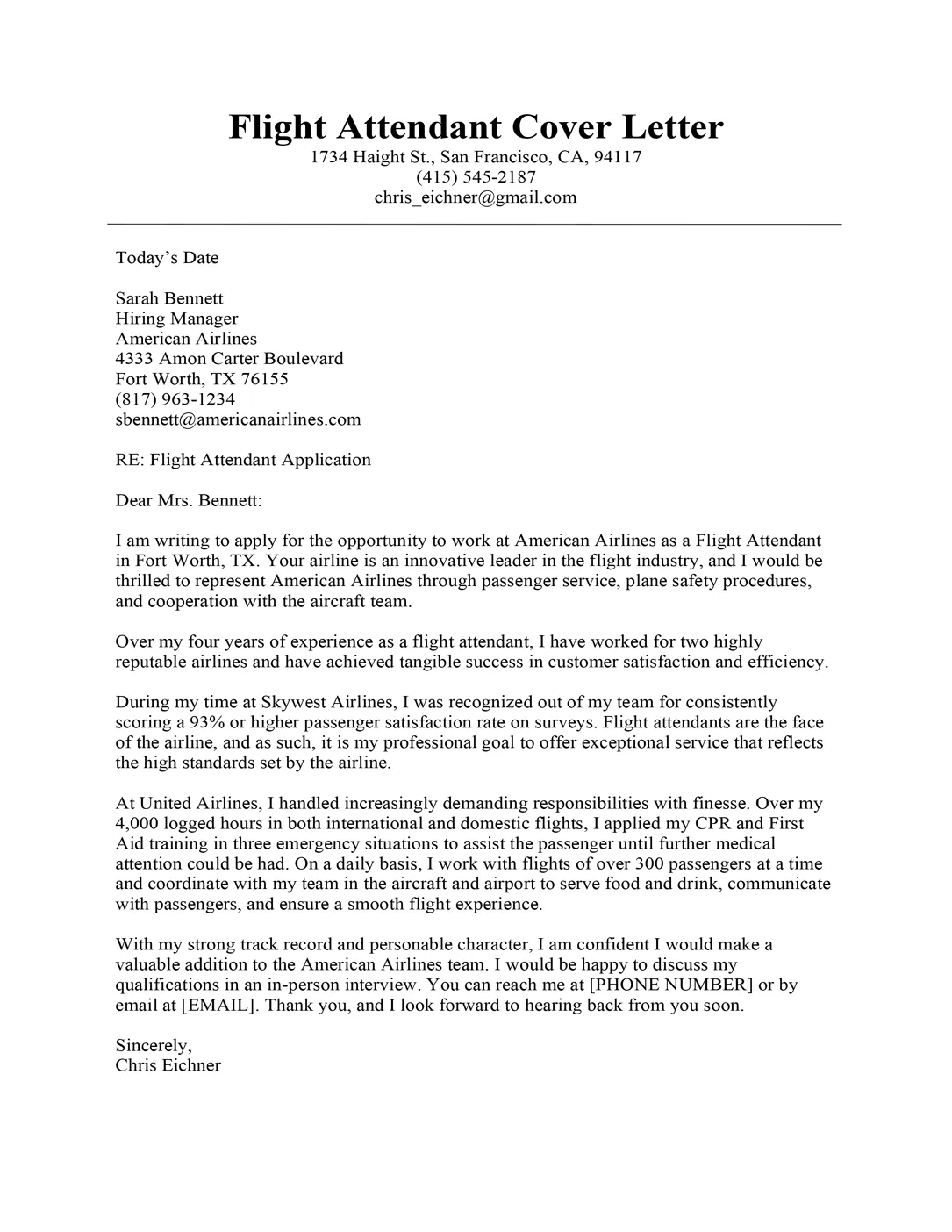
In the competitive world of aviation, a well-crafted cover letter can be your ticket to securing a flight attendant position. It’s your first chance to make a positive impression and demonstrate why you’re the ideal candidate. A cover letter is more than just a formality; it’s a critical marketing tool that highlights your skills, experience, and passion for the role. It allows you to personalize your application and go beyond what’s stated in your resume. Recruiters often scan hundreds of applications, and a compelling cover letter can be the key to getting your resume noticed and landing an interview. A strong cover letter showcases your understanding of the airline’s values and your genuine interest in joining their team, making you stand out from other applicants.
Essential Cover Letter Components
A comprehensive cover letter should include several key components to ensure it effectively communicates your qualifications and enthusiasm. It needs to be structured logically and easy to read, with each section serving a specific purpose. Proper formatting and attention to detail are essential, as they reflect your professionalism and commitment to the role. Remember to keep it concise while providing enough information to make a strong case for your candidacy. Proofread carefully to eliminate any errors in grammar or spelling; errors can significantly damage your credibility and signal a lack of attention to detail, qualities critical in a flight attendant. Using a clear and professional tone throughout the letter can showcase your communication abilities, which are crucial for interacting with passengers and colleagues.
Your Contact Information

At the top of your cover letter, provide your full name, address, phone number, and professional email address. Ensure this information is accurate and up-to-date, as it’s how recruiters will contact you. Use a professional email address that reflects your name and avoids unprofessional usernames or slang. Double-check all contact details to avoid any errors. This ensures that the hiring managers can easily reach you to schedule interviews or provide further information. Clear and accessible contact information shows that you are organized and professional, essential qualities for a flight attendant role.
The Greeting
Address the hiring manager by name if possible; research the airline’s website or LinkedIn to find the name of the recruiter or hiring manager. If you cannot find a specific name, a general greeting like ‘Dear Hiring Team’ is acceptable. Avoid generic greetings like ‘To Whom It May Concern’ as they indicate a lack of effort and personalization. A personalized greeting shows that you have taken the time to research and understand the company’s recruitment process. This simple step can significantly impact how your application is received. Always use a professional tone in your greeting to set the right tone for your letter and demonstrate your respect for the hiring team.
Highlight Your Relevant Skills and Experience
This is where you showcase your abilities and experiences that align with the flight attendant role’s requirements. Focus on skills directly relevant to the job, providing specific examples to demonstrate your capabilities. Quantify your achievements whenever possible to make them more impactful. Mention any previous customer service experience, conflict resolution, or teamwork situations. By highlighting your relevant skills, you clearly show the hiring manager that you are a good fit for the position and have the necessary attributes to excel as a flight attendant. This section is critical for making a strong first impression and capturing the recruiter’s attention.
Customer Service Skills

Flight attendants are primarily customer service professionals. Highlight any experience you have in roles where you interacted with customers and resolved issues. Describe how you handled difficult customers or situations, emphasizing your ability to remain calm, empathetic, and solution-oriented. Provide specific examples of positive customer interactions. Mention any training or certifications you have received in customer service, like conflict resolution or active listening. Focus on your ability to build rapport, provide excellent service, and create a positive experience for passengers. Emphasizing your customer service skills demonstrates your aptitude for handling the various needs of passengers and promoting a pleasant flight experience.
Communication Skills
Effective communication is crucial in this role. Highlight your ability to communicate clearly and concisely, both verbally and in writing. Give examples of how you’ve conveyed information to others, whether it was in a customer service setting or in a team environment. Mention any experience with public speaking or presentations. Include your ability to adapt your communication style to different audiences. Detail your proficiency in multiple languages if you are fluent in any, as this can be a significant asset. Excellent communication skills ensure you can provide clear instructions, handle passenger inquiries, and coordinate with the flight crew, which are all essential aspects of ensuring flight safety and passenger satisfaction.
Problem-Solving Abilities
Flight attendants frequently encounter unforeseen challenges, making problem-solving skills essential. Provide examples of situations where you took initiative to resolve a problem, whether it involved dealing with customer complaints, managing emergency situations, or adapting to changes in schedules. Describe your analytical skills and your ability to think quickly under pressure. Mention any training in first aid or emergency procedures. Illustrate your ability to remain calm and make decisions effectively during critical moments. Highlighting these skills shows that you are prepared to handle the various challenges associated with this demanding role, showcasing your ability to ensure passenger safety and satisfaction.
Showcase Your Passion for the Role

Express your genuine interest in being a flight attendant. Share why you are drawn to this career, whether it’s your love of travel, helping people, or working in a dynamic environment. Demonstrate your understanding of the responsibilities and lifestyle of a flight attendant. Convey your enthusiasm for providing exceptional service and ensuring passenger safety. This part of your letter allows you to connect with the hiring manager on a personal level and show them why you are genuinely excited about the opportunity. Highlight your personality and your motivation to succeed in the aviation industry; your enthusiasm can set you apart.
Mention Your Research
Show the hiring team that you’ve researched the airline and understand its values, mission, and culture. Mention specific aspects of the airline that resonate with you. Show that you are familiar with the airline’s fleet, destinations, or any recent initiatives. Demonstrate your understanding of the airline’s brand and values. Tailor your letter to reflect this knowledge. This demonstrates your dedication and initiative and shows that you’re not just applying for any job but are genuinely interested in working for that particular airline. Research shows your interest in the company and helps you to stand out from other generic applications.
Express Your Enthusiasm
Convey your excitement about the opportunity and your enthusiasm for the role. Use positive and energetic language to express your eagerness to contribute to the airline’s success. Reiterate your interest in working with the team and your commitment to providing excellent customer service. Show the hiring manager that you are passionate about the opportunity and ready to take on the challenges. A positive attitude can leave a lasting impression. Show that you are enthusiastic and excited about the possibility of working for the airline. This will encourage the hiring manager to select you to continue the interview process.
Address Specific Requirements and Qualifications

Carefully review the job description and address the specific requirements and qualifications listed. Tailor your letter to match the criteria outlined by the airline. Mention how your skills and experience align with their needs. Use keywords from the job description in your cover letter. This helps demonstrate that you meet the necessary qualifications and are a great fit for the role. Demonstrating your understanding of the specific requirements shows your attention to detail and your ability to follow instructions, two essential traits for a flight attendant. Carefully matching your qualifications to their needs will demonstrate that you’re serious about the role and that you can meet expectations.
Tailor to the Airline
Customize your cover letter for each airline you apply to. Research the airline’s values, mission, and culture. Highlight any experiences or skills that align with the airline’s specific requirements. Demonstrate your understanding of their brand and how you can contribute to their success. Avoid sending a generic cover letter to multiple airlines; personalization shows you are serious about working for their company. Referencing the airline’s specific initiatives, destinations, or values can also help you showcase your interest. Tailoring your letter helps you to show that you are a thoughtful candidate who has put in the effort to prepare a compelling application.
Emphasize Relevant Certifications and Training
If you possess any relevant certifications or training, make sure to highlight them in your cover letter. Mention any training in first aid, CPR, or emergency procedures. Describe your experience with safety protocols. Highlight any language skills or other relevant qualifications. Mentioning your certifications and training can increase your chances of landing a job interview. This section helps emphasize that you have the essential skills and qualifications the airline seeks in a flight attendant. Be sure to mention any specific training that is relevant to the airline’s operations.
Call to Action and Closing

Conclude your letter with a clear call to action and a professional closing. State your availability for an interview and express your eagerness to discuss your qualifications further. Use a professional closing such as ‘Sincerely’ or ‘Best regards’. Proofread the letter carefully to avoid errors. A strong conclusion leaves a lasting positive impression on the hiring manager, encouraging them to contact you. This will show you are prepared to meet the hiring manager in person or through a virtual interview to discuss your qualifications further.
Express Gratitude
Thank the hiring manager for their time and consideration. Show your appreciation for the opportunity to apply and for their time reviewing your application. Expressing gratitude can strengthen your positive impression. Showing appreciation can demonstrate professionalism. This simple gesture indicates respect and can leave a positive impression on the hiring manager, making them more inclined to move your application forward.
Sign-off and Contact Details
Sign off with a professional closing, such as ‘Sincerely’ or ‘Best regards,’ followed by your full name. Include your contact information again below your signature, especially your phone number and email address. This makes it easy for the hiring manager to reach you. Double-check to ensure that all contact details are accurate. This professional touch ensures the hiring manager can quickly reach you if you move to the interview stage. By including these details, you ensure that the hiring manager has all of the information needed to reach you for an interview.