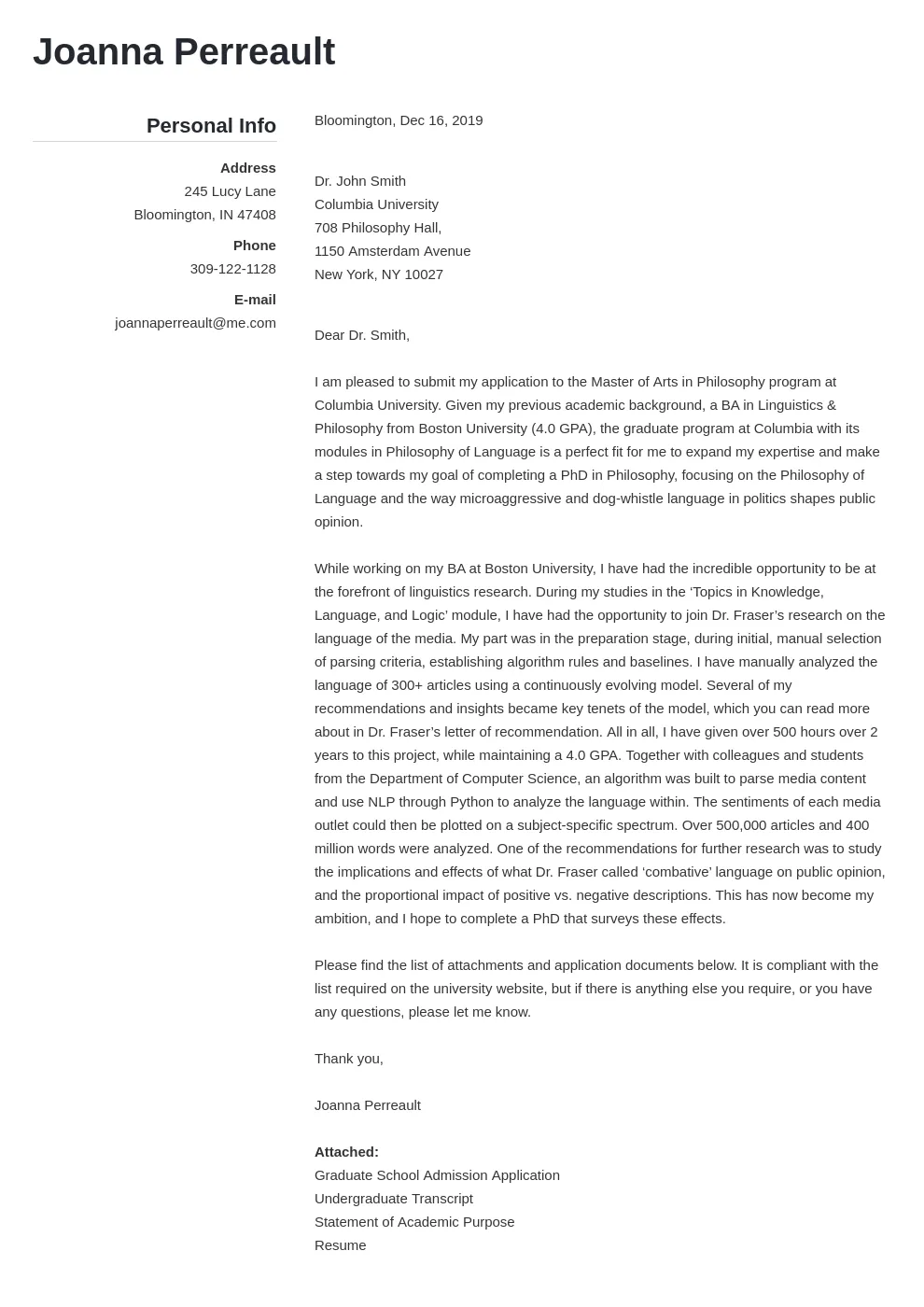
Why a Strong Cover Letter Matters for Graduate School
Your graduate school application is a package deal, and the cover letter serves as the bow that ties it all together. While your transcripts and test scores provide a snapshot of your academic abilities, the cover letter offers you the opportunity to showcase your personality, passion, and potential. It’s where you can explain any anomalies in your academic record, highlight experiences that demonstrate your suitability for the program, and articulate your aspirations for the future. A well-crafted cover letter demonstrates your communication skills, your understanding of the program, and your genuine interest in the field, increasing your chances of acceptance. A weak or generic cover letter, on the other hand, can undermine an otherwise strong application. This is why mastering the art of writing a compelling cover letter is paramount for graduate school success.
Highlighting Your Academic Background and Achievements
Your academic background forms the foundation of your application. In your cover letter, briefly summarize your undergraduate degree, mentioning your major and any relevant coursework. Focus on achievements that are directly related to the graduate program you’re applying for. Did you excel in a particular subject? Did you complete an honors thesis or independent research project? Did you receive any academic awards or scholarships? Quantify your achievements whenever possible. Instead of saying ‘I performed well in my statistics class,’ say ‘I earned an A in Statistics and was ranked in the top 5% of the class.’ Providing concrete evidence of your academic success is crucial for demonstrating your readiness for graduate-level study. This is also a good time to highlight any relevant publications or presentations you may have.
Emphasizing Relevant Skills and Experiences

Beyond academics, your cover letter should showcase the skills and experiences that have prepared you for graduate school. Think about the skills that are most relevant to the program you’re applying to. This may include research skills, analytical skills, writing skills, communication skills, or specific technical skills. Provide concrete examples of how you’ve utilized these skills in the past. Describe relevant work experience, internships, volunteer work, or extracurricular activities. How did these experiences contribute to your development as a scholar and researcher? What did you learn from these experiences, and how will you apply those lessons in your graduate studies? Tailor your examples to the specific requirements and expectations of the program. Highlight any leadership roles you’ve held, and emphasize skills like teamwork, problem-solving, and critical thinking.
Showcasing Your Research Interests and Goals
Graduate programs are looking for students who have a clear sense of their research interests and goals. Your cover letter is the place to articulate your passion for the field and explain why you’re interested in the specific program. What are your specific research interests? What questions do you want to explore? What are your long-term career goals? Mention specific faculty members whose research aligns with your interests. Demonstrate that you’ve done your homework by researching the program, the faculty, and the curriculum. Explain how this program will help you achieve your goals. Be specific and provide concrete examples of your past research or experiences that have fueled your interests. This will demonstrate your genuine passion for the subject matter and your commitment to pursuing advanced studies.
Tailoring Your Cover Letter to the Program
One of the biggest mistakes applicants make is sending out generic cover letters. Each graduate program is unique, and your cover letter should reflect that. Research the program, the faculty, and the curriculum. Mention specific courses or research areas that appeal to you. Address your cover letter to the admissions committee or, if possible, a specific faculty member whose research aligns with your interests. Demonstrate that you understand the program’s mission and values, and explain how your skills and experiences make you a good fit. Customize your cover letter to reflect the specific requirements and expectations of the program. This shows that you’ve taken the time and effort to learn about the program, which signals a genuine interest in joining their academic community.
Reviewing Cover Letter Examples for Different Programs

Studying examples of successful cover letters is a great way to learn the art of writing a compelling one. However, remember that you’re not copying; you’re learning from the structure, tone, and content. Search online for cover letter examples for graduate programs in your field. Pay attention to how the applicants introduce themselves, highlight their achievements, and articulate their research interests. Analyze how they tailor their letters to the specific programs they’re applying to. Take notes on the language, style, and organization of the letters. Use these examples as a starting point for writing your own cover letter, but remember to personalize it to reflect your own unique experiences and aspirations. Consider the perspective of the admissions committee; what information would they find most compelling? What makes the applicant stand out?
Cover Letter Structure and Format
A well-structured cover letter is easy to read and demonstrates professionalism. Follow a standard business letter format, including your contact information, the date, and the recipient’s contact information. The body of your letter should typically consist of three to five paragraphs. The first paragraph should introduce yourself and state your purpose for writing. The subsequent paragraphs should highlight your relevant skills, experiences, and research interests. The final paragraph should reiterate your interest in the program and express your gratitude for their consideration. Use a clear, concise, and professional tone throughout the letter. Proofread your letter carefully for any grammatical errors or typos. Ensure that the formatting is consistent and that the letter is well-organized and easy to read. Aim for a length of one page.
Writing a Compelling Opening Paragraph
The opening paragraph is your chance to grab the reader’s attention and make a strong first impression. Start by stating your purpose for writing: to apply to the graduate program. Briefly mention where you learned about the program or why you’re particularly interested in the institution. Then, provide a concise overview of your qualifications. Highlight one or two key achievements or experiences that make you stand out. Create a sense of excitement and enthusiasm for the program. Avoid generic opening lines like ‘I am writing to apply…’ Instead, aim for a more engaging and personalized approach. Make sure your opening paragraph is well-written, concise, and reflects your unique strengths and aspirations. Consider mentioning a specific faculty member or research area that has drawn your attention to the program.
Structuring Body Paragraphs for Maximum Impact

The body paragraphs are the core of your cover letter, where you showcase your qualifications and demonstrate your suitability for the program. Break down your letter into logical paragraphs, each focusing on a specific aspect of your application. Start with your academic background and achievements, then move on to your relevant skills and experiences. Discuss your research interests and goals in detail, and connect them to the program’s specific offerings. Use clear and concise language, and avoid jargon or overly technical terms. Support your claims with concrete examples and evidence. Quantify your achievements whenever possible. Tailor each paragraph to the specific program, highlighting the aspects of your experience that are most relevant to their needs. Ensure a smooth flow between paragraphs, creating a cohesive narrative of your qualifications and ambitions.
Crafting a Strong Closing Statement
The closing paragraph is your final opportunity to leave a positive impression. Restate your interest in the program and reiterate your gratitude for the admissions committee’s time and consideration. Express your enthusiasm for the opportunity to contribute to the program and learn from the faculty and your peers. Offer to provide any additional information or clarification that may be needed. End with a professional closing, such as ‘Sincerely,’ or ‘Respectfully,’ followed by your name. Proofread your closing paragraph carefully to ensure that it’s free of errors. Your closing should be enthusiastic, professional, and reflect your genuine interest in the program and the opportunity to further your academic goals. Make sure the conclusion ties back to the initial paragraph, creating a satisfying circularity.
Common Mistakes to Avoid in Your Cover Letter
Several common mistakes can undermine your cover letter. Avoid generic cover letters; tailor each one to the specific program. Don’t simply reiterate your resume; use the cover letter to provide context, explain your motivations, and highlight your personality. Don’t use jargon or overly technical language, and ensure that your language is clear and concise. Avoid grammatical errors and typos; proofread carefully. Don’t include irrelevant information or personal details that are not relevant to your application. Don’t be overly boastful or arrogant; instead, focus on showcasing your accomplishments in a humble and professional manner. Be honest and authentic, and avoid exaggerating your accomplishments or making false claims. Remember, the admissions committee wants to know who you are, what you’ve done, and what you aspire to achieve.
Proofreading and Editing Your Cover Letter

Proofreading and editing are crucial steps in ensuring your cover letter is polished and professional. After writing your cover letter, set it aside for a day or two, and then reread it with a fresh perspective. Check for any grammatical errors, typos, and formatting inconsistencies. Ensure that your language is clear, concise, and professional. Ask a friend, family member, or career counselor to review your cover letter and provide feedback. Pay close attention to the overall tone and structure of your letter. Does it effectively convey your qualifications and enthusiasm for the program? Make sure your letter is easy to read and understand. Proofreading is not just about correcting errors; it’s about refining your writing and ensuring that your cover letter makes a strong and positive impression on the admissions committee. A well-edited letter is a testament to your attention to detail and your commitment to excellence.