What is a Cover Letter and Why is it Important
A cover letter is your first opportunity to make a strong impression on a potential employer. It’s a formal document that accompanies your resume when you apply for a job. More than just a formality, a well-crafted cover letter can significantly increase your chances of getting an interview. It’s a chance to showcase your personality, express your enthusiasm for the role, and highlight the skills and experiences that make you a perfect fit for the position. Think of it as your personal introduction, setting the stage for the detailed account of your qualifications presented in your resume. A compelling cover letter provides context, demonstrating how your skills align with the job requirements and why you are genuinely interested in the company.
The Purpose of a Cover Letter
The primary purpose of a cover letter is to introduce yourself and express your interest in a specific job. It allows you to elaborate on the information in your resume, providing a narrative that connects your skills and experiences to the job requirements. The cover letter is a platform to demonstrate your understanding of the company and the role, showcasing how your values align with their mission. It should highlight your key accomplishments and explain why you are the ideal candidate. By addressing the hiring manager directly and personalizing your letter, you can establish an immediate connection and show that you’ve taken the time to research the opportunity and the company.
Key Elements of a Cover Letter

A well-structured cover letter includes several key elements that work together to create a persuasive document. Start with a professional heading that includes your contact information and the date. Then, address the hiring manager by name if possible. The opening paragraph should immediately grab the reader’s attention and state your purpose for writing. In the body of the letter, provide specific examples of your skills and experiences, demonstrating how you meet the job’s requirements. Finally, the closing paragraph should reiterate your interest, express gratitude, and include a clear call to action, such as requesting an interview. Maintaining a professional tone, using proper grammar, and proofreading meticulously are essential aspects of a successful cover letter.
How to Write a Cover Letter Opening
The opening of your cover letter is crucial, as it sets the tone for the entire document and determines whether the hiring manager will continue reading. The first few sentences should be compelling, concise, and directly address the job you are applying for. Avoid generic phrases like ‘I am writing to express my interest…’ Instead, aim to create an immediate impact by highlighting something specific about the company or role that excites you. This is your opportunity to show that you understand the company’s needs and are genuinely interested in the position. A strong opening paragraph immediately captures the reader’s attention, making them want to learn more about your qualifications and how you can contribute to their organization.
Researching the Company
Before you start writing, research the company thoroughly. Visit their website, read recent news articles, and check their social media profiles to understand their mission, values, and recent achievements. Tailor your cover letter to demonstrate your understanding of the company’s culture and the specific requirements of the job. Showing that you have invested time in learning about the organization demonstrates your genuine interest and sets you apart from other applicants. Identify the company’s key priorities and how your skills and experience align with their goals. This research will help you craft a relevant and compelling opening that shows you are a well-informed and thoughtful candidate.
Addressing the Hiring Manager

If possible, address the hiring manager by name. This personal touch immediately demonstrates that you have taken the time to learn about the organization and that you are not sending a generic application. Finding the hiring manager’s name can often be done by checking the job posting, the company website, or LinkedIn. If you can’t find a specific name, use a professional salutation such as ‘Dear Hiring Manager’ or ‘Dear [Department Name] Team.’ Avoid generic greetings like ‘To Whom It May Concern,’ as these can make your application seem impersonal. Addressing the hiring manager directly helps establish a connection and shows that you are serious about the opportunity.
Hooking the Reader with a Strong Opening
The opening of your cover letter must grab the reader’s attention. Start with a compelling statement that immediately showcases your enthusiasm and demonstrates your understanding of the role. Briefly mention your most relevant skill or experience. Consider starting with a specific achievement or a compelling anecdote that highlights your suitability for the position. Your opening should be concise and focused. It should clearly state the purpose of your letter and motivate the hiring manager to continue reading. By captivating the reader from the very beginning, you increase the likelihood of your application receiving the attention it deserves.
Examples of Effective Cover Letter Openings
There are various approaches you can take to create a strong opening for your cover letter. The best approach depends on the specific job and your personal style. Here are a few examples to inspire you:
The Enthusiastic Approach

Express your excitement for the role and the company. For instance, ‘I am thrilled to apply for the Marketing Manager position at [Company Name], as I have long admired your innovative approach to [Industry].’
The Referral Approach
If you were referred, mention the connection. For example, ‘I am writing to express my interest in the Software Engineer position, as recommended by [Referral Name]. I am eager to contribute my skills to your team.’
The Benefit-Oriented Approach
Focus on what you can offer the company. For example, ‘With five years of experience in project management and a proven track record of delivering projects under budget and ahead of schedule, I am confident I can significantly contribute to [Company Name]’s success in [specific area].’
The Question Approach

Pose a relevant question to engage the reader. For example, ‘How can [Company Name] continue to lead in the renewable energy sector? With my expertise in solar technology, I believe I can play a key role in your future innovations.’
Crafting the Body of Your Cover Letter
The body of your cover letter is where you provide the details that support your opening statement. It should highlight your key skills, experiences, and accomplishments that align with the job requirements. Structure your paragraphs logically. Each paragraph should address a specific aspect of the job description. Use strong action verbs to describe your accomplishments. For instance, instead of saying ‘I was responsible for,’ say ‘I managed,’ ‘I led,’ or ‘I implemented.’ Provide concrete examples of your achievements. Show how your skills benefited previous employers or projects. The goal is to demonstrate your value and explain why you are the perfect fit for the role.
Highlighting Your Skills and Experience
Carefully review the job description and identify the key skills and experiences the employer is looking for. In your cover letter, explicitly mention these skills and provide evidence of how you have used them successfully in the past. Structure your letter to emphasize how your qualifications match the job requirements. Include examples of projects, responsibilities, and results that demonstrate your capabilities. Quantify your achievements whenever possible. For example, instead of saying ‘I increased sales,’ state ‘I increased sales by 15% in one quarter.’ Highlighting the right skills and providing concrete examples will show that you can deliver results.
Providing Specific Examples

Instead of simply listing your skills, provide specific examples of how you have used them. Use the STAR method (Situation, Task, Action, Result) to structure your examples. First, describe the situation and the task you were assigned. Then, explain the specific actions you took. Finally, detail the results of your actions. This method provides a clear and concise way to showcase your abilities and demonstrate the impact you can make. By offering tangible examples, you make your cover letter more persuasive and memorable. Your ability to articulate your achievements, combined with the STAR method, illustrates the value you bring to the role and the company.
Demonstrating Your Value to the Company
The main goal of the body of your cover letter is to demonstrate your value to the company. Explain how your skills and experiences align with their needs and goals. Show that you understand what the company is trying to achieve and that you can contribute to its success. Research the company’s recent projects, challenges, and achievements. Explain how your skills can help them overcome challenges or capitalize on opportunities. Frame your accomplishments in terms of their impact on previous employers or projects. By clearly articulating how you can help the company, you significantly increase your chances of securing an interview and getting hired.
Writing a Compelling Cover Letter Closing
The closing paragraph is your final opportunity to make a lasting impression. It should summarize your interest, express gratitude, and include a clear call to action. Keep the closing concise, professional, and focused on the next step. Do not rehash your qualifications. Instead, re-emphasize your enthusiasm for the role and your desire to contribute to the company’s success. The goal is to leave the hiring manager with a positive and memorable impression, prompting them to contact you.
Reiterating Your Interest

In the closing paragraph, reiterate your strong interest in the position. Reiterate how excited you are about the opportunity and the specific ways you can contribute to the company. This reinforces your enthusiasm and reminds the hiring manager why you are a strong candidate. Briefly summarize your key skills and experiences again, connecting them directly to the job requirements. Your enthusiasm should be genuine and reflect your understanding of the company’s needs and goals. By restating your interest, you leave a lasting positive impression.
Expressing Gratitude
Express your gratitude for the hiring manager’s time and consideration. This shows professionalism and respect. A simple ‘Thank you for your time and consideration’ is appropriate. You can also personalize the gratitude by mentioning something specific you learned about the company during your research. Expressing gratitude is not only polite but also leaves a positive impression. It demonstrates that you value the opportunity and that you appreciate the hiring manager’s effort in reviewing your application.
Including a Call to Action
Conclude with a clear call to action. This tells the hiring manager what you expect to happen next. For example, ‘I am eager to discuss my qualifications further in an interview’ or ‘I look forward to the opportunity to speak with you about this role.’ Include your contact information, such as your phone number and email address, in case the hiring manager needs to reach you. A clear call to action makes it easy for the hiring manager to take the next step, increasing your chances of getting an interview. It demonstrates your proactive approach and your commitment to the job.
Cover Letter Sample and Template
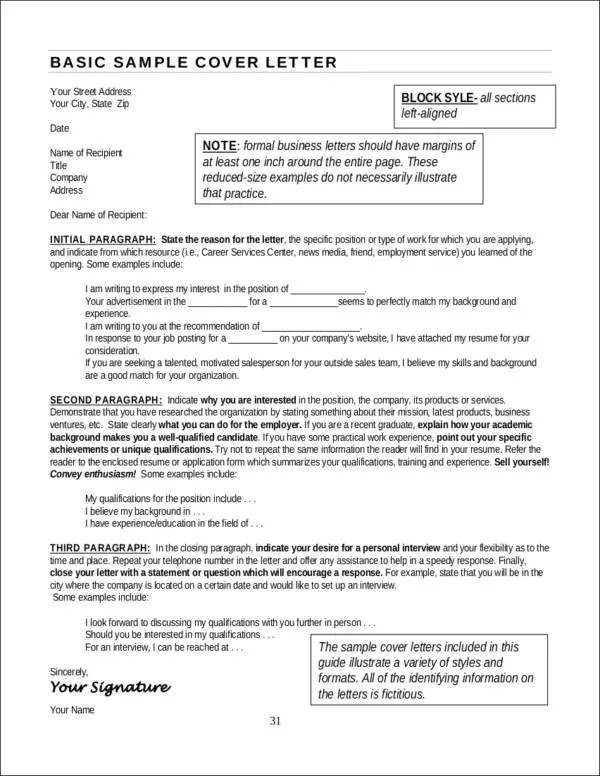
To help you create a compelling cover letter, here is an example and template. Remember to customize this information to fit your specific qualifications and the requirements of the job you are applying for.
Cover Letter Template
Follow this structure when creating your own cover letter, always customizing the content to your individual situation.
[Your Name] [Your Address] [Your Phone Number] [Your Email]
[Date]
[Hiring Manager Name (if known), or Title] [Company Name] [Company Address]
Dear [Mr./Ms./Mx. Last Name or Hiring Manager],
[Opening paragraph - Grab attention and state your interest.]
[Body Paragraph 1 - Highlight relevant skills and experience.]
[Body Paragraph 2 - Provide specific examples of your accomplishments.]
[Body Paragraph 3 - Demonstrate your value to the company.]
[Closing Paragraph - Reiterate your interest, express gratitude, and include a call to action.]
Sincerely, [Your Typed Name]
Common Mistakes to Avoid in Cover Letters
Avoiding common mistakes is just as important as including key elements in your cover letter. These errors can damage your credibility and decrease your chances of getting an interview. Reviewing your cover letter carefully before submitting it can prevent these easily avoidable pitfalls.
Grammatical Errors and Typos
Grammatical errors and typos are major red flags. They suggest a lack of attention to detail and can make you appear unprofessional. Proofread your cover letter multiple times. Use a grammar checker and ask a friend or family member to review it for you. Pay close attention to spelling, punctuation, and sentence structure. A flawless cover letter shows that you care about the details and are willing to put in the effort to create a polished document.
Generic and Uninspired Language
Avoid using generic phrases and clichés. These make your cover letter sound impersonal and uninspired. Instead, use active language and provide specific examples that demonstrate your skills and experience. Research the company and tailor your language to match their tone and culture. Show that you have a genuine interest in the role and that you have taken the time to understand the company’s needs. Using fresh and engaging language will make your cover letter stand out and capture the hiring manager’s attention.
Focusing Solely on Yourself
While your cover letter should highlight your skills and experience, it should also focus on what you can bring to the company. Avoid making your cover letter all about you. Instead, emphasize how your skills and experiences align with the company’s needs and how you can contribute to its success. Research the company’s goals and explain how you can help them achieve their objectives. Demonstrating your value to the company will show that you understand the role and that you are a team player. Focus on your value to the company, not just on your qualifications.