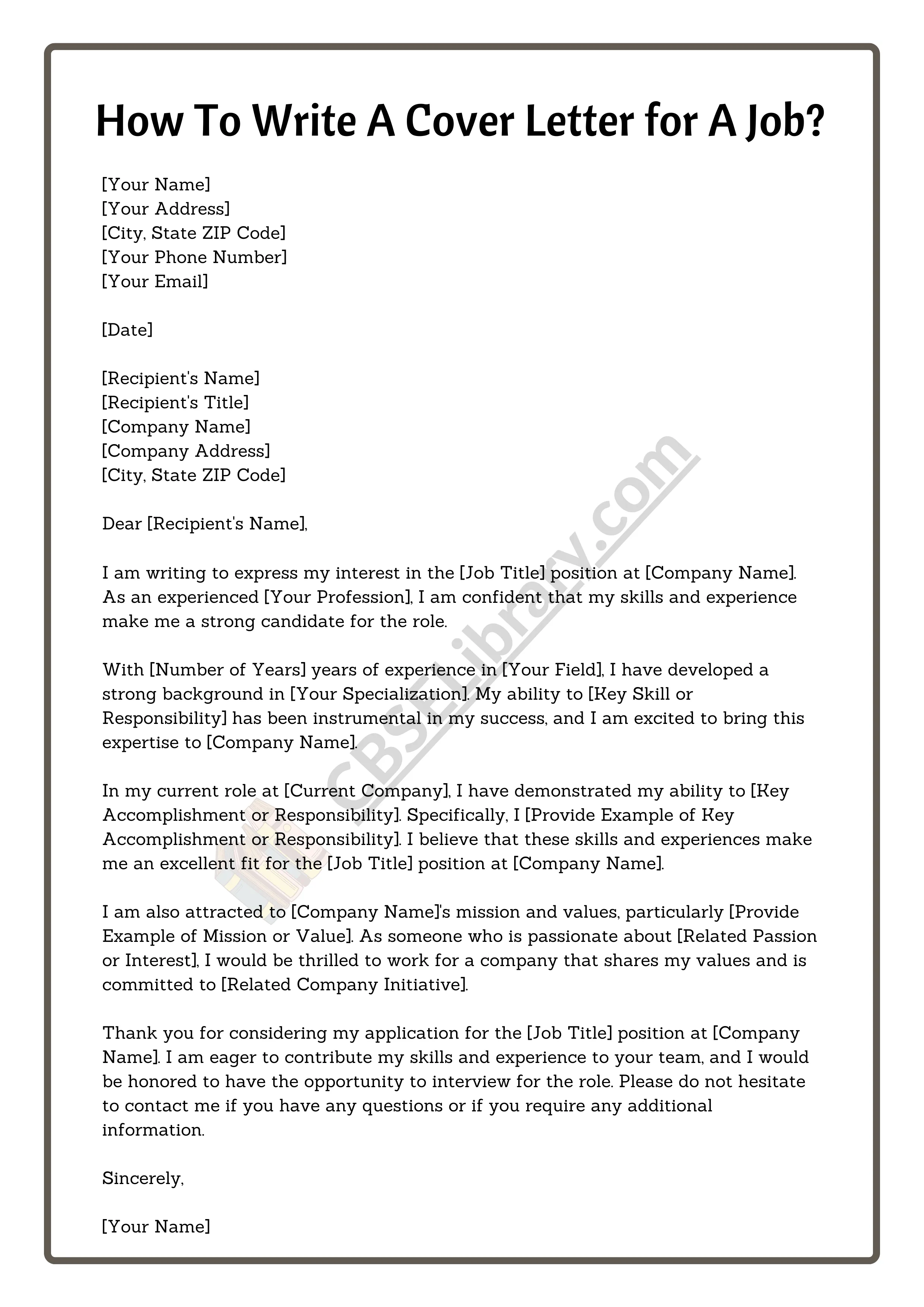
What is a Cover Letter
A cover letter is a crucial document that accompanies your resume when applying for a job. It serves as your first introduction to a potential employer, providing an opportunity to showcase your personality, skills, and enthusiasm for the position. Unlike a resume, which provides a snapshot of your work history and qualifications, a cover letter allows you to explain why you are the perfect fit for the specific role and company. It’s your chance to make a memorable first impression and persuade the hiring manager to consider your application further. Essentially, it’s a tailored sales pitch highlighting your key strengths and how they align with the job requirements.
Why is a Cover Letter Important
In today’s competitive job market, a well-crafted cover letter can significantly increase your chances of landing an interview. It provides context to your resume, allowing you to elaborate on your experiences and demonstrate your passion for the role. A strong cover letter shows employers that you’ve taken the time to research the company and understand their needs. It also provides a platform to express your unique value proposition, highlighting skills and experiences that directly address the job requirements. Furthermore, a cover letter gives you the opportunity to address any potential gaps in your resume or explain career transitions. By personalizing your application, you can distinguish yourself from other candidates and make a lasting impression. It’s an invaluable tool to convince the employer you are not just a list of qualifications, but a real person with genuine interest in the company and the role.
How to Write a Cover Letter for a Job Step by Step

Crafting a compelling cover letter is a step-by-step process that requires careful planning and execution. By following a structured approach, you can create a document that effectively communicates your qualifications and enthusiasm. This guide will walk you through the essential components of a cover letter, providing you with the knowledge and tools to create a standout application that grabs the attention of hiring managers.
Header Section
The header is the first part of your cover letter, and it should include your contact information and the date. Make sure this information is easy to find and clearly displayed. A well-formatted header sets a professional tone and ensures the employer can easily reach you. It is your branding section, so use the same font and style as your resume to maintain consistency.
Your Contact Information
Include your full name, address, phone number, and professional email address. Ensure that your email address is professional and appropriate. Use a clear and easy-to-read font, and ensure the contact information is accurate and up-to-date. Double-check it for any errors before submitting your cover letter.
Date

Below your contact information, include the date you are writing the letter. This is important for record-keeping and helps the employer know when you submitted your application. Format the date consistently with other professional documents. The date should be aligned to the left or right, depending on the overall layout of your letter.
Hiring Manager Information
If possible, address your cover letter to a specific person. Research the company and find out the name of the hiring manager or the person in charge of hiring for the role. Addressing the letter to a specific individual adds a personal touch and shows that you’ve taken the time to research the company. If you can’t find a specific name, use a general salutation, such as ‘Dear Hiring Manager’.
Greeting
Start your cover letter with a professional greeting. Use ‘Dear Mr./Ms./Mx. [Last Name]’ if you know the hiring manager’s name. If you don’t have a specific name, use a professional greeting like ‘Dear Hiring Manager’ or ‘Dear [Department Name] Team’. Avoid overly casual greetings.
Body Section

The body of your cover letter is where you showcase your skills and explain why you’re the perfect fit for the job. This section should be well-structured, concise, and tailored to the specific role and company. Use clear and engaging language to highlight your achievements and demonstrate your enthusiasm. Each paragraph should serve a purpose, contributing to a compelling narrative that convinces the reader of your value.
Opening Paragraph
Start your opening paragraph by stating the position you’re applying for and how you found the job posting. Briefly mention your key skills and what excites you about the opportunity. This is your chance to grab the reader’s attention and immediately demonstrate your interest in the role. Keep it concise and focused on the most relevant information.
Show Your Enthusiasm
Express your genuine enthusiasm for the role and the company. Explain why you are interested in working for them and what attracts you to the position. Demonstrate that you have researched the company and understand their mission and values. Showing enthusiasm is key to making a positive first impression, as it indicates a genuine interest in the opportunity.
Highlight Relevant Skills and Experience

Focus on the skills and experiences that are most relevant to the job requirements. Review the job description carefully and identify the key skills and qualifications the employer is seeking. Provide specific examples of how your past experiences have prepared you for the role, and quantify your achievements whenever possible. Tailor your examples to align with the job’s specific needs, demonstrating how your skills can contribute to the company’s success.
Use Action Verbs
Use strong action verbs to describe your accomplishments and responsibilities. Action verbs make your cover letter more dynamic and engaging, bringing your experience to life. Examples of effective action verbs include ‘managed’, ’led’, ‘developed’, ‘achieved’, ‘implemented’, and ‘created’. Start your sentences with action verbs to show that you are a proactive and results-oriented individual. This style immediately shows the hiring manager you are capable and accomplished.
Quantify Your Achievements
Whenever possible, quantify your achievements with numbers and data. Provide specific examples of your accomplishments, such as ‘increased sales by 15%’, ‘reduced costs by 10%’, or ‘managed a team of 10 employees’. Quantifiable results demonstrate your impact and make your achievements more credible. Use metrics and data to provide solid evidence of your capabilities. This creates a more compelling and convincing case for your candidacy.
Explain Why You’re a Good Fit

Clearly explain why you are a good fit for the role and the company. Highlight how your skills, experience, and personality align with the job requirements and the company’s culture. Demonstrate your understanding of the company’s mission and values. Explain what makes you unique and what you can bring to the team. Tailor this section to the specific requirements mentioned in the job description.
Closing Paragraph
Your closing paragraph should summarize your interest and enthusiasm for the position. Restate your key qualifications and express your eagerness to discuss your application further. Keep it concise and impactful, leaving the hiring manager with a positive impression of your candidacy.
Call to Action
Include a clear call to action in your closing paragraph. Express your availability for an interview and provide your contact information. Make it easy for the hiring manager to take the next step. A strong call to action shows your proactive approach and makes you more likely to be contacted. Be clear about your desire to move forward in the hiring process.
Formal Closing

End your cover letter with a professional closing. Use ‘Sincerely’, ‘Best regards’, or ‘Thank you’ followed by your full name. Choose a closing that matches the tone of your cover letter and the company’s culture. Ensure that your closing is respectful and leaves a positive impression.
Proofread and Edit Your Cover Letter
Before submitting your cover letter, carefully proofread and edit it for any errors in grammar, spelling, and punctuation. A polished and error-free cover letter demonstrates your attention to detail and professionalism. Have a friend or family member review your letter as well, as a fresh pair of eyes can often catch mistakes you might miss. Ensure that your cover letter flows well, and that each section is clear and concise. Proofreading is essential for presenting yourself in the best possible light.
Cover Letter Examples
Reviewing cover letter examples can provide valuable insight into formatting, tone, and content. Look for examples that are tailored to your industry and the specific types of roles you are applying for. Pay attention to how the writers highlight their skills, experiences, and enthusiasm. Adapt the examples to reflect your own unique qualifications and tailor them for each job application. Analyze what makes the examples successful, and use that knowledge to craft your own compelling cover letter.