Why a Cover Letter is Essential for University Applications
A cover letter is your first chance to make a strong impression on the admissions committee. Think of it as your personal introduction, allowing you to go beyond the facts and figures presented in your application. It’s an opportunity to demonstrate your genuine interest in the university and the specific program you’re applying for. In a sea of applicants with similar qualifications, a well-crafted cover letter can set you apart, showcasing your personality, motivations, and unique experiences that make you a great fit for the university’s community. A compelling cover letter provides context for your application, explaining any gaps in your education history, highlighting relevant experiences, and explaining your aspirations, giving the admissions committee a comprehensive understanding of who you are beyond grades and test scores.
What Makes a Great Cover Letter?
A great cover letter is tailored to the specific university and program you’re applying for. It is not a generic document; instead, it reflects your research into the institution and your genuine desire to be a part of it. The tone should be professional yet personal, allowing your personality to shine through. The content should be clear, concise, and well-organized, with a logical flow that is easy to follow. It should highlight your relevant skills, experiences, and achievements, and it must clearly articulate your academic and career goals, demonstrating how the university’s offerings will help you achieve them. It should be free of errors in grammar, spelling, and punctuation, reflecting your attention to detail and commitment to quality.
Highlighting Your Unique Qualities

Focus on what makes you, you. This is your chance to showcase your individuality. This means emphasizing your unique skills, experiences, and qualities that align with the program’s requirements and the university’s values. Think beyond your academic achievements; consider any extracurricular activities, volunteer work, leadership roles, or personal projects that demonstrate your character, interests, and passions. Share anecdotes that illustrate your ability to overcome challenges, work collaboratively, and think critically. By highlighting these aspects, you offer the admissions committee a glimpse of the person you are, not just the student you’ve been.
Key Sections to Include in Your Cover Letter
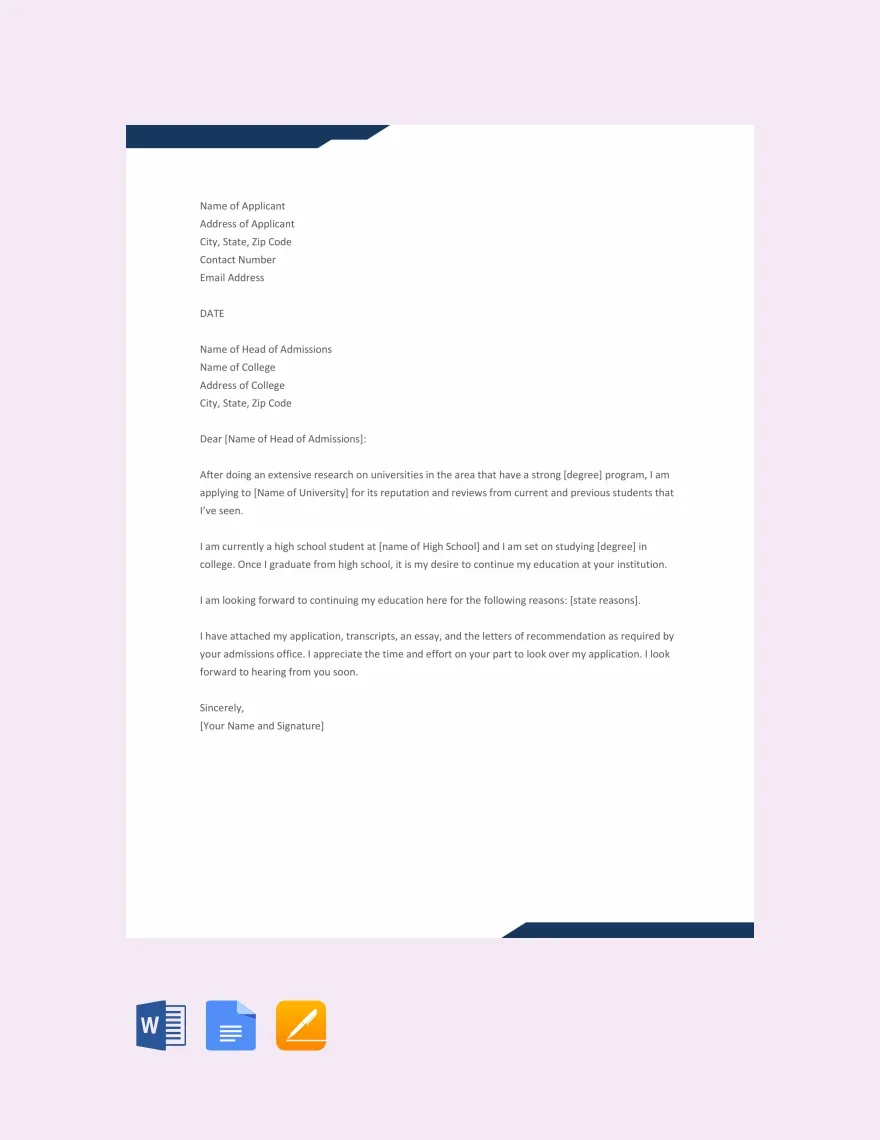
Your Contact Information & Date
Start by including your full name, address, phone number, and email address at the top left or right corner of the letter. Directly below this, include the date you are writing the letter. This ensures the admissions committee can easily contact you and know when the letter was written. Ensure that the email address you provide is professional, avoiding informal usernames. Double-check all contact details for accuracy to avoid any communication issues during the application process.
The University’s Admissions Committee

Address the cover letter to the specific admissions committee or, if possible, a specific individual, such as the program director or admissions officer. Research the university’s website to find the correct name and title. If you can’t find a specific name, use a general salutation like ‘Dear Admissions Committee.’ This shows you’ve taken the time to learn about the university and its application process. Avoid generic greetings like ‘To Whom It May Concern,’ as this can make your letter appear impersonal and less engaging.
Expressing Your Intent & Interest
Clearly state the purpose of your letter – that is, to apply for admission to a specific program at the university. Mention the program’s name and any specific areas of interest within it. Demonstrate your genuine interest in the university by mentioning specific aspects of the program, research opportunities, faculty, or campus culture that appeal to you. Show that you’ve researched the university and program, and that you have a solid understanding of what it offers and how it aligns with your goals. Explain why you are drawn to this particular program and university and what you hope to achieve.
Showcasing Your Achievements & Skills
Provide a brief overview of your academic and extracurricular achievements, highlighting those most relevant to the program you are applying for. Quantify your achievements whenever possible using numbers, percentages, or specific examples. For instance, instead of saying ‘I participated in a debate club,’ say ‘I led the debate club to win the regional championship.’ Mention any relevant skills, such as leadership, teamwork, communication, problem-solving, or technical expertise. Use action verbs to describe your experiences and accomplishments, and show, don’t just tell, what you have done and what you have learned.
Addressing Your Academic Goals

Clearly articulate your academic goals and how the program will help you achieve them. Explain what you hope to learn, what research you’re interested in, and what career aspirations you have. Show that you have a clear vision for your future and that you’ve thought about how this program will contribute to your success. Connect your goals to the specific resources, faculty expertise, or opportunities available at the university, demonstrating how you plan to leverage them to advance your education and career.
Closing with Enthusiasm
Conclude your letter by expressing your enthusiasm for the opportunity to attend the university and your appreciation for their consideration. Reiterate your interest in the program and express your availability for an interview or any other required steps in the application process. Use a professional closing, such as ‘Sincerely’ or ‘Respectfully,’ followed by your typed name. This reinforces your professionalism and leaves a positive final impression on the admissions committee.
Formatting Your Cover Letter for Impact
Choosing the Right Font and Size

Select a professional and readable font, such as Times New Roman, Arial, or Calibri. Use a font size between 10 and 12 points. Maintain consistent font formatting throughout the letter. These choices ensure your cover letter is easy to read and looks polished. Avoid using overly decorative or unusual fonts, as they can distract the reader. Ensure your letter is formatted consistently to make it easy on the eyes.
Proofreading & Editing for Perfection
Thoroughly proofread and edit your cover letter to eliminate any grammatical errors, spelling mistakes, and typos. Ask a friend, family member, or career counselor to review your letter for clarity, coherence, and professionalism. A well-edited cover letter demonstrates your attention to detail and commitment to quality. Pay close attention to sentence structure, punctuation, and word choice. A mistake-free letter leaves a positive impression on the admissions committee. Consider using grammar-checking software to assist in the proofreading process.
Using a Professional Tone
Use a professional and respectful tone throughout your cover letter. Avoid slang, informal language, and overly casual expressions. Address the admissions committee with respect and show your enthusiasm for the opportunity. Maintain a balance between formal and personal; let your personality shine through without sounding unprofessional. Your cover letter is a formal document, so it is important to use language that reflects that.
Common Mistakes to Avoid in Your Cover Letter

Generic Content and Lack of Personalization
Avoid using a generic cover letter that could be sent to any university. Tailor your letter to the specific university and program you’re applying for. Mention specific aspects of the program, faculty, or campus culture that interest you. Demonstrate that you’ve researched the university and program, and that you have a solid understanding of what it offers and how it aligns with your goals. Personalize your letter to showcase your genuine interest in the university and your application.
Grammatical Errors & Typos
Carelessly written cover letters filled with grammatical errors, spelling mistakes, and typos demonstrate a lack of attention to detail and professionalism. Always proofread your letter carefully and have someone else review it for you. Use grammar-checking software to help catch any errors you might have missed. Take the time to ensure your letter is error-free and reflects your commitment to quality and your serious approach to your application.
Exceeding the Recommended Length

Keep your cover letter concise and to the point. Admissions committees are busy people, so respect their time. Aim for a length of one page, unless the application instructions specifically state otherwise. Use clear and concise language to convey your message effectively. Avoid including unnecessary details or lengthy descriptions. Focus on the most relevant information and tailor your letter to the specific requirements of the university application.
Examples of Successful University Cover Letters
Review successful cover letter examples to get ideas and inspiration. Search online for cover letter examples for university applications. Pay attention to the structure, tone, and content of these examples. Note how the applicants highlight their unique qualities, skills, and experiences. Adapt the examples to your own situation and ensure your cover letter is unique. Use successful examples as a guide, but always ensure your cover letter is personal and reflects your individual experience and aspirations.