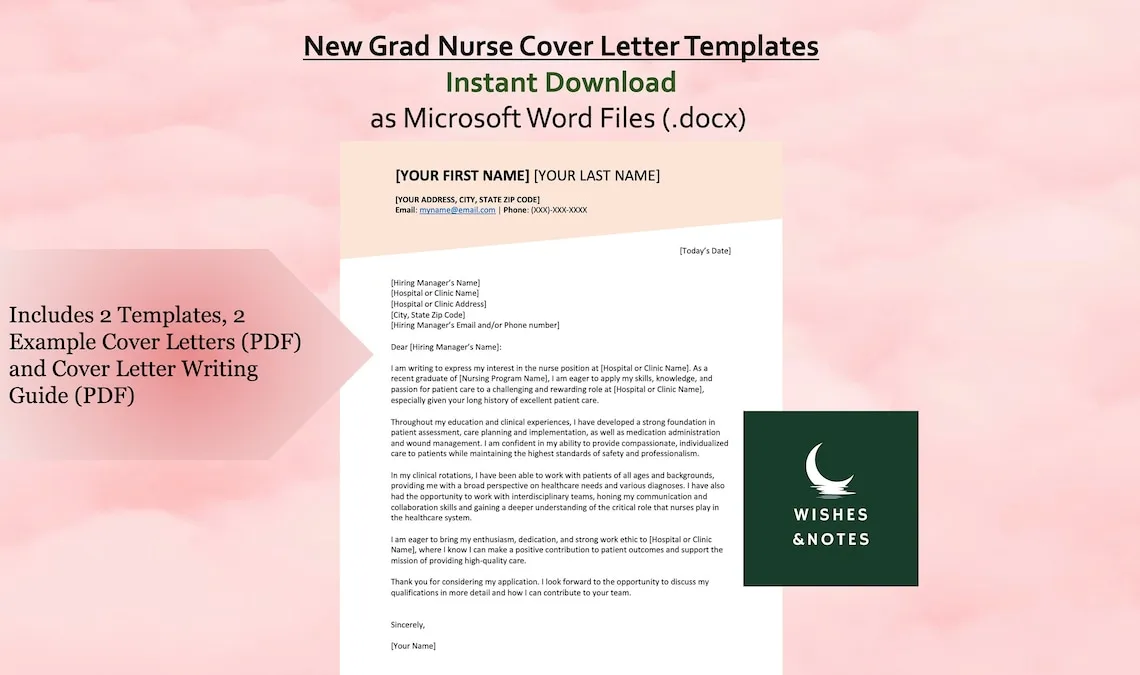
Why a Cover Letter is Crucial for New Nurses
As a new nurse, entering the competitive job market can feel overwhelming. A well-crafted cover letter serves as your introduction, your first impression, and a powerful tool to distinguish yourself from other applicants. It’s more than just a formality; it’s a chance to tell your story, highlight your skills, and express your passion for nursing. While your resume provides a snapshot of your experience and qualifications, the cover letter allows you to elaborate, personalize your application, and connect with the hiring manager on a deeper level. This is where you can demonstrate your enthusiasm and explain why you’re the perfect fit for their specific role and organization. Neglecting a cover letter, or submitting a generic one, can significantly diminish your chances of getting an interview. This document provides an opportunity to showcase your personality, your motivations, and your understanding of the role.
Highlighting Your Nursing Education and Skills
Your cover letter is the perfect place to showcase your educational achievements and the specific skills you’ve developed during your nursing program. Start by mentioning your degree, the institution you attended, and the date of your graduation. Then, emphasize any specializations, certifications, or honors you’ve received. Did you excel in a particular area of nursing, such as critical care, pediatrics, or geriatrics? Did you participate in any clinical rotations that provided you with unique experiences? Include those details. Briefly mention any research projects, volunteer work, or leadership roles you held during your studies. These elements paint a fuller picture of your dedication and expertise. Remember to tailor this section to the job description. If the role emphasizes a particular skill set, highlight relevant courses, clinical experiences, or projects that demonstrate your proficiency in those areas. This targeted approach shows that you’ve done your research and are genuinely interested in the position.
Essential Skills to Showcase in Your Cover Letter

Nursing demands a diverse skill set. When writing your cover letter, focus on both your clinical and soft skills. They are the foundation of your competency and your ability to provide excellent patient care. The employer is looking for nurses who are not only technically proficient but also compassionate, communicative, and adaptable. Be specific and provide examples to demonstrate these skills. For instance, rather than simply stating you have excellent communication skills, describe a situation where you successfully explained a complex medical procedure to a patient or collaborated with a multidisciplinary team to improve patient outcomes. Always align your skill set with the job description. Make sure that you are tailoring your application to the specific requirements of each role that you are applying to.
Clinical Skills
Clinical skills are fundamental to your nursing practice. Mention your proficiency in key areas, such as patient assessment, medication administration, wound care, and the use of medical equipment. If you have experience with specific patient populations, like infants, the elderly, or patients with chronic illnesses, highlight those experiences. If you have experience in specialized units, such as the ICU, ER, or operating room, make sure that you include this within your letter. Quantify your achievements whenever possible. For instance, instead of saying ‘Managed patient care,’ you could say, ‘Managed the care of up to 10 patients per shift, ensuring accurate medication administration and timely interventions.’ Focus on the clinical experiences that are the most relevant to the job description.
Technical Skills
Modern nursing relies heavily on technology. Mention any experience you have with electronic health records (EHRs), patient monitoring systems, and other relevant software. Indicate your comfort level with using specific medical devices, such as ventilators, infusion pumps, and diagnostic equipment. If you have training or certifications in areas like ACLS or BLS, be sure to include them, as these skills are highly valued by employers. Demonstrating proficiency in these skills indicates that you are well prepared for the demands of the job. If the job description mentions specific software or equipment, be sure to highlight your experience using them to show you are a good fit.
Soft Skills

Soft skills are essential for effective patient care and teamwork. Highlight your abilities in areas such as communication, empathy, critical thinking, problem-solving, and teamwork. Provide examples of situations where you demonstrated these skills. For example, ‘Successfully resolved a conflict with a patient by actively listening to their concerns and finding a mutually agreeable solution.’ Also, consider your time management skills. Nursing is a demanding profession, and you will be juggling a variety of tasks. Be sure to also emphasize your adaptability. Nursing requires the ability to adapt to a fast-paced and ever-changing environment, so showcase instances where you displayed flexibility and the ability to learn quickly. Highlight your ability to work with others, as teamwork is an essential component of nursing.
Formatting Your Cover Letter for Maximum Impact
A well-formatted cover letter is easy to read and makes a positive impression. Choose a professional font, such as Times New Roman or Arial, and maintain a consistent font size (11 or 12 points) throughout the document. Use single spacing within paragraphs and double spacing between paragraphs. Be sure to use a clear and concise writing style. Avoid jargon and overly complex sentences. Keep your paragraphs short and focused. Aim for a clean layout that is easy on the eyes. The cover letter should ideally be one page long. The content should be formatted in a way that makes it easy for the hiring manager to read and quickly absorb the key information. Be sure that it is easy to follow and quickly scans for key points.
Header and Contact Information
Start your cover letter with your full name, address, phone number, and email address. Ensure that your email address is professional. If the job description specifies a particular contact person, include their name and title. Address the letter to the hiring manager by name if possible. This personal touch shows that you’ve taken the time to research the organization and position. This demonstrates that you are attentive to details. If you don’t know the name of the hiring manager, you can use a general greeting like ‘Dear Hiring Manager.’
Professional Salutation

Use a professional salutation. ‘Dear Mr./Ms./Mx. [Last Name]’ is standard. If you don’t know the hiring manager’s name, ‘Dear Hiring Manager’ or ‘To Whom It May Concern’ is appropriate. Avoid casual greetings like ‘Hi’ or ‘Hello’. This sets the tone for a professional interaction. Always maintain a tone that reflects your enthusiasm for the position. This is a very effective way to help your application stand out to the hiring manager.
Body Paragraphs Tailored to Nursing Roles
The body of your cover letter is where you sell yourself. Start with a strong opening paragraph that states the position you’re applying for and where you found the job posting. Briefly mention why you’re interested in the role and the organization. In the following paragraphs, highlight your relevant skills, experiences, and achievements. Use the job description as your guide, and tailor your letter to match their requirements. Provide specific examples to support your claims. This is where you want to demonstrate your abilities to provide care. This section gives you the opportunity to set yourself apart from other candidates. Use language that demonstrates that you are an excellent communicator.
Showcasing Your Passion for Nursing
Expressing your passion for nursing is essential. Explain what motivates you to pursue this career path. Discuss what aspects of nursing you find most rewarding. Explain how your values align with the organization’s mission. Share any personal experiences that have influenced your decision to become a nurse. Being authentic in your cover letter is a great way to make a personal connection with the reader. A cover letter that expresses passion shows a commitment to your field and can make a strong impression. It shows that you are passionate about your work and committed to patient care. Your enthusiasm can set you apart from other candidates.
Addressing Potential Weaknesses

As a new nurse, you may lack extensive professional experience. Acknowledge this in your cover letter, but frame it positively. Emphasize your strong foundation of education, clinical rotations, and transferable skills. If you have gaps in your employment history or a lower GPA, address them briefly and honestly. Focus on what you have to offer and how you’re committed to continuous learning and professional development. This demonstrates your self-awareness and ability to learn from your experiences. You can also mention any efforts you have made to improve your skills or overcome challenges.
Closing Your Cover Letter Effectively
End your cover letter with a strong closing paragraph. Reiterate your interest in the position and thank the hiring manager for their time and consideration. State that you are available for an interview and express your eagerness to discuss your qualifications further. Use a professional closing, such as ‘Sincerely’ or ‘Best regards,’ followed by your typed name. A well-crafted closing paragraph leaves a lasting positive impression and reinforces your qualifications. A professional and confident closing leaves a positive impression on the hiring manager and motivates them to contact you.
Expressing Gratitude and Next Steps
Expressing gratitude to the hiring manager is a crucial part of the closing paragraph. Thank them for their time and consideration. You can also add that you look forward to hearing from them soon. Indicate your willingness to provide any additional information or answer any questions they may have. A clear call to action, such as ‘I look forward to the opportunity to discuss my qualifications further,’ encourages them to take the next step. This demonstrates your enthusiasm for the position and your proactive approach.
Proofreading and Editing Your Cover Letter

Before submitting your cover letter, carefully proofread and edit it. Check for any spelling, grammar, and punctuation errors. Ensure that your formatting is consistent and professional. Have a friend or mentor review your cover letter for clarity, flow, and overall impact. A polished cover letter demonstrates your attention to detail and professionalism. Errors can create a negative impression and undermine your credibility. A second pair of eyes can help you catch mistakes that you might have missed. Always do a final review before submitting your application.
Common Mistakes to Avoid in Your Cover Letter
There are some common mistakes that can derail your application. Avoid using generic cover letters. Tailor each letter to the specific job and organization. Do not simply restate your resume. Use your cover letter to elaborate on your experiences and highlight your skills. Don’t include excessive jargon or overly complex language. Keep it clear and concise. Avoid spelling and grammatical errors at all costs. They can damage your professional image. Do not exceed one page in length. If the letter is too long, the hiring manager may not read it. Lastly, do not be negative or make excuses. Focus on your strengths and your enthusiasm for the position. Use your letter to sell your experience and explain why you are the right fit.