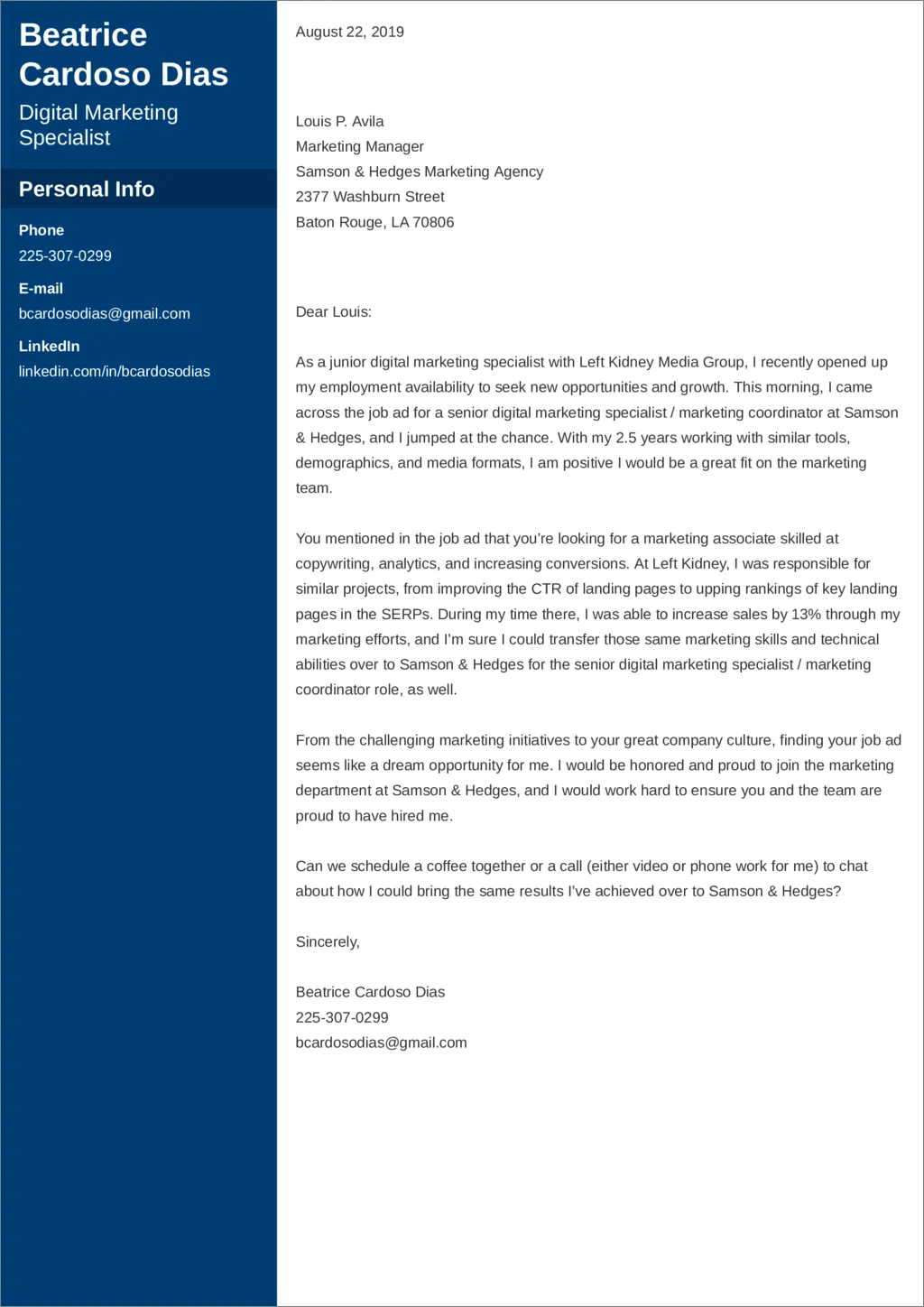
What is a Cover Letter and Why You Need One
A cover letter is a crucial document that accompanies your resume when applying for a job. It serves as your first introduction to a potential employer, allowing you to showcase your personality, skills, and enthusiasm in a way that your resume alone cannot. Think of it as your personal sales pitch, designed to convince the hiring manager that you are the perfect fit for the role. Many job seekers often underestimate the importance of a well-crafted cover letter, but it can significantly increase your chances of landing an interview and ultimately, the job. It provides context to your resume, explains your career goals, and highlights your relevant experience and accomplishments. By taking the time to write a strong cover letter, you demonstrate your genuine interest in the position and the company.
The Importance of a Strong Opening
The opening of your cover letter is the most critical part. It’s your first and often only chance to capture the hiring manager’s attention. A compelling opening can make the difference between your application being read with interest or being immediately discarded. A weak or generic opening can quickly lead to your application being overlooked. Your opening should immediately communicate your enthusiasm, highlight your key qualifications, and make the reader want to learn more about you. Think of it as the hook that reels the reader in, setting the tone for the rest of your letter and establishing your credibility from the very beginning. A strong start is not only about getting the reader’s attention but also about setting the stage for a clear and concise presentation of your skills and experience.
Cover Letter vs Resume

While your resume provides a concise overview of your work history, education, and skills, the cover letter allows you to elaborate on these points and make a personal connection with the hiring manager. The resume is a factual document, while the cover letter is an opportunity to inject your personality and demonstrate your communication skills. The resume lists your achievements; the cover letter explains how those achievements align with the specific job requirements and the company’s needs. Your resume shows what you’ve done, while your cover letter explains why you’re a great fit. The cover letter is a chance to demonstrate your writing skills, your understanding of the job, and your genuine interest in the company, all elements that a resume alone cannot convey. A good cover letter complements your resume by providing context and demonstrating your suitability for the role.
Elements of a Compelling Cover Letter Opening
Addressing the Hiring Manager
Personalizing your cover letter starts with addressing the hiring manager by name. Research the company to find the correct person, ideally the hiring manager or the person who will be your direct supervisor. This shows you’ve taken the time to learn about the company and are genuinely interested in the opportunity. Generic greetings such as “To Whom It May Concern” or “Dear Sir/Madam” are impersonal and suggest a lack of effort. Find the hiring manager’s name through the company website, LinkedIn, or by calling the company’s HR department. Addressing the hiring manager by name shows initiative and attention to detail, making a positive first impression. This personal touch shows that you’ve taken the time to research and are committed to the application process. Knowing the hiring manager’s name can also help you tailor your letter to their specific needs.
Researching the Company

Before writing your cover letter, thoroughly research the company. Understand their mission, values, and recent achievements. This knowledge allows you to tailor your opening to demonstrate your genuine interest in the organization and the role. Visit their website, read their social media, and look for news articles or press releases. Showing you understand the company’s goals and challenges demonstrates your enthusiasm and that you’re a good fit for their culture. This research helps you frame your opening to align with the company’s specific needs and demonstrate your understanding of their industry. Show that you understand their business, their customers, and their place in the market. Use the company’s language and terminology in your cover letter to further illustrate your knowledge and interest.
Personalizing Your Greeting
Once you know the hiring manager’s name, address them formally. Use “Dear Mr./Ms./Mx. [Last Name].” If you’re unsure of their gender or prefer to be more inclusive, use their full name without a title, like “Dear [First Name] [Last Name].” Avoid informal greetings unless you have a pre-existing professional relationship. This shows respect and attention to detail, which will set a positive tone. A personalized greeting makes your cover letter stand out from the generic applications. This small step signals to the hiring manager that you have taken the time and effort to tailor your letter to their specific company and role. The right greeting can create a positive first impression and encourage the reader to continue reading.
Grabbing Attention with a Hook
The opening sentence or two should immediately grab the reader’s attention. Consider using a hook. Start with a statement that piques their interest. This could be a compelling fact about the company, a shared connection, or a brief highlight of a significant achievement. Your hook should relate directly to the job and the company. Think about what will make you memorable. A strong hook encourages the hiring manager to keep reading, setting the stage for the rest of your letter. The hook should immediately demonstrate your understanding of the job and the company’s needs. The goal is to make the hiring manager want to know more about you and what you can bring to the table.
Highlighting Key Skills and Experience

Your opening paragraph should quickly mention the skills and experience most relevant to the job. Briefly highlight how your qualifications align with the job requirements. Reference the job description and use keywords, but be careful not to simply rephrase the job posting. The opening should showcase your unique value proposition and tell the hiring manager why you’re a standout candidate. Mentioning specific accomplishments or quantifiable results will further support your claims. Keep your opening concise and focused on what makes you a good fit for the role. This initial impression is crucial for setting the tone and highlighting your most relevant qualifications. Align your skills and experience with the job description for maximum impact.
Demonstrating Enthusiasm for the Role
Express genuine enthusiasm for the opportunity and the company. Show you’re excited about the role and the organization’s mission. This can be as simple as stating you’re eager to contribute to their team or expressing your admiration for the company’s work. Let your passion shine through. Enthusiasm is contagious and will help the hiring manager see you as a motivated and engaged candidate. This demonstrates that you have a genuine interest in the role and are not just applying for any job. Briefly mention why you are particularly interested in this company and what attracts you to the role. A strong demonstration of enthusiasm makes you more memorable and increases your chances of making a positive impression.
Structuring Your Cover Letter Opening
The Direct Approach

The direct approach is the most straightforward way to start your cover letter. It clearly states your interest in the role and briefly highlights your key qualifications. This approach is concise, professional, and immediately conveys your purpose. It works well when the job requirements are clearly defined and you have directly relevant experience. This approach can be particularly effective when you are applying for a role that matches your skills very closely. Begin by stating the specific position you’re applying for and how you learned about it. Then, provide a brief overview of your most relevant skills and experience. This approach is ideal for candidates with strong qualifications seeking a position that is a clear fit.
The Storytelling Approach
Use a brief anecdote or story to capture the reader’s attention. This approach can be more engaging and memorable, making your application stand out. Share a specific example of how you used your skills to achieve a positive outcome. The story should be relevant to the job requirements and showcase your abilities. This approach is useful when you want to demonstrate your skills and experience in a more creative and personal way. Choose a story that highlights your key strengths and aligns with the company’s values. Ensure the story is concise and directly relates to the role you are applying for. Make sure the story is professional and relevant, avoiding anything too personal or unrelated to the job requirements.
The Benefit-Oriented Approach
Focus on the benefits you can bring to the company. Start by highlighting your understanding of the company’s needs and then explain how your skills and experience align with those needs. This approach emphasizes what you can do for the company, rather than just listing your qualifications. This is an effective way to show that you have researched the company and understand its goals. Frame your opening to address a specific challenge or opportunity the company faces. Then explain how your skills and experience can help them succeed. It’s a way to demonstrate your value from the outset and create a strong impression. Show the hiring manager that you are not just looking for a job but are genuinely interested in helping the company achieve its objectives.
Example Opening Sentences

Direct Opening Examples
“I am writing to express my enthusiastic interest in the Marketing Manager position at [Company Name], as advertised on [Platform]. With five years of experience in digital marketing and a proven track record of increasing brand awareness, I am confident I can contribute to your team’s success.”
“Having followed [Company Name]’s innovative work in [Industry] for several years, I am excited to apply for the Software Engineer position. My background in developing scalable applications aligns perfectly with your requirements.”
Storytelling Opening Examples
“In my previous role at [Previous Company], I spearheaded a social media campaign that increased engagement by 40%. This experience taught me the power of strategic content creation, which I believe will be invaluable in the Content Creator role at [Company Name].”
“During a recent project at [Previous Company], I faced the challenge of streamlining our customer support system. By implementing a new ticketing system, we reduced response times by 30%. This experience solidified my interest in process improvement, making me a strong candidate for the Project Manager position at [Company Name].”
Benefit-Oriented Opening Examples

“[Company Name]’s commitment to [Company Value] deeply resonates with my professional goals. As a skilled data analyst with expertise in [Skill], I am confident that I can contribute to your team’s ability to make data-driven decisions.”
“Knowing that [Company Name] aims to expand into the [Market] market, I am eager to apply for the Business Development Manager role. My experience in identifying new business opportunities and building strong client relationships can help you achieve this expansion.”
Common Mistakes to Avoid in Your Cover Letter Opening
Generic Greetings
Avoid generic greetings such as “To Whom It May Concern” or “Dear Sir/Madam.” These greetings are impersonal and signal a lack of effort. Make the effort to find the hiring manager’s name. This shows that you have taken the time to learn about the company and are genuinely interested in the opportunity. Research the company to find the appropriate contact person; the right greeting sets a professional tone from the beginning. Always try to personalize the greeting to show your attention to detail.
Focusing Solely on Yourself

Don’t make the opening all about yourself. While it’s important to highlight your skills and experience, the focus should also be on what you can do for the company. Avoid phrases such as, “I am seeking a job that…” Instead, frame your opening to address the company’s needs or goals. Show the hiring manager that you understand their challenges and that you can contribute to their success. The best cover letters are those that show that you are an ideal candidate for the job, not just someone who is looking for employment.
Repeating Information from Your Resume
Don’t simply repeat information from your resume. Your cover letter should provide context and elaborate on the skills and experience listed in your resume. The cover letter should demonstrate your personality and communication skills and why you are the right fit. This is your opportunity to provide additional detail and explain how your experiences align with the job requirements. Use the opening to summarize your key strengths, provide a snapshot of why you are the best choice for the job. Highlight achievements or projects that showcase your unique value and demonstrate the value that you would bring to the position.
Proofreading and Editing Your Cover Letter
Tips for a Polished Opening
Before submitting your cover letter, proofread it carefully for any grammatical errors, typos, or formatting inconsistencies. A polished, well-written cover letter demonstrates professionalism and attention to detail. Errors can undermine your credibility and give the impression that you are not detail-oriented. Read your cover letter aloud to catch any awkward phrasing. Ask a friend, family member, or career counselor to review your cover letter for feedback. Make sure your opening sentence is clear, concise, and engaging. The extra effort will pay off. Ensure that your cover letter is free of errors, and the writing is strong and persuasive to make the best impression.
Using Professional Formatting
Use professional formatting to ensure that your cover letter is easy to read. Choose a standard font like Times New Roman, Arial, or Calibri in a readable size (11 or 12 points). Use appropriate spacing and alignment. Maintain consistency throughout your cover letter. Your cover letter should look clean and well-organized. Avoid using excessive colors, images, or unusual fonts. A well-formatted cover letter will make your application look polished and professional. Ensure that your cover letter is professional and well-presented. Professional formatting enhances readability and professionalism, making a positive impression on the hiring manager and helping to communicate your key qualifications efficiently.