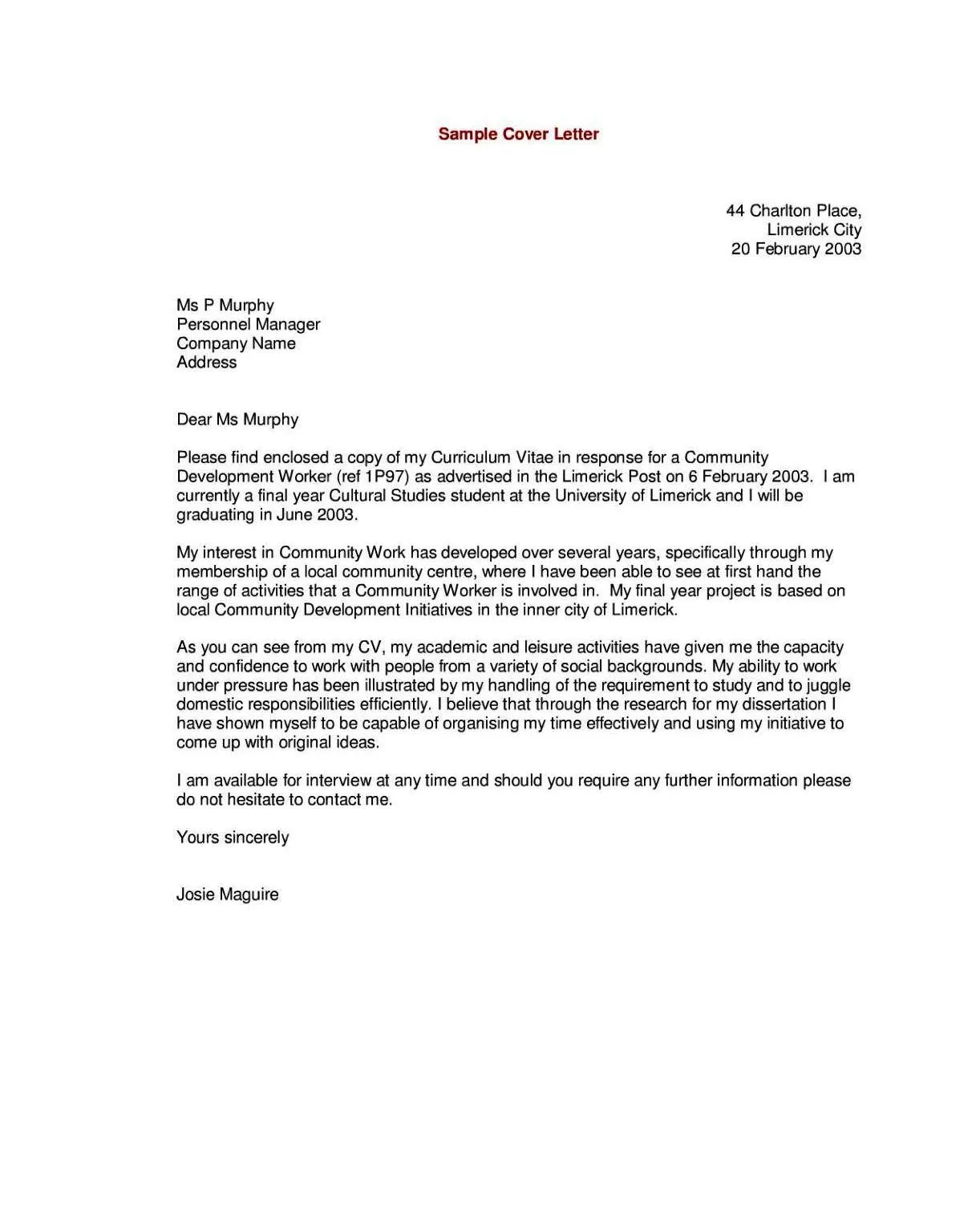
What is a Cover Letter?
A cover letter is a one-page document that you submit with your resume when applying for a job. It serves as an introduction, allowing you to highlight your most relevant skills and experiences and express your interest in the position. Unlike a resume, which is a factual summary of your qualifications, a cover letter allows you to tell a story, connecting your skills to the specific requirements of the job and the needs of the employer. It’s your chance to make a strong first impression and persuade the hiring manager to read your resume and consider you for an interview.
Why Cover Letters Are Still Important
In an era of online applications and digital resumes, you might wonder if a cover letter is still relevant. The answer is a resounding yes. Cover letters offer a unique opportunity to personalize your application and show genuine interest in the role and the company. They allow you to elaborate on your qualifications, explain any gaps in your employment history, and demonstrate your communication skills. Many hiring managers still value cover letters, as they provide valuable insights into a candidate’s personality, writing ability, and understanding of the job requirements. A well-crafted cover letter can significantly increase your chances of getting noticed and landing an interview. (cover-letter-importance.webp)
Key Components of a Cover Letter

A compelling cover letter typically includes several key components that work together to make a strong case for your candidacy. These components include your contact information, the hiring manager’s contact information, a strong opening, a body that showcases your value and highlights relevant skills and experiences, a call to action, and a professional closing. Each part of the letter plays a vital role in presenting you as a qualified and enthusiastic candidate. Carefully constructing each component is essential to grab the reader’s attention and effectively communicate your qualifications.
Your Contact Information
At the top of your cover letter, include your full name, address, phone number, and email address. Ensure that your email address is professional and easy to read. This information allows the hiring manager to easily contact you if they are interested in your application. Make sure the details provided are up-to-date and accurate to avoid any communication issues.
The Hiring Manager’s Contact Information
Whenever possible, address your cover letter to a specific person, such as the hiring manager or the recruiter. This shows that you have taken the time to research the company and are genuinely interested in the position. If you cannot find a specific name, use a general salutation like “Dear Hiring Manager” or “Dear [Department Name] Team.” Finding the right person’s name may require some searching on the company’s website or LinkedIn.
A Strong Opening

The opening paragraph of your cover letter is crucial as it sets the tone and grabs the reader’s attention. Start by stating the position you are applying for and where you found the job posting. Then, immediately express your enthusiasm for the opportunity and the company. Briefly mention what makes you a suitable candidate, highlighting a key skill or experience that aligns with the job requirements. This section should be concise and make the hiring manager want to read further.
Showcase Your Value
In the body of your cover letter, showcase your value by highlighting your skills and experiences. This is where you demonstrate how your qualifications match the job requirements. Provide specific examples of your achievements and how you have contributed to past successes. Use strong action verbs to describe your accomplishments. Focus on what you can bring to the company and how you can solve their problems or meet their goals. This section should be detailed and informative, providing the reader with concrete evidence of your abilities.
Highlight Relevant Skills and Experiences
Focus on the skills and experiences most relevant to the job you are applying for. Carefully review the job description and identify the key requirements. Then, use your cover letter to show how your skills and experiences align with those requirements. Provide specific examples of how you have used these skills in the past and the positive outcomes you achieved. Be specific and provide quantifiable results whenever possible to make your claims more credible. Tailor your letter to the specific job, showing that you understand what the employer is looking for.
Quantify Your Achievements

Whenever possible, quantify your achievements to demonstrate your impact. Instead of saying “Improved sales,” state “Increased sales by 15% in one quarter.” Quantifiable results make your accomplishments more compelling and provide concrete evidence of your abilities. Use numbers, percentages, or specific metrics to showcase your successes. This is particularly effective when describing your accomplishments related to the job’s objectives, making it easier for the hiring manager to understand your potential contribution to the company. This method provides clarity to show what you did.
Express Enthusiasm for the Role
Show genuine enthusiasm for the role and the company. Mention what specifically interests you about the position and why you are excited about the opportunity. Demonstrate that you have researched the company and understand their mission, values, and goals. Show that you can envision yourself contributing to their success. Personalize your letter, making it clear that you are not just sending a generic application but are genuinely interested in this particular opportunity. This enthusiasm can set you apart from other applicants.
Address the Company’s Needs
Address the specific needs of the company or the challenges the role is designed to solve. Show how your skills and experiences can help the company achieve its goals. This demonstrates that you understand the role’s objectives and can contribute to the organization’s success. Explain how your previous experience has prepared you for the specific requirements outlined in the job description. Tailor your letter to demonstrate that you are the right fit by focusing on the company’s requirements.
Formatting Your Cover Letter

Formatting plays a crucial role in how the hiring manager perceives your cover letter. A well-formatted letter is easy to read and makes a positive impression. Use clear and professional formatting to ensure your letter is visually appealing and easy to navigate. The right format will enhance readability and convey professionalism, helping you to stand out from other applicants.
Choose a Professional Font
Select a professional and easy-to-read font such as Times New Roman, Arial, or Calibri. Use a font size between 10 and 12 points. Avoid using unusual or overly stylized fonts, as they can be distracting. Keep the font consistent throughout the entire letter to maintain a polished look. A well-chosen font contributes to a professional appearance.
Keep it Concise and Readable
Keep your cover letter concise and to the point. Aim for a one-page document. Use clear and concise language to convey your message effectively. Break up long paragraphs into shorter ones to improve readability. Use bullet points to highlight key skills or achievements. Make sure that the content is easy to scan for the hiring manager. Good formatting contributes to better readability. (cover-letter-formatting.webp)
Proofread Thoroughly

Proofread your cover letter carefully for any typos, grammatical errors, or punctuation mistakes. Errors can make a negative impression and suggest a lack of attention to detail. Use a spell checker, and consider having a friend or colleague proofread your letter as well. A mistake-free cover letter demonstrates professionalism and attention to detail.
Call to Action
Conclude your cover letter with a clear call to action. Express your interest in an interview and state how you will follow up. Be specific about your next steps, such as when you will contact the hiring manager or when you will be available for an interview. This shows your enthusiasm and initiative, encouraging the hiring manager to take the next steps. Clearly stating your intentions makes your cover letter more effective.
Closing Your Cover Letter
End your cover letter with a professional closing, such as “Sincerely,” “Best regards,” or “Yours sincerely.” After the closing, leave a few lines of space for your signature if you are printing the letter. Then, type your full name. A professional closing adds a touch of formality to your letter. A well-written closing leaves a lasting positive impression, helping to ensure that your cover letter ends on a strong note.
Common Cover Letter Mistakes to Avoid

Avoid common mistakes that can undermine your cover letter and negatively impact your application. These mistakes can make your cover letter seem unprofessional or unsuited for the job. Correcting these common errors can help you create a cover letter that stands out and makes a positive impact. By avoiding these mistakes, you can significantly improve your chances of securing an interview.
Generic Language
Avoid using generic or overly common phrases that fail to showcase your unique qualifications. Instead, personalize your letter by mentioning the company’s name, specific roles, or projects that interest you. Generic language suggests a lack of interest or effort. Using specific details shows that you’ve researched the company and are genuinely interested in the position.
Typos and Grammatical Errors
Typos and grammatical errors can damage your credibility. Proofread your cover letter carefully, and use a spell checker to catch any errors. If possible, have someone else review your letter. Errors make you look unprofessional and indicate a lack of attention to detail. A clean and error-free cover letter demonstrates your professionalism. (cover-letter-mistakes.webp)
Lack of Personalization
Avoid sending a generic cover letter to multiple companies. Customize your letter for each job application. Research the company and the specific role, and tailor your letter to match the job requirements. Personalization shows that you have taken the time and effort to understand the role and the company’s needs. This also helps the hiring manager know you are the right fit for the job.
Ignoring the Job Description
Carefully read the job description and address the requirements outlined in the job posting. Highlight the skills and experiences that match the job description, and use the keywords from the job posting. Ignoring the job description means you are not a good fit, as the hiring manager may not recognize your qualifications. Customizing your cover letter to the job requirements is essential.
Tailoring Your Cover Letter
Tailoring your cover letter to each job application is critical for maximizing your chances of success. This process involves customizing your letter to the specific requirements of each job. It shows that you are a good fit for the role and that you understand the company’s needs. Tailoring helps you to showcase the most relevant skills and experiences.
Researching the Company
Before you write your cover letter, research the company. Visit their website, read news articles, and check out their social media profiles to understand their mission, values, and recent activities. This will help you personalize your letter and show that you are genuinely interested in working for them. Research is critical to demonstrate that you understand the company’s mission, vision, and how you fit into the culture. (cover-letter-tailoring.webp)
Matching Skills to Requirements
Carefully review the job description and identify the key skills and experiences required for the role. Then, highlight your relevant skills and experiences and provide specific examples of how you have used them in the past. Ensure your cover letter directly addresses the job requirements, demonstrating that you are a qualified candidate. This matching of skills to requirements shows that you are an excellent fit.
Using Keywords Effectively
Incorporate keywords from the job description into your cover letter. This helps you to match the requirements outlined in the job posting. Ensure you use these keywords naturally within your sentences. Do not stuff the keywords as this will make your letter look unnatural. Using keywords helps your application get noticed by applicant tracking systems and hiring managers.
Cover Letter Examples by Industry
Different industries may require slightly different approaches to cover letter writing. Tailoring your cover letter to match industry standards is essential to make sure it is well-received. Reviewing examples for your specific industry can help you adapt your writing to industry norms. This customization can help you better reflect your goals and qualifications.
Cover Letter Example for a Marketing Position
A marketing cover letter should highlight your marketing skills, experience with specific marketing tools, and your ability to analyze data and achieve results. Focus on your creativity, communication, and understanding of marketing strategies. Quantify your achievements whenever possible, such as the percentage increase in sales or leads generated. Show how you have helped companies by marketing campaigns.
Cover Letter Example for an Engineering Role
An engineering cover letter should emphasize your technical skills, problem-solving abilities, and relevant experience. Provide details about your projects, engineering software knowledge, and your ability to work in a team. Showcase any certifications or licenses that are relevant to the engineering field. Focus on your contributions to past engineering project successes.
Cover Letter Example for a Teaching Position
A teaching cover letter should highlight your teaching experience, educational philosophy, and your ability to create a positive learning environment. Discuss your experience working with students of different ages and backgrounds, and share any specific achievements, such as improving test scores or implementing innovative teaching methods. Show how you can create a positive and encouraging learning environment.
Tools and Resources for Cover Letter Writing
Several tools and resources can help you write a strong cover letter. From templates to online writing assistants, these tools can help you get started, refine your writing, and ensure your cover letter is professional. Consider utilizing these resources to improve your cover letter writing skills and increase your chances of success.
- Cover Letter Templates Many websites offer free cover letter templates that you can customize to fit your needs. These templates provide a starting point for structuring your letter and can save you time.
- Online Writing Assistants Tools such as Grammarly or ProWritingAid can help you check for grammar and spelling errors, improve your writing style, and ensure that your cover letter is polished.
- Resume Builders Some resume builders also offer cover letter creation features. These tools can help you to create a cohesive and professional application package by streamlining the process.
- Career Counselors A career counselor can provide personalized guidance and feedback on your cover letter. They can help you tailor your letter to specific job applications, optimize your writing, and improve your overall job search strategy.
Writing a compelling cover letter is an important skill. It can set you apart from other applicants. Following these tips, avoiding common mistakes, and using available resources, you can create a cover letter that gets noticed and helps you land the job. (cover-letter-guide.webp)