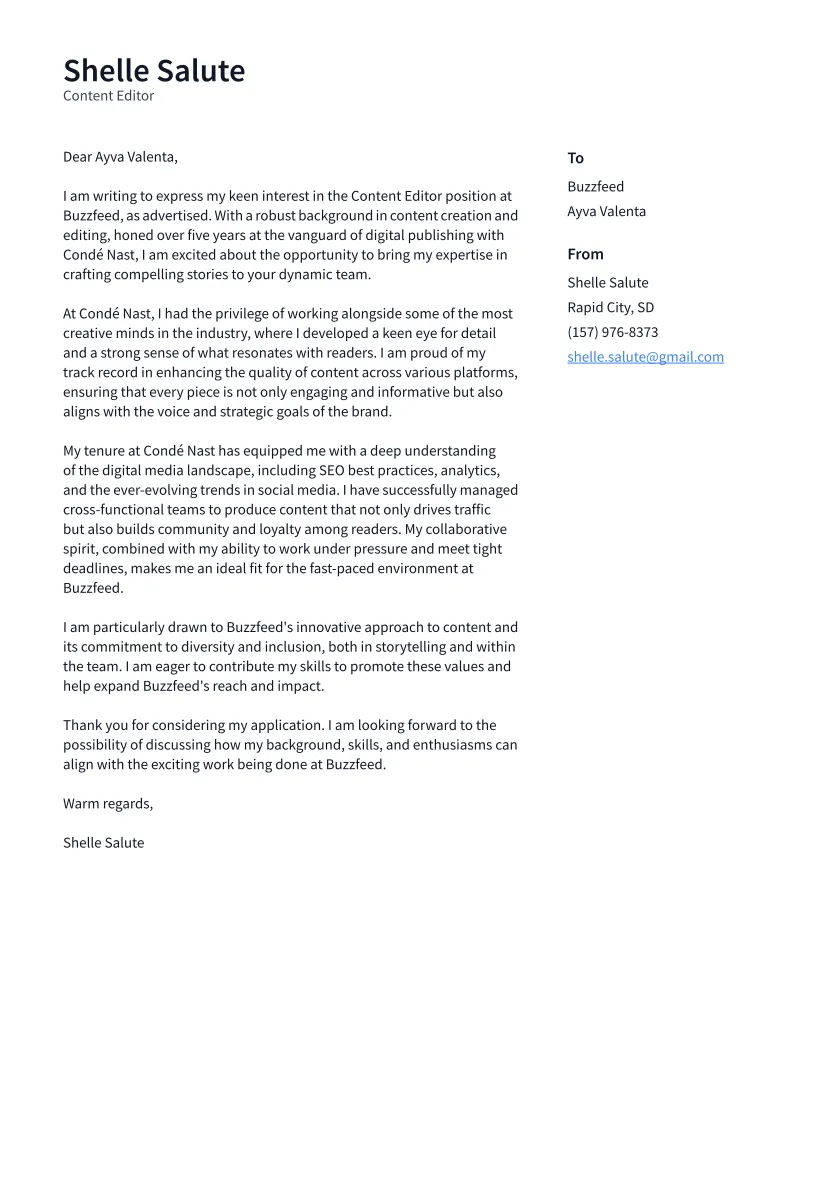
Understanding the Importance of a Content Editor Cover Letter
In the competitive landscape of job applications, a well-crafted content editor cover letter is not just a formality it’s your first impression and a critical tool in securing your dream job. It’s the opportunity to showcase your personality, skills, and experience in a way that a resume alone cannot. While your resume provides a snapshot of your professional history, the cover letter allows you to tell a compelling story about why you’re the perfect fit for the specific content editor role. A strong cover letter can significantly increase your chances of getting an interview, setting you apart from other applicants who may have similar qualifications on paper. Therefore, dedicating time and effort to crafting a powerful cover letter is a strategic investment in your career. This letter should be designed to make a memorable impact.
Why a Cover Letter is Crucial
A cover letter serves several crucial purposes. Firstly, it allows you to personalize your application and demonstrate your genuine interest in the company and the specific role. Generic applications often get discarded, but a tailored cover letter showcases that you’ve done your research and are truly invested in the opportunity. Secondly, it provides a space to elaborate on your key skills and experiences, connecting them directly to the requirements outlined in the job description. This allows you to highlight relevant achievements and explain how your background makes you an ideal candidate. The cover letter also gives you an opportunity to address any potential gaps in your resume or explain unique circumstances. By framing your experience in a positive light, you can address any concerns the hiring manager may have. The goal is to show why you’re the best choice for the position.
Highlighting Skills and Experience

Your cover letter is where you translate your skills and experience into tangible benefits for the employer. Start by identifying the key skills the employer seeks in their job description. Then, provide specific examples of how you’ve demonstrated those skills in previous roles or projects. For example, if the job description emphasizes editing skills, you can showcase how you’ve improved content clarity, accuracy, and overall quality in past projects. Use action verbs to describe your accomplishments, such as edited, revised, proofread, and improved. Furthermore, quantify your achievements whenever possible. Instead of simply stating that you edited content, you can describe how your edits increased audience engagement or reduced grammatical errors by a certain percentage. This data provides evidence of your expertise and abilities to perform the work, and makes you stand out.
Key Components of a Content Editor Cover Letter
Header and Salutation
The header of your content editor cover letter should include your contact information, such as your name, phone number, email address, and LinkedIn profile URL. Use a professional and clean format. The salutation is your first point of contact with the hiring manager, so it should be personalized whenever possible. If you know the name of the hiring manager, address the letter directly to them (e.g., “Dear Mr./Ms. [Last Name]”). If you’re unable to find the hiring manager’s name, a general salutation such as “Dear Hiring Manager” is acceptable. Avoid generic greetings such as “To Whom It May Concern.” This approach shows you’ve taken the initiative to learn who will be reading your letter.
Opening Paragraph Grabbing Attention

The opening paragraph is your chance to capture the hiring manager’s attention and make a strong first impression. Start with a hook that immediately grabs their interest. Mention the specific position you’re applying for and briefly state why you’re excited about the opportunity. You can also mention where you saw the job posting and why the company appeals to you. Avoid generic opening statements that sound impersonal. Instead, show your enthusiasm for the role and company by referencing something specific that resonates with you, such as a company value or a recent project. Showing your enthusiasm from the beginning will signal you’re highly motivated to work in this position.
Body Paragraphs Showcasing Expertise
The body paragraphs are where you showcase your expertise and connect your skills to the job requirements. Use these paragraphs to highlight your relevant experience, skills, and accomplishments. Structure your body paragraphs to address the key requirements listed in the job description. Provide specific examples of your past work to illustrate your abilities. For example, if the job description requires experience with content management systems (CMS), describe your proficiency with those tools, and how you used them to improve content production. Quantify your accomplishments whenever possible, using metrics to demonstrate the impact of your work, such as an increase in website traffic or reduced editing time. This shows the hiring manager that you’re not just skilled, but also results-oriented.
Quantifiable Achievements
Quantifiable achievements are the cornerstone of a compelling cover letter. These metrics provide concrete evidence of your capabilities and the value you can bring to the organization. Instead of simply stating you improved content quality, specify the percentage increase in reader engagement due to your edits. Instead of saying you managed a content calendar, mention the number of articles you published per month and the resulting increase in website traffic or conversions. Include statistics from past work to highlight your effectiveness. For example, if you reduced grammatical errors in a previous role, include the percentage of improvement after your edits. Focus on achievements that demonstrate your ability to deliver results and align with the goals of the role and company. This data gives hiring managers a clear picture of your value.
Tailoring to the Job Description

A generic cover letter is a major red flag. To impress the hiring manager, it is essential to tailor your cover letter to each job application. Carefully review the job description and identify the key skills, qualifications, and experiences the employer is seeking. Then, customize your cover letter to address those specific requirements. Highlight the relevant skills and experiences from your resume, emphasizing how they align with the job description. Provide examples that demonstrate your ability to meet the employer’s needs. Make sure you use the same keywords and phrases from the job description in your cover letter, but avoid keyword stuffing. When you tailor your letter, you are demonstrating that you understand the role and are genuinely interested in the company. It demonstrates your understanding and the value you can contribute.
Closing Paragraph and Call to Action
Your closing paragraph is your last chance to leave a positive impression on the hiring manager. Reiterate your interest in the position and briefly summarize why you’re the ideal candidate. Express your enthusiasm for the opportunity and thank the hiring manager for their time and consideration. End with a clear call to action. State that you’re eager to discuss your qualifications further and are available for an interview at their earliest convenience. Provide your contact information again to ensure that it is easy for them to get in touch with you. A strong closing demonstrates your professionalism and leaves a lasting impression.
Formatting and Style Making it Readable
Font and Layout

A well-formatted cover letter is easy to read and visually appealing. Choose a professional font such as Arial, Calibri, or Times New Roman. Use a font size between 10 and 12 points. Ensure that your cover letter has adequate white space. Use single-spacing within paragraphs and double-spacing between paragraphs to create visual breaks. Use a clear and concise layout with a header, salutation, body paragraphs, and closing. Consider using bullet points to highlight key skills and accomplishments for readability. Be consistent in your formatting throughout the document. By using a simple formatting strategy, your application will be visually appealing and stand out to the reader.
Proofreading and Editing
Proofreading and editing are essential steps in ensuring your cover letter is polished and professional. Proofread your cover letter multiple times to catch any typos, grammatical errors, or inconsistencies. Use a grammar checker to identify potential errors, but don’t rely on it entirely. Have a friend or colleague review your cover letter for a fresh perspective. They may catch errors you missed. Pay close attention to the tone and style of your writing, ensuring it is professional and engaging. Ensure that the content is clear, concise, and easy to understand. Proofreading demonstrates attention to detail and commitment to delivering high-quality work. It’s crucial to put your best foot forward with a polished application.
Common Mistakes to Avoid
Generic Cover Letters

One of the most common mistakes is using a generic cover letter that isn’t tailored to the specific job or company. Generic letters show a lack of effort and demonstrate that you may not be genuinely interested in the role. Always customize your cover letter to reflect the requirements of the job description and the values of the company. Research the company and the role. Mention specific details about the company’s projects, products, or culture that resonate with you. Highlight your skills and experiences that directly align with the job requirements. Customize your cover letter to show that you’ve invested time and effort in understanding the role and the company’s needs.
Typos and Grammatical Errors
Typos and grammatical errors can significantly undermine your credibility as a content editor. Errors reflect a lack of attention to detail, which is a critical skill for this position. Proofread your cover letter carefully multiple times to catch any errors. Use grammar and spell-check tools, but don’t rely on them completely. Have someone else review your cover letter to catch any mistakes you may have missed. Double-check your contact information to make sure it is correct. Be sure that you have the correct company name, hiring manager name, and job title. If your cover letter contains errors, it can be interpreted as a sign that you are not detail-oriented and may be viewed as unprofessional.
Failing to Tailor to the Company
Failing to tailor your cover letter to the company is a critical mistake. Generic cover letters do not show that you have researched the company and the role. The hiring manager wants to see that you understand the company’s mission, values, and goals. Before writing your cover letter, research the company’s website, social media profiles, and recent press releases. Show that you are interested in the company and that you want to contribute to its success. Mention specific projects, products, or initiatives that have caught your attention. Explain why you’re excited about the opportunity and how your skills and experience align with the company’s needs. Tailoring your cover letter to the company is essential to demonstrate that you are genuinely interested in the position and have the skills to succeed in the role.
Examples of Powerful Content Editor Cover Letters

Reviewing examples of successful content editor cover letters can provide you with valuable insights and inspiration. Look for examples that highlight specific skills, quantify achievements, and demonstrate a clear understanding of the role. Pay attention to the tone, style, and format of the letters. Analyze how the writers tailor their letters to the job descriptions and company values. Use these examples as a guide to craft your own compelling cover letter. Tailor them to your own experiences and tailor them to the specific role. Don’t copy the examples directly. Use them as a source of inspiration to create a cover letter that is unique to you and shows your strengths.
When applying for a content editor position, remember that your cover letter is your opportunity to shine. By following these guidelines and tailoring your letter to each application, you’ll significantly increase your chances of landing an interview and securing your dream job. Good luck with your job search!