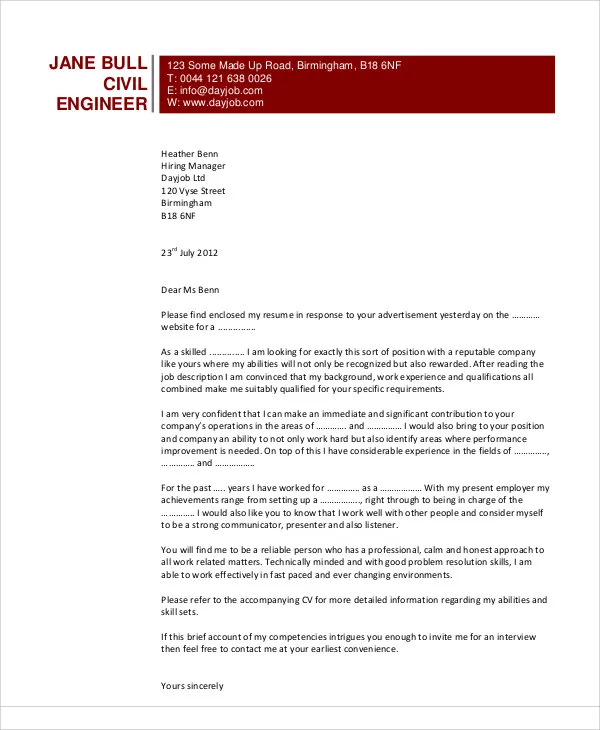
Why an Engineering Cover Letter Matters
In the competitive world of engineering, a well-crafted cover letter is your first chance to make a lasting impression. It’s not merely a formality; it’s a crucial tool that complements your resume and showcases your personality, passion, and specific suitability for the role. Unlike a resume, which provides a snapshot of your qualifications, a cover letter allows you to tell a story, connecting your skills and experiences directly to the requirements of the job and the needs of the employer. This is your opportunity to explain why you are the ideal candidate and what unique value you can bring to the team. Furthermore, a cover letter demonstrates your communication skills, attention to detail, and genuine interest in the position. A strong cover letter can set you apart from other applicants, giving you a significant advantage in the job application process and increasing your chances of landing an interview.
Highlighting Your Skills and Experience
Your cover letter is the ideal place to spotlight your relevant skills and experience. Don’t just list your qualifications; elaborate on them. For instance, instead of stating “Proficient in AutoCAD,” describe a project where you utilized this skill to design a specific component or solve an engineering challenge. Use action verbs to demonstrate what you accomplished and the impact of your work. Showcase your technical expertise, problem-solving abilities, and any specialized knowledge that aligns with the job description. Focus on the skills and experiences that are most relevant to the role you’re applying for, ensuring that you tailor your letter to each application. Highlight your achievements, emphasizing how you successfully applied your skills to overcome challenges and achieve positive outcomes. This section is where you bring your resume to life, illustrating how your past experiences translate into value for the potential employer. Make sure to weave in keywords from the job description to show that you understand what the employer is looking for and how you fit the bill.
Quantifying Your Achievements

To make a strong impression, quantify your accomplishments whenever possible. Instead of simply stating “Improved efficiency,” provide specific metrics such as “Increased production efficiency by 15%.” Using numbers and data adds credibility to your claims and demonstrates the tangible impact of your work. This can include project budgets managed, time saved on projects, or improvements in product performance. For example, if you were involved in a project that reduced costs, specify the amount of the cost savings. If you were part of a team that launched a new product, mention the revenue generated or the number of units sold. By providing quantifiable results, you clearly show your value to potential employers. This approach makes your achievements more compelling and helps hiring managers understand the direct benefits of your skills and experience. Quantifying your achievements also sets you apart from other applicants who may make general claims without providing supporting evidence. Think about what numbers or metrics best represent your contributions in previous roles and use them to demonstrate your capabilities.
Formatting Your Engineering Cover Letter
A well-formatted cover letter is just as crucial as its content. Proper formatting ensures that your letter is easy to read and presents a professional image. Start with a clean and professional font such as Times New Roman, Arial, or Calibri, using a font size between 10 and 12 points. Maintain consistent formatting throughout the document, including font styles, spacing, and margins. Use one-inch margins on all sides and single-space the body of the letter, with a double space between paragraphs. Organize your content logically, using clear headings and subheadings to break up large blocks of text and guide the reader. Ensure that your letter is free of any typos, grammatical errors, and formatting inconsistencies. Proofread carefully and consider asking someone else to review your letter as well. Ensure all contact information at the top is correct, and the date is appropriately placed. Your cover letter should be concise, typically not exceeding one page. Keeping the letter concise demonstrates respect for the hiring manager’s time. The goal is to present your qualifications in a clear, organized, and visually appealing manner, making a positive first impression on the hiring team.
Essential Cover Letter Sections
A standard engineering cover letter generally includes several key sections. Begin with your contact information at the top, including your name, address, phone number, and email address. Next, include the date and the recipient’s contact information, such as the hiring manager’s name, title, company name, and address. Start with a professional greeting, such as “Dear Mr./Ms. [Last Name].” In the body of your letter, write an engaging introduction that states the position you’re applying for and how you learned about the opportunity. The main body should highlight your relevant skills, experiences, and achievements, tailored to the specific job requirements. Clearly explain why you are a good fit for the role and the company. The closing should reiterate your interest and include a call to action, such as requesting an interview. Finally, end with a professional closing, such as “Sincerely” or “Best regards,” followed by your typed name. Each section plays a vital role in demonstrating your qualifications and creating a cohesive narrative that convinces the employer to consider your application.
Contact Information

The contact information section is the first thing a hiring manager will see, so it is essential to ensure it’s accurate and professional. At the top of your cover letter, list your full name, followed by your address, phone number, and email address. Use a professional-sounding email address. Avoid using nicknames or unprofessional email handles. The phone number should be one where you can be easily reached, and your voicemail should be set up with a professional greeting. The date should be placed below your contact information, followed by the hiring manager’s name, title, and the company’s address. Be sure to double-check all the information for accuracy, as a small error here can prevent the employer from reaching you. Make sure your contact information is consistent with what appears on your resume. This attention to detail shows your commitment to professionalism and organization, which are highly valued in engineering roles. It’s your first opportunity to show that you pay attention to detail, which is crucial in the engineering field. It allows employers to quickly and easily contact you for further steps in the application process.
Greeting the Hiring Manager
The greeting sets the tone for the rest of your cover letter. Always address the hiring manager by name, if possible. Research the company and the hiring manager’s name on LinkedIn or the company website. Addressing the letter to a specific person shows that you have taken the initiative to learn about the company and demonstrates a personalized approach. If you cannot find the hiring manager’s name, a generic greeting such as “Dear Hiring Manager” is acceptable, but aim to personalize the greeting whenever possible. Avoid generic or overly casual greetings. The greeting should be followed by a comma or colon. A well-crafted greeting immediately grabs the hiring manager’s attention and shows respect. It shows that you are proactive and attentive to detail, which are highly valued qualities in engineering. Tailor your greeting to match the company culture and the tone of the job posting. Proper greetings set the stage for the positive impression your cover letter aims to achieve.
The Body of Your Cover Letter
The body of your cover letter is where you connect your skills and experiences with the job requirements. In the opening paragraph, state the position you are applying for and briefly explain how you learned about the opportunity. The main part should highlight your most relevant skills, experiences, and accomplishments, using specific examples to demonstrate your value. Tailor your content to the specific requirements outlined in the job description, emphasizing how your qualifications align with their needs. Use action verbs to describe your responsibilities and achievements, and provide quantifiable results whenever possible to show the impact of your work. Show, don’t just tell. Use clear and concise language, avoiding jargon or overly technical terms that the hiring manager might not understand. Connect your experiences to the company’s goals. Be enthusiastic and convey your passion for engineering. This will increase your chances of being considered for an interview and showcase that you are a suitable fit for the role. Make sure the body of the letter builds on your resume while providing additional insights.
Closing Your Engineering Cover Letter

The closing paragraph of your cover letter should reiterate your interest in the position and the company. Express your enthusiasm for the opportunity and summarize why you are a good fit for the role. Include a call to action, such as requesting an interview or expressing your availability to discuss your qualifications further. Reiterate your appreciation for their time and consideration. Keep the tone positive and professional. Use a formal closing, such as “Sincerely” or “Best regards,” followed by your typed name. Avoid clichés and focus on making a lasting impression that reinforces your interest and qualifications. This section should leave a strong final impression on the hiring manager, encouraging them to take the next step and contact you. It’s your last chance to make a compelling case, so make it count and end on a high note. A well-written closing increases the likelihood of your application moving forward in the hiring process.
Proofreading and Editing for Perfection
Before submitting your cover letter, meticulous proofreading and editing are essential. Errors in grammar, spelling, and punctuation can undermine your credibility and make a negative impression. Carefully review your cover letter for any mistakes, paying close attention to detail. Consider asking a friend, family member, or career advisor to proofread your letter, as a fresh pair of eyes can often catch errors you might have missed. Ensure that your contact information is accurate and up-to-date. Check the formatting to ensure that it is consistent throughout the document. Make sure the letter flows logically and that your writing is clear, concise, and engaging. Review the language to ensure it matches the job description. Proofreading is a critical step in ensuring that your cover letter reflects your professionalism, attention to detail, and commitment to quality. A polished cover letter can significantly increase your chances of making a positive impression and securing an interview. Avoid any typos or inconsistencies in your cover letter by thoroughly proofreading it before you submit your application.