Why Your HR Job Cover Letter Matters
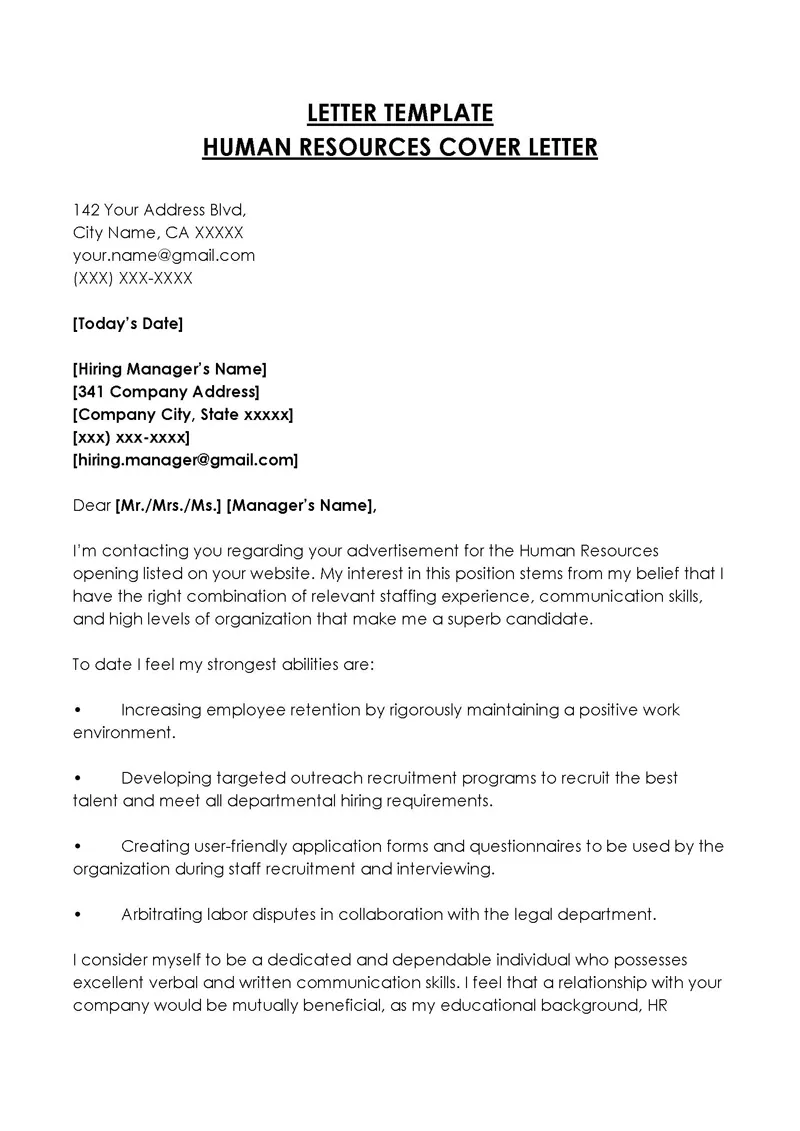
In the competitive world of human resources, your job cover letter is your initial handshake, your first opportunity to make a lasting impression. It’s far more than just a formality; it’s a critical tool that can significantly influence whether your application lands in the ’to be considered’ pile or the ‘rejected’ one. A well-crafted cover letter demonstrates your genuine interest in the role and the company, showcasing your personality and communication skills in a way a resume alone cannot. Think of it as your personal introduction, giving you the chance to connect with the hiring manager on a more personal level and persuade them to delve deeper into your qualifications. Furthermore, it provides a platform to articulate your career aspirations and how they align with the organization’s goals, positioning you as a valuable asset who’s not just seeking a job, but a meaningful contribution. It’s your story, your value proposition, and your opportunity to shine – all within a single, concise document. A compelling cover letter is a proactive step toward securing your dream HR role, transforming you from a mere applicant into a compelling candidate.
Grabbing Attention with Your Cover Letter
In a sea of applications, capturing the hiring manager’s attention from the get-go is essential. The opening paragraph of your HR job cover letter is your hook, and it needs to be compelling. Avoid generic openings like ‘I am writing to apply for the position…’ Instead, start with a powerful statement that immediately grabs their interest. You can mention something specific that excited you about the company or the role. Consider referring to a recent company achievement or a relevant industry trend, demonstrating that you’ve done your homework. Moreover, highlight a unique skill or accomplishment that sets you apart from other candidates. This could be a specific project you managed, a problem you solved, or a result you achieved. The goal is to show, not just tell, that you are the ideal candidate. A successful attention-grabbing opening will make the hiring manager want to read on, giving you the opportunity to fully showcase your skills and experiences. It’s about creating a personal connection and presenting yourself as a proactive and enthusiastic individual who understands the company’s needs. Think of it as your first and most crucial elevator pitch, setting the stage for a successful application.
Highlighting Relevant HR Skills
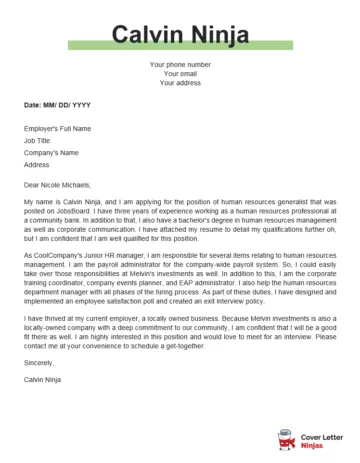
Your HR job cover letter needs to be a showcase of your relevant skills, aligning your qualifications with the specific requirements of the job description. Begin by carefully analyzing the job posting and identifying the key skills the employer is seeking. Then, in your cover letter, explicitly state how your skills match their needs. Use specific examples to illustrate your proficiency. For instance, instead of simply stating that you have ‘strong communication skills,’ describe a situation where you successfully mediated a conflict, led a training session, or presented complex information to a group. Similarly, if the job requires expertise in recruitment, detail your experience in sourcing candidates, conducting interviews, or managing the onboarding process. When listing your skills, quantify your achievements whenever possible. For example, ‘Reduced employee turnover by 15%’ or ‘Successfully recruited over 50 new hires in Q4.’ This not only shows your capabilities but also demonstrates your ability to achieve measurable results. Keep the focus on skills that are directly applicable to the role. By matching your skills with the job requirements, you prove that you are a well-suited candidate and highlight your capacity to excel in the position.
Showcasing Your HR Experience
Your HR experience is your greatest asset and should be presented in a way that highlights your successes and achievements. Instead of just listing your previous job titles and responsibilities, use the cover letter to tell a compelling story of your career journey. For each previous role, briefly outline your key responsibilities and then dive into specific examples of how you contributed to the organization’s success. Focus on quantifiable results, demonstrating the positive impact you made. For instance, if you were involved in a performance management project, mention the percentage increase in employee performance or the reduction in performance-related issues. If you were part of a recruitment initiative, highlight the number of hires you made, the time-to-hire reduction, or the cost savings you achieved. The key is to provide concrete evidence that you are a results-oriented HR professional. Moreover, use your cover letter to show how your previous experiences have prepared you for the specific role you are applying for. Connect your past experiences with the requirements of the current job. By strategically showcasing your HR experience, you build credibility and provide evidence of your ability to perform the job successfully.
Tailoring Your Cover Letter
One of the most significant factors in making your HR job cover letter stand out is customization. Sending a generic cover letter to multiple employers is a common mistake that can undermine your application. Every job and company are different, and your cover letter should reflect that. Tailor your letter to the specific role and the organization you are applying to. Research the company thoroughly. Visit their website, read their mission statement, and learn about their culture and values. Demonstrate that you understand the company’s needs and challenges, and then articulate how your skills and experience can help them. Personalize your letter by addressing the hiring manager by name, if possible. If you know someone at the company, mention their name and how you know them. Most importantly, ensure that the content of your letter directly addresses the requirements outlined in the job description. Incorporate keywords from the job posting and demonstrate how your skills and experience align with the specific requirements. Tailoring your cover letter sends the message that you are truly interested in the role and have taken the time to understand what the company needs. This level of effort is critical for getting noticed and making a strong impression.
Researching the Company

Thorough company research is crucial for crafting a compelling HR job cover letter that demonstrates your genuine interest. It’s the foundation upon which you build a personalized and effective application. Begin by exploring the company’s website and social media profiles. Pay attention to their mission statement, values, and culture. Look for recent news articles, press releases, and any mentions of company achievements or initiatives. This will give you insights into the company’s current priorities and challenges. Also, check out platforms like LinkedIn, Glassdoor, and Indeed to learn about the company’s culture, employee reviews, and leadership. If possible, try to find the name of the hiring manager or someone in the HR department. Addressing your cover letter to a specific person shows that you’ve taken the time to do your research. During your research, pay attention to the company’s language and tone. Use similar language in your cover letter to demonstrate that you are a good fit for the company’s culture. Understanding the company’s history, values, and current initiatives will not only enhance your cover letter but also give you valuable insights to discuss during the interview. It’s a proactive step that positions you as an informed and engaged candidate.
Addressing the Hiring Manager Directly
Addressing the hiring manager by name is a simple yet powerful step that can immediately enhance the effectiveness of your HR job cover letter. It shows that you have taken the time to research and are genuinely interested in the position. Instead of using generic greetings like ‘Dear Hiring Manager,’ try to find the name of the person responsible for hiring. This can often be found on the job posting, the company website, or through a quick search on LinkedIn. If you can’t find the name, try to find the title of the person you will be reporting to. A slightly less personal but still better option than a generic greeting is to use ‘Dear [Department] Hiring Team’. When you address the hiring manager by name, it personalizes your application. It signals that you are not just sending out a mass email, but that you are specifically targeting this role. This immediately makes your letter stand out. If you are unsure of the gender of the hiring manager, you can use a gender-neutral greeting or simply use the full name. While it is not a deal breaker, it is a small detail that can significantly boost your chances of making a positive impression.
Keywords to Include
Incorporating relevant keywords into your HR job cover letter is essential for two main reasons. First, applicant tracking systems (ATS) often scan cover letters and resumes for specific keywords to determine if a candidate meets the job requirements. If your letter does not include these keywords, your application may be rejected before it even reaches a human reader. Second, using relevant keywords demonstrates your understanding of the job requirements and your ability to communicate your skills effectively. Carefully review the job description and identify the key skills, qualifications, and responsibilities. Then, incorporate these keywords naturally throughout your cover letter. This could include specific software, certifications, or areas of expertise. For example, if the job requires experience with performance management, you should include phrases like ‘performance appraisal,’ ’employee development,’ or ‘performance improvement plans.’ Be careful not to stuff your cover letter with keywords. Instead, weave them into your sentences organically, making sure that they fit within the context of your skills and experience. Use a variety of related keywords to show a breadth of understanding. This strategy ensures that your cover letter is both ATS-friendly and demonstrates your relevant skills in an appealing manner.
Formatting for HR Cover Letters

The formatting of your HR job cover letter is just as important as the content. A well-formatted letter is easy to read and demonstrates your professionalism and attention to detail. Choose a clear and readable font, such as Times New Roman, Arial, or Calibri, and use a font size between 10 and 12 points. Keep the layout clean and uncluttered, with ample white space. Use headings and subheadings to break up large blocks of text and make your letter more visually appealing. Structure your letter logically, with an introduction, a few paragraphs highlighting your relevant skills and experience, and a concise conclusion. Use bullet points or numbered lists to present your achievements or skills clearly. This helps the reader quickly grasp the information and allows them to easily scan your letter. Always proofread your letter to eliminate any grammatical errors, spelling mistakes, or typos. Ensure that your letter is properly aligned and that the margins are consistent. Your cover letter should be easily accessible to the hiring manager. Save your cover letter as a PDF file, to preserve your formatting across different devices. A well-formatted cover letter reflects your professionalism and ability to communicate effectively. This attention to detail can make a significant difference in making a great first impression.
Proofreading and Editing
Proofreading and editing are critical steps in the process of crafting a strong HR job cover letter. Even the most well-written letter can be undermined by typos, grammatical errors, or formatting inconsistencies. Before submitting your application, carefully proofread your cover letter multiple times. Read it aloud to catch any awkward phrasing or sentences. Use spell check and grammar check tools, but don’t rely on them exclusively. They may not catch all errors and are not a substitute for careful reading. Have a friend, colleague, or mentor review your cover letter. Fresh eyes can often catch mistakes that you might have overlooked. Pay close attention to details. Ensure that all names, dates, and titles are correct. Check that your contact information is accurate and up-to-date. Review the formatting to ensure it is consistent throughout. Take the time to edit and refine your language. Make sure that your sentences are clear, concise, and easy to understand. Replace any vague or ambiguous language with specific examples and quantifiable achievements. The goal is to present yourself as a polished and professional candidate who pays attention to detail. A well-proofread and edited cover letter demonstrates your commitment to excellence and significantly increases your chances of success.