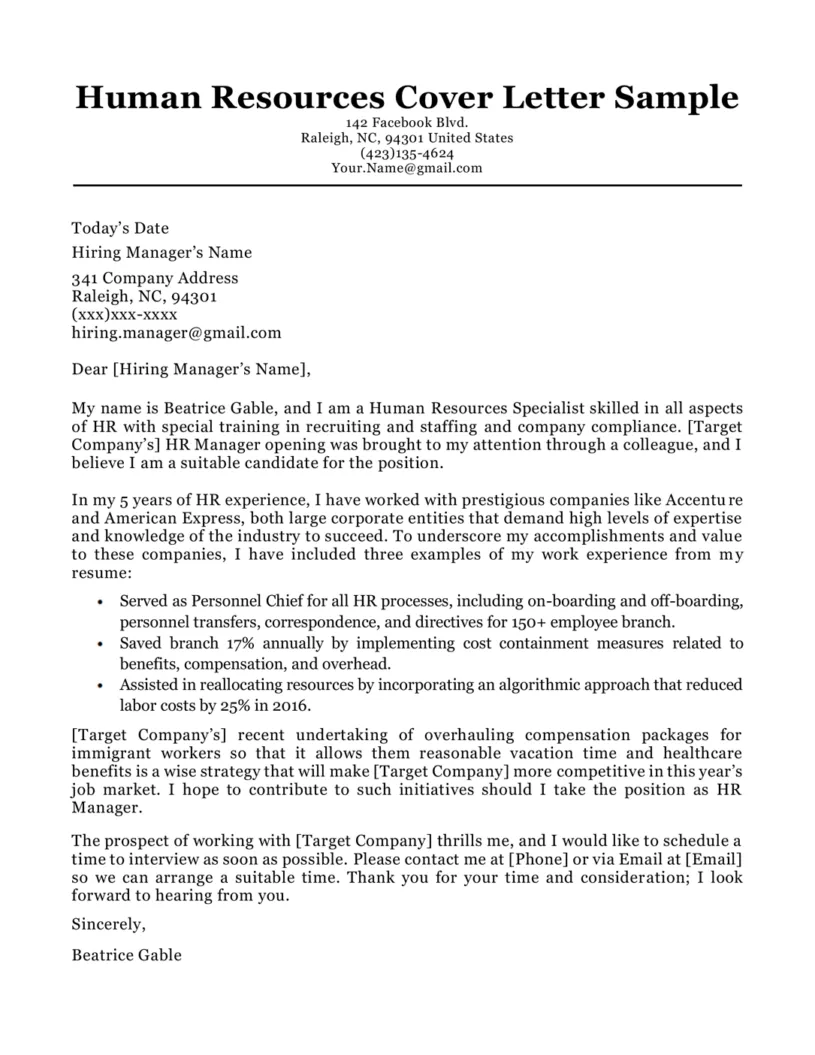
Crafting Your HR Job Cover Letter Winning the Game
Landing your dream HR job starts with a compelling cover letter. This document is your first impression, your chance to showcase your skills, experience, and personality. A well-crafted cover letter can significantly increase your chances of getting an interview. This guide provides you with the essential steps to create a winning HR job cover letter. We will cover everything from structuring your letter to highlighting your achievements and tailoring it to the specific job description. A great cover letter goes beyond just listing your qualifications; it tells a story, demonstrating your passion for HR and your understanding of the company’s needs. By following these guidelines, you’ll be well on your way to securing that coveted HR position.
Understanding the Importance of an HR Cover Letter
The HR cover letter serves as your personal introduction to the hiring manager. It provides context to your resume, allowing you to elaborate on your skills and experiences in a more personal and persuasive way. Unlike your resume, which is a factual summary, the cover letter gives you the opportunity to express your personality and enthusiasm for the role and the company. In the competitive field of human resources, a strong cover letter can differentiate you from other applicants. It demonstrates your communication skills, your attention to detail, and your ability to articulate your value proposition. Many hiring managers will read the cover letter first to get a sense of the applicant’s suitability, so it’s vital to make a positive and memorable impact from the beginning.
Highlighting Your HR Skills and Experience

Your HR cover letter is the perfect place to showcase your relevant skills and experience. Identify the key skills mentioned in the job description and align them with your own abilities. These could include recruitment, employee relations, performance management, compensation and benefits, training and development, or HRIS proficiency. Provide specific examples of how you’ve successfully applied these skills in previous roles. For example, if the job requires strong recruitment skills, you could mention successful sourcing strategies, the number of hires you’ve made, or your experience with applicant tracking systems. If the role requires expertise in employee relations, you could highlight your experience in resolving conflicts, conducting investigations, or managing employee performance issues. Always tailor your examples to match the requirements outlined in the job posting.
Quantifying Achievements in Your Cover Letter
Instead of simply stating your responsibilities, use numbers and data to quantify your achievements. This adds credibility and demonstrates the impact you’ve made in previous roles. For example, rather than saying “Managed recruitment process,” you could say “Reduced time-to-hire by 20% through streamlined recruitment strategies.” Similarly, if you improved employee engagement, provide the percentage increase. If you implemented a new HR system, mention the cost savings or efficiency gains. Quantifiable results showcase your ability to drive results and make a positive contribution to the company. Using metrics shows that you’re not just performing tasks, but that you’re making a measurable impact on the business. This is crucial to showing the value of your skills and is one of the most effective ways to distinguish yourself from other candidates.
Tailoring Your Cover Letter to the Job
A generic cover letter is easily spotted and often disregarded. Tailor each cover letter to the specific job you’re applying for. Review the job description carefully and identify the key requirements, skills, and qualifications the employer is seeking. Then, customize your cover letter to address those specific needs. Highlight the relevant experiences and skills that match those requirements. Show the hiring manager that you understand the role and what the company is looking for. Mention the company name, the specific job title, and any projects or initiatives that resonate with you. This level of personalization shows that you’ve taken the time to research the company and understand the role, which makes a strong impression. This extra effort makes a substantial difference and significantly increases your chances of success.
Researching the Company and Its Culture

Before writing your cover letter, research the company. Understand its mission, values, and culture. Visit the company website, read articles about the company, and check its social media presence. This research will help you tailor your letter to the company’s specific needs and demonstrate your genuine interest. In your cover letter, you can mention specific aspects of the company that resonate with you, such as its commitment to employee development, its innovative approach to HR, or its positive workplace culture. This shows the hiring manager that you’re not just applying for a job but that you’re genuinely interested in the company and its values. Referencing company initiatives or values in your cover letter is an excellent way to show you’ve done your homework.
Showcasing Your Passion for HR
Expressing your passion for human resources is essential. This is not just about skills and experience; it’s about your genuine interest in the field. In your cover letter, explain why you’re passionate about HR. This could include your interest in employee development, your commitment to creating a positive work environment, or your belief in the importance of HR in driving business success. Share your understanding of current HR trends and challenges. If you’ve attended HR conferences, taken relevant courses, or have any professional certifications, mention them. Highlighting your passion for HR will make you stand out from the competition and demonstrate your commitment to the profession. Passion shows your dedication and your interest in continuous learning, which is highly valued in any role.
Structuring Your HR Cover Letter for Impact
Structure your HR cover letter in a clear and concise manner, following a standard business letter format. Start with your contact information, the date, and the hiring manager’s contact information. Then, include the following key sections: an opening paragraph, a body paragraph (or paragraphs), and a closing paragraph. The opening paragraph should state the position you are applying for and briefly explain why you are interested in the role. The body paragraphs should highlight your relevant skills, experience, and achievements. The closing paragraph should reiterate your interest and express your eagerness to hear back from the hiring manager. Using a clear structure makes it easier for the hiring manager to quickly understand your qualifications and see how you meet the job requirements.
Formatting Your Cover Letter for Readability

The appearance of your cover letter is just as important as the content. Use a professional and easy-to-read font, such as Times New Roman, Arial, or Calibri, with a font size between 11 and 12 points. Keep the letter concise, ideally one page long. Use clear and concise language, avoiding jargon or overly complex sentences. Use bullet points to highlight key skills or achievements. Proofread the letter carefully for any grammatical errors or typos. Proper formatting and readability will make your cover letter more appealing and ensure that your message is effectively communicated. Well-formatted documents show that you value organization and that you pay close attention to detail, which are important qualities in an HR professional.
Writing a Compelling Opening and Closing
The opening and closing of your cover letter are critical. Your opening should immediately grab the reader’s attention and express your enthusiasm for the role. Instead of starting with a generic phrase, consider mentioning how you learned about the position, why you’re excited about the opportunity, or a brief highlight of your relevant experience. The closing should reiterate your interest and express your gratitude for their consideration. End with a call to action, such as expressing your eagerness to discuss your qualifications further. A strong opening and closing leave a lasting impression and encourage the hiring manager to take the next step in the hiring process.
Opening the Letter
Start strong. Instead of “Dear Hiring Manager,” try to find the name of the person hiring for the role. If you can’t, then a more personal greeting can set a more positive tone. Briefly mention where you saw the job posting and immediately state your interest and enthusiasm. Show that you are excited about the opportunity and the company, and mention any specific aspects that caught your attention.
Stating Your Purpose

In the opening, immediately state the position you are applying for. Briefly explain why you are interested in the role and the company. This is a great place to show you have done your research and have tailored your application to the role. State your core purpose and express that you are a great fit. This sets the tone for the rest of the letter and highlights what makes you the best fit for the company.
Body of the Letter
Use the body of your letter to highlight your skills, experience, and achievements. Tailor your writing to the specific job requirements. Use the job description as a guide, and provide concrete examples of how you’ve demonstrated the required skills in your past roles. Use numbers to quantify your achievements whenever possible. This shows the hiring manager what results you can bring to the table. Focus on the most relevant information.
Highlighting Your Skills
Focus on the key skills that are important to the job. Don’t just list your skills; provide examples of how you’ve used them effectively. If the role requires strong communication skills, describe a situation where you successfully communicated a complex issue to a group of employees. If it requires analytical skills, describe a time when you analyzed HR data to identify a problem and propose a solution. Link your skills to positive results. Highlighting your skills in relation to the job makes it clear why you are qualified and shows how you would be a great fit for the role.
Highlighting Your Experience

Your experience is just as important as your skills. Provide relevant examples from your past roles, highlighting the key responsibilities and achievements. Use the STAR method (Situation, Task, Action, Result) to structure your responses. Describe the situation, explain the task you were assigned, outline the actions you took, and clearly state the results you achieved. By using this structure, you clearly convey how your experience makes you a strong candidate for the role.
Closing the Letter
End your cover letter with a strong closing. Restate your interest in the position and express your gratitude for the hiring manager’s time and consideration. Include a call to action. This might be a statement that you are eager to discuss your qualifications further, or an invitation to schedule an interview. Always provide your contact information to make it easy for the hiring manager to reach you.
Proofreading and Editing
Before submitting your HR cover letter, proofread and edit it carefully. Errors in grammar, spelling, or punctuation can create a negative impression and undermine your credibility. Read the letter aloud to catch any awkward phrasing or sentences. Have a friend, family member, or career counselor review your letter as well. Another set of eyes can often spot errors that you may have missed. Proofreading is a critical step to making sure your writing is professional and polished and that your letter will leave a positive impression on the hiring manager.
Common Mistakes to Avoid in Your HR Cover Letter

Avoid common mistakes that can hurt your chances of getting an interview. Don’t simply repeat your resume; your cover letter should expand on the information provided in your resume. Avoid generic language and clichés. Instead, use specific examples and tailor your letter to the job requirements. Don’t use overly formal language or jargon. Always maintain a professional tone, and be clear and concise. Also, don’t include negative information, such as complaints about a previous employer. Focus on your strengths and achievements, and maintain a positive attitude throughout.
Using Action Verbs to Enhance Your Cover Letter
Use strong action verbs to describe your skills and achievements. Action verbs bring your cover letter to life and make it more engaging. Start your sentences with dynamic verbs, such as “managed,” “developed,” “implemented,” “led,” “achieved,” “improved,” “organized,” or “trained.” These verbs demonstrate initiative and a proactive approach. They clearly show what you have accomplished in your past roles. Using action verbs helps the reader to visualize your contributions and get a better understanding of the impact you have made.
Examples of Effective HR Cover Letter Phrases
Use powerful phrases to highlight your key skills and qualifications. Instead of saying “I am a good communicator,” use phrases like “Successfully communicated complex information to diverse audiences” or “Facilitated effective communication between employees and management.” For experience, instead of “I have experience in recruitment,” try “Spearheaded recruitment initiatives that resulted in a 20% reduction in time-to-hire.” Show that you are a problem-solver. Instead of just describing the skills, show the hiring manager how you put those skills to use, and always focus on the results. This will give your cover letter a much bigger impact.
Additional Tips for a Standout Cover Letter
Go above and beyond. Mention any relevant certifications or professional development courses you’ve completed. If you have any volunteer experience or involvement in HR-related organizations, include it. Show your eagerness to learn. Show that you are a lifelong learner who is staying up-to-date with the current trends in HR. Your resume can be tailored to the specific role, demonstrating your ability to adapt and tailor your skills and experience. Always maintain a professional tone. By following these additional tips, you’ll create a standout cover letter that grabs the attention of hiring managers.
Seeking Feedback Before Submitting Your Cover Letter
Before submitting your HR cover letter, seek feedback from trusted sources. Ask a career counselor, a mentor, or a friend who has experience in HR to review your letter. They can provide valuable insights and help you identify areas for improvement. Be open to their suggestions and be willing to revise your letter based on their feedback. Getting feedback from multiple sources can help you refine your cover letter and make it as strong as possible. Getting feedback before submitting is always a good idea.