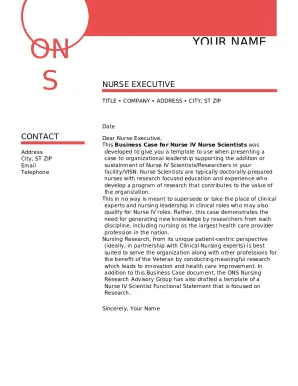
Why You Need an ICU Cover Letter
In the competitive world of nursing, especially within the Intensive Care Unit (ICU), a well-crafted cover letter is not just a formality it’s your first opportunity to make a lasting impression. It offers a crucial chance to highlight your specific skills, experiences, and passion for ICU nursing beyond the constraints of a resume. An effective cover letter tailored for an ICU nursing position can significantly increase your chances of securing an interview by demonstrating to the hiring manager that you are a serious and well-prepared candidate. Your cover letter is your chance to personalize your application and illustrate how your unique qualifications align with the specific needs of the ICU department. By effectively showcasing your relevant experience, enthusiasm, and understanding of the ICU environment, your cover letter can set you apart from other applicants and help you land your dream job in critical care.
Understanding the ICU Environment and Skills
The ICU is a high-pressure environment requiring specialized skills and a unique mindset. Nurses in the ICU need to be adept at handling complex medical equipment, managing critical patients, and making quick, informed decisions under pressure. A successful ICU nurse must possess a strong understanding of advanced life support, medication administration, and patient monitoring techniques. Moreover, the ability to work effectively within a multidisciplinary team, communicate clearly with physicians, patients, and families, and demonstrate empathy are essential qualities. ICU nurses must be able to adapt to rapidly changing situations, maintain composure during emergencies, and prioritize tasks efficiently. They should also have a strong grasp of ethical considerations and patient advocacy, ensuring the highest standards of care for critically ill patients. Demonstrating your understanding of these critical aspects in your cover letter is crucial for showing you are the right fit for this demanding role.
Highlighting Relevant Skills for ICU Nursing

When writing your cover letter, focus on the skills and experiences most relevant to ICU nursing. Start by emphasizing your technical proficiencies such as experience with ventilators, central lines, hemodynamic monitoring, and medication pumps. Then, describe your ability to assess and manage critically ill patients, including your knowledge of common ICU conditions and treatments. Showcase your strong decision-making skills, especially your ability to remain calm and act decisively in emergency situations. Include examples of your experience in a fast-paced environment, highlighting your multitasking abilities, and your capacity to handle multiple patients simultaneously. If you have certifications like CCRN or ACLS, be sure to mention them. Furthermore, demonstrate your soft skills, such as your ability to communicate effectively with patients, families, and colleagues, your teamwork abilities, and your commitment to providing compassionate care. Tailor each skill description to align with the specific requirements mentioned in the job posting to ensure your qualifications are directly relevant to the position.
Crafting a Strong Cover Letter Header
A well-structured header is the foundation of a professional cover letter. It should include your full name, contact information (phone number and email address), and the date. Below your information, include the hiring manager’s name, title, and the hospital or healthcare facility’s address. If the job posting provides a specific contact person, always address the letter to them; it shows you’ve paid attention to the details. If you are unsure of the hiring manager’s name, do your research or use a general greeting like “Dear Hiring Manager.” The header’s formatting should be clean and organized, reflecting your professionalism. Make sure the font and style match your resume and are easy to read. A clear and accurate header not only provides important information but also establishes your credibility and sets the tone for the rest of your cover letter, demonstrating your attention to detail and respect for the application process. This initial impression can significantly impact how your application is perceived.
Personalizing Your Cover Letter
Personalization is key to making your cover letter stand out. Begin by thoroughly researching the hospital or healthcare facility. Understand its mission, values, and the specific needs of its ICU. Tailor your cover letter to reflect your understanding of the organization and how your skills can contribute to its goals. Demonstrate a genuine interest in the role and the institution by mentioning specific programs, initiatives, or departments that resonate with you. If you learned about the position through a specific contact, such as a current employee or professional connection, mention that as well. Avoid using generic phrases and focus on demonstrating how your unique qualifications align with the specific requirements of the job. This personalized approach demonstrates to the hiring manager that you’ve invested time and effort, showing that you are genuinely interested in the opportunity. This approach significantly increases the chance of getting your application noticed and increases your chances of securing an interview.
Writing a Compelling Introduction

Your introduction should immediately capture the hiring manager’s attention. Start by clearly stating the position you are applying for and where you saw the job posting. Briefly highlight your most relevant qualifications, aiming to create immediate interest. Express your enthusiasm for the position and the organization. Avoid generic opening statements and use the introduction to highlight something unique about your experience or skills that makes you stand out. For example, you could mention a specific experience that demonstrates your passion for ICU nursing, a particular skill that aligns with the job requirements, or a personal connection to the hospital’s mission. Make your introduction concise and engaging. The goal is to provide a strong first impression that encourages the reader to continue reading your letter, demonstrating your suitability for the role and sparking the hiring manager’s interest in learning more about your experience.
Body of the Cover Letter Emphasizing Your Experience
The body of your cover letter is where you showcase your skills and experience in detail. Use this section to provide specific examples of your achievements and how they relate to the requirements of the ICU nursing position. Describe your experience in managing critical patients, including the types of conditions you’ve handled, the equipment you are proficient with, and the treatments you have administered. Quantify your achievements whenever possible use numbers or metrics to illustrate your impact. For instance, if you improved patient outcomes, state the percentage of improvement. Highlight your ability to work effectively in a fast-paced, high-stress environment, emphasizing your organizational skills, multitasking abilities, and decision-making skills. Use the STAR method Situation, Task, Action, Result to structure your examples, providing clear context and showcasing your practical skills. Relate your experiences to the specific needs of the ICU, demonstrating your understanding of the critical care environment and your ability to contribute to the team.
Quantifying Achievements and Skills
Quantifying your achievements makes your cover letter more impactful. Instead of simply stating that you improved patient care, provide concrete data to support your claims. For example, mention that you reduced patient fall rates by a certain percentage, decreased medication errors by a specific number, or improved patient satisfaction scores. When describing your skills, provide quantifiable examples. If you are proficient in using specific equipment, indicate how often you used it and in what context. If you trained other nurses, specify the number of nurses you trained and any positive outcomes. Quantifiable data not only provides concrete evidence of your abilities but also helps hiring managers understand the tangible benefits you can bring to the ICU. Use numbers, percentages, and specific figures to make your achievements more convincing and memorable. This level of detail helps demonstrate the value you bring to the role and validates your claims about your skills and experience, thus making your application stand out from the competition.
Showcasing Your Passion for ICU Nursing

Demonstrating your passion for ICU nursing is essential. This passion is what drives your commitment and dedication to providing exceptional patient care. Express your enthusiasm for the challenges and rewards of working in a critical care setting. Share what motivates you to excel in this high-pressure environment. You might discuss your commitment to continuous learning and staying current with the latest advances in critical care. If you have a particular interest in specific areas of ICU nursing, such as trauma care, cardiac care, or neurological care, mention it. Include examples of how you have gone above and beyond to provide compassionate care or improve patient outcomes. Your genuine enthusiasm will make your cover letter more engaging and will make you stand out from other candidates. By showcasing your passion, you’re not just highlighting your professional qualifications, but also your personal commitment to the well-being of your patients, demonstrating that you are a perfect fit for the culture.
Closing Your Cover Letter with a Strong Call to Action
Your closing should summarize your key qualifications and reiterate your interest in the position. Thank the hiring manager for their time and consideration, and make it clear that you are eager for the opportunity to discuss your application further. Clearly state your availability for an interview and provide your contact information if you haven’t already. Use a professional and confident tone. The closing should leave a positive and lasting impression, encouraging the hiring manager to contact you. Consider using a call to action such as, “I am eager to discuss my qualifications further and am available for an interview at your earliest convenience.” This proactive approach shows your interest and initiative. Ensure your contact information is easy to find, and proofread the closing to ensure it’s error-free. A well-crafted closing reinforces your professionalism and maximizes your chances of moving forward in the hiring process.
Formatting and Proofreading Your Cover Letter
Formatting and proofreading are critical steps in creating a professional cover letter. Choose a clear, easy-to-read font, such as Times New Roman, Arial, or Calibri, and maintain consistent formatting throughout the document. Use standard margins, typically one inch on all sides, and ensure your letter is well-organized with clear headings and spacing. Proofread your cover letter carefully for any grammatical errors, typos, or spelling mistakes. Ask a friend, family member, or career advisor to review your letter for you, as a second pair of eyes can often catch errors that you might miss. Ensure the letter is free of any jargon that might confuse the reader, unless essential. Check that your contact information is accurate and up-to-date. Proper formatting and thorough proofreading demonstrate your attention to detail and professionalism. These steps ensure that your cover letter presents you in the best possible light and enhances your chances of getting the job. A polished and error-free cover letter reflects well on your communication skills and your commitment to excellence.
Best Practices for Submission

Follow the specific instructions in the job posting for submitting your cover letter. If the posting requires you to send your cover letter as an attachment, make sure the file is in the correct format, usually PDF or DOCX. Name the file in a professional manner, such as “[Your Name] - Cover Letter - ICU Nurse”. Customize your cover letter for each position you apply for, ensuring that it aligns with the specific requirements and expectations outlined in the job description. Always attach your cover letter and resume together in the same email, unless the job posting indicates otherwise. Before submitting, double-check that all your contact information is accurate and that the recipient is correct. After submitting, follow up with the hiring manager or recruiter within a reasonable timeframe, typically one to two weeks, to express your continued interest and confirm that your application was received. Following these best practices ensures that your application is considered professionally and gives you the best possible chance of getting your foot in the door.