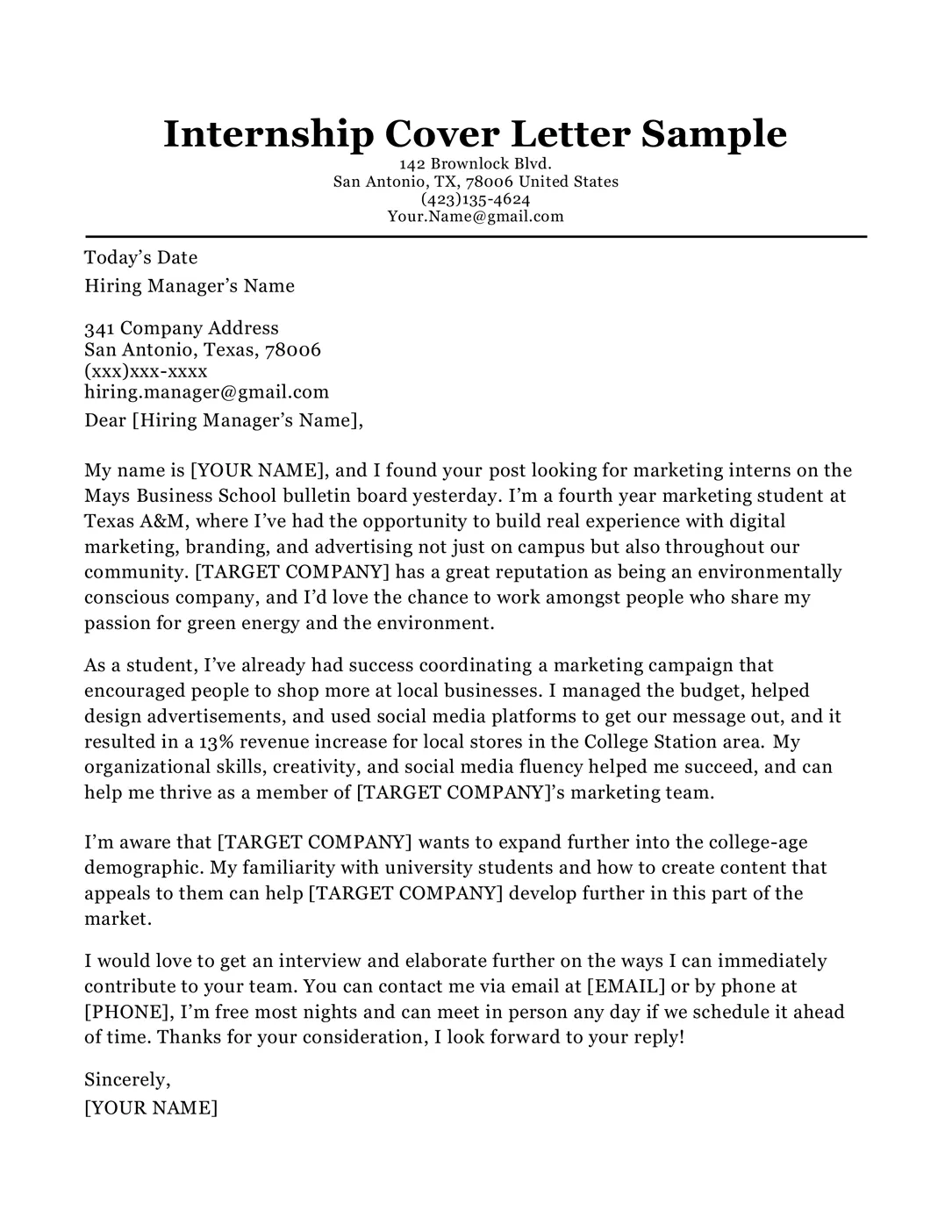
Top 5 Internship Cover Letter Tips
Landing a college internship can be a game-changer for your career. It provides invaluable experience, industry connections, and a glimpse into your future. However, a compelling cover letter is often the first step toward securing these opportunities. With numerous college internship cover letter examples available, it’s crucial to stand out from the crowd. This guide provides the top 5 tips to help you write a winning cover letter that grabs the attention of potential employers and showcases your potential. By following these guidelines, you can significantly increase your chances of getting that coveted internship and jumpstart your career.
Highlight Your Skills
One of the most important aspects of your cover letter is highlighting your relevant skills. These skills are the tools you bring to the table and demonstrate your ability to perform the tasks required by the internship. Review the job description carefully and identify the key skills the employer is seeking. Then, in your cover letter, provide specific examples of how you’ve utilized these skills in previous experiences, whether in coursework, volunteer work, or extracurricular activities. Use action verbs to describe your accomplishments and quantify your achievements whenever possible. For example, instead of saying “I have good communication skills,” you could say, “Successfully presented project findings to a group of 20+ peers, resulting in a 15% increase in project understanding.” Showcasing these skills helps the employer understand what you can contribute to their team.
Showcase Relevant Experience

While you might be a college student with limited professional experience, you likely have experiences that are relevant to the internship. This could include projects completed in your classes, leadership roles in clubs or organizations, volunteer work, or part-time jobs. In your cover letter, provide concise but compelling descriptions of these experiences, emphasizing the skills and knowledge you gained. Focus on the responsibilities you held, the tasks you completed, and the results you achieved. Whenever possible, use specific examples to illustrate your contributions. This helps the employer see how your previous experiences have prepared you for the internship. Showcase your practical knowledge and your potential for future success.
Tailor to the Internship
Generic cover letters rarely impress hiring managers. To increase your chances of success, tailor your cover letter to each internship you apply for. This involves researching the company, the specific internship position, and the hiring manager. Show that you’ve taken the time to understand the role and the organization’s mission. Mention specific aspects of the internship that excite you and explain why you’re a good fit. This may require modifying your cover letter for each application. Demonstrate your understanding of the company’s values, goals, and culture. Showing genuine interest in the specific opportunity is crucial to getting selected for an interview.
Use Action Verbs
Action verbs breathe life into your cover letter and make your accomplishments more impactful. Instead of using passive language, use strong action verbs to describe your responsibilities and achievements. Examples include “managed,” “developed,” “implemented,” “led,” “created,” and “achieved.” These verbs help paint a vivid picture of your abilities and experiences. For example, “Managed a team of five volunteers to organize a community event” is much more compelling than “Was responsible for organizing a community event.” Action verbs convey that you are a proactive individual, capable of taking initiative and delivering results. This will significantly enhance the impression you make on potential employers.
Proofread Carefully

Errors in your cover letter can be a significant deterrent, conveying a lack of attention to detail and professionalism. Always proofread your cover letter thoroughly before submitting it. Check for grammatical errors, spelling mistakes, and punctuation issues. It is also advisable to have a friend, career counselor, or professor review your cover letter. Multiple sets of eyes can help catch errors you might miss. A polished, error-free cover letter demonstrates your commitment to excellence. Correcting such details will help employers understand that you take your work seriously and pay attention to the nuances, which are crucial for any intern.
Crafting a Compelling Opening
The opening of your cover letter is critical; it’s your first impression. It should immediately grab the reader’s attention and make them want to read on. This is your opportunity to stand out from the crowd and to signal your sincere interest in the position. A strong opening sets the tone for the rest of your cover letter. A well-written opening can leave a lasting positive impression on the hiring manager. The goal is to highlight your relevant skills and knowledge and to distinguish your application from the rest.
Start with Impact
Begin your cover letter with a statement that immediately captures the reader’s attention. Instead of starting with a generic greeting, consider leading with a compelling statement about your interest in the company or the internship. This could be a brief anecdote, a compelling fact, or a statement about your enthusiasm for the field. Show that you understand the company’s mission or work and connect this to your career goals. This is your chance to express your enthusiasm and your specific interest in the company and the internship. It should also tell the hiring manager something about you and why you chose to apply.
Express Enthusiasm

Your enthusiasm is contagious. In your opening, express your genuine interest in the internship and the company. Explain why you are excited about this opportunity and what aspects of the role or company particularly appeal to you. Your enthusiasm will signal your passion for the field and your eagerness to learn and contribute. Mentioning specific company values or projects that resonate with you can also make a positive impression. Showing a genuine passion shows you’re dedicated and excited to succeed.
State Your Specific Interest
Clearly state the specific internship position you’re applying for in your opening paragraph. Avoid vague statements or generic introductions. Be direct and let the hiring manager know you are applying for a specific role. This demonstrates your attention to detail and your genuine interest in that particular opportunity. The specific reference shows you have carefully reviewed the job description and are targeting your application appropriately.
Demonstrating Your Value
Once you’ve captured the reader’s attention, it’s time to demonstrate your value. This is where you showcase your relevant skills, experiences, and achievements. Your cover letter should go beyond simply listing your qualifications; it should highlight how you can contribute to the company and the internship. Show how your qualifications align with the requirements of the position and how you can help the company succeed. Show the employer that hiring you will be valuable to them.
Quantify Your Achievements

Whenever possible, quantify your achievements. Instead of saying “Improved customer service,” say “Improved customer satisfaction scores by 15% through implementing a new training program.” Quantifiable results provide concrete evidence of your skills and accomplishments. Metrics such as percentages, numbers, and specific data demonstrate the impact you’ve made in previous roles. These kinds of concrete figures validate your claims. Showing how your previous successes will translate into future success is extremely valuable to the reader.
Connect Skills to Requirements
Carefully review the job description and identify the key skills and qualifications the employer is seeking. Then, in your cover letter, explicitly connect your skills and experiences to these requirements. Provide specific examples of how you’ve utilized these skills in previous experiences. This demonstrates that you have the qualifications the employer is looking for and that you understand the demands of the internship. The more the reader can see a connection between the qualifications and their requirements, the more likely they will be to select your application.
Address Gaps
If you have any gaps in your experience or qualifications, address them in your cover letter. Be honest and straightforward, but focus on what you’ve learned from those experiences. For example, if you lack direct experience in a specific area, you could discuss how you’re actively working to develop those skills. By proactively addressing any potential weaknesses, you show that you’re self-aware, resilient, and committed to growth. This demonstrates your willingness to learn and develop, which is crucial for an internship.
Formatting for Success

The formatting of your cover letter is as important as the content. A well-formatted cover letter is easy to read, visually appealing, and reflects your professionalism. A carefully formatted cover letter will make your application stand out positively. Proper formatting creates a professional appearance, making your cover letter more appealing. Proper formatting will help the reader enjoy the information presented.
Choose the Right Format
Choose a standard, professional format for your cover letter. Use a clear, easy-to-read font, such as Times New Roman, Arial, or Calibri, with a font size between 10 and 12 points. Use one-inch margins on all sides and single-space your text. Use a formal business letter format, including your contact information, the date, the employer’s contact information, a formal salutation (e.g., “Dear Mr./Ms. [Last Name]”, and a professional closing (e.g., “Sincerely”). This formatting choice reflects your understanding of professional norms.
Keep it Concise
Hiring managers are busy, so keep your cover letter concise and to the point. Aim for one page, unless otherwise specified in the job posting. Focus on the most relevant information and avoid unnecessary details. Each paragraph should be brief and focused, conveying a single idea. The goal is to provide the information the hiring manager needs to assess your qualifications without overwhelming them with excessive text. Your goal is to make a positive impact in a short amount of time.
Use Professional Language

Maintain a professional tone throughout your cover letter. Use formal language and avoid slang, jargon, or overly casual phrasing. Proofread carefully to ensure your writing is free of errors. Use active voice and positive language to convey confidence and enthusiasm. Maintain a respectful and professional tone, demonstrating your understanding of workplace communication standards. This will create the impression that you’re ready to work in a professional environment.
Closing Your Cover Letter
The closing of your cover letter is your final opportunity to make a positive impression. It’s your chance to reiterate your interest in the internship, thank the employer for their time, and encourage them to contact you. Be confident and professional in your closing statements. A strong closing can significantly improve your chances of being selected for an interview.
Reiterate Your Interest
In your closing paragraph, reiterate your strong interest in the internship and the company. Reiterate your enthusiasm for the opportunity and explain why you believe you’re a good fit. Briefly summarize your key qualifications and skills, emphasizing how they align with the internship requirements. This reinforces your suitability for the role. Highlighting the skills will remind the hiring manager of why you are a good fit for the role.
Include a Call to Action
End your cover letter with a clear call to action. This could be a request for an interview, a suggestion to review your resume, or an invitation to contact you for further information. State your willingness to discuss your qualifications further. Be confident and proactive in your closing, signaling your interest and eagerness to move forward in the hiring process. A strong call to action encourages the hiring manager to take the next step, which will help you get an interview.
Proofreading and Submission
Once you have finished writing your cover letter, you need to ensure that it is error-free and ready for submission. Proofreading and submitting your cover letter correctly are the final steps in the process. It’s crucial to be sure there are no errors before submitting the cover letter. A mistake could cost you a chance at an interview.
Check for Errors
Before submitting your cover letter, proofread it carefully for any errors. This includes grammatical errors, spelling mistakes, punctuation errors, and formatting inconsistencies. You should also check the cover letter for any inconsistencies, such as incorrect company names or job titles. It is useful to have someone else review the cover letter to catch any errors that you might have missed. Attention to detail is crucial, and a polished cover letter increases your chances of getting selected.
Format for Submission
Ensure your cover letter is formatted correctly for submission. If the job posting requires a specific file type or format, follow those instructions. If not, save your cover letter as a PDF file to preserve the formatting and ensure it appears the same on all devices. Attach your cover letter to your email or submit it through the online application portal as instructed. Following these instructions will help the hiring manager easily access and review your application.