The Importance of a Cover Letter
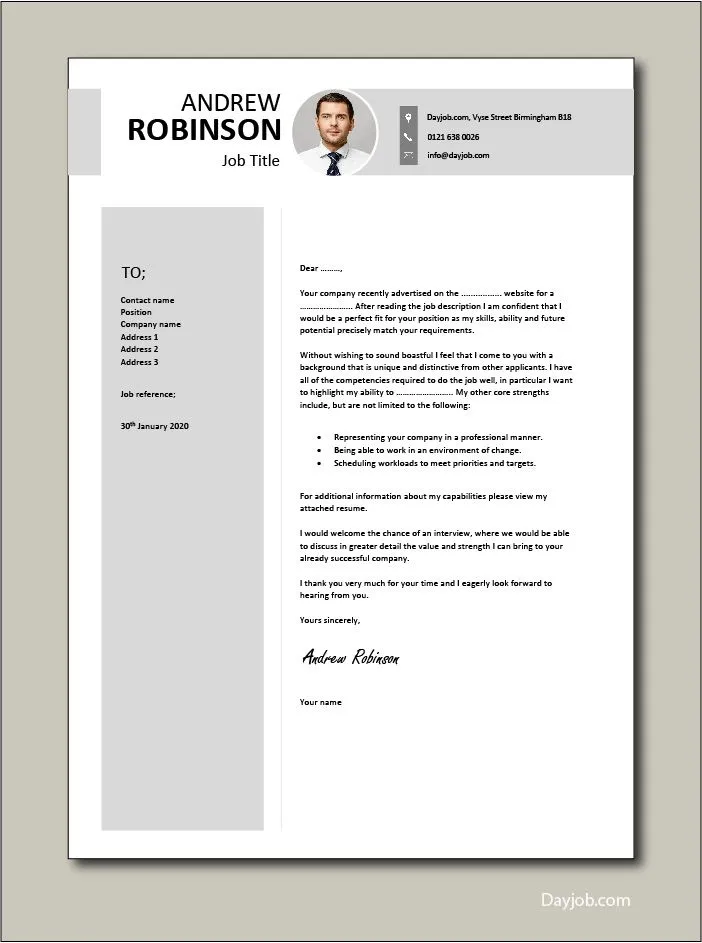
A cover letter is a critical component of a job application, often serving as the first impression you make on a potential employer. It’s your opportunity to go beyond your resume and provide context to your qualifications, demonstrating why you are the perfect fit for the role. Unlike a resume, which lists facts, a cover letter allows you to narrate your professional story, connecting your skills and experiences to the specific requirements of the job. In today’s competitive job market, a well-crafted cover letter can significantly increase your chances of securing an interview and ultimately, landing your dream job. It is an important part of any job application, so use the cover letter template to craft a strong letter to present to a potential employer.
Why a Cover Letter Matters
Cover letters provide an opportunity to express your interest in the position and company, showcase your personality, and highlight how your skills and experiences align with the job requirements. It helps you stand out from other applicants by providing a unique perspective and demonstrating your understanding of the role and company. While resumes offer a snapshot of your experience, cover letters allow you to delve deeper, illustrating how your past achievements make you the ideal candidate. A strong cover letter shows that you have invested time and effort into applying for the job, indicating your genuine interest and enthusiasm. It also provides an opportunity to address any potential gaps in your resume or explain career transitions, ensuring a comprehensive representation of your capabilities and suitability for the role.
How Cover Letters Help Your Application

Cover letters enhance your application by providing a personalized introduction and demonstrating your communication skills. They allow you to tailor your message to each specific job, emphasizing the skills and experiences most relevant to the position. This personalization shows that you have taken the time to research the company and understand their needs. Furthermore, a cover letter allows you to explain any career changes or gaps in your employment history, providing context that a resume might not. By clearly articulating your value proposition and enthusiasm, a well-written cover letter can significantly increase your chances of getting noticed by the hiring manager. The cover letter serves to add context that can turn a simple application into an application that gets an interview.
Key Components of a Cover Letter
Contact Information
At the top of your cover letter, include your contact information, such as your full name, phone number, email address, and optionally, your LinkedIn profile URL. This ensures that the hiring manager can easily reach you. Make sure that your contact information is up-to-date and professional. The contact information should be easily visible and formatted consistently. This information allows the hiring manager to contact you if your application is selected for further review.
Date

Beneath your contact information, include the current date. This helps to establish the recency of your application and is a standard practice for professional correspondence. The date should be formatted in a clear and consistent manner, such as month, day, and year. Always make sure the date is accurate to avoid any confusion.
Hiring Manager’s Details
If possible, address your cover letter to a specific person, such as the hiring manager or the recruiter. Researching the hiring manager’s name adds a personal touch and shows that you have taken the time to learn about the company. If you cannot find a specific name, you can use a generic greeting such as “Dear Hiring Manager” or “Dear [Department Name] Team.” Personalizing the cover letter makes the application more impactful.
The Salutation
Start your cover letter with a professional salutation, such as “Dear Mr./Ms./Mx. [Last Name]” if you know the hiring manager’s name. If you don’t know the name, use “Dear Hiring Manager” or “Dear [Department Name] Team.” Avoid overly casual greetings like “Hi” or “Hello.” The salutation sets the tone for the rest of the letter, so it’s important to start on the right foot. Make sure to use the correct title and spelling to show attention to detail.
Crafting a Strong Opening

The opening paragraph should immediately capture the reader’s attention and state the purpose of your letter. Clearly mention the position you are applying for and where you found the job posting. Express your enthusiasm for the opportunity and briefly highlight why you are a good fit. A strong opening sets the tone for the rest of your cover letter and motivates the reader to continue reading. Make it concise and engaging to make a good first impression. You can use a cover letter template to help with the opening, but personalize it to stand out.
Highlighting Your Skills and Experience
The body of your cover letter should highlight your relevant skills and experiences, demonstrating how they align with the job requirements. Provide specific examples and quantify your achievements whenever possible. Use action verbs to describe your accomplishments and focus on the results you achieved in previous roles. This section should be tailored to each job application, emphasizing the skills and experiences that are most relevant to the position. This section is where you can sell your value as an applicant and use the cover letter template to help.
Tailoring Your Letter
Each cover letter should be tailored to the specific job you are applying for. Review the job description carefully and identify the key skills and qualifications the employer is seeking. Then, use your cover letter to showcase how your experiences and skills match those requirements. Avoid using a generic cover letter; instead, customize it to demonstrate your understanding of the role and the company’s needs. Personalization is one of the biggest advantages of using a cover letter.
Showcasing Relevant Skills

In the skills section, identify the skills most relevant to the job and provide specific examples of how you have used these skills in the past. This could include both hard skills (technical abilities) and soft skills (communication, teamwork, leadership). Use keywords from the job description to demonstrate that you meet the employer’s requirements. Provide evidence of your skills and abilities, not just a list of what you can do. This is what the employer will be looking for when going through your cover letter.
Quantifying Your Achievements
Whenever possible, quantify your achievements to demonstrate the impact of your work. Use numbers and data to illustrate your accomplishments, such as the percentage by which you increased sales, the number of projects you managed, or the amount of money you saved. Quantifiable achievements provide concrete evidence of your skills and make your cover letter more compelling. Being able to provide numbers is one of the strongest selling points in the cover letter.
Matching Skills with Job Requirements
Carefully review the job description and identify the key skills and qualifications the employer is seeking. Then, in your cover letter, clearly demonstrate how your skills and experiences match these requirements. Use specific examples to illustrate how you have successfully used these skills in the past. This will show the hiring manager that you have the skills and qualifications necessary to excel in the role. Matching the requirements is crucial in today’s competitive job market.
Expressing Your Interest

Throughout your cover letter, express your genuine interest in the position and the company. Show that you have researched the company and understand its mission and values. Explain why you are excited about the opportunity and how you believe you can contribute to the organization. This enthusiasm should be evident throughout the letter, from the opening to the closing. Use a cover letter template to make sure you get the structure right but make sure you inject personality.
Writing a Compelling Closing
The closing paragraph should summarize your interest in the position, reiterate your qualifications, and express your gratitude for the reader’s time and consideration. Reiterate your enthusiasm for the opportunity and your belief that you are a great fit. End with a clear call to action, such as asking for an interview. The closing should leave a positive and lasting impression. You can find a cover letter template to help with the closing.
Thanking the Reader
Always thank the hiring manager for their time and consideration. Express your gratitude for the opportunity to be considered for the position. This is a polite and professional gesture that can leave a positive impression. Make sure to be sincere in your thanks, and your gratitude will be received well. This is a common practice when writing cover letters.
Call to Action

End your cover letter with a clear call to action, such as requesting an interview or offering to provide additional information. Make it easy for the hiring manager to take the next step. State that you are available for an interview at their earliest convenience, and provide your contact information. A clear call to action makes it easier for the hiring manager to take the next step.
Formatting and Presentation
Font and Font Size
Choose a professional and easy-to-read font, such as Times New Roman, Arial, or Calibri. Use a font size between 10 and 12 points. Maintain consistency throughout the document to ensure a clean and professional look. This is an important part of the formatting, so make sure it is done right. Ensure your cover letter looks professional, so the hiring manager doesn’t throw it out.
Spacing and Margins

Use single spacing within paragraphs and double spacing between paragraphs. Set your margins to 1 inch on all sides. Proper spacing and margins make your cover letter easy to read and visually appealing. Make sure the formatting is visually appealing. Clean formatting indicates attention to detail. If you are unsure, use a cover letter template to help.
Proofreading and Editing
Proofread your cover letter carefully for any typos, grammatical errors, or inconsistencies. Use spell-check and grammar-check tools, but also have a friend or colleague review it for you. Errors can undermine your credibility and make a negative impression. Proofread your cover letter multiple times before submitting it. Make sure your cover letter makes the best possible impression.
Common Cover Letter Mistakes
Typos and Grammatical Errors
Typos and grammatical errors are the most common mistakes in cover letters. These errors can make you appear careless and unprofessional. Always proofread your cover letter carefully before submitting it. Use spell-check and grammar-check tools to catch any errors you may have missed. Asking someone else to review the cover letter is a good idea.
Generic Content
Avoid using a generic cover letter that is not tailored to the specific job and company. Generic cover letters fail to demonstrate your understanding of the role or your interest in the company. Customize your cover letter to show that you have taken the time to research the company and understand its needs. Make sure the cover letter is tailored to the specific job description. This indicates a genuine interest.
Lack of Personalization
Address your cover letter to a specific person whenever possible. Avoid using generic greetings such as “To Whom It May Concern.” If you are unable to find a specific name, try researching the hiring manager or recruiter. Personalizing your cover letter shows that you are invested in the application and increases your chances of getting noticed. Making a good first impression is crucial to the application.
Using a Cover Letter Template
Where to Find Templates
Cover letter templates are available on various websites, including Microsoft Word, Google Docs, and online job search platforms. These templates can help you structure your cover letter and ensure that you include all the necessary components. When choosing a template, select one that is professional and aligns with your field. Look for templates that are easy to customize and allow you to showcase your unique skills and experiences. Templates will help when writing a cover letter.
Customizing Your Template
While using a cover letter template can be helpful, it is essential to customize it to fit your specific needs and the job you are applying for. Tailor the content to highlight your relevant skills and experiences, and personalize the letter to reflect your unique personality and voice. Avoid using generic phrases, and instead, use specific examples to demonstrate your accomplishments. The template is just a starting point. Use it to make the best possible letter for the job.
Cover Letter Examples for Different Fields
Example 1 Finance
In a finance cover letter, highlight your experience with financial analysis, budgeting, forecasting, and financial reporting. Provide specific examples of your accomplishments, such as improving financial performance, reducing costs, or managing investments. Demonstrate your understanding of financial regulations and industry best practices. Show your experience with financial software and analysis. A great example of a cover letter can be a strong resource for job applicants.
Example 2 Marketing
A marketing cover letter should showcase your creativity, communication skills, and experience with marketing strategies and campaigns. Provide examples of successful campaigns you have managed, your skills with analytics, and how you have increased brand awareness or generated leads. Highlight your understanding of the target audience and your ability to develop effective marketing messages. Focus on the marketing aspects and the marketing language.
Example 3 IT
In an IT cover letter, emphasize your technical skills, such as programming languages, software development, and network administration. Provide specific examples of your accomplishments, such as successfully completing IT projects, resolving technical issues, or improving system efficiency. Highlight your problem-solving abilities and your understanding of IT infrastructure and security. Be specific when explaining the IT skills.
Final Thoughts
Writing a compelling cover letter is an essential step in the job application process. By following the guidelines outlined in this guide, you can create a cover letter that effectively showcases your skills and experiences, demonstrates your enthusiasm, and increases your chances of landing an interview. Always remember to tailor your cover letter to each job application, proofread carefully, and express your genuine interest in the position. By following these guidelines, you will create a cover letter that gets noticed. The cover letter is a very important part of the job search.