Why a Job Cover Letter Matters
In the competitive landscape of job applications, a well-crafted job cover letter is your key to unlocking opportunities. Far more than just a formality, a cover letter serves as your introduction, a chance to showcase your personality, and an opportunity to bridge the gap between your resume and the job requirements. It allows you to expand on your skills, experiences, and aspirations, giving the hiring manager a holistic view of your potential. A cover letter allows you to set the tone of professionalism from the beginning. It presents an immediate opportunity to demonstrate your communication prowess, attention to detail, and genuine interest in the specific role and company.
Highlight Your Skills and Experience
Your cover letter is the perfect place to translate your resume’s bullet points into a compelling narrative. Rather than simply listing your skills, use your cover letter to demonstrate how you’ve applied those skills in previous roles and the results you achieved. Quantify your accomplishments whenever possible, using numbers and data to back up your claims. For instance, instead of saying ‘Managed social media accounts,’ write ‘Increased social media engagement by 30% in six months.’ This approach not only makes your cover letter more persuasive but also helps the hiring manager quickly understand your value proposition. Remember, the goal is to show, not just tell, what you’ve done.
Tailor Your Cover Letter to the Job

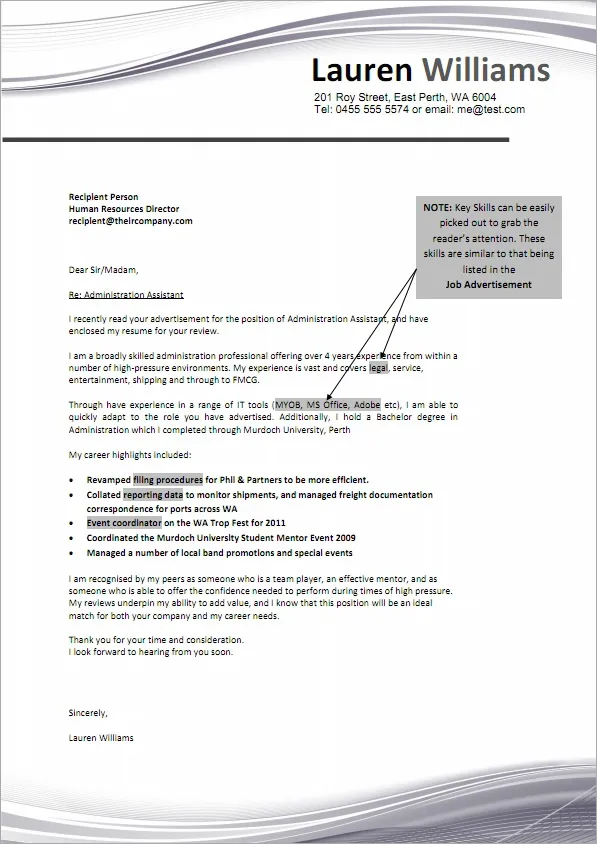
One of the biggest mistakes job seekers make is sending out generic cover letters. Each cover letter should be customized to the specific job and company you are applying to. This involves carefully reviewing the job description and identifying the key skills, experiences, and qualifications the employer is looking for. Then, in your cover letter, clearly demonstrate how your qualifications align with those requirements. This personalization shows the hiring manager that you’ve taken the time to understand the role and are genuinely interested in the opportunity. The more specific you are, the more likely you are to make a positive impression.
Research the Company and Address the Hiring Manager
Before you start writing, invest time in researching the company. Understand their mission, values, and recent achievements. This knowledge will enable you to write a more compelling cover letter that reflects your genuine interest in the organization. If possible, find out the name of the hiring manager or the person to whom you should address your cover letter. Addressing the letter to a specific person demonstrates that you’ve done your homework and have taken the initiative to find out who’s in charge of hiring. Addressing a specific person increases the chances of the hiring manager reading it. If you can’t find a name, using a professional title like ‘Hiring Manager’ is still better than a generic greeting.
Show, Don’t Just Tell, with Accomplishments
The most effective cover letters go beyond simply listing your responsibilities. They focus on your accomplishments and the impact you made in previous roles. Use the STAR method (Situation, Task, Action, Result) to structure your examples. First, briefly describe the situation you were in. Then, explain the task you needed to accomplish. Next, detail the actions you took. Finally, highlight the results you achieved. This approach helps the hiring manager understand the context of your achievements and see how you can contribute to their organization. This strategy is crucial to prove your qualifications and also illustrate your potential value to the organization.
Formatting and Design Tips

Your cover letter’s visual presentation is as important as its content. Use a clean, professional font like Times New Roman, Arial, or Calibri, and keep the font size between 10 and 12 points. Ensure consistent formatting throughout the document, including margins, spacing, and alignment. Avoid using excessive colors, graphics, or unusual fonts, as these can distract from your message. Use bullet points, bolding, and white space to break up large blocks of text and make your cover letter easy to read. Proofread your cover letter carefully before sending it to ensure there are no errors.
Key Elements for a Strong Cover Letter
Opening Paragraph
The opening paragraph is your first chance to make a positive impression. Start with a concise and engaging hook that grabs the hiring manager’s attention. Immediately state the position you’re applying for and how you learned about the opportunity. Briefly highlight your most relevant skills or experiences, and express your enthusiasm for the role and the company. This introductory paragraph sets the stage for the rest of your letter and encourages the reader to continue. Aim for a confident and professional tone that reflects your genuine interest in the position.
Body Paragraphs

The body paragraphs should provide detailed examples of your qualifications and accomplishments. Use these paragraphs to elaborate on the skills and experiences mentioned in your resume. Tailor each paragraph to the specific requirements of the job description. When possible, quantify your achievements with data and metrics. Use action verbs to describe your responsibilities and contributions. Demonstrate how your skills and experiences align with the company’s values and goals. Keep each paragraph focused and relevant, and use clear and concise language. Organize the body paragraphs logically, grouping similar skills or experiences together to create a cohesive narrative.
Closing Paragraph
The closing paragraph should reiterate your interest in the position and company. Summarize your key qualifications and restate your enthusiasm for the opportunity. Include a clear call to action, such as expressing your eagerness to discuss your qualifications further and offering your contact information. Thank the hiring manager for their time and consideration. Proofread the entire cover letter to ensure there are no grammatical errors and that your contact information is up to date. A well-crafted closing paragraph leaves the hiring manager with a positive impression and encourages them to take the next step.
Essential Elements
Contact Information

Include your full name, phone number, email address, and LinkedIn profile URL (if you have one) at the top of your cover letter. Make sure your email address is professional and appropriate. Check that your voicemail is set up and ready to receive messages. Ensure your LinkedIn profile is up-to-date, showcasing your work experience, skills, and recommendations. Keep your contact information consistent across all your application materials, including your resume. Providing complete and accurate contact information makes it easy for the hiring manager to reach out to you.
Professional Tone and Language
Maintain a professional and respectful tone throughout your cover letter. Use formal language and avoid slang, jargon, and overly casual expressions. Proofread your cover letter carefully to eliminate any grammatical errors or typos. Avoid using contractions, and instead, opt for full words. Write in a clear and concise style, making sure each sentence serves a purpose. Keep your tone positive and enthusiastic, and avoid any negative comments or complaints. Tailor the tone and language to align with the company culture and the industry.
Proofreading and Editing
Before sending your cover letter, meticulously proofread it for any errors. Check for grammatical mistakes, typos, and formatting inconsistencies. Use a spell checker, but don’t rely on it entirely. Read your cover letter aloud to catch any awkward phrasing or confusing sentences. Ask a friend or family member to review your cover letter to get a fresh perspective and catch any mistakes you may have missed. Proofreading is the final step in ensuring your cover letter represents you in the best possible light and makes a positive impression on the hiring manager.
Formatting Your Cover Letter

Font and Size
Choose a professional and easy-to-read font such as Times New Roman, Arial, or Calibri. Keep the font size between 10 and 12 points. Avoid using fancy or overly decorative fonts that can distract from your message. Use a font that is consistent throughout your cover letter and your resume. The goal is to create a document that is visually appealing and easy for the hiring manager to read quickly. Consider your audience and the specific industry when selecting the font style. Make sure the font is consistent with your resume.
Margins and Spacing
Use standard one-inch margins on all sides of your cover letter. This will help create a clean and balanced look. Use single spacing within paragraphs and double spacing between paragraphs. Avoid cramming text onto the page. Adequate white space makes the cover letter more readable and less overwhelming. Ensure all text is aligned left, creating a consistent and organized appearance. Proper margins and spacing enhance the overall presentation of your cover letter and make it easier for the hiring manager to focus on your qualifications.
Best Cover Letter Templates

Where to Find Templates
Numerous online resources offer free cover letter templates. Websites like Microsoft Word, Google Docs, and online resume builders provide a wide variety of templates. Search online for ‘cover letter templates’ to find additional options. Look for templates that match the style of your resume and the industry you are targeting. Choose templates that are easy to customize with your own information. Using a template can save you time and help you structure your cover letter effectively, but make sure you personalize the template with your own unique details and experiences.
Customizing Templates
While using a cover letter template is helpful, always customize it to fit your individual needs and the specific job requirements. Update the template with your own information, including your name, contact details, and professional experience. Tailor the content to align with the job description. Modify the wording to reflect your unique skills and accomplishments. Ensure the formatting is consistent and professional. Avoid simply filling in the blanks of a generic template. Use the template as a starting point and personalize it to showcase your unique qualifications and value to the employer. This customization is key to making a strong impression.
Common Mistakes to Avoid
Generic Cover Letters
One of the biggest mistakes is sending out a generic cover letter that isn’t tailored to the specific job or company. Generic cover letters show a lack of effort and a lack of genuine interest in the opportunity. Avoid using a template without customizing it. Take the time to research the company and the job requirements. Highlight your skills and experiences that are most relevant to the role. Show that you’ve taken the time to understand the company’s needs. A personalized cover letter will significantly increase your chances of getting noticed.
Typos and Grammatical Errors
Typos and grammatical errors can make your cover letter appear unprofessional and can damage your credibility. Before submitting your cover letter, proofread it carefully. Check for spelling mistakes, punctuation errors, and grammatical inconsistencies. Use a spell checker, but don’t rely on it completely. Read your cover letter aloud to catch any awkward phrasing or confusing sentences. Ask a friend or family member to review your cover letter for a fresh perspective. Proofreading is crucial to ensure your cover letter represents you in the best possible light.
Focusing on Yourself
Avoid making your cover letter all about you. Instead, focus on how you can benefit the company. Frame your skills and experiences in terms of how they can contribute to the company’s goals. Demonstrate how your qualifications align with the company’s needs. Use the cover letter to showcase your understanding of the industry and the company’s challenges. Showing how you can solve problems or contribute to their success will make you a more appealing candidate. Make sure that the information reflects your understanding of the job.
Call to Action
End your cover letter with a clear call to action. Express your enthusiasm for the position and the company. State your availability for an interview and provide your contact information. Make it easy for the hiring manager to take the next step. Thank the hiring manager for their time and consideration. Proofread your cover letter before submitting it to make sure your call to action is clear and concise. Your call to action is your final opportunity to leave a positive impression.