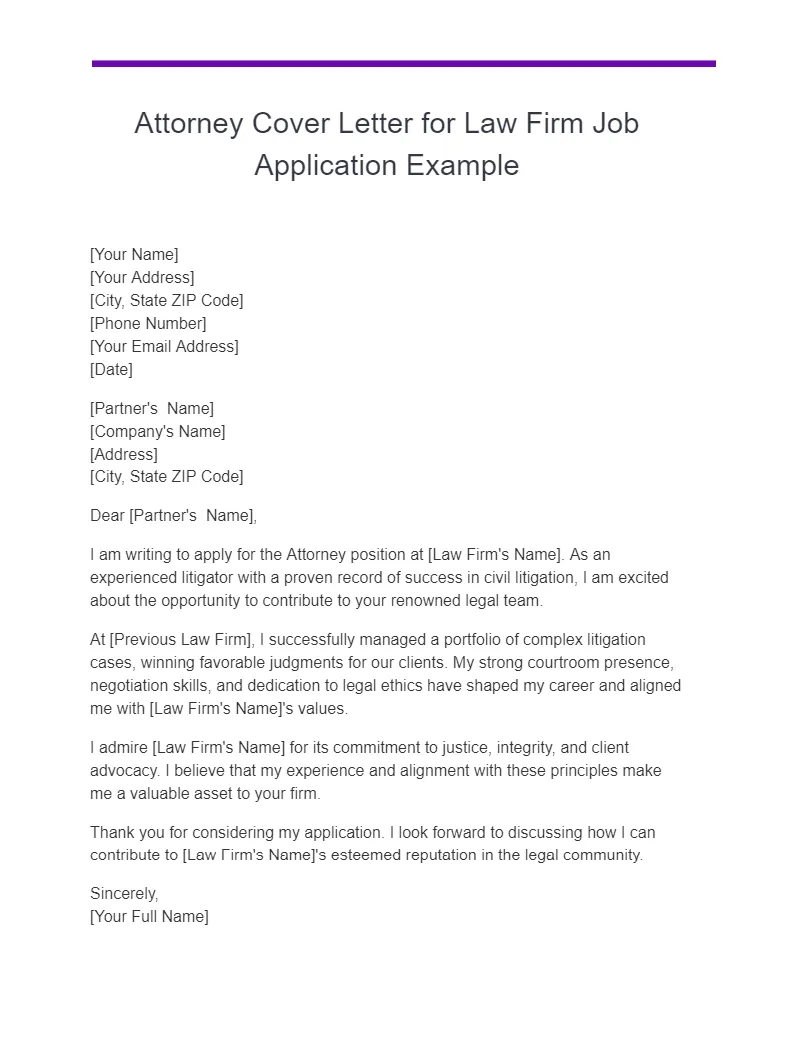
What is a Lawyer Cover Letter (and Why You Need One)
A lawyer cover letter is a crucial document that accompanies your resume when applying for legal positions. It serves as your introduction to a potential employer and offers an opportunity to highlight your qualifications, skills, and experiences in a way that a resume alone cannot. It’s your chance to demonstrate your writing abilities, personality, and genuine interest in the specific role and the law firm or organization. In a competitive job market, a well-crafted cover letter can significantly increase your chances of securing an interview, setting you apart from other candidates who may have similar qualifications on paper. The cover letter provides a space to go beyond a list of your previous jobs.
Key Components of a Lawyer Cover Letter
A strong lawyer cover letter is composed of several key elements that work together to present a compelling case for your candidacy. These components include essential contact information, a professional salutation, an engaging opening paragraph, well-structured body paragraphs that highlight your skills and experience, a compelling closing paragraph, and a formal closing. Each element plays a specific role in conveying your professionalism, expertise, and suitability for the position. Mastering these components ensures your cover letter is clear, concise, and persuasive, leaving a positive impression on the hiring manager. This systematic approach is key for a winning cover letter.
Contact Information & Date

At the top of your cover letter, include your full name, address, phone number, and email address. This information ensures the recipient can easily contact you. Following this, include the date on which you are writing the letter. This provides a record of when you applied and adds a professional touch. Ensure your contact information is accurate and up-to-date to avoid any missed opportunities. Make sure that the formatting is also professional.
Recipient’s Details
Directly below your contact information and the date, provide the recipient’s details. This includes the hiring manager’s name (if known), their title, the law firm or organization’s name, and the address. Addressing the letter to a specific person, rather than using a generic greeting, shows that you have done your research and are genuinely interested in the position. Researching the hiring manager can make your cover letter stand out. If you are unable to find the hiring manager’s name, use a professional alternative such as ‘Hiring Committee’.
Professional Salutation
Start your cover letter with a professional salutation, such as ‘Dear Mr./Ms./Mx. [Last Name]’. If you don’t know the hiring manager’s name, use a formal greeting like ‘Dear Hiring Manager’ or ‘Dear [Department Name] Hiring Committee’. Avoid informal greetings like ‘Hello’ or ‘Hi’. The salutation sets the tone for the rest of your letter and reflects your attention to detail and respect for the recipient. This professional tone is important, and is a must-do.
Opening Paragraph: Grab Their Attention

The opening paragraph is your chance to make a strong first impression. Start by clearly stating the position you are applying for and how you learned about it. Then, briefly highlight your most relevant qualifications or a key achievement that demonstrates your suitability for the role. The goal is to immediately capture the reader’s interest and make them want to learn more about you. This is your elevator pitch in a concise and compelling way. Be sure to match the job description with your skills.
Body Paragraphs: Showcase Your Skills
The body paragraphs are where you delve deeper into your qualifications. Focus on showcasing your skills and experience, providing specific examples to support your claims. Tailor your content to match the requirements of the job description, highlighting the skills and experiences most relevant to the position. Use the STAR method (Situation, Task, Action, Result) to describe your accomplishments, demonstrating how you have successfully handled challenges and achieved positive outcomes. Use this part to expand on your skills, and show how these match the job description.
Highlight Relevant Experience
When describing your experience, focus on the legal skills and responsibilities you have held. Provide specific examples of your work, such as cases you have managed, contracts you have drafted, or clients you have represented. Quantify your achievements whenever possible. Showcasing your practical experience in a concise and clear manner is important. Highlight legal research, writing, negotiation, and any other relevant skills that align with the job requirements. Show how you would use these skills at their firm.
Quantify Achievements

Whenever possible, quantify your achievements to demonstrate your impact. Use numbers and statistics to illustrate your accomplishments. For example, instead of saying ‘Managed a large caseload’, say ‘Successfully managed a caseload of 50+ cases, resulting in a 90% success rate’. Providing concrete numbers makes your claims more credible and helps the hiring manager understand the value you can bring to the firm. Use metrics to show the results of your prior experience.
Emphasize Skills & Qualifications
In addition to highlighting your experience, emphasize the skills and qualifications that make you a strong candidate. Highlight skills such as legal research, writing, negotiation, and client communication. Mention any relevant certifications, licenses, or specializations. Make sure your skills align with the job description, using keywords from the job posting. Emphasize the skills and qualifications that make you the best choice for the role. Be sure to include any specific skills requested in the job posting.
Closing Paragraph: Call to Action
The closing paragraph is your opportunity to reiterate your interest in the position and express your enthusiasm for the opportunity. Clearly state your intention to follow up and your availability for an interview. Thank the reader for their time and consideration. A strong call to action is critical for securing an interview. This part should leave a good impression on the reader.
Express Enthusiasm

In your closing paragraph, express your genuine enthusiasm for the opportunity. Show that you are excited about the prospect of joining the firm and contribute to its success. Mentioning something specific that excites you about the role or the firm, such as their reputation or a particular area of law, can make your enthusiasm more authentic. This is a great way to close, and show your passion.
Thank the Reader
Thank the reader for their time and consideration. Expressing your gratitude is a sign of professionalism and respect. This simple gesture can leave a positive lasting impression. This is a great way to end the cover letter, and create a good impression.
Formal Closing & Signature
End your cover letter with a formal closing such as ‘Sincerely’ or ‘Yours sincerely’. Leave space for your handwritten signature (if submitting a hard copy) and type your full name below the signature line. This final touch demonstrates your professionalism and attention to detail, reinforcing your commitment to the application. This final step is important to show professionalism.
Proofreading and Editing

Before submitting your cover letter, proofread it carefully for any errors in grammar, spelling, and punctuation. Errors can undermine your credibility and make a negative impression on the hiring manager. Use spell-check and grammar-check tools, but also read the letter aloud to catch any mistakes you might have missed. Consider asking a friend or colleague to review your cover letter for feedback. Having another person review your letter is a great way to catch any mistakes you might have missed.
Common Mistakes to Avoid
There are several common mistakes that can weaken your lawyer cover letter. Avoid generic cover letters that are not tailored to the specific job or firm. Do not use jargon or overly complex language that might confuse the reader. Avoid repeating information that is already in your resume. Do not focus too much on yourself and instead highlight how your skills and experiences benefit the employer. Stay away from negative language or criticizing previous employers. These are important to avoid so you can increase your chances of getting hired.
Formatting Tips for Lawyers
Pay attention to the formatting of your cover letter to ensure it is easy to read and visually appealing. Use a professional font like Times New Roman or Arial, with a font size of 11 or 12 points. Use one-inch margins and single-space your text, with a blank line between paragraphs. Use bullet points to list key skills or achievements. Use a clear and organized structure with headings and subheadings to guide the reader. Proper formatting makes your cover letter professional.
Tailoring Your Cover Letter

The most effective cover letters are tailored to each specific job and employer. Research the firm and the specific role you are applying for. Customize your cover letter to highlight the skills and experiences that are most relevant to the job description. Address the hiring manager by name, and mention something specific that shows you understand the firm’s work or values. Taking the time to tailor your cover letter demonstrates your genuine interest in the position. Tailoring each cover letter to each job is important for getting hired.
Cover Letter Examples for Lawyers
Reviewing cover letter examples can provide valuable insights and inspiration as you write your own. Look for examples that align with your experience level and the type of legal role you are seeking. Pay attention to the structure, tone, and content of successful cover letters. Adapt the examples to fit your own qualifications and the specific job requirements. Remember to always tailor the examples to your situation. It is a great idea to use examples to find your style.
Entry-Level Cover Letter
For entry-level positions, emphasize your educational background, relevant coursework, internships, and any legal experience you have gained through volunteer work or extracurricular activities. Highlight your skills, such as legal research, writing, and communication. Show enthusiasm and eagerness to learn. This kind of cover letter can help you find a job even without much experience.
Experienced Lawyer Cover Letter
For experienced lawyers, focus on your accomplishments and quantifiable results. Highlight your successful cases, client achievements, and any specializations or areas of expertise. Showcase your leadership skills and any contributions you have made to your previous firms or organizations. Be sure to add your accomplishments. Show what you have done, and show the results.
Cover Letter for Specific Legal Roles
When applying for specific legal roles, such as a corporate lawyer, a litigator, or a public defender, tailor your cover letter to the specific requirements of the position. Highlight your experience and skills that align with the job description. Showcase your understanding of the legal field. Show your knowledge of the law. Be sure to mention any experiences that match the job description.
Tips for Standing Out
In a competitive job market, it’s important to make your cover letter stand out from the crowd. Highlight your unique skills and experiences that set you apart from other candidates. Show your personality and genuine interest in the position. Mention any awards, honors, or special achievements. Tailor your cover letter to each specific job and employer. Customize your letter to make it unique.
Use Keywords
Use keywords from the job description throughout your cover letter. This helps to demonstrate that you are a good fit for the role and can also help your application pass through applicant tracking systems. Be sure to incorporate the right keywords in the right places. Use the job description as your guide. Using the keywords can help you be selected.
Show, Don’t Tell
Instead of simply stating your skills, provide specific examples that demonstrate your abilities. Use the STAR method (Situation, Task, Action, Result) to describe your accomplishments. Quantify your achievements whenever possible. Use concrete examples. Show your skills in action to your potential employer.
Follow-Up Strategies
Following up after submitting your cover letter is a good way to show your interest and professionalism. Send a brief email to the hiring manager a week or two after submitting your application, reiterating your interest in the position and asking about the status of your application. This can keep you at the top of their mind. Follow-up in a timely manner. Be sure to thank them for their time and consideration.