Crafting Your Marketing Internship Cover Letter
Securing a marketing internship is a significant step towards building a successful career in the field. A well-crafted cover letter is your first opportunity to make a positive impression on potential employers. It allows you to showcase your skills, experience, and enthusiasm for the role. This guide provides a comprehensive overview of how to write a compelling cover letter that grabs the attention of hiring managers and increases your chances of getting hired. From understanding the purpose of a cover letter to customizing it for each application, you’ll learn the key elements that will make your letter stand out.
Understanding the Purpose of a Cover Letter
A cover letter isn’t just a formality; it’s a crucial tool for introducing yourself and demonstrating why you’re the ideal candidate for a marketing internship. Unlike a resume, which provides a snapshot of your qualifications, a cover letter gives you the space to tell your story. It allows you to explain why you’re interested in the specific internship, what skills you bring to the table, and how your background aligns with the company’s goals. Essentially, it humanizes your application and provides context to your resume. Moreover, it shows your personality and communication skills, which are vital in the marketing field.
Highlighting Your Skills and Experiences
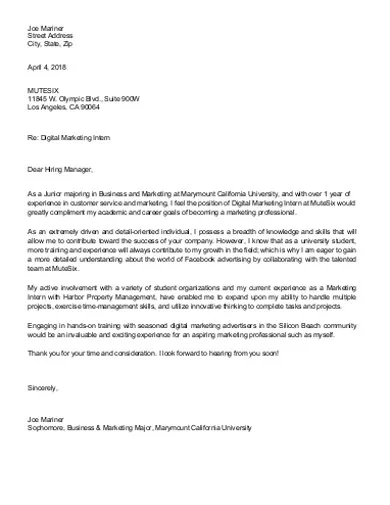
Your cover letter is the perfect place to highlight the skills and experiences that make you a strong contender for a marketing internship. While your resume lists your qualifications, the cover letter provides an opportunity to elaborate on them. Think about the skills most relevant to marketing, such as communication, analytical thinking, creativity, and digital marketing proficiency. Provide specific examples of how you’ve used these skills in the past, whether in previous internships, coursework, projects, or volunteer experiences. This will show the hiring manager that you have the practical knowledge needed to succeed.
Key Components of a Strong Cover Letter
A well-structured cover letter comprises several key components, each serving a specific purpose. These components work together to create a cohesive and compelling narrative that showcases your qualifications and interest in the internship. Understanding the structure of a cover letter is essential for ensuring that you communicate your value proposition effectively and leave a lasting impression on the hiring manager. Careful attention to detail in each section will significantly improve your chances of success.
Contact Information and Salutation
Begin your cover letter with your contact information, including your name, address, phone number, and email address. Ensure that your email address is professional. Below this, include the date and the hiring manager’s name (if known) and title. If you can’t find the hiring manager’s name, use a general salutation like “Dear Hiring Manager” or “Dear [Company Name] Team.” Tailoring your salutation shows you’ve done your research and are taking the application seriously.
Opening Paragraph Grab Attention

The opening paragraph is your opportunity to capture the reader’s attention. Start with a strong statement that immediately conveys your interest in the internship and the company. Briefly mention where you saw the job posting and why you’re excited about the opportunity. Highlight a key skill or experience that aligns with the internship requirements. The goal is to hook the reader and make them want to learn more about you. A compelling opening sets the tone for the rest of the letter.
Body Paragraphs Demonstrate Value
The body paragraphs are where you demonstrate your value and explain why you’re a good fit for the internship. Use these paragraphs to highlight your relevant skills, experiences, and achievements. Provide specific examples to support your claims. Focus on the skills mentioned in the job description and tailor your examples to match the requirements. Show, don’t just tell; provide concrete evidence of your capabilities. By aligning your skills with the needs of the company, you increase the chances of getting noticed.
Showcasing Relevant Skills
Identify the key skills the employer seeks, such as content creation, social media management, SEO knowledge, or data analysis. Then, showcase how you’ve developed and applied these skills. If you have experience writing blog posts, managing social media accounts, or analyzing marketing campaigns, mention it. Describe the specific tasks you performed, the tools you used, and the results you achieved. For instance, if you mention social media management, provide examples of how you increased engagement or follower counts.
Quantifying Achievements

Whenever possible, quantify your achievements. Instead of saying, “Improved social media presence,” say, “Increased social media engagement by 20% in three months.” Quantifiable results make your accomplishments more impactful and show employers that you can deliver results. Use numbers, percentages, and data to demonstrate the value you brought to previous projects or roles. This helps the hiring manager understand your impact and potential contribution to their team.
Highlighting Relevant Coursework
If you lack significant professional experience, highlight relevant coursework. Mention any marketing-related courses you’ve taken, such as marketing principles, digital marketing, consumer behavior, or market research. Describe the projects you completed in these courses and the skills you developed. Even if the project wasn’t directly related to marketing, focus on the skills you gained, such as project management, teamwork, or analytical thinking. This demonstrates your academic preparation and your passion for the field.
Closing Paragraph Call to Action
The closing paragraph should summarize your interest in the internship and reiterate your enthusiasm for the opportunity. Thank the hiring manager for their time and consideration. Include a call to action, such as expressing your availability for an interview and providing your contact information. Make it easy for the employer to reach out to you. Ensure your closing is confident, positive, and leaves a lasting impression. End with a professional closing, such as “Sincerely” or “Best regards.”
Formatting and Design Tips

The formatting and design of your cover letter are just as important as the content. A well-formatted letter is easier to read and makes a positive impression. Poor formatting can distract from your message and make your letter look unprofessional. Pay attention to font choice, layout, and overall design to ensure your letter is visually appealing and easy to navigate. The goal is to create a document that looks polished and professional.
Choosing the Right Font and Layout
Choose a professional and easy-to-read font such as Times New Roman, Arial, Calibri, or Helvetica. Use a font size of 11 or 12 points. Keep the layout clean and uncluttered with a single-spaced body and a double-spaced between paragraphs. Use standard margins of 1 inch on all sides. Ensure your letter is well-aligned and organized. A clean layout makes the letter more accessible and emphasizes the content.
Proofreading and Editing Your Cover Letter
Proofreading and editing are critical steps in the cover letter writing process. Carefully review your letter for any grammatical errors, spelling mistakes, and typos. Even a single error can undermine your credibility. Read your letter aloud to catch any awkward phrasing or unclear sentences. Ask a friend, career counselor, or professor to review your letter for feedback. A fresh set of eyes can often spot mistakes you’ve missed. Ensure your letter is polished and error-free.
Sample Cover Letter Template

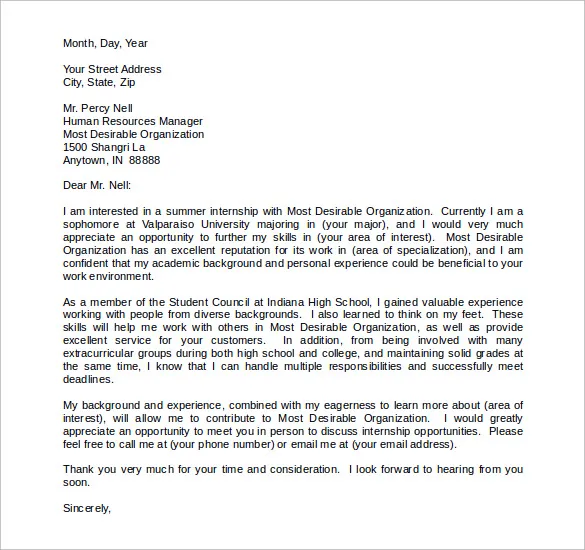
Below is a sample cover letter template to guide you in writing your own. Remember to customize this template to fit your specific skills, experiences, and the requirements of the internship.
Header and Contact Information
Your Name Your Address Your Phone Number Your Email Address
Date Hiring Manager’s Name (if known) Hiring Manager’s Title Company Name Company Address
Greeting
Dear Hiring Manager,
[Body Paragraph 1]
Body Paragraph 1

In the opening, state the position and where you saw the posting. Highlight your enthusiasm, and mention a key skill or experience relevant to the role.
Body Paragraph 2
Describe a relevant skill, providing examples of how you used it. Quantify your achievements, and show how your skills align with the company’s needs. Explain your motivation and the unique value you bring to the table.
Closing and Call to Action
Reiterate your interest, thank the hiring manager, and include a call to action, such as offering to discuss your qualifications further. Provide your contact information and end with a professional closing (e.g., “Sincerely”).
Tailoring Your Cover Letter
Generic cover letters rarely impress. Tailoring your cover letter for each application is crucial. This shows the hiring manager that you’ve taken the time to learn about the company and understand the specific requirements of the internship. Tailoring your letter to the company and position increases your chances of being selected for an interview. Investing time in customization proves you’re serious and committed to the opportunity.
Researching the Company and Internship
Before writing your cover letter, research the company and the specific internship. Visit the company’s website, read their mission statement, and learn about their products or services. Review the internship description carefully, paying attention to the skills and qualifications they are seeking. Understanding the company’s culture and goals will help you tailor your letter to their specific needs. Demonstrating your knowledge of the company’s mission and values will impress the hiring manager.
Customizing Your Letter for Each Application
Use the information you gather during your research to customize your cover letter. Address the hiring manager by name if possible. Highlight the skills and experiences most relevant to the internship. Explain why you are specifically interested in working for that company. Mention any company-specific initiatives or projects that align with your interests. By tailoring your letter to the specific requirements and values of the company, you showcase your genuine interest in the opportunity and enhance your chances of success.
Review and Submission
Once you’ve written your cover letter, it’s important to review it carefully before submitting. This ensures that your letter is free of errors and presents you in the best possible light. A well-reviewed and polished cover letter demonstrates professionalism and attention to detail. Taking the time to review and edit your letter can significantly improve your chances of landing the marketing internship.
Checking for Errors
Before submitting your cover letter, thoroughly check it for any errors. Proofread your letter for grammatical errors, spelling mistakes, and typos. Ensure that the formatting is consistent and professional. Verify that your contact information is accurate. Reading your cover letter aloud can often help you catch errors that you might miss when reading silently. Also, make sure the content is clear, concise, and easy to understand. Always use a grammar checker to identify mistakes.
Submitting Your Cover Letter
When submitting your cover letter, follow the instructions provided in the job posting. If the posting specifies a particular format or method of submission, adhere to those guidelines. Save your cover letter as a PDF file to ensure that the formatting remains consistent. Include your cover letter and resume in the same email or document if possible. Double-check that you have attached all required documents. Sending a complete and well-formatted application demonstrates your attention to detail and professionalism, which are critical traits for any marketing intern.
By following these steps and tailoring your cover letter, you’ll significantly increase your chances of landing a marketing internship. Good luck!