What Makes a Great McKinsey Cover Letter
A McKinsey cover letter is your first opportunity to impress the firm and secure an interview. It’s not just a formality, but a crucial marketing tool. Your goal is to demonstrate that you possess the key qualities McKinsey seeks in its consultants. This involves clearly articulating your experiences, showcasing your problem-solving skills, and highlighting your leadership potential. This guide will walk you through each step, providing insights into crafting a compelling cover letter that grabs attention and sets you apart from other candidates. Remember, the cover letter should be a concise and impactful representation of your abilities and fit for the firm.
Understanding McKinsey’s Values
McKinsey values are at the core of its culture, and demonstrating alignment with these values is critical. The firm emphasizes leadership, impact, and problem-solving. Understanding these core values is vital to making your cover letter a success. You should infuse your cover letter with these key values, making your application that much more attractive. By incorporating your experience, and what you have learned, you can highlight your achievements, and show how you align with the firm’s core values.
Impact and Leadership

McKinsey seeks individuals who demonstrate leadership potential and a track record of making a tangible impact. Highlight instances where you’ve taken initiative, motivated teams, and driven positive outcomes. Leadership is about inspiring and guiding others, but also taking responsibility and making tough decisions. When describing your experiences, focus on the results you achieved. For example, show how you led a team to achieve a specific goal, or how your actions directly benefited a project. It’s about the impact you’ve made.
Problem-Solving Abilities
Consulting is all about problem-solving. McKinsey consultants face complex challenges, so demonstrating your ability to analyze, strategize, and implement solutions is essential. Provide examples of how you’ve approached difficult problems, breaking them down into manageable components, identifying the root causes, and developing innovative solutions. Use the STAR method – Situation, Task, Action, Result – to structure your examples. This shows you can not only identify problems but also implement effective solutions.
Highlighting Relevant Experience
Your cover letter should focus on the experiences most relevant to a consulting role. While all experiences can provide valuable insights, prioritize those that showcase analytical skills, teamwork, leadership, and a drive for results. This includes previous internships, academic projects, extracurricular activities, and any other experiences that highlight your ability to think critically, solve problems, and work effectively in a team. Tailoring your letter to emphasize these experiences, as well as showing how you acquired those skills, will make a strong impression.
Structuring Your Cover Letter

A well-structured cover letter is essential for capturing a reader’s attention and guiding them through your key qualifications. Aim for a clear and concise structure. Each paragraph should have a specific purpose. Keep the structure logical, using a strong introduction, detailed middle paragraphs, and a concise conclusion. The key is making it easy to read and digest, and clearly conveying your message to your reader.
The Opening Paragraph
The opening paragraph is your first opportunity to grab attention. State the position you’re applying for, briefly explain why you’re interested in McKinsey, and highlight your strongest qualification. The opening should clearly and concisely express your enthusiasm, and make the reader want to know more. If you were referred by someone at the firm, mention this. Avoid generic openings, and quickly get to the point, showing your understanding of the company and the role.
Middle Paragraphs
The middle paragraphs are where you provide the meat of your cover letter. Focus on experiences that demonstrate the key skills and qualities McKinsey values. Use the STAR method, or similar, to provide context, describe your actions, and present quantifiable results. This is where you showcase your achievements, highlight leadership, and demonstrate problem-solving abilities. Keep these paragraphs focused and to the point, using specific examples. Every sentence should work toward supporting your core argument.
The Closing Paragraph

Your closing paragraph should reiterate your interest in the position, summarize your key qualifications, and express your enthusiasm for an interview. Thank the reader for their time and consideration, and restate your contact information. Proofread your cover letter one last time. Be confident and proactive in your closing. It should be the final stamp, making the reader certain of your value.
Showcasing Your Achievements
Achievements are more compelling than just listing responsibilities. Use the cover letter to showcase concrete accomplishments from your previous experiences. This could be from academic projects, previous internships, or any volunteer work. Quantify your achievements whenever possible, providing specific metrics to illustrate your impact. Focus on tangible results and how you contributed to those results. It should show that you can not only get the job done, but also excel at it.
Quantifying Your Accomplishments
Quantifying your accomplishments adds credibility to your claims and demonstrates your ability to achieve results. Use numbers, percentages, and other metrics to illustrate your impact. For example, instead of saying “Improved efficiency,” say “Increased efficiency by 15% through process optimization.” Using numbers clearly illustrates your value to a company, and shows that you are committed to the job, and can be successful. The more specific your claims, the more believable you are.
Using Action Verbs

Action verbs bring your experiences to life and make your cover letter more dynamic. Start your sentences with strong action verbs that describe your actions and accomplishments. Instead of using passive language, choose verbs that convey initiative, leadership, and impact. Verbs like ’led’, ‘developed’, ‘implemented’, ‘achieved’, and ’transformed’ are excellent choices. This shows that you are someone who takes action, and are ready to take initiative when it comes to the role.
Tailoring Your Cover Letter
A generic cover letter will not impress McKinsey. You need to customize your cover letter for each position and firm you apply to. Research the specific role and company, and tailor your skills and experiences to match their requirements. This includes understanding the firm’s values, culture, and the specific needs of the role. This shows that you took the time to learn about the role, and are genuinely interested in the opportunity. Tailoring your cover letter shows you are dedicated, detail oriented, and that you know what you’re doing.
Researching McKinsey
Before you start writing, research McKinsey thoroughly. Visit their website to understand their values, culture, and recent projects. Learn about the people who work there and the industries they serve. Understanding the firm’s mission and the types of projects they undertake will enable you to tailor your letter effectively. Look for information about the specific role you’re applying for, and understand what skills and experiences they’re seeking. Your knowledge will help you show your interest and fit.
Matching Skills to the Role

Carefully review the job description and identify the key skills and experiences required. Then, highlight the experiences that align with these requirements. Don’t just list your skills. Provide specific examples that showcase how you’ve used these skills in the past and the results you achieved. Use the language from the job description to show that you understand the requirements, and how your skills directly translate to the job at hand. This is what makes you the perfect applicant.
Cover Letter Formatting and Style
The formatting and style of your cover letter are just as important as its content. It should be easy to read, professional, and reflect the McKinsey brand. A well-formatted cover letter demonstrates attention to detail and professionalism. Choose a clean font, use clear headings, and maintain a consistent style throughout. Ensure there are no spelling or grammar errors. A professional cover letter also reflects well on your knowledge, and shows that you know what you’re doing.
Formatting Tips
Use a standard font like Times New Roman or Arial, size 11 or 12. Maintain consistent formatting throughout your letter, with clear headings and spacing between paragraphs. Use bullet points to highlight key achievements and quantify your accomplishments. Keep the tone professional, and use concise and clear language. Make sure there are no grammatical or spelling errors. The overall goal is to make it easy for the reader to understand your qualifications, and to showcase your attention to detail.
Proofreading and Editing

Proofreading and editing are crucial steps. Read your cover letter multiple times, and ask a friend, mentor, or career counselor to review it. Look for any grammatical errors, typos, or inconsistencies in your formatting. Check that your language is clear and concise, and that your achievements are quantified. A polished cover letter demonstrates professionalism and attention to detail. Thorough proofreading ensures your application is perfect, increasing the likelihood of getting the role.
Common McKinsey Cover Letter Mistakes
Avoiding common mistakes is critical to making a strong impression. Ensure that you avoid any common pitfalls. This will help you make a great first impression and increase your odds of success. Avoiding these common mistakes will help you stand out from other applicants, and give you an edge over the competition.
Generic Language
Using generic language makes your cover letter sound uninspired and does not demonstrate your understanding of McKinsey. Avoid clichés and phrases that could apply to any company. Be specific about why you’re interested in McKinsey, and what you can bring to the firm. Tailor your language to reflect your genuine interest and your understanding of McKinsey’s values and culture. Focus on your particular skills, as well as the value you can offer to the firm.
Lack of Specificity
A lack of specificity makes your cover letter unconvincing. McKinsey wants to see clear examples of your skills and achievements, supported by data and results. Instead of making vague statements, provide concrete examples of your accomplishments. Quantify your achievements whenever possible. Use the STAR method to structure your examples and show how you approached problems, and what you were able to accomplish. The more detail you use, the more memorable and convincing you will be.
Ignoring the Firm’s Culture
Ignoring McKinsey’s culture demonstrates a lack of understanding and interest. Research the firm’s values and culture, and tailor your cover letter to reflect your understanding. Mention the firm’s work, its values, and explain why they resonate with you. If you know someone who works at McKinsey, mention them if appropriate. Show that you have researched the firm and have a genuine interest in becoming part of their team. This will greatly increase your chances of being selected.
McKinsey Cover Letter Examples
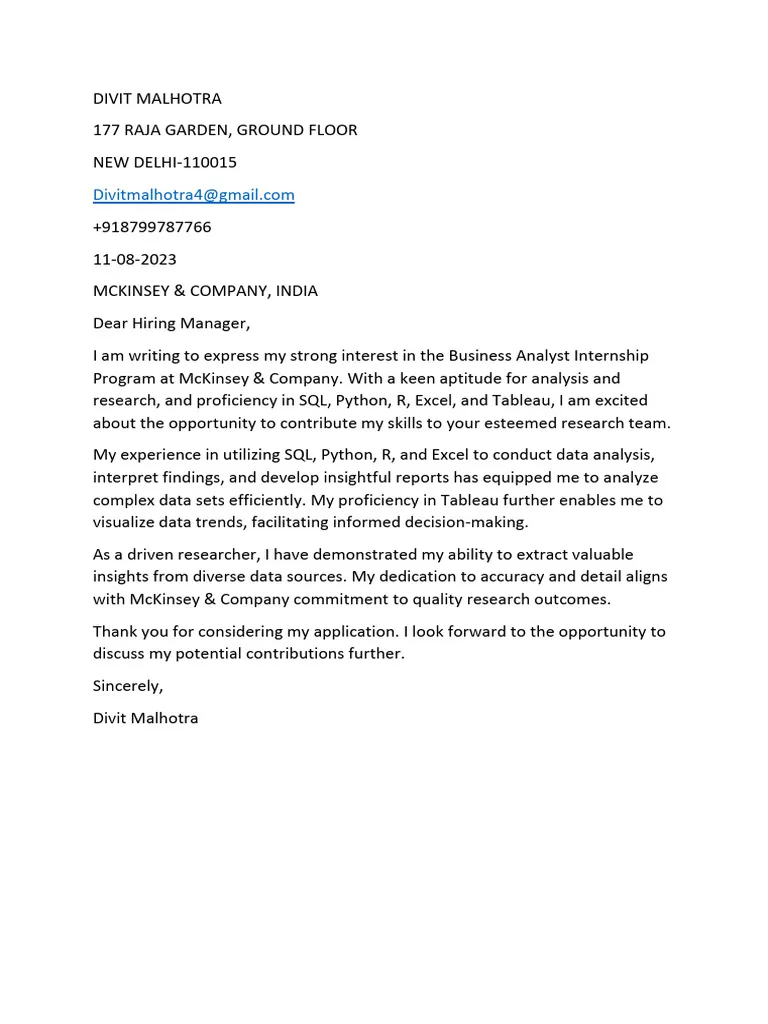
Reviewing McKinsey cover letter examples is an excellent way to gain inspiration and understand the elements of a successful cover letter. You can find samples online, and use them to guide your writing. Pay attention to the structure, language, and tone. Adapt the examples to your specific experiences and the role you’re applying for. However, avoid simply copying someone else’s work. The best cover letters are authentic and highlight your unique qualities and the value you bring. You want the reader to understand why you, and not anyone else, should be hired.
Key Takeaways for Your McKinsey Cover Letter
Crafting a winning McKinsey cover letter is an investment in your career. Focus on the key takeaways from this guide to maximize your chances of success. Understand McKinsey’s values, tailor your letter to the role, showcase your achievements, use action verbs, and proofread meticulously. By following these guidelines, you can create a cover letter that will make a strong impression. A well-written and well-crafted cover letter will help you stand out from the competition. Good luck on your journey.