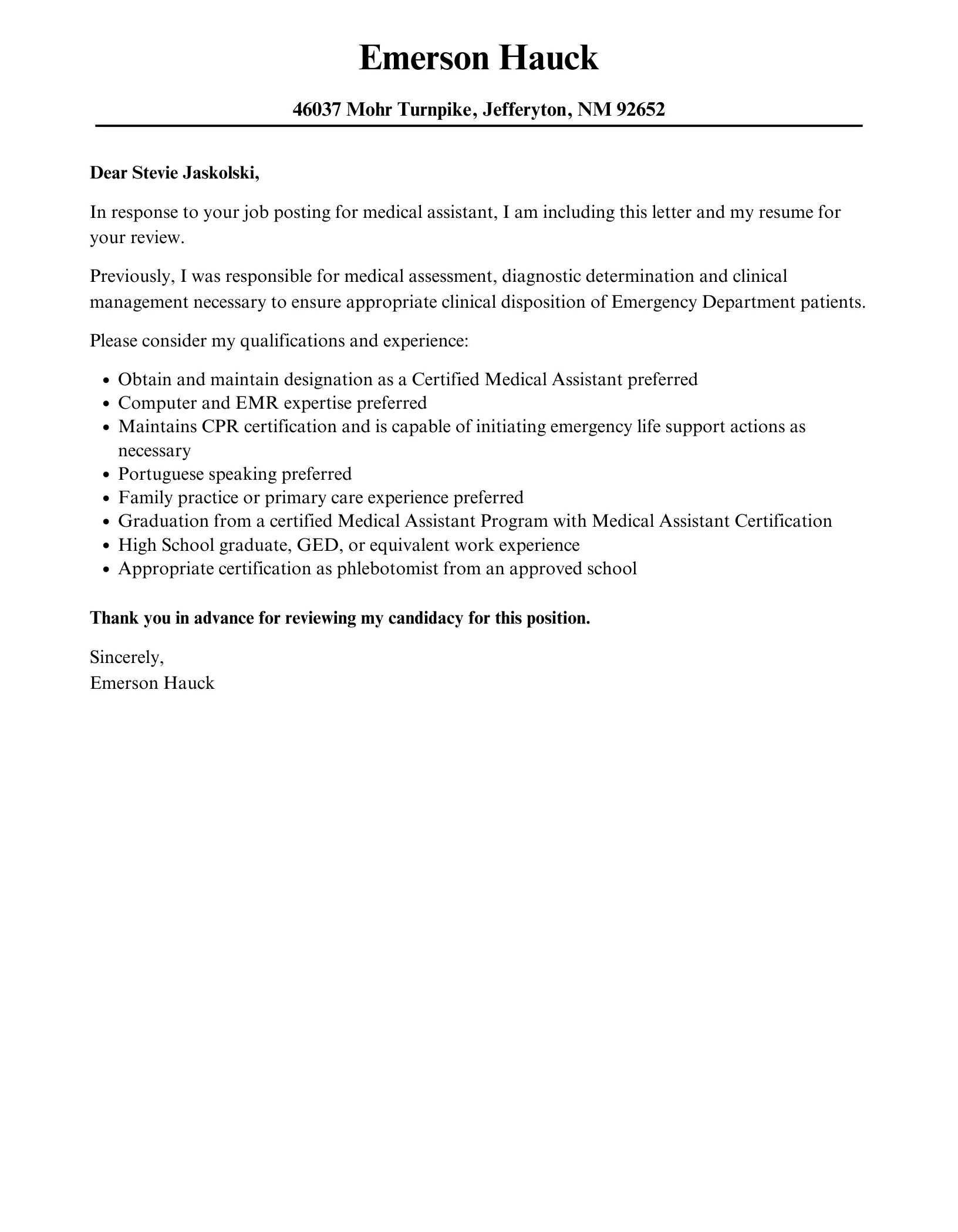
Cover Letter for Medical Assistant Jobs
A well-crafted cover letter is your first opportunity to make a strong impression and secure an interview. It serves as a vital introduction, demonstrating your enthusiasm, skills, and suitability for the medical assistant position. Unlike a resume, which provides a factual overview of your experience, a cover letter allows you to personalize your application, explain your career goals, and showcase your personality. This guide provides you with all the necessary steps to write a compelling cover letter tailored for medical assistant roles. By following these guidelines, you can significantly increase your chances of landing your dream job in the healthcare field. It’s a critical tool in your job search arsenal and should be treated with the utmost care and attention to detail. A thoughtful cover letter can transform a simple application into a compelling pitch for why you are the ideal candidate.
Understanding the Purpose of a Cover Letter
The primary purpose of a cover letter is to introduce you to a potential employer and highlight why you are the best fit for the medical assistant position. It’s not merely a repetition of your resume; instead, it provides context, personality, and a narrative that connects your qualifications with the specific requirements of the job. A cover letter allows you to explain any gaps in your employment history, express your enthusiasm for the role and the organization, and demonstrate your understanding of the healthcare environment. Moreover, it showcases your communication skills – an essential attribute for any medical professional. A well-written cover letter should encourage the hiring manager to read your resume and consider you for an interview.
Highlighting Skills and Experience

Your cover letter is your chance to showcase the skills and experience that make you a standout medical assistant candidate. Focus on the abilities that align with the job description, and quantify your accomplishments whenever possible. Instead of simply listing your duties, provide concrete examples of how you’ve utilized your skills to achieve positive outcomes in previous roles. Did you improve patient satisfaction scores? Did you streamline administrative processes? Be specific, using action verbs to describe your contributions and highlight the value you brought to your previous employers. This section must demonstrate that you have the necessary experience and skills, increasing your chances of getting an interview.
Key Skills to Showcase
Medical assistant positions require a diverse set of skills, so it’s important to highlight the most relevant ones in your cover letter. These typically include clinical skills (such as taking vital signs, assisting with examinations, and administering medications), administrative skills (such as scheduling appointments, managing patient records, and handling insurance claims), and interpersonal skills (such as communicating with patients, providing emotional support, and working effectively as part of a healthcare team). Adaptability, attention to detail, and the ability to multitask are also highly valued. Tailor your list of skills to match the requirements listed in the job posting, ensuring that you address the specific needs of the employer.
Relevant Experience Examples
Provide specific examples of your experience to demonstrate how you’ve applied your skills in a real-world setting. Instead of just stating that you have experience with patient communication, describe a specific situation where you successfully handled a difficult patient, resolved a conflict, or provided exceptional care. If you have experience with electronic health records (EHR) systems, mention the specific systems you’re familiar with and highlight any improvements you implemented. Quantify your achievements whenever possible; for instance, state the number of patients you assisted daily or the percentage increase in efficiency you achieved by implementing a new process. Providing relevant examples enhances the credibility of your skills.
Formatting Your Cover Letter

A well-formatted cover letter is visually appealing and easy to read. It should adhere to professional standards, using a clear and concise structure. Proper formatting demonstrates attention to detail and professionalism, which are essential traits for a medical assistant. By paying attention to the layout, you can create a positive impression, making it easier for the hiring manager to read and understand your qualifications. A cover letter should always be well-organized and free of errors, as this reflects on your overall professionalism and capabilities. The structure should be clear and logical, making it easy for the reader to understand your key selling points and experience.
Header and Contact Information
Your cover letter should begin with a professional header containing your name, address, phone number, and email address. Make sure your email address sounds professional (e.g., firstname.lastname@email.com) and is regularly monitored. Below your contact information, include the date and the employer’s contact information (if available), including the hiring manager’s name and title. This personal touch shows that you have done your research and are serious about the position. This is the first piece of information the hiring manager sees, so it is critical to make a good first impression from the start. Accuracy in the header is paramount, so double-check all the details.
Salutation and Introduction
Start your cover letter with a professional salutation, such as “Dear Mr./Ms. [Last Name],” if you know the hiring manager’s name. If you don’t know the name, use a general greeting like “Dear Hiring Manager.” Your introduction should immediately grab the reader’s attention, stating the specific position you’re applying for and briefly mentioning why you are interested in the role and the organization. Avoid generic introductions; instead, personalize your opening to demonstrate your enthusiasm and understanding of the role. The introduction is your opportunity to make a strong initial impression and draw the reader into the rest of your letter, highlighting what makes you a unique candidate.
Body Paragraphs

The body of your cover letter should be the core of your pitch, typically consisting of two to three paragraphs. In these paragraphs, highlight your relevant skills, experience, and accomplishments, providing specific examples to demonstrate your qualifications. Connect your skills with the requirements outlined in the job description, using keywords from the posting to show that you understand the employer’s needs. Explain why you are interested in the specific organization and what you hope to contribute to the team. Use a professional tone, and keep your writing concise and focused on what makes you the best candidate. This is the space to show your understanding of the role and express why you would be an asset.
Call to Action and Closing
Conclude your cover letter with a strong call to action, expressing your interest in an interview and your eagerness to discuss your qualifications further. Reiterate your enthusiasm for the position and thank the reader for their time and consideration. A professional closing, such as “Sincerely” or “Respectfully,” followed by your typed name, is essential. Proofread your entire cover letter before submitting it. This final step ensures that you present yourself in the best possible light, reinforcing your professionalism and attention to detail. Including your contact information again is a smart idea, to make it easy for the hiring manager.
Tailoring Your Cover Letter
Customizing your cover letter for each job application is critical for demonstrating your genuine interest in the specific role and organization. Generic cover letters rarely impress hiring managers; instead, they demonstrate a lack of effort and a failure to recognize the unique needs of the employer. The most effective cover letters are tailored to the job posting, highlighting how your skills and experience align with the specific requirements. This personalization significantly increases your chances of standing out from other applicants.
Researching the Employer

Before writing your cover letter, conduct thorough research on the employer. Visit their website, read recent news articles, and check out their social media presence to understand their mission, values, and recent initiatives. This research allows you to tailor your cover letter to the organization, demonstrating that you understand their goals and can contribute to their success. Understanding the employer’s culture and environment will enable you to connect your skills with their specific needs. Personalizing your cover letter with this information highlights your genuine interest in the organization and increases your chances of getting noticed.
Customizing for the Job Description
Carefully review the job description and identify the key skills, experiences, and qualifications the employer is seeking. Customize your cover letter to directly address these requirements, using keywords from the job posting to demonstrate that you are a strong match. Highlight specific experiences or skills that align with each requirement, providing concrete examples and quantifiable results when possible. By directly addressing the job description, you show that you understand the needs of the position and how you can contribute to the organization’s goals. Tailoring your letter will ensure that your qualifications are relevant and compelling, resulting in a higher chance of securing an interview.
Common Mistakes to Avoid
Avoiding common mistakes is just as important as highlighting your qualifications. Several errors can immediately disqualify you from consideration, regardless of your skills and experience. By being aware of these pitfalls, you can ensure that your cover letter is polished and professional. Proofreading and paying attention to detail are critical for making a good impression and demonstrating your professionalism. Avoiding these common errors ensures that your application stands out for the right reasons.
Proofreading and Editing

Typos, grammatical errors, and formatting inconsistencies can make your cover letter appear unprofessional and damage your credibility. Always proofread your cover letter multiple times and use a spellchecker and grammar checker. It is best to have someone else review your cover letter to catch any errors you may have missed. Attention to detail is essential in the medical field, and a flawless cover letter demonstrates that you possess this critical skill. This step alone could determine whether or not you are offered an interview. Taking the time to edit carefully is a simple but effective way to strengthen your application.
Using Generic Templates
Using generic cover letter templates is a major mistake that can significantly reduce your chances of landing an interview. While templates can be a starting point, they rarely allow you to adequately demonstrate your unique qualifications and enthusiasm for the specific role and organization. Hiring managers can easily spot generic cover letters and often discard them because they lack personalization. Spend the time to write a custom cover letter, tailoring it to the job description and showcasing your specific skills and experience. This effort will demonstrate your genuine interest in the role and significantly improve your chances of getting noticed.
Medical Assistant Cover Letter Examples
Reviewing medical assistant cover letter examples can provide valuable insights and inspiration for crafting your own. Look for examples that align with the specific job you are applying for and that demonstrate a professional tone and format. Analyze how the examples highlight skills, experience, and accomplishments. Pay attention to the structure, formatting, and overall writing style. Adapt the examples to your own background and tailor them to the specific requirements of the jobs you are applying for. Using a well-written example as a starting point can help you create a cover letter that effectively showcases your qualifications and increases your chances of landing an interview for medical assistant jobs. Always remember to personalize the example.