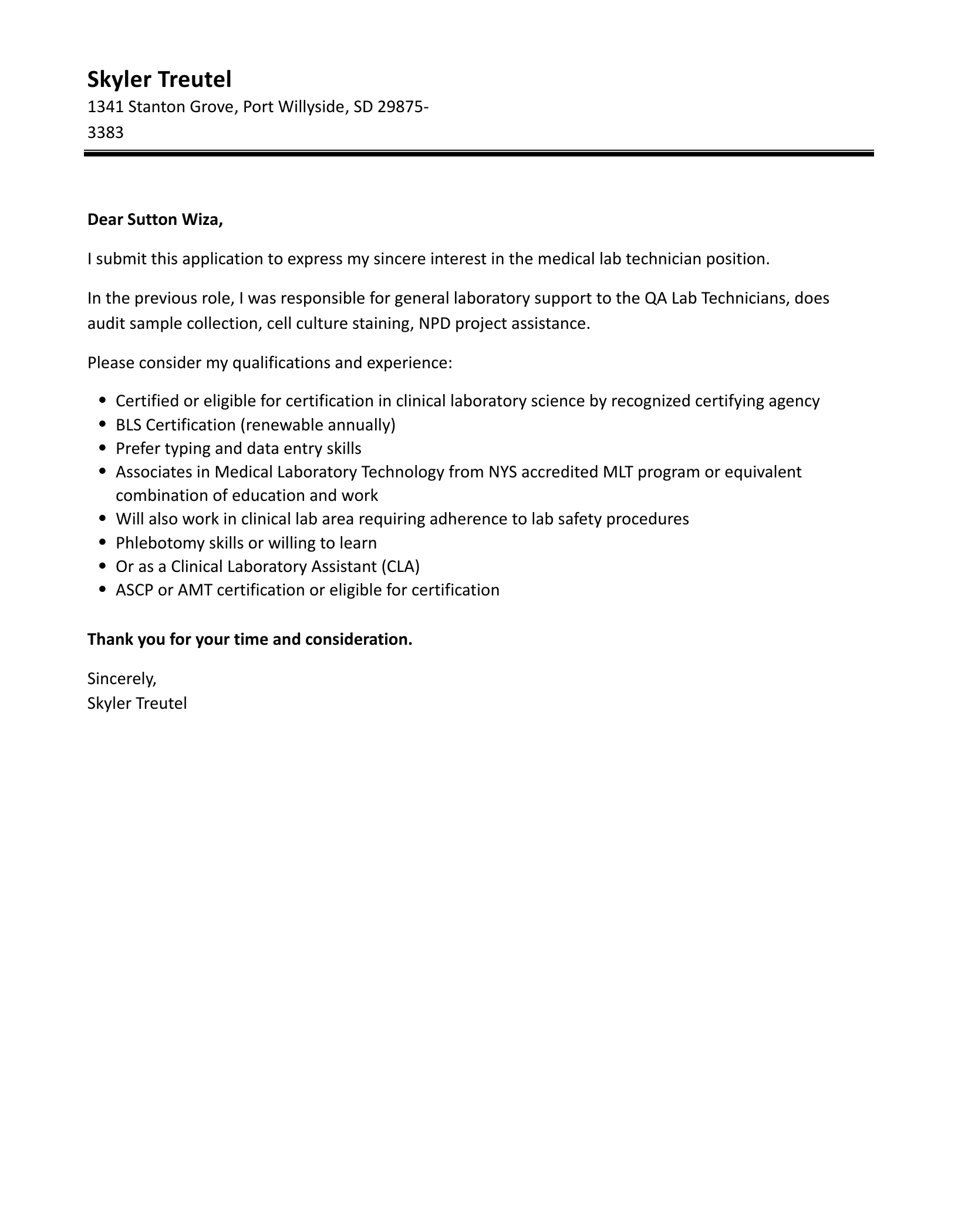
Highlighting Your Skills Medical Lab Technician Cover Letter
A compelling medical lab technician cover letter is your first opportunity to make a strong impression on potential employers. It’s more than just a formality; it’s your chance to showcase your relevant skills, experience, and personality, setting you apart from other candidates. This guide offers practical advice and strategies to help you craft a cover letter that effectively communicates your qualifications and increases your chances of landing an interview. By focusing on the key elements that hiring managers look for, you can create a cover letter that highlights your strengths and demonstrates your suitability for the medical lab technician position. Remember, each cover letter should be tailored to the specific job and company you’re applying to, emphasizing the skills and experiences most relevant to the role.
Key Skills to Include in Your Cover Letter
Your cover letter is an ideal place to highlight the diverse range of skills that make you a successful medical lab technician. These skills can be broadly categorized into technical and soft skills, and both are crucial for conveying your capabilities. Demonstrating your expertise in both areas helps paint a complete picture of your suitability for the role. When describing your skills, use specific examples and quantify your achievements whenever possible. This will not only make your cover letter more persuasive but also provide tangible evidence of your abilities. Moreover, ensure that the skills you highlight align with the job description and the specific requirements of the position you are applying for. This targeted approach will make your application more relevant and appealing to the hiring manager.
Technical Skills

Technical skills are the cornerstone of any medical lab technician’s role. These skills directly relate to the hands-on tasks and procedures you will perform. Start by listing all the laboratory procedures you are proficient in, such as blood sample analysis, operating laboratory equipment, and performing various diagnostic tests. Next, detail your expertise with the specific software or equipment used in modern labs, including any experience with automated analyzers, LIMS (Laboratory Information Management Systems), and data analysis tools. Mentioning specific certifications, such as those related to phlebotomy or specific laboratory techniques, can also strengthen your application. Always tailor this section to match the specific requirements mentioned in the job description. For example, if the job requires experience with a particular type of equipment, be sure to highlight your proficiency with it.
Laboratory Procedures
Detailing your proficiency in laboratory procedures is essential. Include specific tests and analyses you have experience with. Mention any specializations you possess, like hematology, microbiology, or clinical chemistry. Provide specific examples of the procedures you’ve successfully performed. For instance, state that you are experienced in performing complete blood counts (CBCs), urinalysis, and various other tests. Be sure to include your experience with quality control and quality assurance measures, which are crucial for maintaining the accuracy and reliability of lab results. Your goal is to provide a clear picture of your hands-on abilities and practical experience in a lab setting. If you have experience with any specialized techniques, such as molecular diagnostics or flow cytometry, make sure to highlight them as well, as these skills are often in high demand.
Software Proficiency
Modern medical labs rely heavily on software and digital systems. Highlight your proficiency with LIMS, which are crucial for managing lab data and workflows. Mention any experience with data analysis software or statistical packages you have used to analyze test results. Include experience with electronic medical record (EMR) systems, as these are used to manage patient data. Don’t forget to mention any training you have received in using specific lab equipment, as well as your experience with data entry and report generation. Mention the software you have experience with and any certifications you possess related to specific software or systems. This will demonstrate your ability to handle digital data and navigate complex lab information systems effectively, which is increasingly important in a modern lab environment.
Soft Skills for Medical Lab Technicians

While technical skills are essential, soft skills are equally important for success in a medical lab setting. These are the interpersonal and personal attributes that help you work effectively with colleagues, manage your time, and ensure accuracy and reliability. Focus on demonstrating the skills that are most relevant to the role, providing specific examples from your previous experiences to illustrate your abilities. Emphasizing these skills will showcase your ability to perform the job efficiently and collaboratively, helping you stand out from other candidates. Highlighting these skills can make a real difference in how the hiring manager views your application. Therefore, you must make sure your cover letter paints a holistic picture of you as a well-rounded professional.
Communication Skills
Strong communication skills are vital for medical lab technicians. Highlight your ability to clearly communicate test results, both verbally and in writing, to physicians and other healthcare professionals. Provide examples of times when you had to explain complex information in a simple, understandable way. Mention your experience in communicating with patients and handling sensitive information, such as explaining test procedures or addressing their concerns. Include any training in medical terminology or healthcare communication you’ve received. Being able to communicate effectively ensures that critical information is conveyed accurately and in a timely manner. This is key to patient care and successful collaboration within a medical team. This will help you stand out when you demonstrate these skills.
Attention to Detail
Accuracy is paramount in medical labs, making attention to detail a crucial skill. Provide examples of how you maintain accuracy in your work. Mention your experience in quality control and quality assurance procedures. Describe any systems you have in place to ensure the accuracy of your work, such as double-checking your results or adhering to strict protocols. Highlight instances where your meticulous approach prevented errors or improved accuracy. Precision in lab work is a matter of patient safety and reliable diagnostics. Demonstrating your ability to meticulously follow instructions, accurately record data, and consistently produce reliable results is essential. Be sure to include your attention to detail in your cover letter to show you possess this skill.
Problem-solving Abilities

Medical lab technicians often encounter unexpected issues, such as equipment malfunctions or unusual test results. Highlight your problem-solving skills by providing examples of how you have resolved technical issues, troubleshooted equipment, or addressed unexpected test results. Show your ability to analyze problems, identify solutions, and implement them effectively. Mention any experience you have in troubleshooting equipment failures, and describe the steps you took to resolve them. Detail how you handle issues that arise in a lab setting. Problem-solving skills can set you apart when you are applying for this position. Include concrete examples of your troubleshooting skills to make it more impactful.
Formatting Your Cover Letter
The format of your cover letter is crucial for creating a positive first impression. A well-formatted cover letter is easy to read, organized, and professional. Choose a clear and readable font, such as Arial or Times New Roman, and use a font size between 10 and 12 points. Keep your letter concise, ideally one page long, and use clear headings and bullet points to organize your information. Use appropriate spacing and margins to ensure the document is visually appealing. Proper formatting demonstrates attention to detail and professionalism, which are important qualities for a medical lab technician.
Contact Information
Start your cover letter with your contact information, including your full name, phone number, email address, and professional-looking LinkedIn profile URL, if you have one. Place this information at the top of the letter, aligned to the left or right. Ensure that your contact details are current and accurate, as this is how potential employers will reach you. This ensures that the recruiter can easily contact you. Double-check your email address and phone number to avoid any errors that could prevent the employer from contacting you. Make sure your contact information is accessible and professional.
Professional Greeting

Address the hiring manager directly whenever possible. Research the company to find the name of the hiring manager, or use a professional greeting like “Dear Hiring Manager.” Avoid generic greetings like “To Whom It May Concern,” as this can make your letter seem impersonal. Addressing the letter to a specific person shows that you have taken the time to research the company and that you are genuinely interested in the position. This can help you create a more personal connection with the hiring manager, which can increase your chances of getting an interview. This is a good way to demonstrate that you care enough to make the effort to personalize your application.
Body Paragraphs
The body of your cover letter is where you showcase your skills and experience. Start with a strong opening paragraph that grabs the reader’s attention, stating your interest in the position and how you found the job posting. The following paragraphs should describe your relevant skills, experiences, and accomplishments, linking them to the specific requirements of the job. Use action verbs and quantify your achievements whenever possible. Conclude the body with a paragraph summarizing your key qualifications and reiterating your enthusiasm for the role. Ensure your body paragraphs are well-structured, concise, and easy to follow. This is where you can show why you are the best candidate for this position.
Highlighting Experience
In the body of your cover letter, provide a summary of your work experience. Focus on your relevant roles, responsibilities, and achievements. Use the STAR method (Situation, Task, Action, Result) to describe your accomplishments, which can make your experience more impactful. Describe your experience in detail. Start with your most recent or relevant job, then work backward. Highlight the specific tasks you performed, the equipment you used, and the types of tests you conducted. Explain the impact you made in your previous roles. Quantify your achievements by using numbers and data whenever possible. Show that you have experience with various laboratory procedures, and showcase your proficiency in specific areas like hematology or microbiology.
Quantifying Achievements

To make your cover letter more compelling, quantify your achievements with specific data and numbers. Use metrics to demonstrate the impact you had in your previous roles. For example, instead of saying you improved efficiency, state that you reduced turnaround time by a specific percentage. If you were involved in a project, mention the number of samples you processed or the number of errors you prevented. When possible, use statistics to show your impact and effectiveness. When quantifying your achievements, use specific numbers to showcase your impact. This will make your achievements more tangible and provide evidence of your abilities. This approach will make your cover letter more persuasive and demonstrate your value to potential employers.
Closing and Call to Action
Your closing paragraph should reiterate your enthusiasm for the position and express your interest in an interview. Thank the hiring manager for their time and consideration. End with a clear call to action, such as requesting an interview or offering to provide any additional information. Make it easy for the hiring manager to contact you. This ensures that your cover letter ends on a positive note and encourages the hiring manager to take the next step. Ensure your call to action is clear and concise.
Proofreading and Editing
Proofreading and editing are crucial for ensuring your cover letter is professional and polished. Thoroughly review your cover letter for any grammatical errors, typos, or formatting inconsistencies. Use a grammar checker to catch any mistakes you may have missed. Have a friend, family member, or career counselor review your cover letter. This is a necessary step. Be sure to check for consistency in your formatting, such as font style, font size, and spacing. By taking the time to proofread and edit your cover letter, you will demonstrate your attention to detail and professionalism, making a positive impression on potential employers.
Cover Letter Templates

Using a cover letter template can be a helpful starting point. Templates provide a basic structure and formatting, saving you time and ensuring your cover letter has all the necessary components. However, remember that you must customize the template to fit your specific skills and experience. Use templates as a guide, but always tailor the content to match the specific job you are applying for. A generic template will not be as effective as a personalized one. Many websites and resources offer free cover letter templates, so you can choose one that suits your needs. With the help of a template, you can create a professional cover letter.
Where to Find Templates
Several websites offer free cover letter templates. Popular resources include job search websites, career advice platforms, and Microsoft Word. Look for templates that match the industry and the specific job you are applying for. Always choose a template that is modern and well-formatted. Some websites offer templates that allow you to customize the template’s design. It is important to choose a template that is customizable and easy to use. You may also find cover letter examples on these sites to guide you. There are many different options available, so you can find a template that meets your specific needs. Make sure the template is designed for professional use.
Customizing the Template
Once you’ve selected a template, customize it to match your qualifications and the specific job you’re applying for. Replace the placeholder text with your own information, including your skills, experience, and achievements. Make sure to tailor the content to the requirements outlined in the job description. Adapt the language and tone of the template to match your personality and the company culture. Never submit a generic template without customizing it. Tailor the template to highlight your strengths. Customize the template to reflect your skills and your experiences. Customize the template to fit your background and skills. Personalize the template by including specific details about the job you are applying for.
Medical Lab Technician Cover Letter Mistakes to Avoid
Avoiding common mistakes can significantly improve your cover letter. Pay attention to these common pitfalls to ensure your application stands out for the right reasons. By knowing what mistakes to avoid, you can improve your chances of success. Make sure your cover letter is not generic. By avoiding these mistakes, you can create a compelling cover letter that gets you the interview.
Generic Cover Letters
Avoid sending generic cover letters that are not tailored to the specific job or company. Generic cover letters do not impress hiring managers. Customize each cover letter to the job description. Tailoring your cover letter is important. Always tailor your cover letter to the specific role and company.
Typos and Grammatical Errors
Typos and grammatical errors can undermine your credibility and professionalism. Proofread your cover letter carefully. Use grammar and spell-checking tools. Have someone else review your cover letter for errors. Review for grammatical errors. Use a grammar checker to catch any mistakes you might have missed. A cover letter with mistakes reflects poorly on your attention to detail. Always make sure your cover letter is free of errors.
Focusing on Yourself
Focusing too much on yourself rather than the needs of the employer can be a mistake. Focus on your skills, experience, and how you can contribute to the company’s success. Show the hiring manager what you can do for them. Focus on the employer’s needs. Tailor your cover letter to show what you can offer. Always make sure you are focusing on how you can benefit the company.
Final Review for Your Cover Letter
Before submitting your cover letter, review it one last time to ensure it is free of errors and tailored to the job you are applying for. Make sure your contact information is correct. Re-read your cover letter to ensure that your tone is professional and enthusiastic. Check that your cover letter is clear, concise, and easy to read. Having a final review will make your cover letter perfect and ready for submission. Proofread your cover letter carefully before sending it.