Why a Nanny Cover Letter Matters
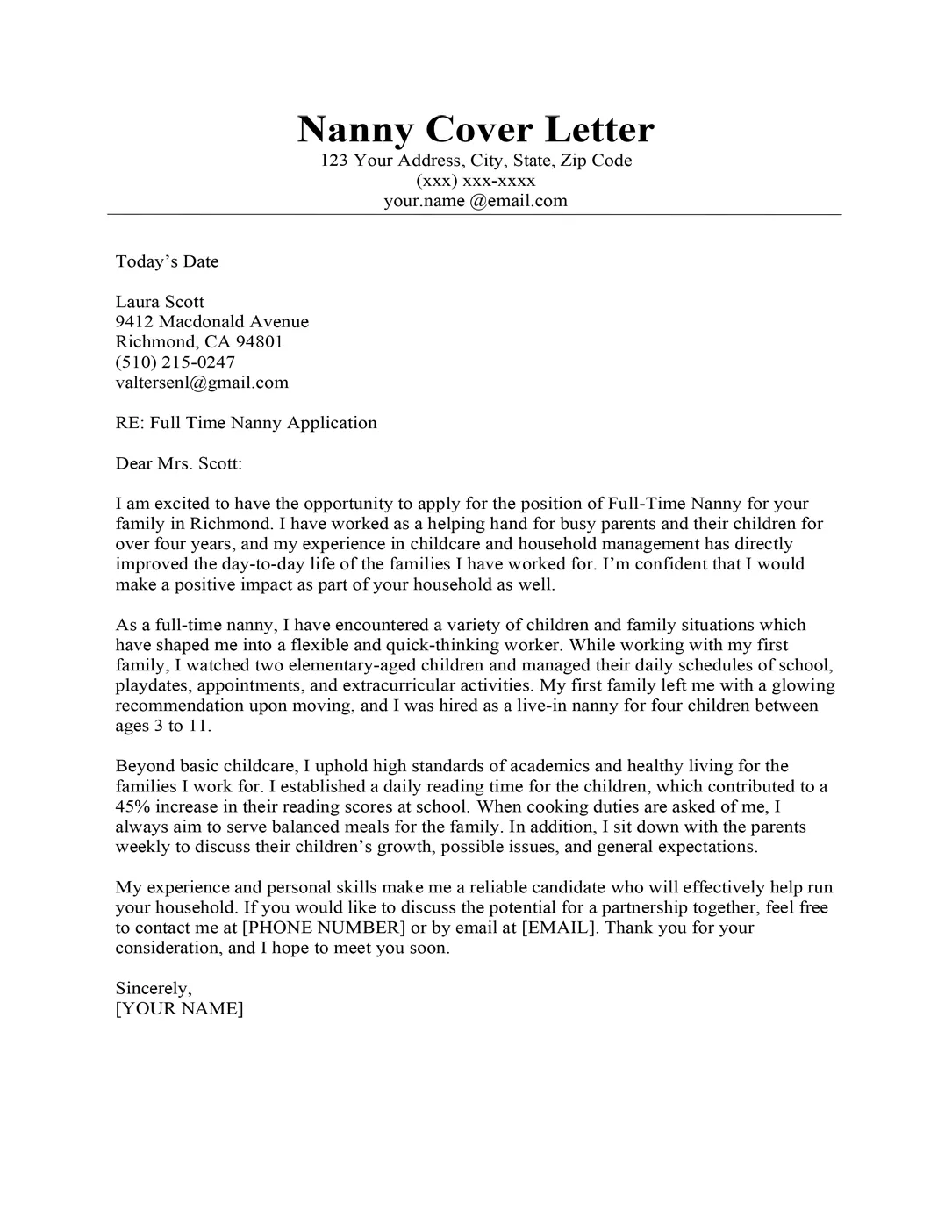
A well-crafted nanny cover letter is your first opportunity to make a lasting impression on potential employers. It’s much more than just a formality; it’s your chance to showcase your personality, enthusiasm, and suitability for the role. Unlike a resume, which provides a factual overview of your experience, a cover letter allows you to connect with the family on a personal level. It helps you to explain why you are the best fit for their specific needs and to demonstrate your genuine interest in their children’s well-being. By investing time in writing a compelling cover letter, you significantly increase your chances of securing an interview and ultimately, the job. The cover letter offers a space to address any potential gaps in your resume, such as a career change or extended absence, and explain how your skills translate to the role of a nanny. It provides a glimpse into your childcare philosophy and allows you to highlight specific experiences that demonstrate your ability to care for children. In essence, it’s your unique selling proposition in a competitive job market.
Essential Elements of a Nanny Cover Letter
To create a cover letter that truly impresses, you must include several crucial elements. Begin with your contact information, including your name, phone number, email address, and optionally, your mailing address. Following this, address the letter to the specific family or, if you don’t know the family’s name, use a general greeting such as ‘Dear Hiring Manager.’ The introduction should be concise and engaging, clearly stating the position you are applying for and where you found the job posting. Briefly mention your relevant experience and express your enthusiasm for the role. In the body of the letter, delve into your experience in detail, highlighting your accomplishments and skills. Tailor your letter to the specific needs of the family and the job description, showcasing your ability to care for children of a particular age or with special needs. Describe your childcare philosophy, focusing on your approach to discipline, education, and creating a nurturing environment. Always remember to proofread your cover letter thoroughly for grammar and spelling errors. Include a call to action to express your availability and willingness to meet with them.
Your Contact Information and Introduction

The first section of your cover letter sets the tone for the rest, so it’s crucial to get it right. Start with your contact information at the top of the letter, ensuring it’s easy to read and accurate. Following your contact details, address the letter appropriately. If you know the family’s name, use it; otherwise, use a professional greeting like ‘Dear Hiring Manager’ or ‘Dear [Family Name]’. The introduction should be captivating and clearly state your purpose. Mention the specific position you are applying for and how you learned about the opening. Briefly introduce yourself and highlight your most relevant qualifications. For example, you could start by stating your years of experience, your passion for childcare, or a specific skill that matches the job description. Your introduction should express your enthusiasm for the role and indicate your understanding of the family’s needs. This opening is your opportunity to make a strong first impression and encourage the reader to continue reading your letter.
Showcasing Your Nanny Experience
The heart of your cover letter is where you detail your nanny experience. Focus on your previous roles and responsibilities, providing specific examples of your accomplishments. Instead of simply listing your job duties, use the STAR method (Situation, Task, Action, Result) to tell compelling stories that demonstrate your abilities. Describe the situations you faced, the tasks you were assigned, the actions you took, and the positive results you achieved. For instance, instead of stating ‘supervised children,’ describe how you ‘organized educational activities for children ages 4-7, resulting in improved reading comprehension and enhanced social skills.’ Quantify your achievements whenever possible, such as ‘reduced screen time by 30% through engaging outdoor activities.’ Tailor your descriptions to match the requirements of the specific job. If the family has mentioned specific needs, such as experience with a particular age group or managing multiple children, emphasize your relevant experience in those areas. By providing concrete examples, you demonstrate your competence and make your experience more relatable and convincing.
Highlighting Your Skills and Qualifications
Beyond your experience, highlight your skills and qualifications that make you an excellent nanny. Focus on skills that align with the job description and the family’s needs. These may include skills related to child development, such as early childhood education and behavior management, as well as practical skills like meal preparation, first aid, and transportation. If you have specialized certifications, such as CPR or a degree in early childhood education, be sure to mention them. Showcase soft skills such as patience, communication, creativity, and reliability. Give examples of how you have used these skills in previous roles. For example, you could describe how you used your creativity to plan engaging activities or your patience to help a child overcome a challenge. Demonstrate your ability to create a safe and nurturing environment where children can thrive. If you have experience with special needs children, mention that. Ensure that you present yourself as someone who is not only qualified but also genuinely passionate about childcare.
Mentioning Your Childcare Philosophy

Your childcare philosophy is a vital part of your cover letter, as it reflects your values and approach to childcare. This section helps families understand your core beliefs and ensures you are a good match for their parenting style. Briefly explain your approach to discipline, education, and fostering a nurturing environment. Do you prioritize positive reinforcement, play-based learning, or a structured routine? Articulate your views on how children learn, grow, and develop. Consider including examples of how you’ve applied your philosophy in the past. This can include discussing how you handle difficult situations, encourage creativity, or promote healthy habits. Mention your strategies for encouraging children’s social and emotional development. Ensure your philosophy aligns with the family’s values. Tailor your response based on the job description and your understanding of the family’s needs. Express your enthusiasm for supporting the children’s growth and well-being, showcasing your commitment to creating a loving and enriching environment where they can flourish.
Addressing the Specific Job Requirements
To stand out, personalize your cover letter by specifically addressing the requirements outlined in the job description. Review the posting carefully and identify the key skills and experiences the family is looking for. Highlight how your qualifications match their needs, providing specific examples from your past experiences. Show that you have read the job description thoroughly and understand what the family is seeking in a nanny. If they mention specific responsibilities, such as transportation, meal preparation, or assistance with homework, address these points in detail. Demonstrate your willingness to perform these tasks and how your experience makes you a good fit. If the family has particular preferences, such as experience with a certain age group, or a specific type of activity, be sure to highlight related experiences. By demonstrating your understanding of their needs and highlighting the ways you meet those requirements, you increase your chances of being seen as the perfect candidate. This personalized approach demonstrates your genuine interest in the position and the family.
Including References and Availability
Conclude your cover letter by mentioning that you are available for an interview and are happy to provide references upon request. List your references in a separate document, with their names, titles, contact information, and your relationship to them. Before including any references, always ask for their permission. In your cover letter, you can simply state, ‘References are available upon request.’ It’s also helpful to mention your availability for the role. State your preferred start date and your general availability, such as ‘I am available to start immediately’ or ‘I am available to work full-time.’ Be flexible and open to discussing your availability further during the interview. Reiterate your enthusiasm for the position and thank the family for their time and consideration. Express your confidence in your ability to meet their needs and look forward to the opportunity to discuss your application further. A clear and concise closing that reiterates your interest leaves a positive final impression.
Proofreading and Polishing Your Letter

Before submitting your cover letter, it’s crucial to thoroughly proofread and polish it for any errors. Errors can undermine your professionalism, so take the time to review your letter carefully. Check for grammar, spelling, and punctuation errors. Ensure that your sentences are clear, concise, and easy to understand. Use a grammar and spell-checking tool, but don’t rely on it completely; read the letter aloud to catch any awkward phrasing or mistakes. Ask a friend or family member to review the letter for a fresh perspective. They may catch errors you missed. Ensure that your tone is professional and enthusiastic throughout. Your cover letter is a direct reflection of your attention to detail. A well-written, error-free cover letter shows that you care about making a positive impression. Proofreading is one of the most important steps in the process of writing an impressive nanny cover letter. After all, the family will see this as a reflection of your care when you’re with their children.